Aching Shoulders in Pregnancy: A Complete Clinical Guide for Patients

Most shoulder aching in pregnancy is related to muscle strain, posture changes, and altered sleep position. Pain felt at the shoulder may occasionally be referred from the neck, upper back, gallbladder, or irritation inside the abdomen.
Key Takeaways
- Most shoulder aching in pregnancy is related to muscle strain, posture changes, and altered sleep position.
- Pain felt at the shoulder may occasionally be referred from the neck, upper back, gallbladder, or irritation inside the abdomen.
- Warning signs include sudden severe pain, shortness of breath, chest pain, fever, weakness, or reduced movement.
- Gentle stretching, posture support, warm or cold packs, and clinician-guided activity changes often help.
- Pregnant patients should check with a qualified doctor before using medicines or starting new exercises.
Aching shoulders in pregnancy are common and are often linked to posture changes, muscle tension, sleeping position, or strain as the body adapts to pregnancy. However, shoulder pain can sometimes reflect a problem outside the shoulder itself, so persistent, sudden, or severe symptoms deserve medical attention.
Overview: Why aching shoulders can happen in pregnancy
Aching shoulders in pregnancy are usually caused by everyday mechanical changes rather than a serious disease. As pregnancy progresses, body weight distribution changes, the chest wall expands, ligaments become more flexible, and sleeping and sitting positions often shift. These changes can place extra strain on the neck, upper back, and shoulder muscles, leading to soreness, stiffness, or a dull ache.
Many pregnant patients also spend more time in positions that tighten the upper body, such as leaning back to balance the growing abdomen, looking down at a phone, or sleeping on one side with inadequate pillow support. Repeated lifting, carrying older children, desk work, or stress-related muscle tension can make symptoms more noticeable.
Although common, shoulder discomfort should not be dismissed automatically. Pain felt in the shoulder is sometimes “referred pain,” meaning the problem starts elsewhere but is perceived in the shoulder area. This can happen with neck irritation, upper abdominal problems, and in rare cases urgent pregnancy-related conditions. Knowing the pattern of the pain and the accompanying symptoms helps guide next steps.
What shoulder pain may feel like
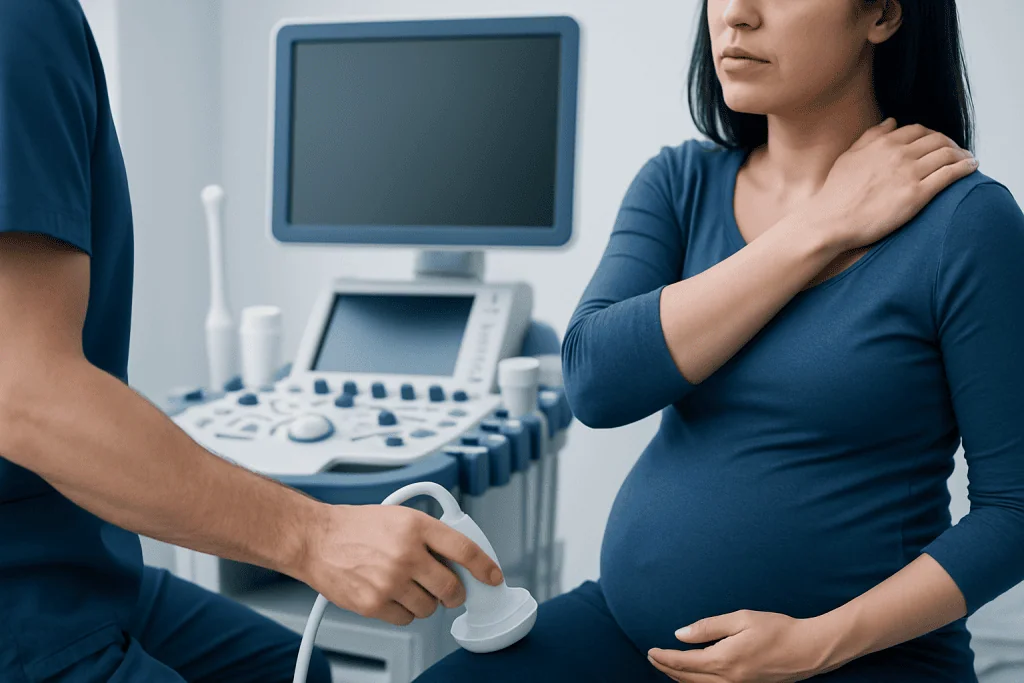
Shoulder discomfort in pregnancy can vary from person to person. Some patients describe a dull ache across the top of the shoulder or between the shoulder blades. Others notice tightness in the neck and shoulder, pain when lifting the arm, soreness after sleeping, or a burning sensation that travels from the upper back into the shoulder.
The timing can offer clues. Pain that worsens after work, carrying bags, prolonged sitting, or sleeping in one position often points to muscle strain or posture-related tension. Pain that is sharp, appears suddenly, or is linked with trouble breathing, chest discomfort, abdominal pain, dizziness, or vaginal bleeding needs more urgent medical review.
Symptoms that may occur alongside shoulder aching include:
- Neck stiffness or upper back tightness
- Reduced range of motion when reaching or lifting
- Numbness or tingling down the arm if a nerve is irritated
- Headaches related to neck and shoulder tension
- Pain on one side only, especially after sleeping
If shoulder pain comes with widespread joint pain, hand swelling, or wrist symptoms, a clinician may also consider related musculoskeletal conditions, including overuse syndromes such as carpal tunnel syndrome.
Common causes and less common but important causes

The most common causes of aching shoulders in pregnancy are musculoskeletal. As the center of gravity shifts forward, the upper back may round and the shoulders may roll inward, placing tension on the trapezius, rhomboids, and rotator cuff muscles. Hormonal changes also increase ligament laxity, which can make joints feel less stable and muscles work harder to support them.
Sleep position is another frequent factor. Side sleeping is often recommended in later pregnancy, but without enough pillow support the neck and shoulder can remain compressed for hours. Carrying a bag on one shoulder, working at a poorly adjusted desk, or repeatedly lifting can add to the strain. Stress and fatigue may also lead to involuntary tightening of shoulder and neck muscles.
Less commonly, shoulder pain may be referred from the neck or upper spine, especially if there is a pinched nerve, disc irritation, or significant muscle spasm. Problems affecting the gallbladder may cause pain under the right ribs that travels to the right shoulder. Digestive or upper abdominal conditions can sometimes create a similar pattern. If neck-related symptoms are prominent, clinicians may also assess for causes of disc-related nerve irritation, depending on the full clinical picture.
Rare but important causes need urgent evaluation. Irritation of the diaphragm from internal bleeding or abdominal inflammation can cause shoulder-tip pain. In early pregnancy, this can be a concerning symptom if accompanied by pelvic pain, faintness, or bleeding. Chest or lung problems, including a blood clot in the lung, may also be felt in the shoulder and are usually accompanied by shortness of breath, chest pain, or rapid breathing.
How doctors evaluate shoulder pain in pregnancy
Assessment starts with a careful history. A doctor or midwife will ask when the pain began, whether it is on one side or both, what makes it better or worse, and whether there are related symptoms such as numbness, abdominal pain, fever, shortness of breath, headache, or bleeding. The stage of pregnancy matters, because some causes are more likely at different times.
The physical examination often includes checking posture, neck movement, shoulder range of motion, areas of tenderness, strength, and any signs of nerve involvement. The clinician may also assess the chest, abdomen, blood pressure, and circulation if the symptom pattern suggests a non-musculoskeletal cause.
If an underlying internal problem is suspected, testing may be needed. Depending on symptoms, this can include blood tests, obstetric assessment, or imaging. Ultrasound is commonly used in pregnancy when appropriate. In selected situations, clinicians may recommend MRI because it can help evaluate soft tissues and the spine without ionizing radiation. The exact plan is individualized to the pregnancy stage and the urgency of symptoms.
Treatment options that are usually considered safe and practical
Treatment depends on the cause, but many cases improve with conservative care. Resting from the activity that triggered the pain, adjusting posture, changing sleep support, and using a warm compress or cold pack for short periods often help. Some patients benefit from placing a pillow under the upper arm or between the knees and using a supportive pillow that keeps the neck in a neutral position.
Gentle movement is usually better than complete inactivity. Slow shoulder rolls, light stretching of the chest and upper back, and frequent posture breaks may reduce stiffness. If the pain stems from muscle strain or poor mechanics, a clinician may advise physical therapy and rehabilitation to improve posture, mobility, and muscle support in a pregnancy-conscious way.
Medicine options during pregnancy should always be checked with a qualified clinician. Even common pain relievers are not automatically suitable in every trimester or for every patient. If symptoms suggest a shoulder joint or tendon problem rather than general muscle tension, referral to orthopedics and traumatology may be appropriate for further evaluation.
When the pain is not truly coming from the shoulder, treatment focuses on the underlying cause. Gallbladder disease, nerve compression, lung conditions, or obstetric emergencies require targeted medical care rather than home measures alone.
Self-care, posture, and prevention strategies
Prevention centers on reducing mechanical stress. Good workstation setup can make a meaningful difference: shoulders relaxed, elbows supported, screen at eye level, and feet stable. Taking short movement breaks every 30 to 60 minutes helps prevent neck and shoulder tightening.
Sleeping support is especially important in pregnancy. A pillow that keeps the head aligned with the spine and a second pillow to support the upper arm can reduce pressure on the top shoulder. Some patients also feel better with a pregnancy pillow that supports the abdomen and back, reducing twisting during sleep.
Helpful daily habits may include:
- Using both straps on a backpack instead of one-shoulder bags
- Avoiding repeated overhead reaching when possible
- Lifting with good body mechanics and asking for help with heavy objects
- Practicing gentle prenatal exercise if approved by a clinician
- Managing stress with breathing exercises or relaxation techniques
If pain keeps returning, it may be useful to have a clinician review movement patterns, sleeping setup, and work ergonomics. Persistent symptoms can sometimes improve significantly once the main trigger is identified.
When to seek medical care
A pregnant patient should seek medical advice promptly if shoulder pain is severe, keeps worsening, or does not improve with simple measures. Medical review is also important if the pain follows an injury, causes significant weakness, or makes it hard to move the arm normally.
Urgent care is needed if shoulder pain happens with chest pain, shortness of breath, fainting, fever, one-sided swelling, severe abdominal or pelvic pain, vaginal bleeding, or a sudden feeling of being unwell. In early pregnancy, shoulder-tip pain together with pelvic pain or bleeding can require immediate assessment.
Persistent right-sided shoulder pain with nausea, vomiting, or upper abdominal discomfort also deserves review, as referred pain can come from the gallbladder or nearby structures. If symptoms are complex or unexplained, a multidisciplinary assessment may help. Acibadem International’s multidisciplinary specialists in JCI-accredited hospitals evaluate pregnancy-related pain for international patients and coordinate care when imaging, obstetrics, and musculoskeletal expertise are needed. Where spine, nerve, or soft tissue assessment is necessary, clinicians may consider options such as neurosurgical evaluation or other specialty referrals based on the findings.
Frequently asked questions
Is aching shoulders in pregnancy normal?
Yes, mild shoulder aching is common in pregnancy and is often related to posture changes, muscle tension, and sleeping position. Still, pain that is sudden, severe, or associated with other symptoms should be checked by a doctor.
Can pregnancy hormones cause shoulder pain?
Pregnancy hormones can make ligaments more flexible and joints feel less supported, which can indirectly contribute to shoulder and upper back strain. Hormones do not usually cause isolated shoulder pain on their own, but they can make mechanical discomfort more likely.
What helps relieve shoulder pain during pregnancy?
Many patients improve with rest from aggravating activities, posture correction, warm or cold packs, and supportive pillows during sleep. Gentle stretching and clinician-approved exercise can also help, but medicines should only be used after checking with a healthcare professional.
When is shoulder pain in pregnancy an emergency?
Emergency assessment is important if shoulder pain occurs with shortness of breath, chest pain, fainting, severe abdominal or pelvic pain, vaginal bleeding, or sudden severe illness. In early pregnancy, shoulder-tip pain with pelvic pain or bleeding needs urgent medical attention.
Why does shoulder pain get worse at night during pregnancy?
Nighttime pain is often linked to side sleeping, pressure on one shoulder, poor pillow support, or neck misalignment. Long periods in one position can tighten the muscles and make a strained shoulder feel worse by morning.
Can shoulder pain be related to the baby or the uterus?
Usually, shoulder pain is not directly caused by the baby. However, some pregnancy-related internal problems can cause referred pain to the shoulder, which is why unusual or severe symptoms should not be ignored.
References
- American College of Obstetricians and Gynecologists
- National Health Service
- Royal College of Obstetricians and Gynaecologists
- Mayo Clinic
- Society for Maternal-Fetal Medicine
This article is for general information only and is not a substitute for professional medical advice. Please consult a qualified doctor about your individual situation.
Joint and spine care in Turkey — expert assessment & treatment
JCI-accredited · board-certified surgeons · reply within 24h
Add us as a Preferred Source to see more of our trusted health content across Google Search, AI Overviews and Discover.
Check your numbers in seconds
BMI, calories, due date, blood pressure and 30+ more clinical calculators — free, instant, doctor-reviewed ranges.