ACL Injury: Symptoms, MRI Diagnosis, and Return to Sport

ACL injury often causes a popping sensation, rapid swelling, pain, and a feeling that the knee may give way. MRI is the main imaging test used to confirm an ACL tear and check for meniscus, cartilage, or other ligament injuries.
Key Takeaways
- ACL injury often causes a popping sensation, rapid swelling, pain, and a feeling that the knee may give way.
- MRI is the main imaging test used to confirm an ACL tear and check for meniscus, cartilage, or other ligament injuries.
- Treatment may be non-surgical or surgical depending on age, activity goals, knee instability, associated injuries, and sport demands.
- Rehabilitation is essential after both non-surgical treatment and ACL reconstruction, and usually progresses in phases.
- Return to sport should be based on strength, movement control, functional testing, confidence, and medical clearance rather than time alone.
An ACL injury is a common knee ligament injury, especially in sports that involve pivoting, sudden stops, or landing from a jump. Early assessment, accurate MRI diagnosis, individualized treatment, and structured rehabilitation help support safe recovery and return to activity.
Overview
The anterior cruciate ligament, commonly called the ACL, is one of the key stabilizing ligaments inside the knee. It helps control forward movement and rotation of the shin bone in relation to the thigh bone. An ACL injury usually means the ligament has been stretched or torn, most often during sport or high-demand physical activity.
ACL tears are particularly common in activities that involve cutting, pivoting, sudden deceleration, jumping, and landing. Football, basketball, volleyball, handball, skiing, and racket sports are typical examples. However, ACL injuries can also happen during recreational exercise, falls, or accidents.
For many patients, the most important questions are whether the ACL is torn, whether surgery is needed, and when it is safe to return to sport. The answers depend on the injury pattern, knee stability, associated damage, personal goals, and the quality of rehabilitation. A careful medical evaluation helps create a plan that protects the knee while supporting the patient’s activity goals.
ACL Tear Symptoms
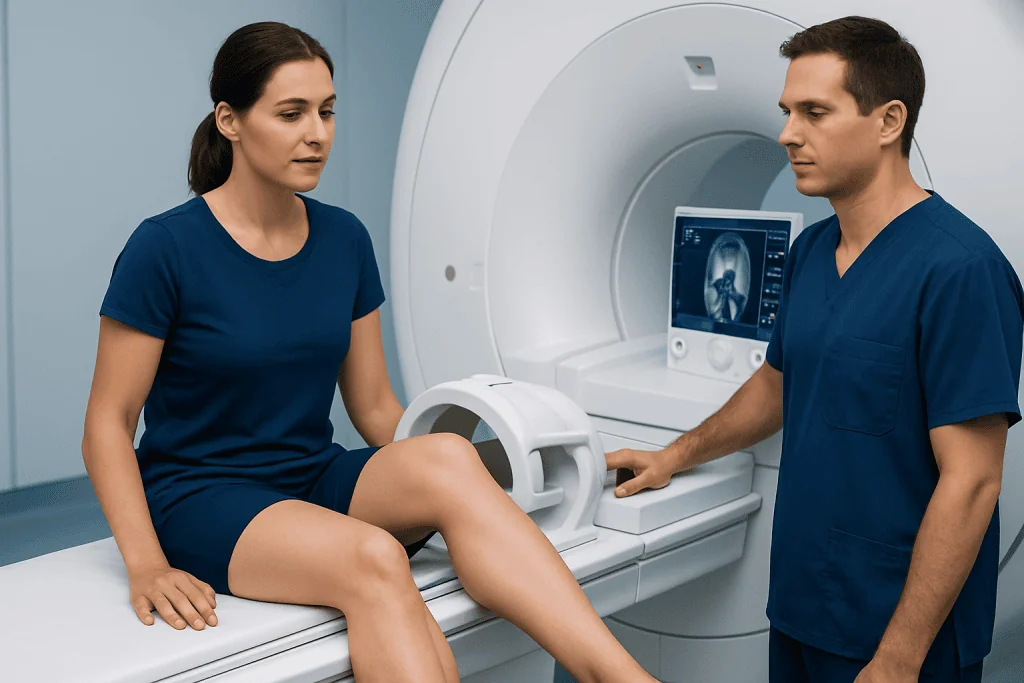
Many people with an ACL injury describe a sudden event rather than gradual knee pain. The knee may twist or buckle during a change of direction, landing, or collision. Some patients hear or feel a pop at the time of injury, followed by pain and difficulty continuing the activity.
Swelling often develops within the first few hours because bleeding can occur inside the knee joint after a ligament tear. The knee may feel tight, stiff, or difficult to fully bend and straighten. Walking may be possible in some cases, but the knee can feel unreliable, especially when turning, descending stairs, or trying to run.
Common symptoms of an ACL injury include:
- A popping sensation or sound at the time of injury
- Rapid knee swelling, often within hours
- Pain, especially with weight-bearing or twisting
- A feeling that the knee gives way or shifts
- Reduced range of motion and stiffness
- Difficulty returning to sport or high-demand movement
Symptoms can vary. Some people have significant pain at first, while others notice instability more than pain after the initial swelling improves. Because meniscus, cartilage, or other ligament injuries may occur at the same time, persistent swelling, locking, catching, or repeated giving way should be assessed by a qualified orthopedic specialist.
Causes and Risk Factors
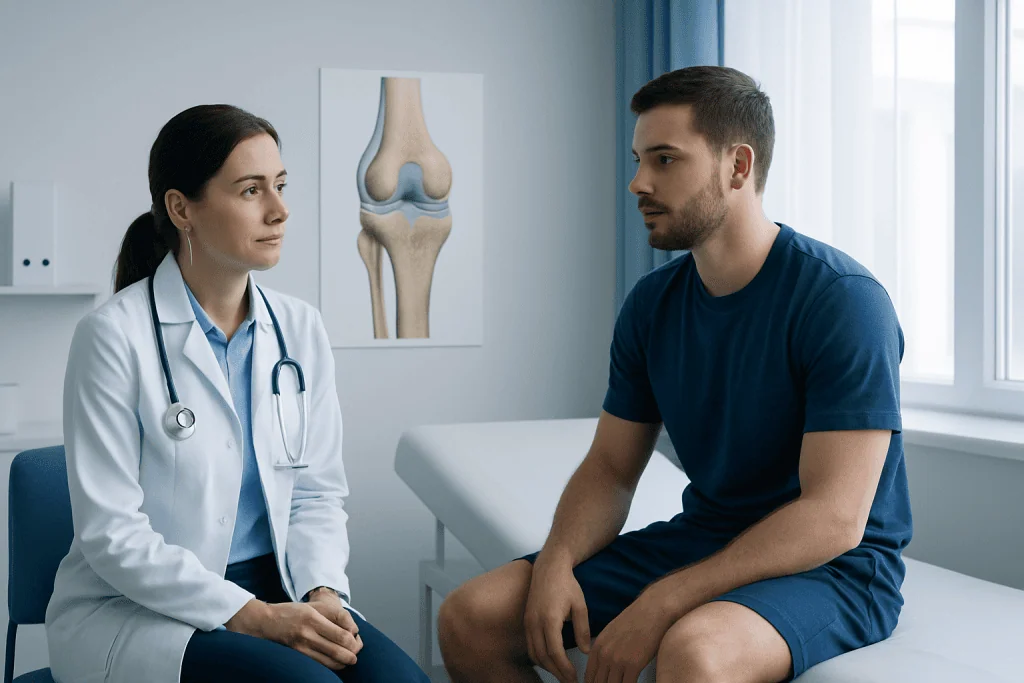
ACL injuries may be contact or non-contact injuries. A contact injury can occur when another person or object forces the knee into an abnormal position. A non-contact injury is often related to sudden deceleration, pivoting, cutting, or landing with the knee collapsing inward. Non-contact mechanisms are common in many sports.
Several factors can increase the risk of ACL injury. These include reduced hip and core control, poor landing mechanics, muscle strength imbalance, fatigue, previous knee injury, and playing surfaces or footwear that increase traction. Anatomical and hormonal factors may also contribute, and female athletes in some pivoting sports have a higher risk of ACL tears than male athletes.
Risk does not mean inevitability. Neuromuscular training programs that focus on strength, balance, landing technique, agility, and controlled movement can reduce the risk of knee injuries in many athletes. These programs are most effective when practiced consistently and incorporated into warm-ups or sport preparation.
Diagnosis and MRI Evaluation
Diagnosis begins with a medical history and physical examination. The doctor will ask how the injury happened, when swelling occurred, whether the knee felt unstable, and whether there are symptoms such as locking or catching. Examination may include specific clinical tests that assess ACL stability, such as the Lachman test, pivot shift test, and anterior drawer test.
X-rays are often used first to check for fractures, joint alignment, or bone injuries that may accompany a traumatic knee event. X-rays do not show the ACL itself, but they help rule out important associated problems. In children and adolescents, X-rays can also help evaluate growth plates and certain fracture patterns that can mimic ligament injury.
MRI is the main imaging method for confirming an ACL tear. It can show whether the ACL is partially or completely torn and can identify associated injuries, including meniscus tears, bone bruising, cartilage damage, and injuries to the medial collateral ligament or other structures. MRI findings are interpreted together with symptoms and examination results because treatment decisions depend on the whole clinical picture, not imaging alone.
In some cases, the knee is too painful or swollen for a reliable early examination. The doctor may recommend rest, swelling control, and a follow-up examination after the acute phase. This staged approach can help improve diagnostic accuracy and planning.
Treatment Options
Treatment for ACL injury is individualized. Not every ACL tear automatically requires surgery, but not every patient is safe with non-surgical care. The decision depends on knee instability, age, activity level, work demands, sport goals, associated meniscus or cartilage injuries, and personal preferences after informed discussion with the care team.
Non-surgical treatment may be appropriate for people with lower activity demands, minimal instability, partial injuries with good knee control, or those who do not participate in pivoting sports. It usually includes swelling control, restoration of motion, strengthening, balance training, and gradual return to daily activity. A brace may be recommended in selected cases, but it does not replace rehabilitation.
ACL reconstruction is commonly considered for patients who have ongoing instability, wish to return to pivoting or competitive sports, or have associated injuries that need surgical management. In reconstruction, the torn ACL is replaced with a graft, often taken from the patient’s own hamstring, patellar tendon, or quadriceps tendon, or sometimes from a donor graft depending on the situation. The surgeon chooses the graft and technique based on patient factors, sport demands, and clinical judgment.
Timing also matters. Surgery is usually planned after swelling has improved and knee motion has been restored, unless there are urgent associated injuries requiring earlier care. Prehabilitation before surgery can improve strength, range of motion, and readiness for the postoperative rehabilitation process.
Rehabilitation and Return to Sport
Rehabilitation is central to ACL recovery, whether treatment is surgical or non-surgical. The early goals are to reduce swelling, regain full knee extension, improve bending, restore walking pattern, and activate the quadriceps muscles. Progress is usually gradual and guided by symptoms, examination findings, and functional ability.
After ACL reconstruction, rehabilitation typically moves through phases: early protection and motion, strengthening, balance and neuromuscular control, running progression, agility drills, sport-specific training, and return-to-sport testing. The pace can vary depending on graft choice, associated meniscus repair, cartilage injury, pain, swelling, and strength recovery. Returning too early may increase the risk of re-injury, so time alone is not enough to determine readiness.
A safe return to sport usually requires several criteria to be met. These may include near-symmetrical strength, good single-leg control, satisfactory hop or functional test performance, absence of swelling or giving way, sport-specific movement quality, and psychological readiness. Confidence is important because fear of re-injury can affect movement patterns and performance.
Many athletes need months of structured rehabilitation before full return to pivoting sport, and some require longer. The decision should be shared among the patient, orthopedic surgeon, physiotherapist, and, when relevant, coach or athletic trainer. The goal is not only to return, but to return with safe mechanics and a plan to reduce future injury risk.
Prevention and Self-Care
Prevention focuses on improving the way the body controls the hip, knee, and ankle during athletic movement. Warm-up programs that include balance, strength, plyometrics, landing practice, and cutting technique can help athletes develop safer movement patterns. These programs should be taught correctly and performed regularly, not only after an injury has occurred.
For someone who has recently injured the knee, early self-care should be sensible and protective. Rest from sport, applying cold packs for comfort, elevating the leg, and using compression may help reduce swelling in the acute phase. Weight-bearing should be guided by pain and medical advice, and crutches may be useful if walking is difficult.
It is important not to test the knee repeatedly by twisting or returning to play before evaluation. Continuing sport with an unstable knee can increase the risk of additional meniscus or cartilage injury. Gentle range-of-motion exercises may be recommended after assessment, but rehabilitation should be individualized by a qualified professional.
When to See a Doctor
A person should seek medical evaluation after a knee injury if there was a pop, rapid swelling, inability to continue sport, difficulty bearing weight, or a feeling that the knee is unstable. Medical assessment is also important if symptoms persist for more than a few days or if the knee locks, catches, or repeatedly gives way.
Urgent care is appropriate if there is severe pain, obvious deformity, numbness, poor circulation in the foot, fever with a swollen joint, or inability to move or bear weight after trauma. These symptoms may suggest additional injuries that require prompt attention.
Patients planning to return to sport benefit from assessment by clinicians experienced in sports knee injuries. At Acibadem International, multidisciplinary orthopedic, radiology, and rehabilitation teams in JCI-accredited hospitals evaluate and treat ACL injuries for international patients, with care plans tailored to the individual’s diagnosis and goals.
Frequently asked questions
Can someone walk with a torn ACL?
Yes, some people can walk after an ACL tear, especially once the first pain settles. However, the knee may feel unstable during turning, stairs, running, or sport. Walking ability does not rule out a significant ligament injury.
Is MRI always needed for an ACL injury?
MRI is very useful when an ACL tear is suspected because it can confirm the injury and detect meniscus, cartilage, or other ligament damage. A doctor may also use X-rays to rule out fractures. The need for MRI depends on the examination, symptoms, and treatment planning.
Does every ACL tear need surgery?
No. Some people do well with structured rehabilitation and activity modification, especially if the knee is stable and they do not participate in pivoting sports. Surgery is more often considered when the knee gives way, the patient wants to return to high-demand sport, or there are associated injuries.
How long does it take to return to sport after ACL reconstruction?
Return to sport varies from person to person and should not be based on the calendar alone. Many patients require several months of progressive rehabilitation, strength rebuilding, and functional testing. Medical clearance is based on knee stability, strength, movement quality, confidence, and absence of swelling or pain.
What happens if an ACL tear is ignored?
Some low-demand patients may adapt well, but an unstable ACL-deficient knee can give way during twisting activities. Repeated instability episodes may increase the risk of meniscus or cartilage damage. A medical evaluation helps determine the safest plan.
Can ACL injury be prevented?
Not all ACL injuries can be prevented, but risk can be reduced. Neuromuscular training programs that include strength, balance, landing technique, and agility control can help athletes move more safely. Consistency and correct technique are important for benefit.
References
- American Academy of Orthopaedic Surgeons
- National Institute for Health and Care Excellence
- British Journal of Sports Medicine
- American Orthopaedic Society for Sports Medicine
- European Society of Sports Traumatology, Knee Surgery and Arthroscopy
This article is for general information only and is not a substitute for professional medical advice. Please consult a qualified doctor about your individual situation.
Joint and spine care in Turkey — expert assessment & treatment
JCI-accredited · board-certified surgeons · reply within 24h
Add us as a Preferred Source to see more of our trusted health content across Google Search, AI Overviews and Discover.