Acl Knee: A Complete Medical Overview

The ACL is a central knee ligament that supports stability during twisting, pivoting and rapid direction changes. A pop, swelling, pain and a feeling that the knee gives way can suggest an ACL injury, but an examination is needed for diagnosis.
Key Takeaways
- The ACL is a central knee ligament that supports stability during twisting, pivoting and rapid direction changes.
- A pop, swelling, pain and a feeling that the knee gives way can suggest an ACL injury, but an examination is needed for diagnosis.
- Not every ACL tear requires surgery; treatment decisions depend on knee stability, activity goals and associated injuries.
- Physical therapy is important for both non-surgical care and recovery after ACL reconstruction.
- Returning to sport should be based on strength, movement control and clinical assessment rather than time alone.
An ACL knee injury is damage to the anterior cruciate ligament, one of the main ligaments that helps control forward and rotational movement of the knee. It commonly occurs during pivoting, landing, or sudden changes in direction, and treatment may include rehabilitation alone or surgery followed by structured recovery.
ACL Knee Overview: What Does It Mean?
The term “ACL knee” usually refers to an injury involving the anterior cruciate ligament (ACL). This strong band of tissue sits inside the knee joint and connects the thighbone (femur) to the shinbone (tibia). It works with other ligaments, muscles and cartilage to keep the knee stable during everyday movement and sport.
The ACL helps limit excessive forward movement of the tibia and helps control rotation at the knee. It is especially important during actions such as cutting, pivoting, jumping and landing. When the ligament is stretched or torn, a person may experience pain, swelling and instability.
ACL injuries range from a mild sprain, where fibers are stretched, to a partial tear or complete tear. A complete tear does not usually heal back together in the same way as some other soft-tissue injuries because of the ligament’s limited blood supply and the mechanical forces within the joint. However, many people can regain good function through individualized treatment and rehabilitation.
How an ACL Injury May Feel
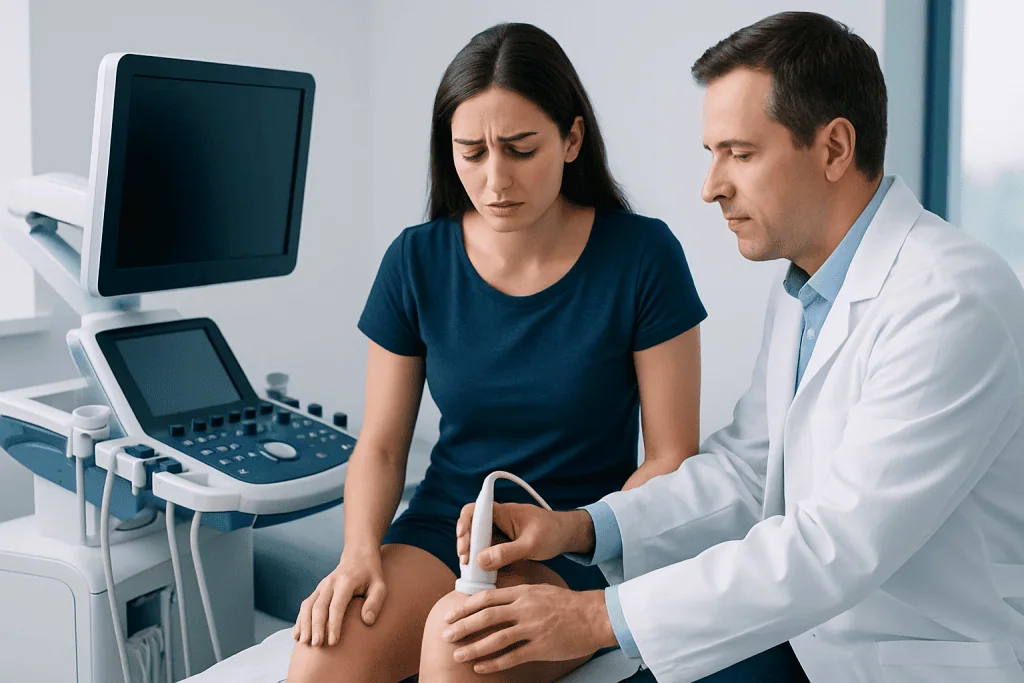
Symptoms can begin immediately after an ACL knee injury, although their severity varies. Some people hear or feel a pop at the time of injury. This may be followed by sudden pain, difficulty continuing activity and swelling that develops over the following hours.
A common longer-term symptom is instability. The knee may feel as though it is shifting, buckling or giving way, particularly when turning, walking on uneven ground, descending stairs or returning to sports. Some people have relatively little pain after the early phase but continue to notice that they do not trust the knee during active movements.
Other structures can be injured at the same time, including the menisci, cartilage, medial collateral ligament or bone beneath the joint surface. These associated injuries may cause locking, catching, reduced range of motion, joint-line tenderness or persistent swelling. Symptoms alone cannot confirm which structure is affected, so clinical assessment is important.
- A pop or snapping sensation at the time of injury
- Rapid swelling of the knee
- Pain when bearing weight or moving the joint
- Reduced ability to fully bend or straighten the knee
- Repeated episodes of giving way or instability
Causes and Risk Factors
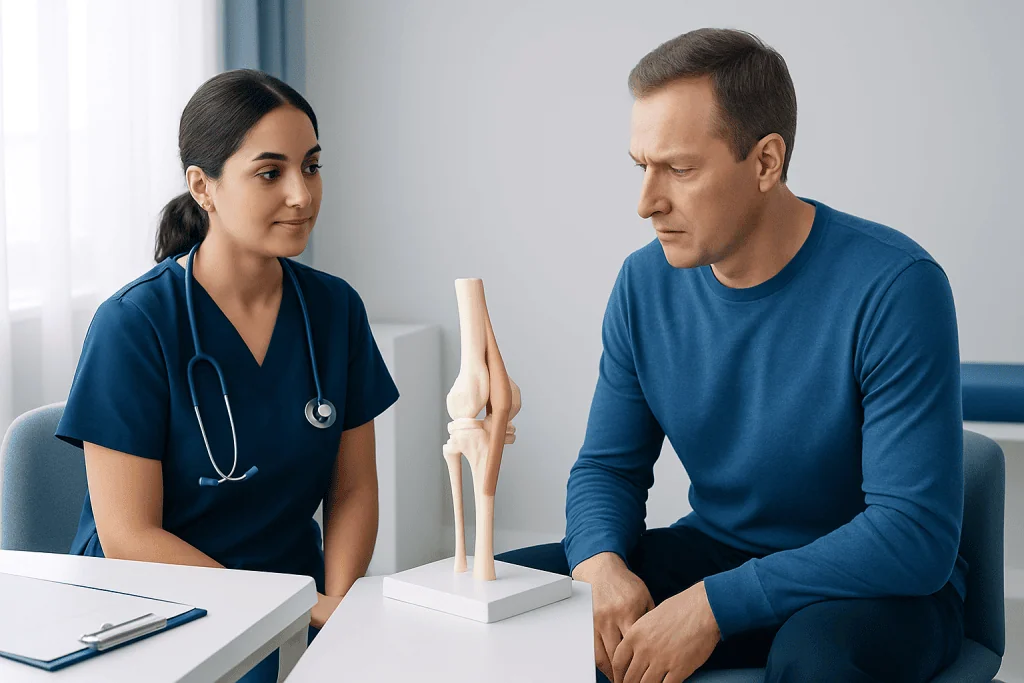
Most ACL tears are non-contact injuries. They often happen when the foot is planted and the body changes direction quickly, such as during football, basketball, tennis, skiing or similar activities. An awkward landing from a jump, sudden deceleration or hyperextension of the knee can also place substantial stress on the ACL.
Contact injuries can occur as well. A blow to the outside of the knee, for example, may force the joint inward and damage the ACL along with other ligaments. Road traffic accidents, falls and workplace injuries may also lead to ACL damage.
Risk is influenced by multiple factors rather than one cause alone. These can include the type and intensity of activity, previous knee injury, reduced hip or core control, muscle fatigue, landing technique and playing surface. Anatomical and hormonal factors may also contribute to differences in injury risk between individuals. These factors do not mean an injury is inevitable, but they can guide prevention and training strategies.
How ACL Knee Injuries Are Diagnosed
A clinician will first ask how the injury happened, what symptoms occurred immediately afterward and whether the knee has felt unstable since. They will examine swelling, range of motion, walking pattern, tenderness and the stability of the ligaments. Specific hands-on tests can help assess whether the ACL is likely to be injured.
Plain X-rays do not show the ACL itself, but they may be used to look for fractures or small bone injuries associated with ligament trauma. Magnetic resonance imaging (MRI) is commonly used when a detailed view of the ACL, menisci, cartilage and other soft tissues is needed. It can help confirm the extent of injury and identify associated damage that may affect treatment planning.
Early assessment can sometimes be limited by pain, swelling or protective muscle spasm. In these circumstances, a clinician may first recommend measures to reduce swelling and restore movement before completing a more detailed examination. Diagnosis should consider the whole knee, not only whether an ACL tear is present.
Treatment Options and Recovery Planning
Initial care for a suspected ACL injury commonly includes resting from aggravating activity, using ice for short periods, compression, elevation and appropriate pain relief recommended by a healthcare professional. A brace or crutches may be useful for some people during the early phase. The aim is to protect the knee while swelling and pain settle, rather than to remain inactive for longer than necessary.
Non-surgical treatment may be appropriate for people with a partial injury, lower activity demands, good knee stability or a willingness to avoid movements that trigger giving way. A supervised rehabilitation program focuses on restoring knee extension and bending, reducing swelling, improving quadriceps and hamstring strength, and retraining balance and movement control. Some people can return to many daily activities and selected forms of exercise without reconstruction.
ACL reconstruction may be considered when the knee remains unstable, when a person wishes to return to pivoting sports or physically demanding work, or when there are related injuries that need surgical management. Reconstruction generally uses a tissue graft to create a new ACL rather than repairing the torn ligament directly. Graft options and surgical techniques vary, and an orthopedic surgeon can explain the potential benefits and limitations in an individual’s situation.
Whether or not surgery is chosen, rehabilitation is central to recovery. After reconstruction, progress usually moves through phases: regaining motion and swelling control, rebuilding strength, improving jumping and landing mechanics, and gradually resuming sport-specific tasks. A return to sport should follow functional testing and clinical guidance, as returning before the knee is ready may increase the risk of another injury.
Prevention and Day-to-Day Self-Care
Although not every ACL injury can be prevented, structured neuromuscular training can lower risk in many active people. Programs commonly include strength work for the hips, thighs and trunk; balance exercises; jumping and landing practice; and training in safe cutting and deceleration techniques. These programs are most useful when performed regularly and incorporated into warm-ups or routine training.
After an ACL injury, it is sensible to avoid pivoting, twisting and high-impact activity until a qualified clinician advises that the knee is ready. Continuing an activity when the knee repeatedly gives way may increase the chance of damaging the meniscus or cartilage. Low-impact options, such as cycling or swimming, may be introduced at an appropriate stage, depending on symptoms and rehabilitation advice.
Good recovery habits include attending physiotherapy sessions, performing prescribed home exercises with correct technique, allowing time for rest and discussing new symptoms promptly. Braces can provide confidence or short-term support for selected people, but they do not replace strength, coordination training or a personalized rehabilitation plan.
When to Seek Medical Care
Medical assessment is recommended after a knee injury that causes a pop, rapid swelling, inability to bear weight, major loss of movement or a feeling of instability. Prompt evaluation is particularly important if the knee looks deformed, feels numb or cold, or pain is severe, as these symptoms may indicate an injury requiring urgent care.
A person should also arrange an appointment if knee pain, swelling, locking or giving way persists after the initial injury. Recurrent instability deserves attention even when pain is mild, because it can affect confidence, mobility and participation in work or sport.
An orthopedic specialist, sports medicine clinician or physiotherapist can help determine the cause of symptoms and discuss suitable next steps. Acibadem International’s multidisciplinary specialists and JCI-accredited hospitals diagnose and treat knee ligament injuries for international patients, with care plans based on clinical assessment, imaging findings and individual activity goals.
Frequently asked questions
Can an ACL tear heal without surgery?
A complete ACL tear generally does not reconnect in the same way as some other ligament injuries. However, some people can function well without surgery through rehabilitation, activity modification and improved muscle control. The best approach depends on knee stability, associated injuries and personal activity goals.
Can someone walk with a torn ACL?
Many people can walk after the immediate pain and swelling improve, even with a complete ACL tear. Walking ability does not rule out a significant ligament injury. Instability may become more noticeable during turning, pivoting, fast movement or uneven-ground activities.
How is an ACL tear different from a meniscus tear?
The ACL is a ligament that helps stabilize the knee, while the meniscus is a shock-absorbing cartilage structure between the thighbone and shinbone. An ACL tear often causes instability, while a meniscus tear may cause catching, locking or pain along the joint line. Both can occur together after the same injury.
How long does recovery from ACL reconstruction take?
Recovery varies according to the surgical procedure, graft type, associated injuries and rehabilitation progress. Daily activities usually return before demanding sport, and a safe return to pivoting sports commonly requires many months of structured rehabilitation. A clinician should use strength, movement quality and functional testing to guide timing.
Is surgery always necessary for an ACL knee injury?
No. Surgery is not necessary for every ACL injury. People with stable knees and lower-demand activity goals may do well with a carefully planned rehabilitation program, while reconstruction may be more appropriate for ongoing instability or a planned return to pivoting sports.
What should a person avoid after a suspected ACL injury?
Until assessed, it is generally wise to avoid running, jumping, twisting and pivoting activities that could make the knee give way. A person should not try to test the knee through sport or strenuous exercise. Medical guidance can help determine when movement and strengthening exercises can safely begin.
References
- American Academy of Orthopaedic Surgeons
- OrthoInfo by the American Academy of Orthopaedic Surgeons
- National Institute of Arthritis and Musculoskeletal and Skin Diseases
- American Orthopaedic Society for Sports Medicine
- National Health Service
This article is for general information only and is not a substitute for professional medical advice. Please consult a qualified doctor about your individual situation.
Joint and spine care in Turkey — expert assessment & treatment
JCI-accredited · board-certified surgeons · reply within 24h
Add us as a Preferred Source to see more of our trusted health content across Google Search, AI Overviews and Discover.