Adenocarcinoma Lung Cancer: Early Signs, Risk Factors, and How It Is Treated

Adenocarcinoma lung cancer is a common form of non-small cell lung cancer and can occur in both smokers and non-smokers. Early signs are often subtle and may include a persistent cough, chest discomfort, shortness of breath, or unexplained fatigue.
Key Takeaways
- Adenocarcinoma lung cancer is a common form of non-small cell lung cancer and can occur in both smokers and non-smokers.
- Early signs are often subtle and may include a persistent cough, chest discomfort, shortness of breath, or unexplained fatigue.
- Diagnosis usually involves imaging, tissue biopsy, and molecular testing to help choose the most appropriate treatment.
- Treatment may include surgery, chemotherapy, radiation therapy, targeted therapy, immunotherapy, or a combination of these.
- Quitting smoking, avoiding harmful exposures, and discussing screening with a doctor can help reduce risk or support earlier detection.
Adenocarcinoma lung cancer is the most common type of non-small cell lung cancer and often begins in the outer parts of the lungs. Early symptoms may be mild or absent, so diagnosis usually relies on imaging, biopsy, and tumor testing to guide treatment.
Overview
Adenocarcinoma lung cancer is a type of lung cancer that starts in gland-forming cells that line the air sacs and produce substances such as mucus. It is the most common subtype of non-small cell lung cancer and often develops in the outer regions of the lungs rather than in the central airways. Because of where it begins, it may grow for some time before causing noticeable symptoms.
This cancer can affect people who smoke, formerly smoked, or have never smoked. In people who have never smoked, adenocarcinoma is one of the more common lung cancer types. The disease can range from a small, localized tumor to cancer that has spread to lymph nodes or other parts of the body, which is why careful staging is an important part of diagnosis and treatment planning.
Although the term sounds complex, the basic question many patients ask is straightforward: what does it mean for treatment and outlook? In general, adenocarcinoma lung cancer is treated based on the tumor’s stage, a person’s overall health, and whether the cancer carries specific genetic or protein markers. This individualized approach has expanded treatment options and, for many patients, improved care planning.
Early Signs and Symptoms
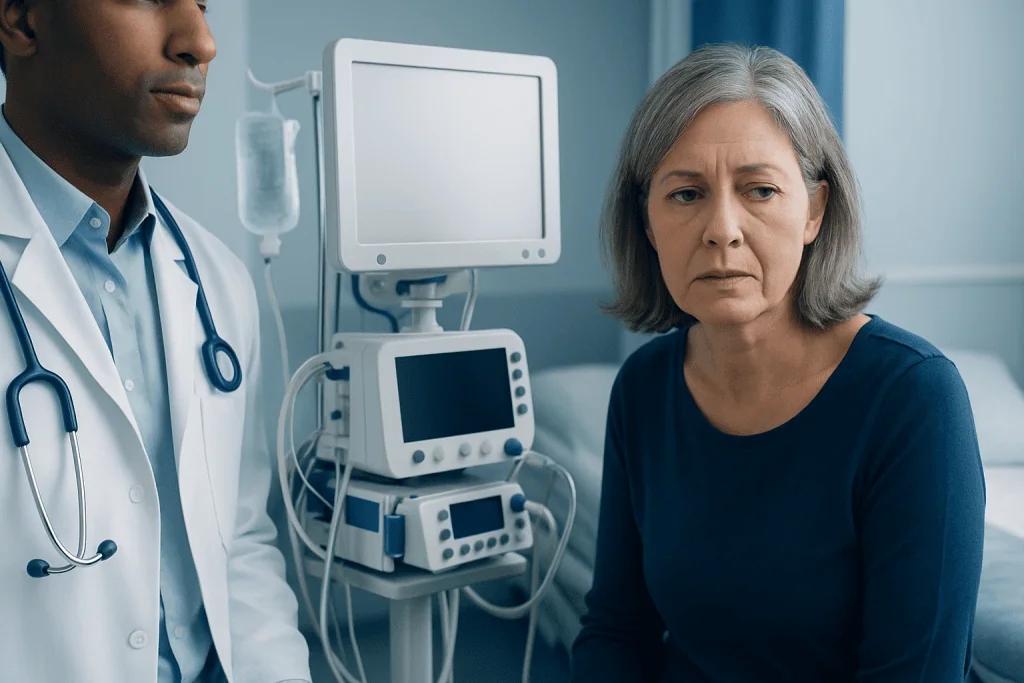
Early adenocarcinoma lung cancer may not cause symptoms at all. When symptoms do appear, they are often nonspecific and can resemble common respiratory conditions. This is one reason why people may delay medical evaluation, especially if the symptoms seem mild or come and go.
Possible symptoms can include a cough that does not go away, new or changing shortness of breath, chest discomfort, wheezing, fatigue, or coughing up blood. Some people notice repeated chest infections or reduced exercise tolerance. If the tumor grows near the lining of the lung, it may cause pain with deep breathing or a buildup of fluid around the lung.
More advanced disease may lead to unexplained weight loss, loss of appetite, persistent bone pain, headaches, or hoarseness, depending on where the cancer has spread. These symptoms do not always mean cancer, but they should be assessed by a qualified doctor, especially when they persist.
- Persistent or worsening cough
- Shortness of breath with usual activity
- Chest pain or chest pressure
- Fatigue or reduced stamina
- Coughing up blood
- Unexplained weight loss
Causes and Risk Factors
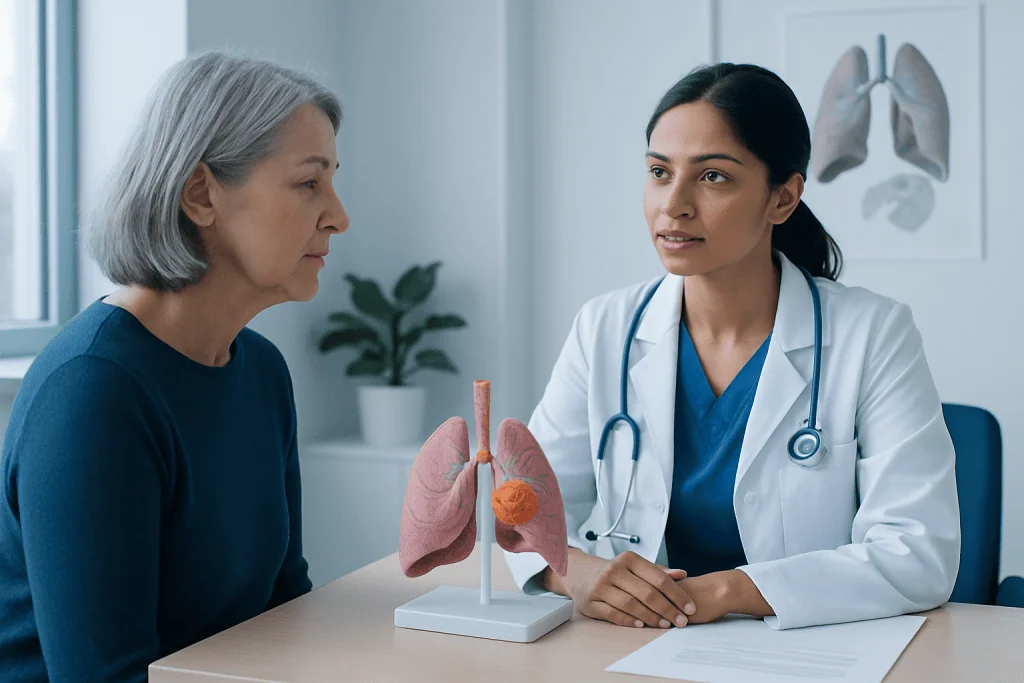
The exact cause of adenocarcinoma lung cancer is not always clear, but it develops when lung cells acquire genetic changes that allow them to grow uncontrollably. Smoking remains the most important risk factor for lung cancer overall, including adenocarcinoma. However, this subtype is also seen more often than some others in people who have never smoked.
Other risk factors include exposure to secondhand smoke, radon gas, air pollution, asbestos, and certain workplace chemicals. A personal history of lung disease, prior chest radiation, or a family history of lung cancer may also increase risk. Risk does not guarantee that cancer will develop, but it helps doctors decide when closer evaluation or screening is appropriate.
Researchers now know that some adenocarcinomas carry specific molecular changes, such as alterations in EGFR, ALK, ROS1, KRAS, or other genes. These are not the same as inherited risk in every case; many arise only in the tumor itself. Identifying these changes is important because they can help guide treatment choices, particularly in advanced disease.
How Diagnosis Is Made
Doctors usually begin with a medical history, physical examination, and imaging tests. A chest X-ray may show an abnormality, but a CT scan gives more detailed information about the size and location of a lung lesion. If cancer is suspected, imaging may be followed by PET-CT or brain imaging to check whether the disease has spread.
A confirmed diagnosis requires a tissue sample. Depending on where the tumor is located, this may be obtained with bronchoscopy, a CT-guided needle biopsy, or a surgical procedure. Pathologists examine the tissue under a microscope to determine whether it is adenocarcinoma and to distinguish it from other forms of lung cancer.
Testing often goes beyond the microscope. Many patients need molecular profiling and biomarker testing to look for tumor features that may respond to specific treatments. Common tests include genetic analysis of the tumor and protein testing such as PD-L1. Staging then describes how far the cancer has spread and helps the care team decide whether surgery, systemic treatment, radiation, or combined approaches are most suitable.
Treatment Options
Treatment for adenocarcinoma lung cancer depends mainly on the stage of the disease, the person’s overall health, and the tumor’s molecular features. For small, localized cancers, surgery may offer the best chance of complete removal. Operations can include removal of a segment of lung, a lobe, or occasionally a larger portion, depending on the tumor’s position and extent. A specialist may discuss lung cancer surgery when the cancer appears resectable.
Radiation therapy may be used after surgery, instead of surgery when an operation is not suitable, or to relieve symptoms in more advanced disease. Chemotherapy may be given before surgery, after surgery, or as part of treatment for more widespread cancer. In many care plans, chemotherapy is combined with other treatments rather than used alone.
Targeted therapy is an important option when tumor testing finds a specific molecular change. These medicines are designed to act on certain cancer-driving pathways and may be used in advanced disease and, in select situations, after surgery. Immunotherapy helps the immune system recognize and fight cancer cells and may be used alone or together with chemotherapy depending on biomarker results. Patients with advanced or complex cases may be treated within a broader medical oncology plan, and some may also need radiation oncology support as part of multidisciplinary care.
Follow-up is a key part of treatment. Doctors monitor response with scans, symptom review, and sometimes repeat biopsy or blood-based testing if the cancer changes over time. This helps the team adjust treatment while focusing on both disease control and quality of life.
Living With the Condition: Supportive Care and Self-care
Supportive care is important at every stage of adenocarcinoma lung cancer, not only in advanced illness. The aim is to reduce symptoms, maintain strength, and support emotional well-being. Breathlessness, fatigue, pain, poor appetite, anxiety, and sleep disturbance can often be improved with a coordinated care plan.
Helpful self-care steps include eating regular, nourishing meals when possible, staying physically active within safe limits, and reporting side effects early. People who smoke benefit from smoking cessation support, even after diagnosis, because quitting may improve lung function, treatment tolerance, and overall health. Vaccinations and prompt attention to respiratory infections may also be part of supportive care.
Emotional support matters as much as physical treatment. Many patients find it helpful to speak with family, a counselor, a support group, or a cancer nurse specialist. Palliative care can be introduced alongside active treatment to improve comfort and daily functioning; it is not limited to end-of-life care.
Prevention and Early Detection
Not all cases of adenocarcinoma lung cancer can be prevented, but some risk factors can be reduced. Avoiding smoking and secondhand smoke is the most important step. It is also sensible to reduce exposure to radon and occupational hazards when possible, especially in settings where protective measures are recommended.
For people at higher risk, lung cancer screening may help detect disease earlier, before symptoms develop. Screening typically uses low-dose CT scanning and is intended for selected individuals based on age and smoking history. A doctor can explain whether screening is appropriate and how its benefits and limitations apply to a particular person.
Earlier detection does not replace diagnosis of symptoms. Even a person who has had normal screening should seek medical review for a persistent cough, coughing up blood, unexplained weight loss, or worsening shortness of breath. Timely evaluation can help clarify whether symptoms are due to infection, inflammation, or a condition such as lung cancer.
When to Seek Medical Care
Medical care should be sought if respiratory symptoms persist beyond a few weeks, change noticeably, or interfere with daily life. A cough that does not improve, shortness of breath that is new or worsening, chest pain, repeated chest infections, or coughing up blood all deserve prompt assessment. The same is true for unexplained weight loss, marked fatigue, or pain that does not have a clear cause.
Urgent medical attention is needed for severe shortness of breath, large amounts of blood in the sputum, sudden chest pain, confusion, or symptoms that rapidly worsen. These signs do not always mean cancer, but they should not be ignored.
Because care often involves several specialties, many patients benefit from evaluation in a center with experience in thoracic imaging, pathology, surgery, medical oncology, and radiation oncology. Acibadem International’s multidisciplinary specialists and JCI-accredited hospitals diagnose and treat adenocarcinoma lung cancer for international patients, with care plans tailored to the stage and biology of the disease.
Frequently asked questions
Is adenocarcinoma lung cancer the same as lung cancer?
Adenocarcinoma lung cancer is one subtype of lung cancer. It belongs to the larger group called non-small cell lung cancer and is the most common subtype in many populations.
Can adenocarcinoma lung cancer happen in someone who never smoked?
Yes. Although smoking is a major risk factor, lung adenocarcinoma can occur in people who have never smoked. Other factors such as radon exposure, air pollution, genetics, and certain molecular changes may play a role.
What are the earliest symptoms of adenocarcinoma lung cancer?
Early symptoms may be absent or subtle. When present, they can include a persistent cough, mild shortness of breath, chest discomfort, unusual fatigue, or repeated chest infections.
How is adenocarcinoma lung cancer confirmed?
Doctors usually use imaging first, such as CT scans, to identify suspicious areas. A biopsy is then needed to confirm the diagnosis, and the tissue is often tested for biomarkers and genetic changes that can guide treatment.
Is adenocarcinoma lung cancer treatable?
Yes, it is treatable, and treatment options have expanded significantly. Depending on the stage and tumor features, care may include surgery, radiation therapy, chemotherapy, targeted therapy, immunotherapy, or combinations of these.
Does every patient need genetic or molecular testing?
Many patients, especially those with advanced non-small cell lung cancer, benefit from molecular testing because results may affect treatment choice. A doctor will decide which tests are most relevant based on the biopsy findings and stage.
References
- World Health Organization
- National Cancer Institute
- American Cancer Society
- National Comprehensive Cancer Network
- American Society of Clinical Oncology
This article is for general information only and is not a substitute for professional medical advice. Please consult a qualified doctor about your individual situation.
Lung Cancer in Turkey — costs, top hospitals & a free quote
JCI-accredited · board-certified surgeons · reply within 24h
Add us as a Preferred Source to see more of our trusted health content across Google Search, AI Overviews and Discover.
Check your numbers in seconds
BMI, calories, due date, blood pressure and 30+ more clinical calculators — free, instant, doctor-reviewed ranges.

Medical Oncology Department
Medical treatment of cancer with chemotherapy, immunotherapy and targeted therapies under a multidisciplinary tumor board.
60 specialists in this unitMore from the Health Library



Related Specialists

Assoc. Prof. Dr. Aras Şenvar
Otorhinolaryngology
Prof. Dr. Abdullah Büyükçelik
Medical Oncology
Dr. Taylan Özgür Çetin
Intensive Care
Psk. Elifnur Sular
Psychology