After Hernia Operation Swollen Testicles: Procedure, Recovery and Results

Scrotal and testicular swelling are relatively common short-term effects after inguinal hernia repair. Bruising and swelling may spread from the groin into the scrotum and penis because these areas share connected tissues.
Key Takeaways
- Scrotal and testicular swelling are relatively common short-term effects after inguinal hernia repair.
- Bruising and swelling may spread from the groin into the scrotum and penis because these areas share connected tissues.
- Recovery varies by procedure and person, but many people resume light daily activities within days and progress over several weeks.
- Ice packs, supportive underwear, prescribed pain relief and avoiding heavy lifting can help during early recovery.
- Severe pain, a hard or rapidly enlarging scrotum, fever, wound discharge, nausea or difficulty urinating require medical advice.
After hernia operation swollen testicles can occur after an inguinal hernia repair, usually because of bruising, inflammation, or fluid moving into the scrotum. Mild swelling often improves gradually with rest, support and time, while sudden severe pain, marked enlargement, fever or persistent worsening should be assessed promptly.
Overview: After Hernia Operation Swollen Testicles
After hernia operation swollen testicles are usually related to temporary swelling and bruising in the groin and scrotum, particularly after an inguinal hernia repair. Blood or fluid can track downward from the surgical area into the scrotum, making one or both sides appear enlarged, discoloured or tender. This often settles gradually during recovery.
Although this symptom can be uncomfortable and worrying, it does not automatically mean that the testicle has been injured. The operating team should provide individual aftercare instructions, since the expected degree and duration of swelling depend on the hernia size, the repair method, whether the hernia extended into the scrotum, and the person’s general health.
An inguinal hernia happens when tissue, often fat or bowel, pushes through a weak area of the lower abdominal wall near the groin. Surgical repair returns the tissue to its proper place and strengthens the weak area, commonly with mesh. For background on the condition, see inguinal hernia.
Can Your Testicles Swell Up After Hernia Surgery?
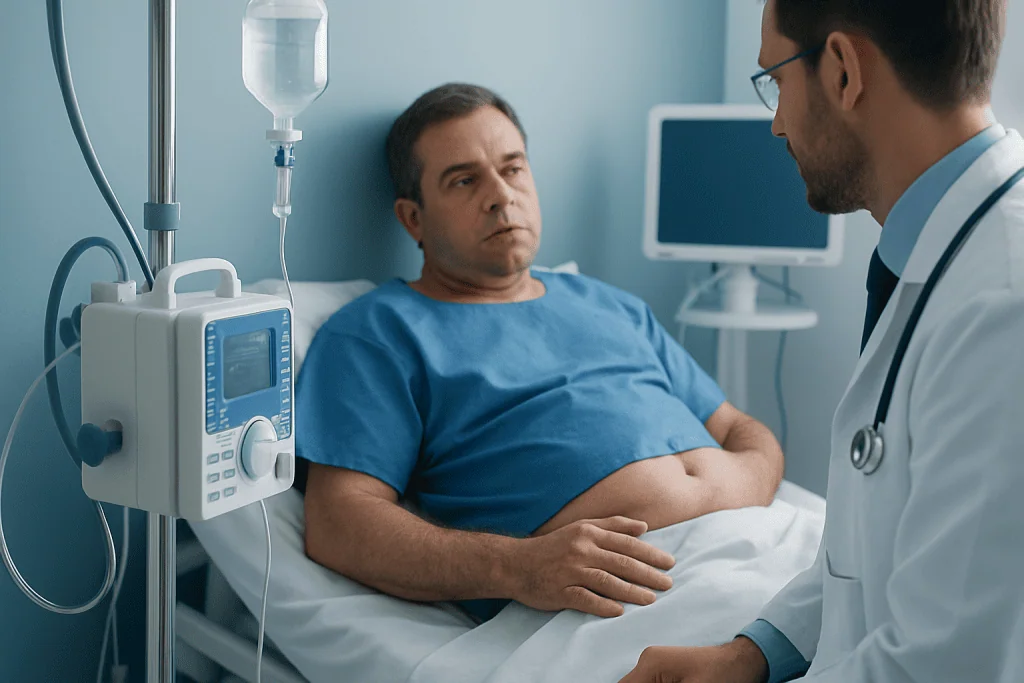
Yes. Testicular or scrotal swelling can happen after hernia surgery, especially when surgery is performed in the groin. The swelling may be due to normal postoperative inflammation, bruising, a small collection of blood called a haematoma, or a fluid collection called a seroma. It may affect the scrotum, penis, groin or lower abdomen.
Swelling is more likely after repair of a large inguinal hernia or a hernia that reached the scrotum. During surgery, tissues around the spermatic cord are handled carefully, but they may remain irritated for a time. The scrotal skin can also show blue, purple, green or yellow bruising as it heals.
Normal recovery swelling should generally become less painful and begin to improve over time. A clinician should assess swelling that is rapidly increasing, very firm, associated with severe pain, or accompanied by fever, redness spreading from the incision, drainage, vomiting, or a testicle that feels unusually high or difficult to examine.
How Inguinal Hernia Repair Works and Who May Need It
Hernia repair aims to relieve symptoms and reduce the risk of complications such as obstruction or strangulation, when trapped tissue loses its blood supply. Surgery may be recommended for a painful, enlarging or recurrent hernia, and it is usually advised urgently if there are signs of a complicated hernia. The decision also considers overall health, work and activity needs, hernia type, and personal preferences.
Repairs may be open or minimally invasive. In open repair, the surgeon makes an incision in the groin, returns the hernia contents to the abdomen, and reinforces the weak area. Laparoscopic or robotic-assisted repair uses several smaller abdominal incisions, a camera and specialised instruments to repair the hernia from inside the abdominal wall.
Mesh is commonly used in adult hernia repair because it provides reinforcement and may lower recurrence risk in suitable patients. However, the best approach is individual. A surgeon discusses expected benefits, alternatives, anaesthesia and possible risks before arranging inguinal hernia surgery.
What Happens During the Procedure
Before surgery, the clinical team reviews medical history, medicines, allergies and previous operations. Some people need blood tests or other preoperative checks. The surgical team gives instructions about eating, drinking and medicines before the procedure; these instructions should be followed carefully.
During an open operation, the surgeon accesses the hernia through a groin incision. The hernia sac and its contents are carefully separated from surrounding structures, including the spermatic cord, before the weakened area is repaired. In a minimally invasive procedure, the surgeon uses a camera to view the inside of the abdomen and places repair material through small incisions.
Most procedures use general anaesthesia, although some open repairs may be performed with local or regional anaesthesia and sedation. Following surgery, patients are monitored while waking from anaesthesia and are given guidance on wound care, mobility, eating, pain control and symptoms that need review.
Potential benefits include relief from hernia discomfort, restoration of normal activity over time and prevention of hernia-related complications. Possible risks include bleeding, infection, fluid collection, urinary retention, recurrent hernia, ongoing groin discomfort, and uncommon injury to nearby structures. Testicular blood-flow problems are rare but need prompt evaluation if suspected.
How Long Does It Take for Testicles to Heal After Hernia Surgery?
There is no single healing timetable. Mild bruising and swelling may improve noticeably within one to two weeks, but a larger scrotal swelling or seroma can take several weeks, and occasionally longer, to resolve. The testicles themselves usually do not require separate treatment when the cause is routine postoperative swelling.
Supportive underwear or a scrotal support may reduce pulling and discomfort. In the first day or two, a wrapped cold pack applied intermittently to the groin or scrotal area can help limit swelling; it should not be placed directly on the skin. Resting with the scrotum supported can also be useful.
Patients should use only pain medicines recommended by their own surgical team. They should not squeeze, massage, puncture or try to drain a swollen scrotum or lump. If swelling is not improving, becomes more painful after initial improvement, or remains concerning after the expected follow-up period, the surgeon may examine the area and sometimes arrange an ultrasound.
How Long Does It Take to Recover From an Inguinal Hernia Repair?
Many people go home on the day of surgery or after a short hospital stay, depending on the procedure and individual needs. Walking gently soon after surgery is encouraged because it supports circulation and bowel function. Tiredness, groin soreness and pulling sensations are common in the first few days.
Light daily activities are often possible within a few days, but driving, work and exercise should resume only when a person can move comfortably, react safely and is no longer taking sedating pain medicine. Desk-based work may be possible sooner than physically demanding work. Heavy lifting and strenuous exercise are usually restricted initially, with timing tailored by the surgeon.
Most people make substantial progress over several weeks. Numbness, firmness beneath the incision or occasional twinges can continue while tissues heal. A gradual return to normal movement is generally preferable to prolonged bed rest, but patients should follow their surgeon’s specific advice, particularly after a large, recurrent or complex hernia repair.
A healthy recovery also includes preventing constipation, which can strain the repair. Drinking fluids, eating fibre-containing foods when appropriate, walking and using a recommended stool softener if needed may help. Persistent constipation, significant bloating or inability to pass urine should be discussed with a clinician.
Self-Care, Follow-Up and When to Seek Medical Care
Keeping the incision clean and dry according to postoperative instructions, wearing loose clothing, avoiding tobacco, and attending follow-up appointments all support recovery. A person should check the wound for increasing redness, warmth, separation or drainage rather than expecting it to look completely normal immediately after surgery.
When to seek medical care: Contact the surgical team promptly for worsening rather than improving pain or swelling, increasing redness, pus-like drainage, a temperature or chills, persistent vomiting, difficulty passing urine, or a new bulge near the repair. Urgent assessment is important for sudden severe testicular pain, rapid scrotal enlargement, a dark or pale testicle, faintness, chest pain or shortness of breath.
These symptoms may have several causes, many of which are treatable, but they should not be managed at home without advice. Early contact with the operating team is especially important in the first days after surgery, when it can be difficult to distinguish expected postoperative changes from a complication.
Acibadem International’s multidisciplinary specialists and JCI-accredited hospitals diagnose and treat hernia conditions for international patients, including postoperative concerns that require surgical or urological assessment.
Frequently asked questions
Is scrotal bruising normal after an inguinal hernia repair?
Scrotal bruising can be a normal temporary effect after inguinal hernia surgery. Blood from the surgical area can move downward into the scrotal tissues, causing colour changes and swelling. It should gradually fade, but increasing bruising with severe pain or swelling should be reported to the surgical team.
Should a swollen testicle be treated with ice after hernia surgery?
A wrapped cold pack may help reduce early swelling and discomfort when used according to the surgeon’s advice. It should be used for short intervals and never directly against the skin, as this can cause skin injury. Supportive underwear and rest are also commonly recommended.
Can a seroma cause swelling after hernia surgery?
Yes. A seroma is a collection of clear fluid that can develop in the area where the hernia was repaired and may extend toward the scrotum. Many seromas settle without treatment, but a clinician should review a painful, enlarging, persistent or infected-looking collection.
Can you live a normal life after hernia surgery?
Most people return to normal daily life after they have recovered from hernia surgery. They usually resume activities gradually, beginning with walking and light tasks before returning to strenuous work, exercise or lifting. The safest timeframe depends on the repair type, the size of the hernia and the surgeon’s instructions.
When can sexual activity resume after inguinal hernia repair?
Sexual activity can usually resume when a person feels comfortable and movement does not cause significant pain. This may be within days to a few weeks, depending on recovery. New or worsening testicular pain, swelling or a groin bulge during recovery should be discussed with a clinician.
Does persistent testicular pain after hernia surgery need investigation?
Persistent or worsening testicular pain should be reviewed by the surgical team. While temporary soreness may occur during healing, examination can help identify causes such as swelling, infection, nerve irritation or another scrotal condition. Sudden severe pain needs urgent medical assessment.
References
- American College of Surgeons
- National Health Service
- National Institute of Diabetes and Digestive and Kidney Diseases
- European Hernia Society
This article is for general information only and is not a substitute for professional medical advice. Please consult a qualified doctor about your individual situation.
Explore treatments in Turkey — costs, top hospitals & a free quote
JCI-accredited · board-certified surgeons · reply within 24h
Add us as a Preferred Source to see more of our trusted health content across Google Search, AI Overviews and Discover.