Alopecia: An Evidence-Based Guide for Patients

Alopecia is a symptom or diagnosis of hair loss, not a single disease with one cause. Different patterns of hair loss suggest different causes, such as androgenetic alopecia, alopecia areata, or scarring alopecia.
Key Takeaways
- Alopecia is a symptom or diagnosis of hair loss, not a single disease with one cause.
- Different patterns of hair loss suggest different causes, such as androgenetic alopecia, alopecia areata, or scarring alopecia.
- Early medical evaluation can help identify treatable causes and reduce the risk of permanent hair loss in some types.
- Diagnosis often includes a scalp examination, medical history, and sometimes blood tests or a scalp biopsy.
- Treatment may include observation, topical or oral medicines, management of nutritional or hormonal issues, and scalp care.
Alopecia is the medical term for hair loss. It can happen for many reasons, including genetics, autoimmune disease, stress, hormones, medications, and scalp conditions, so treatment depends on finding the underlying cause.
Overview: what alopecia means
Alopecia is the medical term for hair loss. It may affect the scalp alone or involve other hair-bearing areas such as the eyebrows, eyelashes, beard, or body. For some people it appears gradually over years, while for others it begins suddenly in round patches or after a stressful event, illness, pregnancy, or medication change.
Alopecia is not one single condition. It includes several patterns and causes of hair loss, and the outlook depends on which type is present. Some forms are temporary and reversible, while others are long-lasting or progressive. This is why a diagnosis based on pattern, timing, symptoms, and scalp findings matters more than the word “alopecia” alone.
The most common type is androgenetic alopecia, often called male-pattern or female-pattern hair loss. Other important types include alopecia areata, telogen effluvium, traction alopecia, and scarring alopecias. Understanding the type helps set realistic expectations and guides the safest treatment plan.
Common symptoms and patterns of hair loss
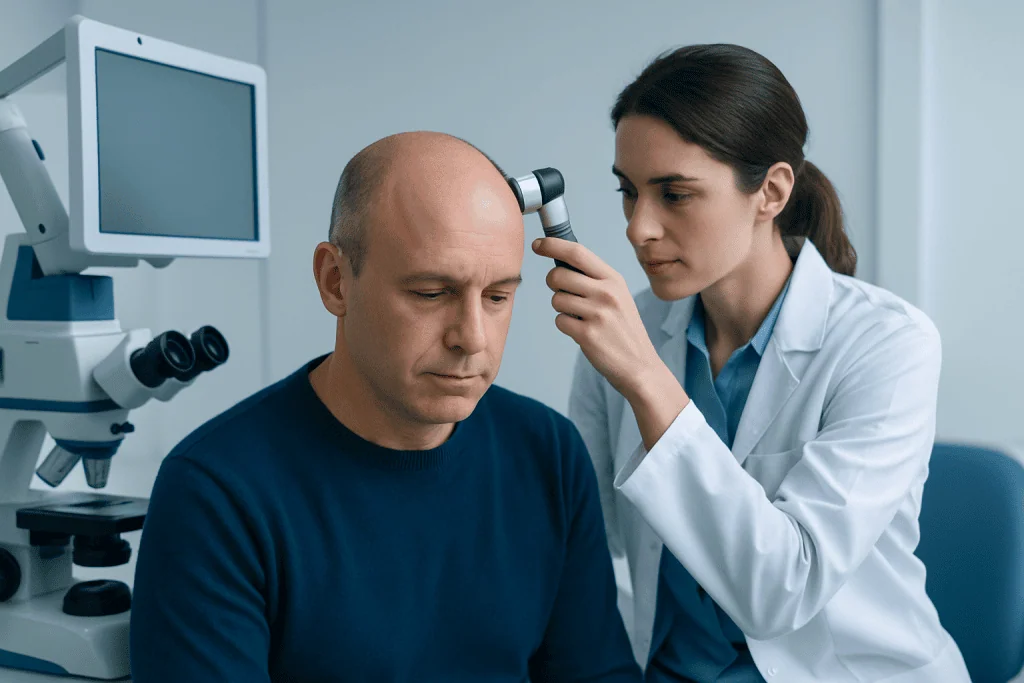
Alopecia can look different from person to person. Some people notice more hair in the shower or on the pillow, while others see widening of the part, a receding hairline, thinning at the crown, or sharply defined bald patches. Hair may also become finer or shorter before obvious loss is seen.
The pattern often offers useful clues. Diffuse shedding across the scalp is common in telogen effluvium, which can follow fever, surgery, significant stress, childbirth, major weight loss, or nutritional deficiency. Patchy hair loss may suggest alopecia areata, an autoimmune condition. Hair loss focused along the hairline or in areas of tension may point to traction alopecia from tight hairstyles.
Associated symptoms are also important. Itching, burning, tenderness, scaling, pus, broken hairs, or visible redness can suggest an inflammatory scalp disorder or infection rather than simple pattern hair loss. Loss of eyebrows or eyelashes, nail pitting, or sudden body hair loss can provide additional diagnostic clues.
- Gradual thinning on top of the scalp
- Sudden round or oval bald patches
- Diffuse shedding after stress or illness
- Receding hairline or thinning temples
- Hair breakage from grooming, chemicals, or traction
- Scalp itching, redness, scaling, or pain
Why alopecia happens: causes and risk factors

Hair growth follows a cycle of active growth, transition, rest, and shedding. Alopecia develops when that cycle is disrupted, hair follicles are miniaturized, or inflammation damages the follicle. Common causes include inherited sensitivity to hormones, autoimmune activity, physical or emotional stress, nutritional deficiencies, scalp disease, and medication effects.
Androgenetic alopecia is related to genetics and hormone sensitivity in the hair follicles. It often runs in families and may begin any time after puberty, becoming more noticeable with age. Telogen effluvium occurs when more hairs than usual shift into the shedding phase. Triggers can include high fever, severe infection, major surgery, childbirth, rapid dieting, iron deficiency, thyroid disease, and some medications.
Other causes deserve prompt attention because some can lead to permanent loss if untreated. Scarring alopecias involve inflammation that destroys follicles. Fungal scalp infection is more common in children but can affect adults. Tight braids, extensions, or repeated chemical or heat damage can contribute to traction or breakage. In some cases, evaluation may also include conditions linked to the skin, hormones, or immune system, such as psoriasis when scalp scaling is present.
Risk factors vary by type but may include family history, certain hairstyles, autoimmune disease, thyroid disorders, nutritional imbalance, recent illness, major life stress, and some medicines. A careful review of overall health is often as important as the scalp exam itself.
How doctors diagnose alopecia
Diagnosis starts with a detailed history. A doctor will usually ask when the hair loss began, whether it is patchy or diffuse, how quickly it progressed, and whether there are symptoms such as itching or pain. Questions about family history, recent illness, pregnancy, weight change, diet, stress, and medications can help narrow the cause.
The scalp examination looks at the pattern of loss, hair shaft thickness, signs of inflammation, scale, scarring, and miniaturization of follicles. A gentle hair-pull test may be used to see whether active shedding is occurring. In some clinics, dermoscopy or trichoscopy provides a closer view of the hair and scalp and can help distinguish among common forms of alopecia.
Blood tests may be recommended when the pattern suggests an internal trigger. Depending on the situation, these may assess iron stores, thyroid function, vitamin or mineral status, hormones, or signs of autoimmune disease. If scarring alopecia or an uncertain diagnosis is suspected, a scalp biopsy may be needed. When infection or another skin disorder is possible, a specialist may also evaluate whether a broader dermatology assessment is appropriate.
Treatment options: what may help
Treatment for alopecia depends on the type, severity, age of the patient, and how long the hair loss has been present. In some cases, especially telogen effluvium, treatment focuses on correcting the trigger and allowing the hair cycle time to recover. In others, active treatment may help slow progression, reduce inflammation, or encourage regrowth.
For androgenetic alopecia, options may include approved topical treatments, selected oral medications under medical supervision, and supportive scalp care. For alopecia areata, treatment may involve anti-inflammatory approaches such as topical therapies or other medical options chosen by a dermatologist. If nutritional deficiencies, thyroid disease, or hormonal problems are contributing, addressing the underlying issue is an essential part of care.
Scarring alopecias require early diagnosis and specialist management because the treatment goal is often to stop inflammation before follicles are permanently damaged. Traction alopecia improves best when tight hairstyles are stopped early. If there is significant scalp disease, symptoms, or uncertainty about the diagnosis, a patient may benefit from specialist review and, when needed, hair transplant evaluation only after the cause is clearly established and medically stable.
Some people explore regenerative or procedural options, but these are not suitable for every type of alopecia. Procedures are usually considered after a diagnosis is confirmed and realistic expectations are discussed. If hair loss is advanced and stable, treatment planning may sometimes include medical hair loss treatment or reconstructive options based on the scalp condition and the person’s goals.
Self-care, prevention, and realistic expectations
Not all alopecia can be prevented, especially when it is strongly influenced by genetics or autoimmunity. Still, healthy scalp and hair habits can reduce avoidable damage and support overall treatment. Gentle hair care, minimizing repeated chemical processing, avoiding excessive heat, and reducing tension from tight styles are sensible steps for many people.
General health matters too. A balanced diet with adequate protein, iron, and other nutrients supports normal hair growth. Sudden restrictive dieting may worsen shedding. It is also helpful to review any new medications with a clinician, especially if hair loss began soon after a change. Stress management is worthwhile for overall health, although it should not be assumed that stress is the only explanation.
Hair regrowth usually takes time. Even when treatment is effective, visible improvement may take several months because hair grows slowly. Setting realistic expectations can reduce frustration. Camouflage methods, hairstyles that reduce tension, scalp sun protection, and emotional support may all be useful while waiting for recovery or while managing a chronic form of alopecia.
When to seek medical care
Medical review is a good idea when hair loss is sudden, patchy, rapidly progressive, or accompanied by itching, pain, redness, scale, or scarring. These features can suggest inflammation, infection, or autoimmune disease that may need timely treatment. Children with hair loss should also be assessed promptly, especially if there is scalp scaling or broken hairs.
A doctor should also be consulted if hair loss begins after a major illness, new medication, childbirth, or significant weight change, or if it occurs along with fatigue, menstrual changes, cold intolerance, or other symptoms that may point to thyroid or nutritional problems. Seeking help early may improve the chances of preserving hair in potentially scarring conditions.
If specialist care is needed, multidisciplinary teams can help coordinate diagnosis and treatment. Acibadem International’s specialists in JCI-accredited hospitals care for international patients with hair and scalp disorders, including evaluation through dermatology services and treatment planning when appropriate.
Frequently asked questions
Is alopecia the same as normal daily hair shedding?
No. Some hair shedding is part of the normal hair cycle. Alopecia refers to hair loss that is more noticeable, persistent, patterned, patchy, or linked to an underlying condition affecting the hair follicles or scalp.
Can alopecia grow back on its own?
Sometimes, yes. Hair may regrow without treatment in temporary forms such as some cases of telogen effluvium or limited alopecia areata, but this depends on the cause. Other forms, especially pattern hair loss or scarring alopecia, often need medical evaluation and may not fully reverse on their own.
Does stress cause alopecia?
Stress can contribute to certain types of hair loss, especially telogen effluvium, which often appears weeks to months after a stressful event or illness. However, stress is not the only cause, and it should not be assumed to explain hair loss without a proper assessment.
What tests are usually done for alopecia?
Many people are diagnosed based on medical history and scalp examination alone. If the cause is unclear or an internal trigger is suspected, a doctor may order blood tests such as iron studies or thyroid tests, and in selected cases a scalp biopsy may be recommended.
Is alopecia permanent?
It can be temporary or permanent depending on the type. Hair loss from shedding disorders may recover, while inherited pattern hair loss is usually progressive, and scarring alopecias can cause permanent loss if not treated early.
Can hairstyles or hair products lead to alopecia?
Yes, certain practices can contribute. Tight hairstyles, repeated chemical treatments, and excessive heat may damage the hair shaft or place ongoing tension on follicles, which can lead to traction alopecia or breakage over time.
References
- American Academy of Dermatology
- National Institute of Arthritis and Musculoskeletal and Skin Diseases
- National Health Service
- Mayo Clinic
- Merck Manual
This article is for general information only and is not a substitute for professional medical advice. Please consult a qualified doctor about your individual situation.
Hair transplant in Turkey — costs, graft counts & a free assessment
JCI-accredited · board-certified surgeons · reply within 24h
Add us as a Preferred Source to see more of our trusted health content across Google Search, AI Overviews and Discover.