

Alzheimer’s Disease Specialists: How They Diagnose and Manage Care

Alzheimer’s disease specialists may include neurologists, geriatricians, psychiatrists, neuropsychologists, and rehabilitation professionals. Diagnosis usually combines medical history, physical and neurological examination, cognitive testing, lab work, and brain imaging when needed.
Key Takeaways
- Alzheimer’s disease specialists may include neurologists, geriatricians, psychiatrists, neuropsychologists, and rehabilitation professionals.
- Diagnosis usually combines medical history, physical and neurological examination, cognitive testing, lab work, and brain imaging when needed.
- Treatment focuses on symptom management, maintaining function, supporting daily life, and addressing behavior, sleep, and safety concerns.
- Care works best when patients and caregivers are involved early in planning for routines, medications, home safety, and future needs.
- Not all memory loss is Alzheimer’s disease, so specialist evaluation is important to look for treatable causes.
Alzheimer’s disease specialists help identify the cause of memory and thinking changes and build a care plan that supports both the patient and family. Their role often includes diagnosis, treatment guidance, symptom monitoring, safety planning, and coordination of long-term care.
Overview: What Alzheimer’s Disease Specialists Do
Alzheimer’s disease specialists are doctors and allied health professionals with experience in evaluating memory loss, changes in thinking, and behavioral symptoms linked to dementia. They help determine whether symptoms are due to Alzheimer’s disease, another type of dementia, or a different medical issue that may be reversible or manageable. Their goal is not only to diagnose a condition but also to guide practical, compassionate care over time.
Several types of specialists may be involved. A neurologist focuses on disorders of the brain and nervous system, while a geriatrician specializes in health concerns of older adults. Psychiatrists may help with mood, anxiety, sleep, or behavior changes. Neuropsychologists perform detailed thinking and memory assessments, and speech, occupational, or physical therapists may support communication, function, and mobility.
Because Alzheimer’s disease develops gradually, care often happens in stages. Early on, specialists may focus on diagnosis, education, and treatment planning. As needs change, they may help with symptom monitoring, daily function, home safety, caregiver support, and planning for future decisions. This team-based approach can help patients maintain quality of life for as long as possible.
When to See a Specialist for Memory and Thinking Changes
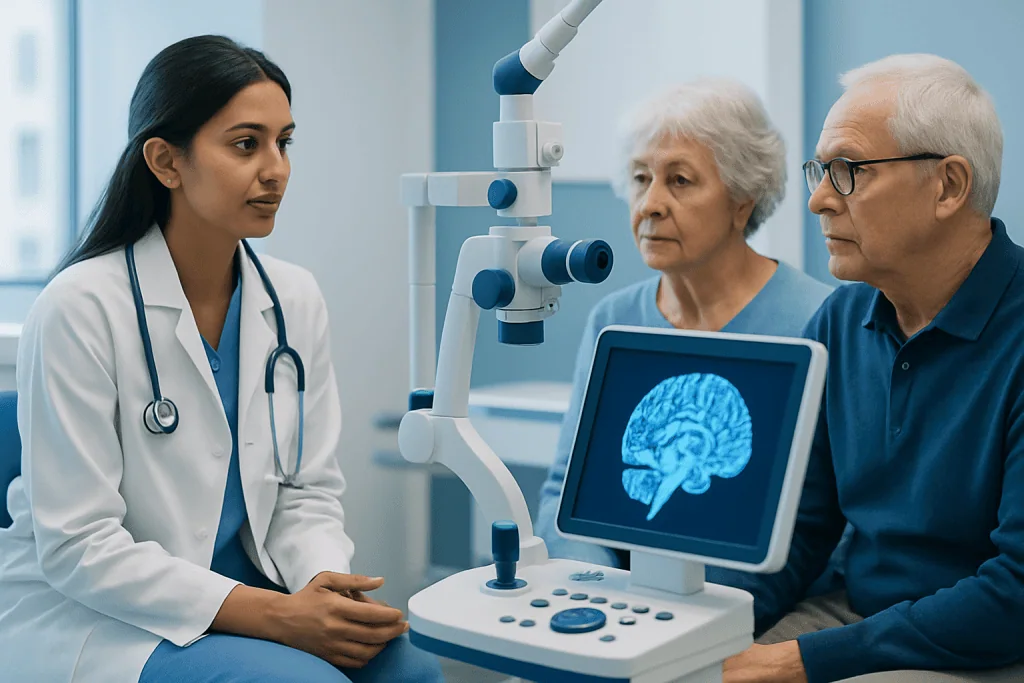
Occasional forgetfulness can be part of normal aging, but persistent changes in memory, reasoning, language, or daily function deserve medical attention. A specialist evaluation may be helpful if a person repeats questions often, gets lost in familiar places, struggles with bills or medications, has trouble finding words, or shows noticeable changes in judgment or personality.
Family members often notice symptoms before the patient does. This can include misplaced items in unusual places, missed appointments, reduced interest in usual activities, or difficulty following conversations. The key concern is not a single lapse but a pattern of decline that affects everyday life.
Urgent medical review is especially important if confusion starts suddenly, fluctuates quickly, or is accompanied by fever, weakness, falls, severe headache, or new speech problems. These patterns may point to other conditions that need prompt treatment rather than a slowly progressive dementia.
- Memory loss that disrupts daily life
- Difficulty planning, problem-solving, or managing finances
- Confusion about time or place
- Problems with language or understanding
- Changes in mood, behavior, or social withdrawal
How Alzheimer’s Disease Is Diagnosed

Diagnosis begins with a careful medical history. The specialist asks about symptoms, when they started, how they have changed, and how they affect everyday tasks such as cooking, driving, shopping, dressing, or managing medication. Input from a family member or caregiver is often very helpful, because they may notice changes that the patient does not recognize.
A physical and neurological examination follows. This may include checking reflexes, balance, coordination, speech, vision, and movement. The doctor also reviews mood, sleep, hearing, alcohol use, and current medicines, since some medications or health issues can contribute to confusion or memory problems.
Cognitive screening tests are commonly used to assess memory, attention, language, and executive function. In some cases, more detailed testing with a neuropsychologist can help clarify the pattern of strengths and weaknesses. This can help distinguish Alzheimer’s disease from other causes of cognitive decline, including Parkinson’s disease-related cognitive changes, vascular problems, depression, or other neurological conditions.
Doctors often order blood tests to look for treatable causes such as thyroid disorders, vitamin deficiencies, infection, or metabolic imbalance. Brain imaging, such as MRI scanning, may be used to look for stroke, bleeding, tumors, hydrocephalus, or patterns of brain shrinkage that support a dementia diagnosis. In selected cases, a specialist may recommend more advanced testing, but the exact workup depends on the person’s history and symptoms.
Who Is on the Dementia Care Team?
Alzheimer’s care is often most effective when it is shared across a multidisciplinary team. The lead specialist may be a neurologist or geriatrician, but care usually extends beyond one doctor. Nurses, psychologists, social workers, therapists, and primary care clinicians all play important roles in monitoring health, supporting function, and helping families adapt to changing needs.
Neuropsychological assessment can provide a detailed map of thinking skills and day-to-day challenges. Occupational therapists may suggest strategies for dressing, bathing, cooking, medication routines, and home safety. Speech and language therapists can help with communication difficulties and, later, swallowing concerns. Physical therapists may support balance, gait, and fall prevention.
Social workers and case managers are often essential for caregiver support, community resources, legal planning, transportation, and long-term care discussions. This broader team approach helps address not only memory symptoms but also the emotional, physical, and practical effects of the condition on the whole household.
Treatment and Ongoing Management
There is currently no single cure that reverses established Alzheimer’s disease, but treatment can still make a meaningful difference. Specialists may prescribe medications that help with memory and daily function in some patients, or medicines aimed at specific symptoms such as sleep disturbance, depression, anxiety, agitation, or hallucinations when appropriate. Drug choices are individualized, especially in older adults who may have other medical conditions or take multiple medications.
Non-drug strategies are a central part of care. Structured routines, regular meals, physical activity, daylight exposure, hearing and vision support, and calm communication can reduce distress and improve function. Specialists often encourage simple environmental changes such as labels, reminder notes, pill organizers, and reducing clutter or noise.
Management also includes monitoring for medical problems that can worsen confusion, such as infection, dehydration, pain, constipation, or medication side effects. If another neurological condition is present, the specialist may coordinate further evaluation using neurological rehabilitation or other supportive services to maintain independence and mobility.
In some patients, treatment planning may overlap with broader neurology care for headaches, movement symptoms, seizures, stroke history, or unexplained changes in behavior. Follow-up visits help adjust treatment over time as the condition and daily needs evolve.
Caregiver Support, Safety, and Daily Living
Family caregivers are a vital part of Alzheimer’s care. Specialists often spend time helping loved ones understand what symptoms mean, how to communicate clearly, and how to respond to resistance, wandering, poor sleep, or repeated questions. Reassurance, simple sentences, eye contact, and one-step instructions are often more helpful than correction or argument.
Safety planning becomes increasingly important as judgment and memory decline. This may include reviewing driving, preventing falls, securing medications, simplifying appliances, and reducing the risk of getting lost. Financial safeguards, emergency contact plans, and discussion of legal documents such as advance directives or power of attorney are often recommended early, while the patient can still participate in decisions.
Daily living support should be tailored to the person’s abilities. Encouraging independence in simple tasks can preserve dignity and routine, but too much complexity may create frustration. Many caregivers also benefit from respite services, support groups, and counseling to reduce burnout and isolation.
Near the end of the care pathway, some families may need advice on home nursing, memory care services, or palliative approaches that focus on comfort. At Acibadem International, multidisciplinary specialists in JCI-accredited hospitals evaluate and manage Alzheimer’s disease for international patients, including diagnosis, follow-up, and coordinated supportive care.
Can Alzheimer’s Disease Be Prevented?
Alzheimer’s disease cannot always be prevented, and no lifestyle step offers a guarantee. However, specialists generally encourage measures that support overall brain and vascular health. These habits may lower risk or help preserve function over time, especially when started in midlife and continued consistently.
Common recommendations include controlling blood pressure, diabetes, and cholesterol; staying physically active; avoiding smoking; limiting excess alcohol; and treating hearing loss, depression, and sleep problems. A balanced eating pattern, regular social engagement, and mentally stimulating activities may also support healthy aging.
Prevention also includes avoiding complications once symptoms begin. Good medication review, regular follow-up, vision and hearing correction, hydration, infection prevention, and fall reduction can help prevent sudden declines in function. A specialist can tailor advice based on age, medical history, and family concerns.
When to Seek Medical Help Again
After diagnosis, regular follow-up is important because symptoms, daily function, and caregiver needs can change. Families should contact the care team if memory or confusion worsens quickly, if new falls occur, or if behavior changes become difficult to manage. New sleep problems, weight loss, swallowing trouble, or sudden incontinence also deserve attention.
Immediate medical care is important for sudden confusion, severe drowsiness, new weakness, facial droop, chest pain, fever, or an abrupt change from the person’s usual pattern. These symptoms may signal an infection, stroke, medication reaction, or another medical emergency rather than routine progression of dementia.
Even when symptoms are mild, early specialist assessment can be valuable. It can uncover treatable causes, establish a baseline, and give patients and families time to plan support, routines, and future decisions with greater confidence.
Frequently asked questions
What kind of doctor diagnoses Alzheimer’s disease?
Alzheimer’s disease may be diagnosed by a neurologist, geriatrician, psychiatrist, or another doctor experienced in memory disorders. Many patients are first assessed by a primary care doctor and then referred to a specialist for a more detailed evaluation.
How do specialists tell Alzheimer’s disease from normal aging?
Specialists look for a pattern of decline that interferes with daily life, not just occasional forgetfulness. They combine history, cognitive testing, examination, lab work, and sometimes brain imaging to understand whether symptoms fit Alzheimer’s disease or another cause.
Is every memory problem a sign of Alzheimer’s disease?
No. Memory problems can also be linked to stress, depression, medication side effects, thyroid disease, vitamin deficiency, sleep disorders, infection, or other neurological conditions. That is why a proper medical assessment is important.
Can Alzheimer’s disease specialists help after diagnosis too?
Yes. Their role continues after diagnosis with treatment planning, symptom monitoring, medication review, caregiver guidance, and safety planning. Ongoing follow-up helps adapt care as needs change over time.
Are brain scans always needed to diagnose Alzheimer’s disease?
Not always, but brain imaging is often helpful. It can rule out other causes of symptoms, such as stroke, tumor, bleeding, or hydrocephalus, and may provide supportive information when combined with the clinical evaluation.
What should families bring to a memory specialist appointment?
It helps to bring a list of symptoms, when they began, current medications, past medical history, and examples of changes in daily function. A family member or trusted friend can be useful because they may notice changes the patient does not recall.
References
- World Health Organization
- National Institute on Aging
- Alzheimer's Association
- National Institute of Neurological Disorders and Stroke
- Centers for Disease Control and Prevention
This article is for general information only and is not a substitute for professional medical advice. Please consult a qualified doctor about your individual situation.
Explore treatments in Turkey — costs, top hospitals & a free quote
JCI-accredited · board-certified surgeons · reply within 24h
Add us as a Preferred Source to see more of our trusted health content across Google Search, AI Overviews and Discover.

More from the Health Library



Related Specialists

Assoc. Prof. Dr. Murat Kiraz
Neurosurgery
Dr. Ahmet Gülen
Pediatrics
Prof. Dr. Seyit Ali Gümüştaş
Orthopedic Surgery & Traumatology
Prof. Dr. Belgin Selam
Gynecology & Obstetrics