Alzheimer’s Disease Specialists: What to Expect From Diagnosis and Ongoing Care

Alzheimer’s disease specialists assess memory, thinking, behavior, daily function, and overall health. Diagnosis usually involves history-taking, cognitive testing, physical and neurological exams, blood tests, and brain imaging when needed.
Key Takeaways
- Alzheimer’s disease specialists assess memory, thinking, behavior, daily function, and overall health.
- Diagnosis usually involves history-taking, cognitive testing, physical and neurological exams, blood tests, and brain imaging when needed.
- Ongoing care focuses on symptom management, safety, daily routines, caregiver support, and planning for future needs.
- Early evaluation can help identify treatable causes of memory problems and allow earlier support.
- Care is often provided by a multidisciplinary team rather than one doctor alone.
Alzheimer’s disease specialists help evaluate memory and thinking changes, confirm the cause when possible, and create a long-term care plan. Their role often includes treatment, safety planning, caregiver guidance, and regular follow-up as needs change over time.
Overview: What Alzheimer’s Disease Specialists Do
Alzheimer’s disease specialists are clinicians with training and experience in evaluating memory loss, thinking problems, and changes in behavior or daily function. They may include neurologists, geriatricians, psychiatrists, neuropsychologists, neuroradiologists, and other professionals who work together to understand the cause of cognitive decline. In many cases, a person may first see a primary care doctor and then be referred to a specialist or memory clinic for a more detailed assessment.
The main goal of specialist care is not only to name a condition, but also to understand how symptoms affect everyday life. Alzheimer’s disease is one cause of dementia, but memory and thinking changes can also be related to medication side effects, sleep problems, depression, thyroid disease, vitamin deficiencies, stroke, or other neurological conditions. A careful evaluation helps rule out other causes and identify the most likely diagnosis.
Specialists also guide treatment and long-term support. This may include medicines that help manage symptoms in some people, advice on sleep and daily structure, support for mood or behavior changes, and planning for driving, finances, home safety, and future care. Because Alzheimer’s disease changes over time, follow-up visits are an important part of care.
When to Seek an Evaluation

It is reasonable to seek specialist input when memory problems become noticeable, repeat questions increase, appointments are missed more often, or familiar tasks become harder to manage. Families may also notice changes in judgment, personality, language, navigation, problem-solving, or the ability to handle money and medications. These changes are not always caused by Alzheimer’s disease, which is why assessment matters.
An evaluation is especially important when symptoms interfere with work, home responsibilities, or safety. Examples include getting lost on a familiar route, forgetting the stove is on, falling for scams, mixing up medicines, or becoming confused in places that once felt familiar. Sudden changes, hallucinations, weakness, new trouble speaking, or a rapid decline need prompt medical attention because they may suggest another urgent problem.
Some people hesitate to seek help because they worry that memory changes are just a normal part of aging. Mild slowing can happen with age, but persistent difficulties that affect daily life deserve medical review. Early evaluation can reduce uncertainty and give patients and families more time to understand options and plan ahead.
What to Expect During the Diagnostic Process
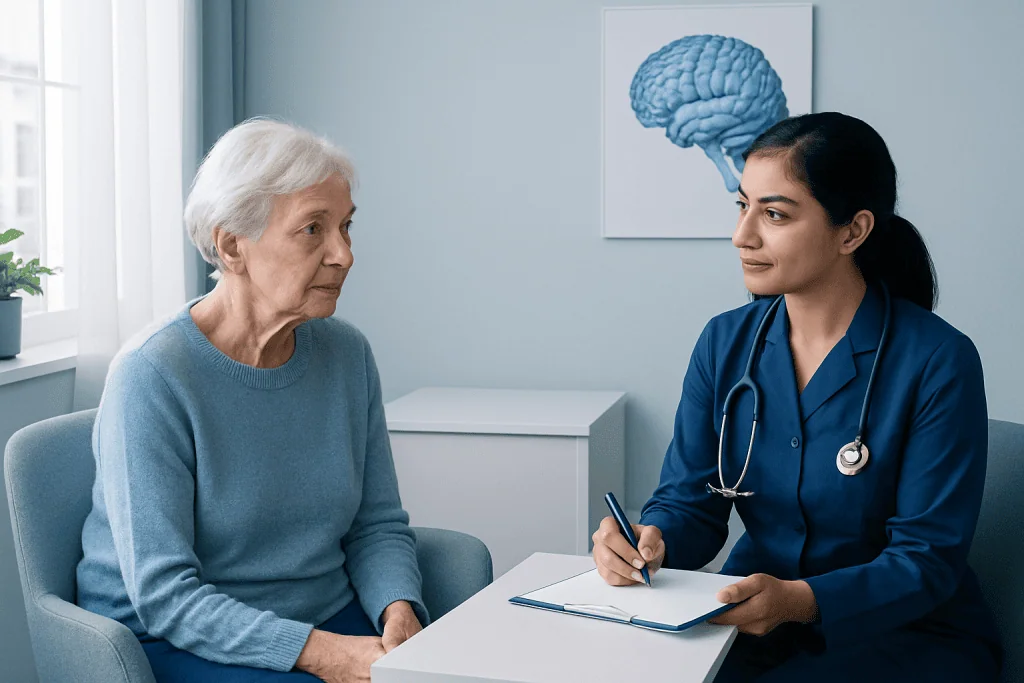
A specialist visit usually begins with a detailed history. The doctor will ask about the person’s symptoms, when they started, how they have changed, and how they affect day-to-day activities such as cooking, shopping, medication use, personal care, work, and driving. Because the person affected may not notice every change, a family member or trusted companion is often invited to share observations.
The clinician will review medical conditions, past neurological problems, mood symptoms, sleep quality, alcohol use, hearing and vision, and all current medicines. Some medications can worsen confusion or memory, especially in older adults. A physical and neurological exam helps assess movement, balance, reflexes, speech, and other signs that may point to a particular cause.
Cognitive testing is a standard part of the assessment. This may include brief screening tools in the clinic as well as more detailed neuropsychological testing when needed. These tests look at memory, attention, language, visual-spatial skills, and executive function. They do not have to be “passed” or “failed”; they help build a picture of strengths and weaknesses.
Additional tests may include blood work and brain imaging. Blood tests can help identify treatable contributors such as thyroid problems, vitamin deficiencies, infection, or metabolic issues. Brain imaging, such as MRI or CT, can help look for stroke, bleeding, tumors, <a href="https://acibademinternational.com/diseases/normal-pressure-hydrocephalus/”>normal pressure hydrocephalus, or patterns of brain change that support a diagnosis. In selected cases, specialists may discuss advanced testing to clarify whether Alzheimer’s disease is the likely cause of dementia symptoms.
Who May Be Involved in Care
Although many people think of one “Alzheimer’s doctor,” care is often shared by a team. A neurologist may focus on diagnosis and brain-related symptoms, while a geriatrician may look at the whole health picture in an older adult, including mobility, medications, frailty, and chronic conditions. A psychiatrist may help if depression, anxiety, agitation, or sleep disturbance are significant. A neuropsychologist can provide detailed cognitive testing that helps clarify the pattern of impairment.
Other professionals often play an important role. Nurses, social workers, occupational therapists, speech and language therapists, physiotherapists, and dietitians may all contribute depending on the person’s needs. Social workers can help families navigate community resources, respite options, home support, and future planning. Occupational therapists can suggest ways to simplify routines and reduce risks at home.
This team-based approach is useful because Alzheimer’s disease affects more than memory alone. Communication, mobility, nutrition, mood, swallowing, and caregiver stress may all need attention over time. In some centers, evaluation may be organized through a dedicated memory clinic, where several professionals contribute to one care plan.
Treatment and Ongoing Alzheimer’s Care
There is no single cure for Alzheimer’s disease, so treatment usually focuses on managing symptoms, supporting independence, and maintaining quality of life for as long as possible. Specialists may recommend medicines that can help with memory and thinking symptoms in some people or medicines that target specific behavioral symptoms when non-drug approaches are not enough. Because older adults may be sensitive to side effects, treatment plans are usually individualized and reviewed regularly.
Non-drug strategies are also central to care. Specialists often advise on predictable daily routines, regular physical activity, hydration, hearing and vision support, good sleep habits, social engagement, and mentally meaningful activities. Small practical adjustments can make a real difference, such as using labeled drawers, calendars, pill organizers, reminders, and reducing noise or clutter during tasks.
Behavior changes such as agitation, wandering, apathy, sleep disturbance, or suspiciousness can be distressing, but they often have triggers. Pain, constipation, infection, hunger, fear, unfamiliar environments, or overstimulation may contribute. A specialist team can help identify patterns and suggest calmer, safer responses. In some cases, patients may also undergo brain MRI or other evaluations as part of follow-up when symptoms change unexpectedly.
As the condition progresses, care planning becomes increasingly important. Discussions may include driving safety, legal and financial planning, home adaptations, fall prevention, nutrition, and future care preferences. If swallowing, balance, or mobility become concerns, referral for neurological rehabilitation or supportive therapies may be helpful as part of a broader care plan.
Support for Family Members and Caregivers
Caregivers are an essential part of Alzheimer’s care, and specialist teams usually involve them whenever possible. Family members often help with appointments, medicines, meals, safety, and monitoring changes between visits. They may also be the first to notice stressors that worsen confusion, such as infection, dehydration, poor sleep, or changes in routine.
Specialists can help caregivers understand what symptoms are part of the disease and what may signal another medical issue. They may offer guidance on communication, such as speaking calmly, giving one step at a time, avoiding arguments about mistaken beliefs, and using reassurance and redirection when the person is distressed. These approaches often work better than correction or confrontation.
Caregiver well-being matters too. Looking after someone with dementia can be physically and emotionally demanding, and burnout can affect both the caregiver and the patient. Respite support, support groups, counseling, and practical home-help services can make long-term care more sustainable. Families should feel comfortable asking about local resources and future planning early, not only in a crisis.
Prevention, Risk Reduction, and Self-care
Not all cases of Alzheimer’s disease can be prevented, but healthy habits may support brain health and reduce overall risk of cognitive decline. Specialists often encourage control of blood pressure, diabetes, and cholesterol, as well as regular physical activity, smoking cessation, adequate sleep, treatment of hearing loss, and social connection. Staying engaged in meaningful mental and physical activities is generally beneficial for overall well-being.
For people already diagnosed with Alzheimer’s disease, self-care is still important. Consistent routines, balanced meals, good hydration, sensory aids such as glasses or hearing devices, and regular medical follow-up can help reduce avoidable setbacks. It is also helpful to review medicines periodically to limit those that may worsen confusion.
Home safety should be checked regularly. Measures may include reducing trip hazards, improving lighting, storing medications safely, securing dangerous tools or chemicals, and considering supervision if wandering becomes a risk. If symptoms overlap with or raise concern for another memory condition such as dementia from mixed causes, specialists may adapt the care plan based on the broader picture of health.
When to See a Doctor Urgently and Where Care May Be Provided
Even in a person already diagnosed with Alzheimer’s disease, a sudden change should not automatically be assumed to be “just the dementia.” Urgent medical attention is needed for sudden confusion, fever, dehydration, a fall with possible head injury, new weakness, trouble speaking, chest pain, shortness of breath, or a very rapid worsening of behavior or alertness. These can suggest delirium, infection, stroke, medication problems, or other treatable emergencies.
Routine follow-up is also important when symptoms gradually worsen, sleep becomes poor, appetite changes, swallowing becomes difficult, or caregivers feel increasingly overwhelmed. During these visits, the specialist may reassess function, update treatment, arrange therapy support, or recommend additional testing such as neurology consultation if a new neurological issue is suspected or if the original diagnosis needs review.
Care may be delivered through hospitals, outpatient neurology or geriatrics clinics, memory clinics, rehabilitation services, and community-based support programs. Near the end of the diagnostic and treatment journey, some families also seek coordinated international care; Acibadem International’s multidisciplinary specialists and JCI-accredited hospitals diagnose and treat Alzheimer’s-related conditions for international patients when this is appropriate.
Frequently asked questions
What kind of doctor diagnoses Alzheimer’s disease?
Alzheimer’s disease may be diagnosed by a neurologist, geriatrician, psychiatrist, or another clinician experienced in memory disorders. Many people are also evaluated in a memory clinic, where several specialists contribute to the diagnosis and care plan.
Do memory problems always mean Alzheimer’s disease?
No. Memory and thinking changes can have many causes, including medication effects, sleep problems, depression, thyroid disease, vitamin deficiencies, stroke, or other forms of dementia. That is why a proper medical evaluation is important.
What tests are usually done during an Alzheimer’s evaluation?
Testing often includes a medical history, input from a family member, cognitive screening, a physical and neurological exam, and blood tests. Brain imaging such as MRI or CT may also be used to rule out other causes or support the diagnosis.
Can Alzheimer’s disease be cured?
At present, there is no single cure for Alzheimer’s disease. Treatment focuses on symptom management, preserving function, supporting safety, and helping patients and families plan for changes over time.
How often should someone with Alzheimer’s disease see a specialist?
Follow-up depends on symptoms, treatment changes, and overall health. Some people are reviewed regularly every few months, while others may need earlier appointments if there is a sudden change, new behavior concerns, or caregiver strain.
Should a family member attend appointments?
Yes, when possible. A family member or trusted caregiver can provide useful information about daily function and symptom changes, help remember recommendations, and support the care plan between visits.
References
- World Health Organization
- National Institute on Aging
- Alzheimer's Association
- National Institute of Neurological Disorders and Stroke
- Centers for Disease Control and Prevention
This article is for general information only and is not a substitute for professional medical advice. Please consult a qualified doctor about your individual situation.
Explore treatments in Turkey — costs, top hospitals & a free quote
JCI-accredited · board-certified surgeons · reply within 24h
Add us as a Preferred Source to see more of our trusted health content across Google Search, AI Overviews and Discover.