Angiogram: What Patients Need to Know

An angiogram uses contrast dye and imaging to show how blood moves through blood vessels. It may be used to investigate chest pain, leg pain with walking, stroke symptoms, aneurysms, or abnormal test results.
Key Takeaways
- An angiogram uses contrast dye and imaging to show how blood moves through blood vessels.
- It may be used to investigate chest pain, leg pain with walking, stroke symptoms, aneurysms, or abnormal test results.
- Many angiograms are minimally invasive and done through a small catheter placed in the wrist or groin.
- Most people go home the same day, but recovery instructions and activity limits should be followed carefully.
- Risks are generally low, but bleeding, contrast reactions, kidney strain, and vessel injury can occur.
- A doctor can explain whether an angiogram is the best test or whether a CT, MRI, or ultrasound may be suitable.
An angiogram is a medical imaging test used to look at blood vessels and blood flow. It helps doctors find narrowing, blockages, aneurysms, or bleeding and can guide treatment decisions when symptoms suggest a circulation problem.
Overview: what an angiogram is and why it is done
An angiogram is a test that shows the inside of blood vessels using imaging and a contrast dye. The goal is to help doctors see whether arteries or veins are narrowed, blocked, leaking, enlarged, or shaped abnormally. In many cases, the term refers to catheter angiography, in which a thin tube is guided into a blood vessel and contrast is injected while X-ray images are taken.
Although many people associate an angiogram with the heart, the test can be used in several parts of the body. Doctors may examine coronary arteries, vessels in the brain, legs, kidneys, lungs, or abdomen depending on symptoms and medical history. A coronary angiogram is often part of a broader cardiology evaluation when chest pain or abnormal heart testing raises concern about reduced blood flow to the heart muscle.
An angiogram may be diagnostic, meaning it is used to find the cause of symptoms, or it may be combined with treatment during the same session. For example, if a severe narrowing is found, the medical team may consider procedures such as angioplasty or stenting when appropriate. This ability to move from diagnosis to treatment is one reason the test remains important.
When an angiogram may be recommended
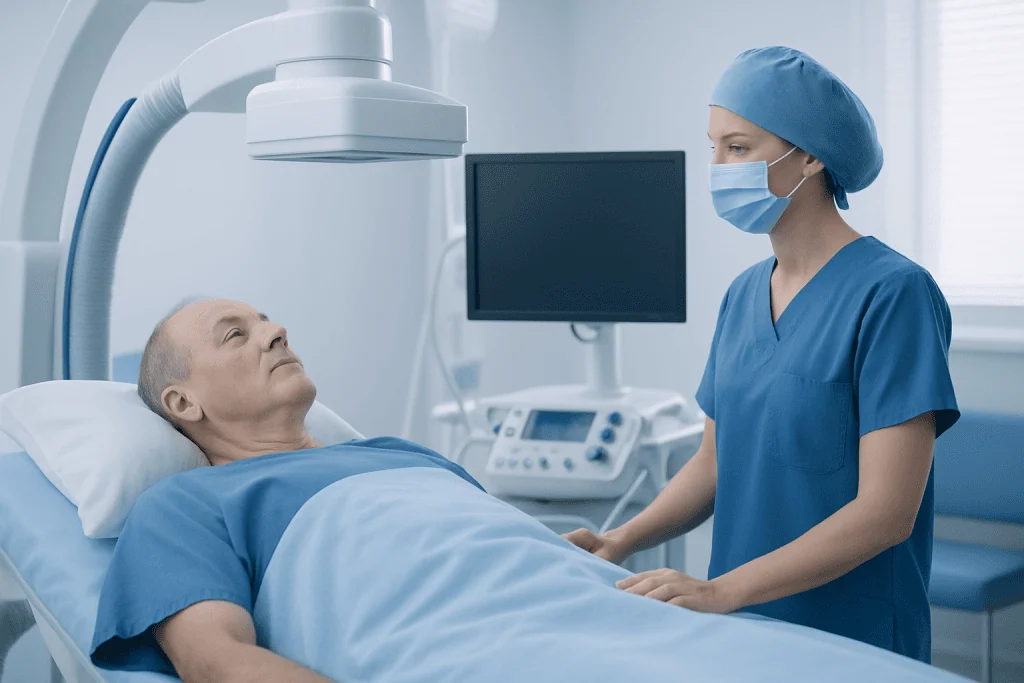
Doctors usually recommend an angiogram when there is a strong need to assess blood vessels in detail. This may happen after symptoms, physical exam findings, blood tests, or other imaging suggest a circulation problem that could benefit from closer evaluation. The test can help answer specific questions quickly and accurately.
Common reasons for an angiogram include:
- Chest pain, shortness of breath, or abnormal stress test results suggesting coronary artery disease
- Leg pain while walking, cold feet, or poor wound healing suggesting peripheral artery disease
- Sudden neurological symptoms that may relate to a blocked or abnormal brain blood vessel
- Suspicion of an aneurysm, blood vessel malformation, or internal bleeding
- Planning treatment before surgery or an interventional procedure
In some people, less invasive tests such as CT angiography, MR angiography, or Doppler ultrasound may be considered first. A doctor chooses the most suitable approach based on the urgency of symptoms, the body area being studied, kidney function, allergy history, and whether treatment may need to be done immediately. If arterial disease is suspected, related conditions such as peripheral artery disease may also be evaluated as part of the overall assessment.
How the angiogram procedure is performed
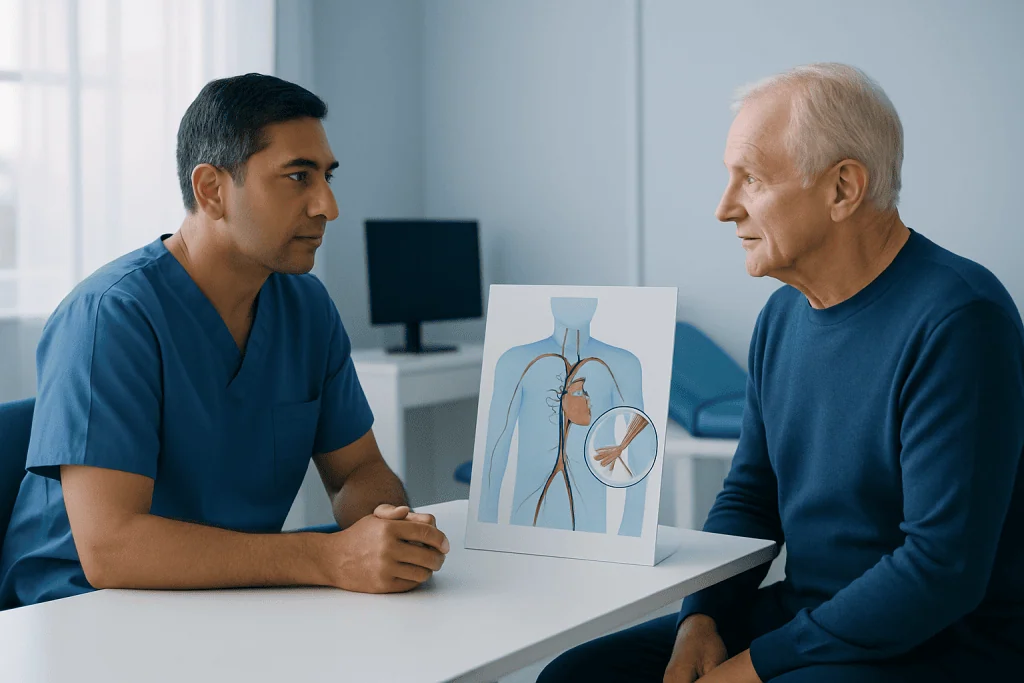
Before the test, the care team reviews medications, allergies, kidney function, and any history of bleeding problems. Patients are often asked not to eat or drink for a period before the procedure, though instructions vary. Blood thinners, diabetes medicines, and kidney-related precautions may need special planning, so it is important to follow the preparation guidance exactly.
During a catheter angiogram, the skin is cleaned and numbed, most often at the wrist or groin. A doctor inserts a small catheter into the blood vessel and gently guides it to the area being examined. Contrast dye is injected through the catheter while X-ray images are taken. Patients may feel a brief warm sensation when the dye is given, but the test is usually not painful.
The procedure length depends on the body area involved and whether treatment is also performed. A simple diagnostic angiogram may be relatively short, while combined procedures can take longer. If a significant heart artery narrowing is found, doctors may discuss coronary angiography findings alongside options such as medication, further monitoring, or an intervention.
After the catheter is removed, pressure or a closure device is used to reduce bleeding at the access site. The patient is then observed for a period of time. Many people return home the same day, while others stay longer if they had a complex procedure, other health conditions, or treatment during the same session.
What patients may feel before, during, and after the test
Feeling nervous before an angiogram is common, especially if it is the first time. The care team usually explains each step in advance and monitors heart rate, blood pressure, and comfort throughout the procedure. Mild sedation may be used in some cases, but many patients remain awake and able to respond to instructions.
During the test, there may be brief pressure at the access site when the catheter is inserted. Some people notice warmth, flushing, or a metallic taste for a few seconds when contrast is injected. These sensations are usually temporary. If there is chest discomfort, shortness of breath, itching, or unusual pain, patients should tell the team immediately.
Afterward, it is normal to have mild soreness or bruising where the catheter entered the skin. The team provides instructions about fluids, rest, showering, driving, and when to return to normal activity. Most patients are encouraged to drink fluids unless another medical condition limits this, because hydration helps the body clear the contrast dye.
Recovery advice can vary based on the reason for the angiogram and whether treatment was performed. If a vascular problem affecting the legs or other arteries is found, follow-up may involve lifestyle changes, medicines, or further care through vascular surgery services when needed.
Risks, safety, and possible complications
An angiogram is a commonly performed test, and serious complications are uncommon, but no invasive procedure is entirely risk-free. The medical team works to lower risk by reviewing allergies, kidney health, medications, and previous reactions to contrast dye. Patients benefit from sharing a complete medical history, including pregnancy, asthma, and any past bleeding issues.
Possible risks include bleeding or bruising at the catheter site, infection, damage to the blood vessel, irregular heart rhythm, and reaction to the contrast dye. In some people, contrast can temporarily affect kidney function, especially if kidney disease, dehydration, diabetes, or advanced age is present. Rarely, the procedure may trigger more serious events such as heart attack, stroke, or major bleeding.
Radiation exposure from X-ray imaging is also considered, though the amount used is carefully controlled. When alternative tests can provide the needed information with less risk, a doctor may recommend those instead. For example, some patients are first assessed with noninvasive imaging, and invasive angiography is reserved for cases where results will directly influence treatment decisions.
Understanding the results and treatment options
An angiogram can show whether blood vessels are open and whether blood flow is normal. Results may reveal narrowing from plaque buildup, a complete blockage, an aneurysm, a tear in the vessel wall, abnormal connections between vessels, or an area of bleeding. The meaning of the findings depends on which blood vessels were studied and what symptoms led to the test.
Sometimes the result is reassuring and no procedure is needed beyond continued monitoring or medical therapy. In other cases, treatment may be recommended to restore blood flow or prevent complications. Depending on the situation, options may include medicines, lifestyle changes, angioplasty, stenting, surgery, or specialist follow-up.
For heart-related findings, the care team may discuss risk factor control, medication adjustment, or additional treatment through interventional cardiology. If imaging suggests a weakened or enlarged artery, further assessment for conditions such as aortic aneurysm may be needed to determine whether monitoring or repair is appropriate.
Patients should feel comfortable asking for a clear explanation of the results in everyday language. Helpful questions include what was found, whether treatment is needed now, what alternatives exist, and what warning signs should prompt urgent follow-up.
Self-care after an angiogram and ways to support vascular health
After an angiogram, careful self-care supports healing and helps lower the chance of problems. Patients are usually advised to avoid heavy lifting and strenuous exercise for a short period, especially if the groin was used as the access site. The puncture area should be kept clean and observed for swelling, redness, continued bleeding, or increasing pain.
Longer-term care depends on the reason the angiogram was done. If narrowed arteries are found, doctors often focus on controlling blood pressure, cholesterol, blood sugar, and tobacco exposure. Regular physical activity, a heart-healthy eating pattern, weight management, and taking prescribed medicines consistently can all support better circulation.
For many people, the angiogram becomes an opportunity to address the underlying cause rather than only the immediate symptoms. At the end of the care pathway, some patients may seek coordinated evaluation from centers experienced in complex vascular and heart conditions. Acibadem International’s multidisciplinary specialists and JCI-accredited hospitals diagnose and treat these conditions for international patients when advanced assessment is needed.
When to seek medical care
Immediate medical care is important if symptoms suggest a serious blood flow problem. This includes sudden chest pain, trouble breathing, fainting, weakness on one side of the body, trouble speaking, severe headache, or sudden coldness and pain in an arm or leg. These symptoms can signal an emergency and should not be ignored.
After an angiogram, patients should contact a doctor promptly if they develop heavy bleeding from the catheter site, rapidly increasing swelling, numbness, fever, worsening redness, severe pain, or signs of an allergic reaction. Urgent advice is also needed if urine output drops noticeably or if there is new shortness of breath or chest discomfort. When in doubt, it is safest to seek professional guidance rather than wait for symptoms to pass.
Frequently asked questions
Is an angiogram the same as a CT scan?
Not exactly. An angiogram often refers to catheter angiography, which uses a thin tube placed into a blood vessel and contrast dye to create detailed images. CT angiography also uses contrast, but it is done with a CT scanner and does not usually require a catheter in the artery.
How long does an angiogram take?
The procedure time varies depending on the body area being examined and whether treatment is performed at the same time. A straightforward diagnostic angiogram may be relatively brief, but preparation and recovery observation add extra time. The care team can give a more accurate estimate before the test.
Is an angiogram painful?
Most people do not describe an angiogram as painful, though there can be brief discomfort. The skin is numbed before catheter insertion, and patients may feel pressure at the access site or temporary warmth when contrast dye is injected. Mild soreness or bruising afterward is common.
What should patients do before an angiogram?
Preparation depends on the type of angiogram and a person’s health history. Patients are usually asked about allergies, kidney problems, pregnancy, and medicines such as blood thinners or diabetes drugs. Following fasting instructions and bringing an updated medication list are important steps.
Can an angiogram treat a blockage as well as find it?
In some cases, yes. If a significant narrowing is identified, the doctor may be able to perform treatment during the same session, such as angioplasty or stent placement, if it is appropriate and planned. In other situations, treatment is scheduled later after results are reviewed.
How long is recovery after an angiogram?
Many people recover quickly and go home the same day, especially after a diagnostic procedure. Activity may need to be limited for a short time, and the access site should be monitored for bleeding or swelling. Recovery can take longer if treatment was also performed or if other medical issues are present.
This article is for general information only and is not a substitute for professional medical advice. Please consult a qualified doctor about your individual situation.
Explore treatments in Turkey — costs, top hospitals & a free quote
JCI-accredited · board-certified surgeons · reply within 24h
Add us as a Preferred Source to see more of our trusted health content across Google Search, AI Overviews and Discover.

More from the Health Library

High Intensity Exercise for Weight Loss: What Patients Need to Know

Malabsorption — Explained by Medical Evidence, Not Myths

Cold Water — Explained by Medical Evidence, Not Myths
Sympathetic Nervous System: An Evidence-Based Guide for Patients

Coriander Seeds Benefits: A Complete Medical Overview