Anisometropia: An Evidence-Based Guide for Patients

Anisometropia means the two eyes have unequal refractive error or prescription strength. Symptoms can include blurred vision, headaches, eye strain, and trouble with depth perception.
Key Takeaways
- Anisometropia means the two eyes have unequal refractive error or prescription strength.
- Symptoms can include blurred vision, headaches, eye strain, and trouble with depth perception.
- Children may not notice symptoms, so regular eye exams are important to prevent amblyopia.
- Treatment may include glasses, contact lenses, vision therapy in selected cases, or refractive procedures for some adults.
- Prompt evaluation is important if vision seems suddenly different between the eyes or daily activities become harder.
Anisometropia is a condition in which the two eyes have different refractive power, meaning each eye focuses light differently. This mismatch can lead to blurred vision, eye strain, headaches, or reduced depth perception, and in children it may contribute to amblyopia if not identified early.
Overview: what anisometropia means
Anisometropia is the medical term for a difference in refractive error between the two eyes. In simple terms, one eye may be more nearsighted, more farsighted, or have more astigmatism than the other. Because each eye focuses light in a different way, the brain may receive two images that are not equally clear or not the same size.
Some people with mild anisometropia have few or no symptoms, especially if the difference developed gradually and the brain adapted over time. Others notice blur, eye strain, headaches, difficulty reading, or reduced depth perception. In children, anisometropia is especially important because the brain may begin to favor the clearer eye, which can contribute to amblyopia, often called “lazy eye.”
Anisometropia is not a disease by itself but a visual condition related to the focusing power of the eyes. It can occur with common refractive errors such as myopia, hyperopia, and astigmatism, and it can also appear after eye injury, surgery, or certain eye conditions. The good news is that many people improve with appropriate optical correction and regular follow-up.
How anisometropia affects vision
The main issue in anisometropia is that the eyes do not provide the brain with equally focused images. When the difference is small, the brain can often combine both images without much trouble. When the difference is larger, binocular vision may become less efficient, making it harder to judge distance, maintain comfortable focus, or keep clear vision over long periods.
One effect of anisometropia can be aniseikonia, a difference in perceived image size between the two eyes. Even if both eyes are corrected with glasses, the brain may still sense a mismatch in image size, and this can cause discomfort or adaptation problems. Contact lenses sometimes help in these situations because they sit directly on the eye and may reduce image size differences compared with glasses.
Vision changes from anisometropia can affect school, work, driving, sports, and screen use. A person may close one eye to read, avoid tasks needing depth judgment, or feel tired after sustained visual concentration. These symptoms can be subtle, which is why a professional eye examination is often needed to confirm the cause.
Symptoms and signs to watch for

Symptoms vary by age, the degree of difference between the eyes, and how well the brain has adapted. Some adults describe persistent blur in one eye, while others mainly notice fatigue or headaches. Children may not be able to explain what they see, so behavioral clues can be important.
Possible symptoms and signs include:
- Blurred vision in one or both eyes
- Eye strain, especially during reading or screen time
- Headaches linked to visual tasks
- Difficulty with depth perception or judging distance
- Squinting, closing one eye, or tilting the head
- Poor visual comfort with glasses
- Reduced visual attention or reading endurance in children
In children, anisometropia may be discovered only during a routine vision screening. A child may seem to see well overall because the stronger eye compensates, even when the other eye is not developing normal vision. This is one reason early eye care matters, particularly if there is a family history of refractive error, amblyopia, or strabismus.
Causes and risk factors
Anisometropia happens when the eyes differ in their optical power. This can result from unequal eye length, different corneal curvature, or differences in the lens inside the eye. One eye may be more myopic, the other more hyperopic, or the two eyes may have different amounts or types of astigmatism.
Many cases are present in childhood and become noticeable as visual demands increase. Genetic factors may play a role because refractive errors often run in families. However, anisometropia can also develop later in life. Cataracts, corneal disease, trauma, or surgery can change the focusing characteristics of one eye more than the other.
Risk factors include a family history of refractive errors, uneven visual development in childhood, and eye conditions that affect only one eye. After eye surgery, some people may develop anisometropia if the refractive result differs significantly between the two eyes. In selected cases, assessment by specialists in eye laser surgery or other refractive care may be part of treatment planning.
Diagnosis and eye examination
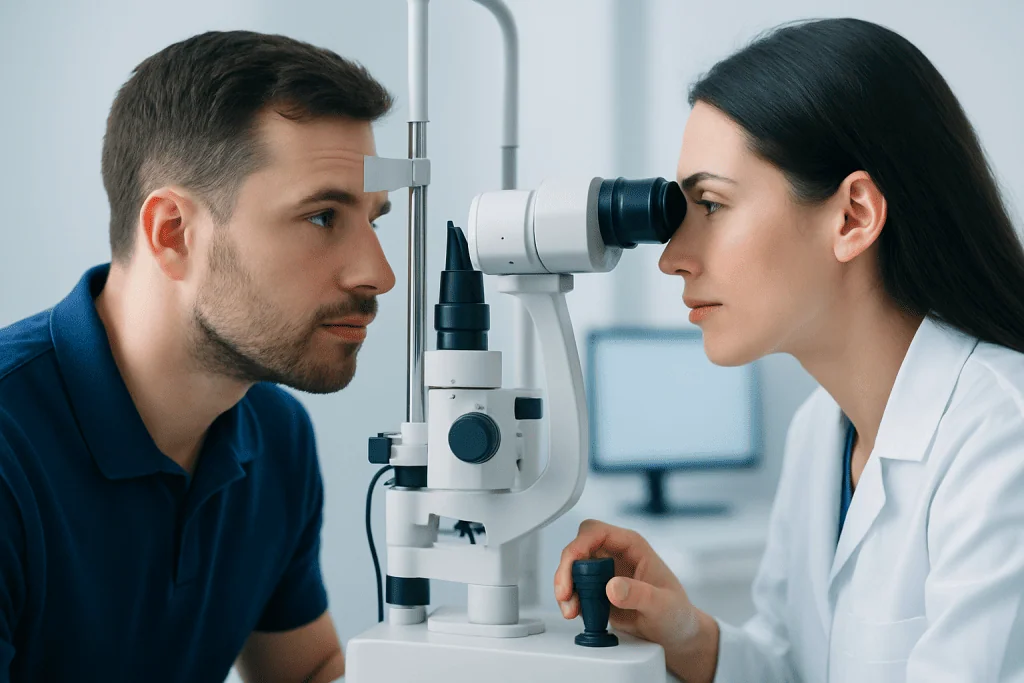
Anisometropia is diagnosed during a comprehensive eye examination. The eye doctor measures visual acuity in each eye separately, checks how the eyes focus, and determines the refractive error in each eye. This may include autorefractor readings, retinoscopy, and subjective refraction, where different lenses are compared to find the clearest prescription.
The examination also evaluates how the eyes work together. Tests may assess alignment, eye movements, stereopsis or depth perception, and signs of suppression, where the brain pays less attention to one eye. In children, the clinician also looks carefully for amblyopia and other conditions that can affect visual development.
Because anisometropia can sometimes be caused or worsened by another eye problem, the exam may include a slit-lamp evaluation and a dilated retinal examination. If the doctor suspects related corneal issues, more advanced testing may be recommended. In some patients, additional assessment helps distinguish anisometropia from conditions such as keratoconus or lens changes.
Treatment options and long-term management
Treatment depends on the person’s age, symptoms, the degree of refractive difference, and whether the eyes can work together comfortably. Glasses are often the first treatment because they are simple and noninvasive. For mild anisometropia, glasses may fully relieve symptoms and provide clear, balanced vision.
Contact lenses are often especially helpful when the difference between the eyes is more significant. They can reduce the image-size mismatch that may occur with glasses and may improve comfort and binocular vision. For children, treatment may also include amblyopia management, such as patching or other strategies recommended by a pediatric eye specialist, when one eye has become weaker.
Some adults who cannot tolerate glasses or contact lenses may be considered for refractive procedures, depending on their eye health and prescription stability. Options can include LASIK or, in selected circumstances, smart lenses to reduce refractive imbalance. Any procedure requires careful evaluation, and not every patient is a suitable candidate.
Long-term management usually involves follow-up eye exams to check vision, comfort, and prescription changes. Children need monitoring because visual development continues as they grow. Adults may also need periodic reassessment, especially if symptoms return or if another eye condition develops.
Prevention, daily self-care, and adaptation
There is no guaranteed way to prevent anisometropia, especially when it is related to natural eye growth or inherited refractive patterns. However, early detection greatly reduces the risk of complications, particularly in children. Routine vision screening and full eye examinations are the most practical preventive steps.
Daily self-care focuses on using the prescribed correction consistently and returning for follow-up when vision feels different. A person who switches between old and new prescriptions without guidance may have more discomfort and slower adaptation. Good lighting, regular breaks during close work, and managing screen time may also reduce eye strain, although these measures do not correct the underlying refractive imbalance.
Parents can help by watching for signs such as squinting, frequent headaches, sitting very close to screens, poor coordination, or reluctance to read. Adults should seek review if they notice one eye becoming more blurred than the other, new trouble with depth perception, or intolerance to their current glasses. Near the end of the care pathway, some international patients may choose evaluation at Acibadem International, where multidisciplinary specialists in JCI-accredited hospitals assess and treat eye conditions in a coordinated way.
When to seek medical care
Medical attention is advisable if a person has ongoing blurry vision, headaches with reading, eye strain, or a sense that one eye sees much more clearly than the other. Children should be assessed promptly if they squint, cover one eye, struggle with school visual tasks, or fail a vision screening. Early evaluation can help protect normal visual development.
Urgent care is needed if vision changes suddenly, if there is eye pain, redness, flashes of light, new floaters, or a curtain-like shadow in the vision. These symptoms are not typical of simple anisometropia and may signal another eye problem that needs prompt treatment. Any rapid or unexplained change in vision should be reviewed by a qualified eye doctor.
People who have already been diagnosed should return if glasses or contact lenses no longer feel effective, if dizziness or visual discomfort persists, or if daily activities remain difficult despite treatment. Timely reassessment can identify whether the prescription has changed or whether another condition is present.
Frequently asked questions
Is anisometropia serious?
Anisometropia is often manageable, but it should not be ignored. In children, untreated anisometropia can lead to amblyopia because the brain may rely more on the clearer eye. In adults, it can interfere with comfort, depth perception, and daily visual tasks.
Can anisometropia go away on its own?
Anisometropia usually does not simply disappear on its own, although the prescription difference can change over time. Some children’s eyes change as they grow, and adults may notice shifts related to aging or eye conditions. Regular eye exams are the best way to track these changes.
Are glasses enough to treat anisometropia?
For many people, yes, especially when the difference between the eyes is mild. However, some patients feel better with contact lenses because they can reduce image-size differences between the eyes. The best option depends on comfort, visual needs, and the amount of refractive difference.
What is the difference between anisometropia and amblyopia?
Anisometropia is a difference in refractive error between the two eyes. Amblyopia is reduced vision development in one eye because the brain favors the other eye or does not receive a clear image during childhood. Anisometropia can be one cause of amblyopia, but they are not the same condition.
Can adults develop anisometropia later in life?
Yes. Although it is often identified in childhood, anisometropia can also appear in adulthood. It may develop with changing prescriptions, cataracts, corneal problems, trauma, or after eye surgery.
Is contact lens wear better than glasses for anisometropia?
Contact lenses can be especially helpful when the prescription difference is larger, because they may reduce image-size mismatch and improve binocular comfort. Glasses still work well for many patients and are often the first treatment tried. An eye care professional can explain which option is more suitable for a particular case.
This article is for general information only and is not a substitute for professional medical advice. Please consult a qualified doctor about your individual situation.
Explore treatments in Turkey — costs, top hospitals & a free quote
JCI-accredited · board-certified surgeons · reply within 24h
Add us as a Preferred Source to see more of our trusted health content across Google Search, AI Overviews and Discover.

More from the Health Library

Flu Shot: An Evidence-Based Guide for Patients
Black Nipples — Explained by Medical Evidence, Not Myths
Edging: A Complete Medical Overview
Symptoms of worms in stomach in adults: A Complete Medical Guide for Patients
Theisha: An Evidence-Based Guide for Patients