Ankle Physical Therapy Exercises: How It Works, Results and What to Expect

Ankle rehabilitation usually starts with gentle motion and progresses toward strength, balance and activity-specific training. The right exercise plan depends on the injury, whether surgery was performed, current pain and swelling, and medical restrictions.
Key Takeaways
- Ankle rehabilitation usually starts with gentle motion and progresses toward strength, balance and activity-specific training.
- The right exercise plan depends on the injury, whether surgery was performed, current pain and swelling, and medical restrictions.
- Improvement is gradual; consistency with a home program is often as important as supervised therapy sessions.
- Sharp pain, worsening swelling, numbness or an inability to bear weight should be assessed rather than pushed through.
- A physiotherapist can modify exercises for sports, work demands, age-related balance needs and long-term ankle instability.
Ankle physical therapy exercises are individualized movements that help restore flexibility, strength, balance and confidence in walking after an ankle injury, operation or period of immobilization. A physiotherapist selects and progresses exercises according to the diagnosis, healing stage, symptoms and personal goals.
Overview: how ankle physical therapy exercises work
Ankle physical therapy exercises help the ankle regain safe movement and function after problems such as a sprain, fracture, tendon injury, surgery or recurrent instability. Rather than using one standard exercise list, rehabilitation is planned around the tissues involved, the stage of healing and the person’s everyday needs. The goal is not only to reduce symptoms, but also to make walking, stairs, work, exercise and sport safer and more comfortable.
A typical program develops in stages. Early care may focus on swelling control, protecting the injured area and restoring gentle range of motion. As healing allows, therapy adds strengthening for the calf and lower-leg muscles, balance work, walking retraining and movements that resemble the person’s activities. This progression helps the ankle tolerate load gradually instead of being asked to do too much too soon.
For a simple sprain, rehabilitation may be relatively brief. Recovery after a fracture, tendon repair or complex surgery commonly requires a longer and more closely supervised plan. Exercises should follow the restrictions set by the treating clinician, especially when a cast, boot, repair or bone healing is involved.
Who may benefit and how candidacy is assessed
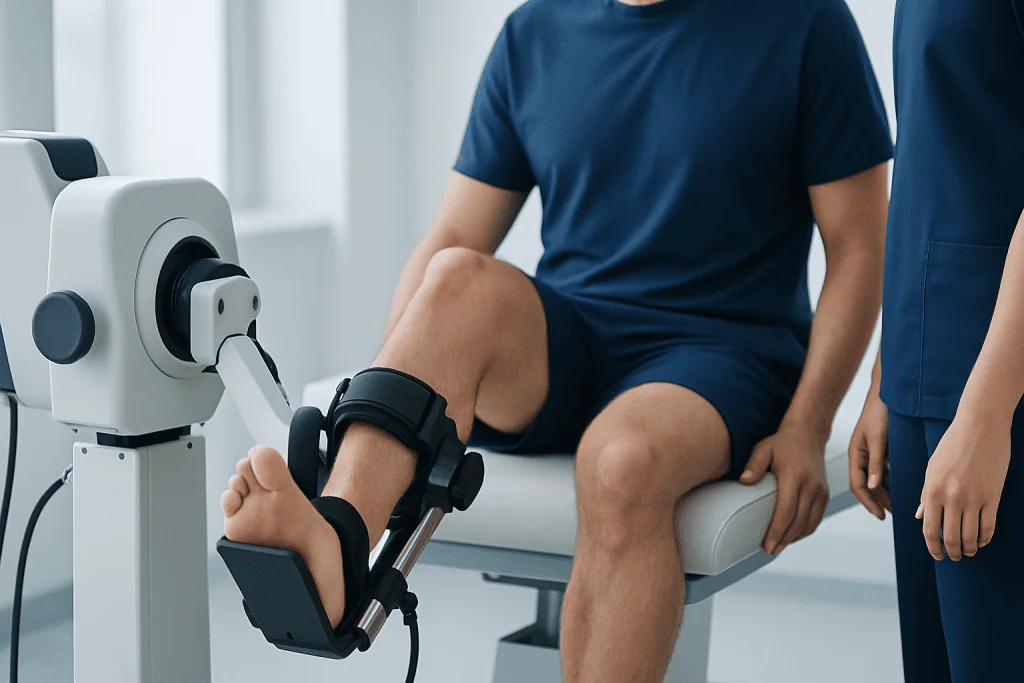
Physical therapy may be recommended after an acute ankle sprain, an ankle fracture, ligament or tendon injury, surgery, stiffness after immobilization, or ongoing episodes of the ankle “giving way.” It can also help people who have reduced balance, altered walking patterns or difficulty returning to work or recreational activity after an ankle problem. Persistent symptoms following an ankle sprain deserve assessment because weakness and reduced balance can contribute to repeat injuries.
Before exercises begin, a clinician or physiotherapist reviews the diagnosis, imaging when available, medical history, current medications and healing restrictions. They may assess swelling, tenderness, skin condition, ankle motion, calf strength, balance, walking and the ability to perform daily tasks. This assessment helps identify whether rehabilitation can start immediately or whether further protection, imaging or specialist review is needed.
People are not expected to begin at the same level. Someone recovering from surgery or a fracture may initially be non-weight-bearing or use crutches, while someone with a mild sprain may safely start guided movement earlier. A tailored approach is particularly important for people with diabetes, impaired circulation, nerve problems, osteoporosis, inflammatory arthritis or previous ankle injuries.
What to expect at physical therapy for the ankle?

The first appointment commonly includes a discussion of how the injury happened, symptoms, previous ankle problems, activity level and goals. The physiotherapist then examines the ankle and nearby joints, because hip, knee and foot mechanics can affect ankle loading. They will explain the likely rehabilitation priorities and teach exercises that are appropriate for the current stage of healing.
Appointments may include hands-on techniques to address stiffness when suitable, guided mobility work, resistance exercises, balance training and practice of walking, stairs or task-specific movement. The therapist may also advise on footwear, braces, crutch use, pacing and managing swelling. Not every person needs every intervention, and treatment should be adjusted if symptoms or healing status change.
A home exercise plan is usually provided between visits. Clear instructions matter: patients should know how often to do each movement, which sensations are expected and which signs mean they should stop and contact their clinician. Mild muscular effort or temporary stiffness can occur with progression, but sharp pain or a marked symptom flare is not a goal of therapy.
What do you do when doing ankle rehab?
Ankle rehabilitation generally moves from protected mobility to functional loading. Early exercises may include gently moving the foot up and down, making ankle circles or tracing the alphabet with the toes, provided these movements are approved. These activities can help reduce stiffness without placing excessive demand on healing tissues.
As tolerated, strengthening may include controlled calf raises, resistance-band movements in different directions, foot and toe control exercises, and gradual weight-bearing tasks. Balance training can begin with supported standing and advance to single-leg stance, reaching tasks or uneven-surface work when appropriate. Later rehabilitation may involve step-ups, controlled squats, hopping, changes of direction or sport-specific drills.
Quality of movement is important. Exercises are usually performed slowly and with good alignment rather than rushed or forced. Rest periods, ice or elevation when advised, and appropriate footwear may support comfort. A person recovering after ankle surgery should not add weight-bearing, stretching or impact activities until the surgeon and rehabilitation team confirm that healing permits it.
- Follow the prescribed exercise order and progression.
- Use assistive devices or a brace as advised.
- Track pain, swelling and function between sessions.
- Prioritize controlled movement over high repetitions.
- Ask before returning to running, jumping or pivoting activities.
How long does it take to strengthen ankle muscles?
Ankle muscle strengthening is gradual. Some people notice improved control and tolerance for everyday activities within several weeks of regular, appropriately progressed exercise. Building more reliable strength, balance and endurance often takes longer, particularly after a significant sprain, fracture, surgery or a prolonged period of reduced activity.
The timeline depends on the original injury, tissue healing, pain and swelling, whether weight-bearing was restricted, baseline fitness and consistency with the home program. Calf and lower-leg muscles may lose conditioning quickly when a boot or cast limits use, so recovery is not measured by strength alone. Restored range of motion, balance, walking quality and confidence also guide progression.
It is generally safer to judge readiness by function rather than a calendar date. A rehabilitation professional may compare both sides during tasks such as heel raises, single-leg standing, hopping or stair use when those tests are appropriate. Returning to demanding sport or physical work too early can increase the chance of reinjury.
How long is physical therapy for an ankle?
The length of physical therapy for an ankle varies widely. A minor uncomplicated injury may need education, a short supervised program and home exercises, while rehabilitation after a fracture, tendon reconstruction or complex ligament injury may continue for months. Follow-up frequency can also change over time, with more support early on and greater emphasis on independent exercise later.
Therapy is usually continued until the person has achieved the agreed functional goals, such as comfortable walking, sufficient motion, improved strength and stable balance for daily life or sport. Some people benefit from occasional reassessment as they return to higher-level activity. Others may need a longer plan if pain, stiffness, instability or fear of movement persists.
Progress is not always linear. A temporary increase in symptoms can occur after activity is advanced, and the plan may need adjustment. Open communication with the physiotherapist, orthopedic clinician and surgeon where relevant helps keep rehabilitation aligned with healing and personal goals.
Benefits, possible setbacks and recovery expectations
Potential benefits of ankle physical therapy exercises include improved motion, stronger supporting muscles, better balance, more efficient walking and a safer return to valued activities. Rehabilitation can also teach practical ways to reduce repeat sprains, such as gradual conditioning, appropriate bracing when indicated and balance training. For chronic instability or persistent pain, a reassessment may identify contributing issues that need further care.
Exercises should be challenging enough to promote adaptation but not so demanding that they significantly aggravate the injury. Possible short-term setbacks include soreness, fatigue or temporary swelling after a new exercise is introduced. Persistent pain, increasing swelling, a new feeling of instability, skin changes, numbness or worsening function should be reported to a clinician rather than managed by simply increasing exercise.
Recovery also involves returning to normal activities in steps. Walking may precede uneven-ground hiking; jogging may precede cutting and jumping; and daily tasks may precede occupational or competitive demands. A clinician can help determine whether an ankle brace, supportive footwear or a gradual return-to-sport plan is appropriate.
When to seek medical care
Medical assessment is important after a significant ankle injury, especially if the person cannot take several steps, has severe or rapidly increasing swelling, obvious deformity, marked tenderness over bone, or pain that does not improve. Urgent care is also appropriate for a cold, pale or blue foot, new numbness or weakness, an open wound, fever with redness, or severe calf pain and swelling.
Even without urgent symptoms, a clinician should review an ankle that repeatedly gives way, remains painful or swollen, has restricted movement, or does not progress as expected with initial care. These symptoms can sometimes reflect a fracture, tendon injury, cartilage problem or another condition requiring a different plan.
Acibadem International’s multidisciplinary specialists and JCI-accredited hospitals assess and treat ankle conditions for international patients, coordinating orthopedic evaluation and rehabilitation when needed. Individual medical advice is essential before starting or advancing ankle physical therapy exercises, particularly after surgery or a serious injury.
Frequently asked questions
Can ankle physical therapy exercises be done at home?
Many ankle rehabilitation exercises are designed to be performed at home after a physiotherapist has shown the correct technique and progression. Home exercise is usually most effective when it complements professional assessment, especially after a fracture, operation or severe injury. People should follow their individualized restrictions and avoid advancing exercises on their own if symptoms worsen.
Should ankle exercises hurt?
Exercises may produce a feeling of muscle effort, mild stretching or temporary stiffness, particularly as activity increases. Sharp pain, a sudden increase in swelling, new instability or pain that remains worse after activity should be discussed with a clinician. Rehabilitation plans can be adjusted to keep loading safe and tolerable.
When can someone start weight-bearing after an ankle injury?
The correct timing depends on the diagnosis and treatment. Some mild injuries allow early, gradual weight-bearing, while fractures, tendon repairs and certain surgeries may require a period of protection. The treating clinician or surgeon should provide the specific weight-bearing instructions.
Do balance exercises matter after an ankle sprain?
Yes. An ankle sprain can affect proprioception, which is the body’s awareness of joint position and movement. Balance training can help restore control and may reduce the likelihood of recurrent sprains when included in an appropriate rehabilitation plan.
Can a person return to running while doing ankle physical therapy?
Running is usually introduced only after walking is comfortable and the ankle has enough motion, strength and balance for impact activity. The decision also depends on swelling, pain, the original injury and the person’s running goals. A gradual return plan is safer than resuming previous mileage immediately.
What happens if ankle weakness is ignored?
Ongoing weakness or reduced balance can affect walking, stairs and confidence during activity. It may also contribute to recurrent sprains or compensatory discomfort elsewhere in the leg. Assessment and targeted rehabilitation can identify the most appropriate next steps.
References
- American Academy of Orthopaedic Surgeons
- American Physical Therapy Association
- National Institute of Arthritis and Musculoskeletal and Skin Diseases
- National Health Service
- Mayo Clinic
This article is for general information only and is not a substitute for professional medical advice. Please consult a qualified doctor about your individual situation.
Joint and spine care in Turkey — expert assessment & treatment
JCI-accredited · board-certified surgeons · reply within 24h
Add us as a Preferred Source to see more of our trusted health content across Google Search, AI Overviews and Discover.