Antibacterial Ointment for Dog Bite: An Evidence-Based Guide for Patients

The first priority after a dog bite is washing the wound well with soap and running water. Antibacterial ointment may help protect minor, shallow bites, but it does not replace medical care for deeper or higher-risk wounds.
Key Takeaways
- The first priority after a dog bite is washing the wound well with soap and running water.
- Antibacterial ointment may help protect minor, shallow bites, but it does not replace medical care for deeper or higher-risk wounds.
- Bites to the hands, face, joints, or genitals, and any puncture wound or wound with spreading redness, should be evaluated by a clinician.
- Some dog bites need oral antibiotics, stitches, tetanus protection, or rabies risk assessment.
- People with diabetes, poor circulation, weakened immunity, or liver disease should seek medical advice sooner.
Antibacterial ointment for dog bite can be appropriate for some small, superficial wounds after thorough washing, but it is not enough for every bite. Because dog bites can introduce bacteria deep into the skin, patients should know when home care is reasonable and when a doctor should assess the injury promptly.
Overview: Is antibacterial ointment enough for a dog bite?
Antibacterial ointment for dog bite may be useful for a very minor, superficial wound after the area has been cleaned thoroughly, but it is not the main treatment and it is not suitable for every bite. The most important first-aid step is immediate washing with soap and running water, because this helps reduce bacteria and debris at the skin surface. A thin layer of over-the-counter antibacterial ointment can then be applied to some shallow wounds before covering them with a clean dressing.
Dog bites deserve careful attention because teeth can push bacteria into deeper tissue even when the skin opening looks small. For this reason, a wound that appears minor may still carry a risk of infection, tissue damage, or injury to tendons and nerves. Some bites need medical evaluation for cleaning, possible oral antibiotics, tetanus protection, or advice about rabies prevention depending on the situation.
Patients often wonder whether a topical product can prevent infection on its own. In practice, antibacterial ointment works only on the surface of the skin. It cannot treat bacteria that have been introduced more deeply, and it does not replace a clinician’s assessment when the wound is punctured, deep, heavily contaminated, or located in a higher-risk area such as the hand or face.
How dog bites can become infected
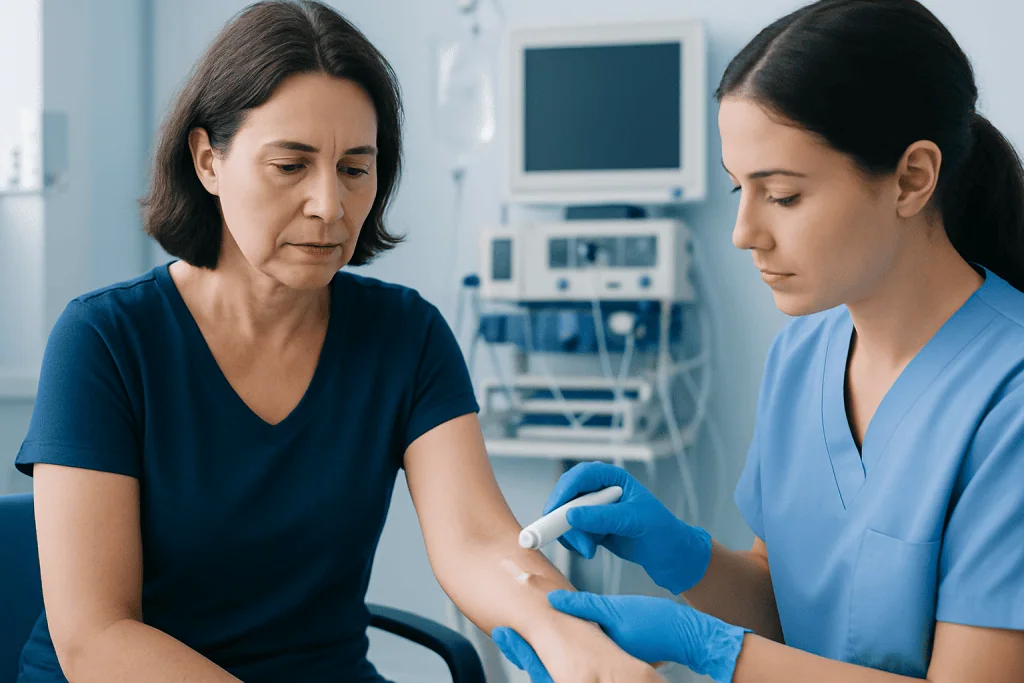
Dogs carry a mix of bacteria in their mouths, and the skin itself also contains bacteria that can enter a wound after injury. When a bite breaks the skin, these bacteria may multiply in the soft tissues and lead to redness, warmth, swelling, pain, drainage, or fever. Infection can develop within hours or over the next few days.
Puncture wounds are especially important because the surface opening may be tiny while the deeper track reaches into fat, muscle, tendon, or around a joint. This creates an environment where bacteria can remain trapped. Bites on the hands are often treated more cautiously because the structures in the hand are compact and infections can spread quickly.
Not every bite becomes infected, but risk is higher when the wound is deep, crushed, dirty, or not cleaned promptly. The chance of complications also increases in people with certain medical conditions. If redness spreads, pain worsens rather than improves, or pus appears, medical review is important because an untreated bite infection can become serious.
When antibacterial ointment may help
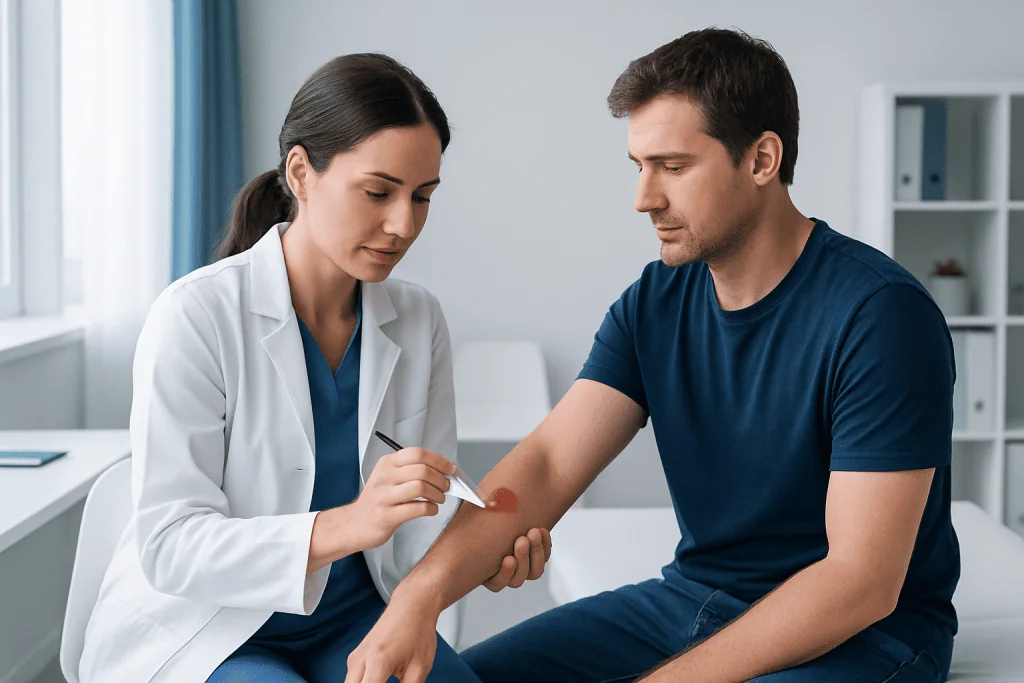
Antibacterial ointment may be reasonable for a small scrape or a very shallow bite that has barely broken the skin, especially if it is not on the hand, face, or near a joint. It should be used only after rinsing the wound under running water and washing the surrounding skin with soap. After patting the area dry, a thin layer can be applied and the wound covered with a sterile, non-stick bandage.
Topical ointment helps keep the surface moist and may lower the number of bacteria on the skin. It is a supportive measure, not a substitute for medical treatment. If the wound is deeper than a superficial scratch, if it keeps bleeding, or if the edges are gaping, a clinician should assess it rather than relying on home treatment alone.
Some people develop skin irritation from topical antibiotics. If rash, itching, or worsening redness appears exactly where the ointment was applied, the product should be stopped and the area washed gently. A doctor or pharmacist can advise whether a plain protective ointment and dressing would be more appropriate.
How to clean and care for a dog bite at home
Immediate wound care matters more than any ointment. The area should be rinsed under cool or lukewarm running water for several minutes. Mild soap can be used on the surrounding skin, and visible dirt should be removed gently. If the wound is bleeding, steady pressure with a clean cloth or gauze can help control it.
After cleaning, the wound can be covered with a clean dressing. For a small superficial injury, a thin layer of antibacterial ointment may be applied before the dressing. The bandage should be changed daily or sooner if it becomes wet or dirty. Keeping the area clean and watching for changes over the next 24 to 72 hours is important.
Patients should avoid harsh disinfectants inside the wound unless specifically advised by a clinician, because some products can irritate tissue and may delay healing. It is also best not to close a bite wound at home with glue strips or adhesive products. If the wound appears deep, widely open, or near an important structure, medical care is the safer option.
- Wash hands before and after touching the wound.
- Remove rings or tight jewelry early if the bite is on a hand or finger, in case swelling develops.
- Elevate the affected area when practical to help reduce swelling.
- Seek help sooner if the bite was from an unknown, stray, or unvaccinated dog.
Who is more likely to need medical treatment
Certain wounds are more likely to require professional care, even if they look small. These include puncture wounds, bites with crushed tissue, bites to the hand, face, foot, or genitals, and wounds near joints, tendons, or prosthetic implants. A doctor may decide that oral antibiotics are appropriate, especially when the bite has a higher risk of infection.
Some patients should be assessed sooner because their bodies may have more difficulty fighting infection. This includes people with diabetes, liver disease, poor circulation, a weakened immune system, or those taking immunosuppressive medicines. Older adults and very young children may also need more cautious evaluation.
In some cases, a bite wound may need specialist review if it affects deeper tissues, leaves a large skin defect, or raises concern for nerve or tendon damage. Problems with wound healing or more serious skin infection may overlap with conditions such as cellulitis. Depending on the extent of tissue injury, care can range from oral antibiotics to formal wound management or plastic surgery for selected complex injuries.
Diagnosis and treatment a doctor may recommend
When a patient is evaluated for a dog bite, the clinician usually asks when the bite happened, how it occurred, whether the dog is known and vaccinated, and what first aid has already been done. The wound is examined for depth, contamination, signs of infection, and possible injury to structures beneath the skin. If a bite is close to a bone or joint, or if a tooth may have broken off, imaging may sometimes be needed.
Treatment depends on the location and severity of the bite. Care may include thorough irrigation, removal of damaged tissue, dressing changes, and oral antibiotics for selected wounds. In some situations, a doctor may discuss delayed closure rather than immediate stitches, because closing a contaminated bite too early can sometimes increase infection risk. If the injury is extensive or function is affected, orthopedic and trauma care may be appropriate.
Tetanus protection is reviewed because a booster may be needed depending on vaccination history and the type of wound. Rabies prevention is considered when the dog is unknown, unavailable for observation, behaving unusually, or from a setting where rabies risk is a concern. If a wound has already become red, swollen, or draining, treatment may also address an skin infection directly.
Near the end of the care pathway, some patients benefit from multidisciplinary follow-up, especially when wounds involve the face, hand, or deeper tissues. Acibadem International’s multidisciplinary specialists in JCI-accredited hospitals diagnose and treat bite-related injuries for international patients, including advanced wound assessment and coordinated specialty care when needed.
When to seek medical care
Prompt medical care is recommended if the bite is deep, punctured, heavily bleeding, on the hand or face, or if the skin edges are widely separated. Patients should also seek help if movement, sensation, or strength seems reduced after the injury, as this may suggest tendon or nerve involvement. A bite from a stray, unknown, or unvaccinated dog also deserves timely medical advice because of rabies considerations.
Even if home care has started, new symptoms can signal infection or a more significant problem. These include increasing redness, swelling, pain, warmth, pus, red streaks, fever, swollen lymph nodes, or feeling generally unwell. Worsening symptoms after the first day should not be explained away as normal healing.
Emergency care is appropriate for severe bleeding that does not stop with pressure, a rapidly spreading infection, trouble using the affected limb, or signs of serious illness. Patients who are unsure whether a wound is superficial or deeper than it appears should err on the side of caution and contact a qualified doctor.
Prevention, follow-up, and practical self-care
Preventing complications after a dog bite is not only about the first day. The wound should be checked daily for increasing redness, swelling, tenderness, drainage, or an unpleasant smell. Dressings should be kept clean and dry, and any prescribed antibiotics should be taken exactly as directed by the treating clinician. It is best not to stop treatment early just because the skin starts to look better.
Patients should also pay attention to function. Stiffness, difficulty bending a finger, numbness, or persistent throbbing pain can suggest a deeper problem even if the outer wound looks small. Hand and facial bites deserve particular care because even a limited infection can affect movement, sensation, and appearance.
To reduce future risk, children should be supervised around dogs, dogs should not be disturbed while eating or sleeping, and unfamiliar animals should be approached cautiously. Learning safe behavior around pets is a practical way to prevent injury. If there is uncertainty about wound healing, scarring, or recurrent redness, follow-up with a healthcare professional is sensible rather than continuing self-treatment for too long.
Frequently asked questions
Can antibacterial ointment prevent infection after a dog bite?
It may help reduce surface bacteria in a minor, superficial wound after good cleaning, but it cannot reliably prevent all infections. Dog bites can push bacteria deep into tissue, where topical ointment does not reach. That is why some bites still need a doctor's assessment and sometimes oral antibiotics.
What is the first thing to do after a dog bite?
The wound should be washed promptly under running water, with soap used on the surrounding skin. If there is bleeding, gentle but firm pressure with a clean cloth can help. Early cleaning is one of the most important steps for lowering infection risk.
Should a dog bite be covered or left open?
A small superficial wound is usually best covered with a clean, non-stick dressing after washing. Covering helps protect the area from dirt and friction. However, the decision to close a deeper bite with stitches should be made by a clinician, not at home.
How do patients know if a dog bite is infected?
Warning signs include increasing redness, swelling, warmth, pain, pus, bad odor, or fever. Red streaks moving away from the wound and swollen lymph nodes are also concerning. If symptoms worsen instead of gradually improving, a doctor should evaluate the injury.
Do all dog bites need antibiotics?
No, not all dog bites need antibiotics. Doctors are more likely to prescribe them for high-risk wounds, such as punctures, hand bites, facial bites, deeper injuries, or wounds in people with diabetes or weakened immunity. The need for antibiotics depends on the wound and the patient's overall health.
When is rabies or tetanus a concern after a dog bite?
Tetanus protection may need to be updated depending on the person's vaccine history and the type of wound. Rabies risk depends on the dog, whether it can be observed, local public health guidance, and how the bite occurred. A healthcare professional can decide whether preventive treatment is needed.
References
- Centers for Disease Control and Prevention
- American Academy of Pediatrics
- American Academy of Family Physicians
- Merck Manual Professional Edition
- World Health Organization
This article is for general information only and is not a substitute for professional medical advice. Please consult a qualified doctor about your individual situation.
Explore treatments in Turkey — costs, top hospitals & a free quote
JCI-accredited · board-certified surgeons · reply within 24h
Add us as a Preferred Source to see more of our trusted health content across Google Search, AI Overviews and Discover.