Are Sleep Disorders Neurological? How the Brain Regulates Sleep

The brain regulates sleep through connected centers that control timing, alertness, breathing, movement, and dreaming. Some sleep disorders are primarily neurological, while others involve mental health, airway, lifestyle, or medical conditions.
Key Takeaways
- The brain regulates sleep through connected centers that control timing, alertness, breathing, movement, and dreaming.
- Some sleep disorders are primarily neurological, while others involve mental health, airway, lifestyle, or medical conditions.
- Common warning signs include excessive daytime sleepiness, unusual nighttime movements, snoring, pauses in breathing, and sudden sleep attacks.
- Diagnosis may involve a sleep history, neurological examination, sleep study, and sometimes brain or nerve testing.
- Treatment depends on the cause and may include sleep habit changes, medications, breathing support, or treatment of an underlying neurological condition.
Many sleep disorders have a neurological basis because the brain and nervous system control when a person sleeps, wakes, breathes, moves, and dreams. Understanding this brain-sleep connection can help explain symptoms and guide the right evaluation and treatment.
Overview: Are Sleep Disorders Neurological?
Sleep disorders can be neurological, but not all of them are caused only by the brain or nervous system. Sleep itself is a brain-driven process. It depends on networks in the brainstem, hypothalamus, thalamus, and cerebral cortex that work together to control alertness, drowsiness, breathing, movement, and transitions between sleep stages. Because of this, problems affecting these systems may lead to disturbed sleep.
Neurological sleep disorders include conditions in which brain signaling is directly involved, such as narcolepsy, REM sleep behavior disorder, restless legs syndrome, and some central disorders of breathing during sleep. Other sleep problems, such as insomnia or obstructive sleep apnea, may also involve the nervous system but often have mixed causes, including stress, airway anatomy, weight, medications, or other medical conditions.
It is often helpful to think of sleep disorders as conditions that can arise from several body systems at once. A person may have a neurological contribution, a psychological contribution, and a physical contribution together. This is one reason careful assessment matters. Symptoms that seem similar on the surface, such as tiredness or broken sleep, may have very different underlying causes.
How the Brain Regulates Sleep
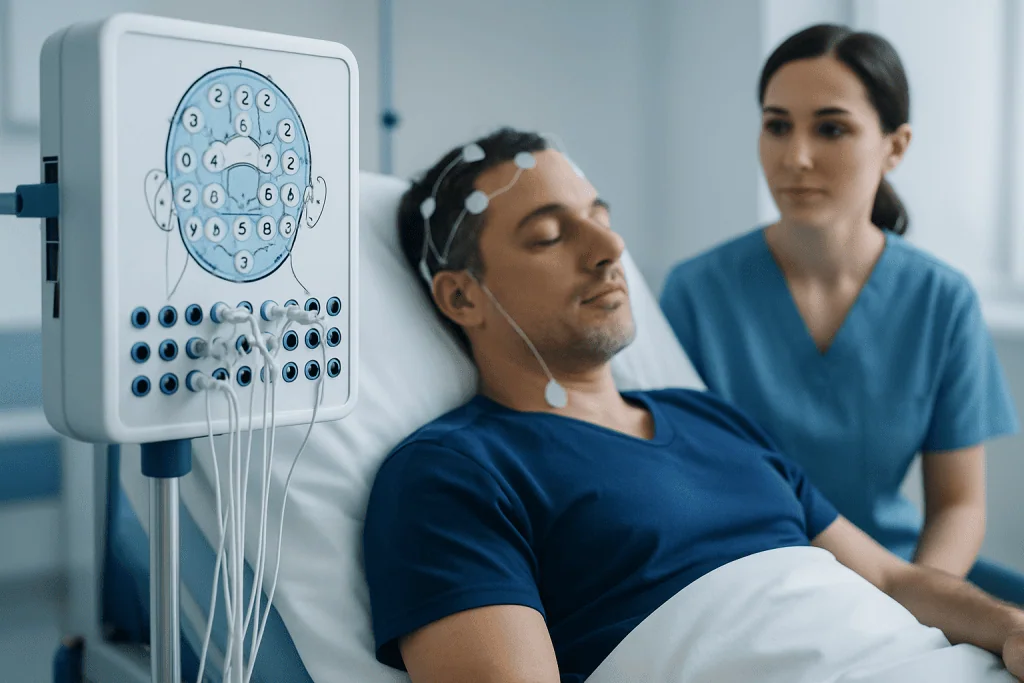
The brain regulates sleep through an internal timing system often called the circadian rhythm, along with sleep pressure that builds the longer a person stays awake. The circadian system is strongly influenced by light exposure. Signals from the eyes help the brain’s internal clock align sleep and wake times with day and night. At the same time, chemical changes in the brain create a drive for sleep after many hours of wakefulness.
Several brain chemicals and nerve pathways help switch the body between alertness and sleep. For example, orexin, also called hypocretin, helps maintain wakefulness. Changes in orexin signaling are closely linked to narcolepsy. Other neurotransmitters, including gamma-aminobutyric acid, acetylcholine, dopamine, serotonin, and norepinephrine, help regulate transitions between non-REM and REM sleep, attention, muscle tone, and dreaming.
During healthy sleep, the brain cycles through different stages in a patterned way. Non-REM sleep supports physical restoration and memory processing, while REM sleep is more closely linked with vivid dreams and temporary muscle relaxation. If the brain circuits controlling these stages are disrupted, a person may develop unusual movements, dream enactment, fragmented sleep, or severe daytime sleepiness.
The brain also coordinates breathing, heart rate, and muscle activity during sleep. This is why neurological disorders can affect nighttime breathing or cause repeated awakenings. In some cases, a sleep problem may be the first sign of a broader neurological condition, making early medical review especially valuable.
Types and Symptoms of Neurological Sleep Disorders

Neurological sleep disorders can present in different ways depending on which part of sleep regulation is affected. Some people cannot stay awake during the day, while others cannot stay asleep at night. Some experience unusual behaviors during sleep, and others have disturbed breathing or leg discomfort that interrupts rest.
Symptoms vary, but several patterns may suggest a neurological component. These include sudden sleep attacks, vivid dream-like experiences when falling asleep or waking, temporary inability to move during sleep-wake transitions, unusual movements during dreaming, repeated jerking or kicking, and overwhelming daytime sleepiness despite adequate time in bed. Conditions such as Parkinson's disease and other neurological disorders can also be associated with changes in sleep.
- Excessive daytime sleepiness or irresistible episodes of sleep
- Difficulty falling asleep or staying asleep
- Loud snoring, choking, or pauses in breathing
- Unusual movements, sleepwalking, or acting out dreams
- Uncomfortable sensations in the legs with an urge to move them
- Morning headaches, poor concentration, memory problems, or irritability
Not every symptom means a serious neurological disorder is present. However, when sleep problems are frequent, disruptive, or associated with falls, injuries, breathing pauses, or impaired daytime functioning, they should be assessed by a qualified doctor. Sleep symptoms often improve when the underlying cause is identified and treated.
Causes and Risk Factors
Sleep disorders may develop when the brain’s sleep-wake regulation is disrupted by illness, injury, genetics, age-related changes, or medications. Some neurological conditions affect pathways involved in alertness, muscle tone, breathing, or movement. This can lead to symptoms such as fragmented sleep, daytime fatigue, dream enactment, or abnormal breathing patterns during the night.
Examples of neurological contributors include neurodegenerative diseases, epilepsy, stroke, traumatic brain injury, autonomic disorders, and movement disorders. Certain sleep disorders may also occur alongside epilepsy or after changes affecting the brainstem or hypothalamus. In children and adults, developmental and inherited factors can also play a role.
At the same time, not all risk factors are neurological. Stress, anxiety, depression, shift work, jet lag, alcohol, caffeine, and some prescription or over-the-counter medicines can disturb sleep regulation. Obesity and upper airway anatomy are especially important in obstructive sleep apnea, even though the brain still influences breathing stability during sleep.
Age is another important factor. Older adults may be more likely to develop fragmented sleep, REM sleep behavior disorder, or sleep changes related to neurological disease. Family history, chronic medical illness, and poor sleep habits may further increase risk. Because causes often overlap, treatment usually works best when it addresses the whole person, not only one symptom.
How Doctors Diagnose These Conditions
Diagnosis begins with a detailed history. A doctor will usually ask about sleep timing, snoring, breathing pauses, dream enactment, leg symptoms, medications, caffeine and alcohol use, mood, and daytime performance. If possible, input from a bed partner or family member can be helpful because many nighttime symptoms happen while the person is unaware.
A physical and neurological examination may follow, especially when symptoms suggest a disorder of movement, nerve function, or brain signaling. Doctors may also ask patients to keep a sleep diary or use questionnaires to better understand patterns over time. In some cases, wearable activity monitoring can provide additional information about sleep-wake cycles.
A sleep study, also called polysomnography, is often used to record brain waves, breathing, oxygen levels, heart rhythm, muscle activity, and movement during sleep. This can help diagnose conditions such as sleep apnea treatment needs, REM sleep behavior disorder, periodic limb movements, and other sleep-related problems. Some patients may also need daytime testing such as a multiple sleep latency test to evaluate excessive sleepiness and possible narcolepsy.
Depending on the situation, doctors may recommend blood tests, imaging, or referral to neurology, pulmonology, psychiatry, or ENT specialists. In complex cases, a multidisciplinary approach may be useful. The goal is not simply to label the problem, but to understand why it is happening so treatment can be tailored appropriately.
Treatment Options
Treatment depends on the diagnosis and the factors contributing to it. For some people, the most important step is correcting sleep habits, adjusting medication timing, or treating stress, anxiety, or depression. For others, targeted neurological or sleep-specific treatment is needed to improve safety and daytime functioning.
Common approaches may include behavioral strategies for insomnia, medicines for narcolepsy or restless legs syndrome, and protective steps for REM sleep behavior disorder. When breathing problems are present, doctors may recommend devices such as positive airway pressure or other approaches linked to management of sleep apnea. If enlarged tissues or nasal blockage contribute to disrupted breathing, some patients may also benefit from ENT evaluation and procedures such as septoplasty.
If a sleep problem is related to another neurological illness, treating that condition is part of care. For example, movement symptoms, medication side effects, or neurodegenerative disease features may need review. In selected cases, management may involve a broader neurological treatment plan, especially if symptoms overlap with disorders that affect movement or behavior during sleep.
People with severe daytime sleepiness, sudden sleep attacks, or unsafe nighttime behaviors should avoid driving or high-risk activities until they have been assessed. Near the end of the care pathway, some patients may choose evaluation at specialized centers; Acibadem International’s multidisciplinary specialists and JCI-accredited hospitals diagnose and treat sleep and neurological conditions for international patients.
Prevention and Self-care
Not every sleep disorder can be prevented, especially when it is linked to a neurological disease or inherited tendency. Still, healthy habits can support the brain’s natural sleep regulation and reduce the severity of many symptoms. Regular routines help reinforce the body’s internal clock and improve sleep quality over time.
Helpful self-care steps include keeping a consistent sleep and wake time, getting morning daylight exposure, limiting screens before bed, and creating a dark, quiet, comfortable sleep space. Avoiding nicotine, heavy meals, and alcohol near bedtime may also help. For many people, reducing late caffeine and maintaining regular physical activity during the day can improve sleep depth and daytime energy.
- Keep a regular sleep schedule, even on weekends
- Seek medical advice before stopping or changing sleep-related medications
- Maintain a healthy weight if advised by a doctor
- Use caution with sedatives, alcohol, and sleep aids
- Make the bedroom safe if there are falls, sleepwalking, or dream enactment behaviors
Self-care is important, but it should not replace professional assessment when symptoms are ongoing or concerning. Persistent fatigue, repeated breathing pauses, or dangerous movements during sleep usually need formal evaluation. Early care can improve quality of life and may also help uncover broader health issues.
When to See a Doctor
A doctor should be consulted when sleep problems last more than a few weeks, affect school or work performance, or cause significant daytime sleepiness. Medical review is also important if a person snores heavily, stops breathing during sleep, acts out dreams, or experiences unusual nighttime movements that raise safety concerns.
Urgent assessment may be needed if sleepiness causes near-miss accidents, if confusion or new neurological symptoms appear, or if there is sudden weakness, severe headaches, seizures, or major changes in behavior. In children, poor growth, learning problems, hyperactivity, or persistent snoring should also be discussed with a healthcare professional.
Many sleep disorders are treatable, and effective care often begins with a clear description of symptoms. Bringing a list of medications, sleep habits, and observations from a family member can make the appointment more productive. When needed, doctors may coordinate care with specialists in neurology consultation and sleep medicine to confirm the cause and plan treatment.
Frequently asked questions
Are all sleep disorders considered neurological?
No. Some sleep disorders are primarily neurological, while others are related more to breathing, mental health, lifestyle, medications, or other medical conditions. However, the brain plays a role in all sleep because it controls sleep timing, sleep stages, and wakefulness.
What part of the brain controls sleep?
Sleep is regulated by several connected areas rather than one single spot. Important regions include the hypothalamus, brainstem, thalamus, and cortex, along with chemical messengers that control alertness and transitions between sleep stages.
Can neurological diseases cause sleep problems?
Yes. Conditions such as Parkinson's disease, epilepsy, stroke, traumatic brain injury, and some neurodegenerative disorders can affect normal sleep regulation. In some cases, sleep symptoms may appear early and become an important clue for diagnosis.
How do doctors know if a sleep problem is neurological?
Doctors look at the pattern of symptoms, medical history, medications, and any signs of nerve or brain involvement. A neurological examination and sleep study are often helpful, and some patients may need daytime sleepiness testing, imaging, or specialist referral.
Can sleep disorders be treated successfully?
Many can be managed effectively, especially when the cause is identified. Treatment may include better sleep routines, behavioral therapy, medication, breathing support, or treatment of an underlying neurological or medical condition.
When should someone worry about excessive daytime sleepiness?
Daytime sleepiness should be assessed if it is persistent, affects concentration, causes unplanned naps, or increases the risk of accidents. It is especially important to seek care if sleepiness occurs despite adequate time in bed or is accompanied by snoring, breathing pauses, or sudden muscle weakness.
References
- American Academy of Sleep Medicine
- National Institute of Neurological Disorders and Stroke
- National Heart, Lung, and Blood Institute
- Centers for Disease Control and Prevention
- National Institute on Aging
This article is for general information only and is not a substitute for professional medical advice. Please consult a qualified doctor about your individual situation.
Explore treatments in Turkey — costs, top hospitals & a free quote
JCI-accredited · board-certified surgeons · reply within 24h
Add us as a Preferred Source to see more of our trusted health content across Google Search, AI Overviews and Discover.
Check your numbers in seconds
BMI, calories, due date, blood pressure and 30+ more clinical calculators — free, instant, doctor-reviewed ranges.

More from the Health Library



Related Specialists

Assoc. Prof. Dr. Şevket Tolga Tombul
Urology
Dr. Artunç Kaan Turanoğlu
Otorhinolaryngology
Assoc. Prof. Dr. Şule Göncü Ayhan
Gynecology & Obstetrics
Prof. Dr. Beril Akman
Internal Medicine