Are Teeth Bones? Here Is What the Evidence Says
Teeth are not bones, even though both contain calcium and phosphorus. Bone can remodel and repair itself more effectively than tooth enamel.
Key Takeaways
- Teeth are not bones, even though both contain calcium and phosphorus.
- Bone can remodel and repair itself more effectively than tooth enamel.
- Teeth are made of enamel, dentin, cementum, and pulp, which gives them unique properties.
- Most questions about whether teeth are bones are harmless, but pain, swelling, bleeding, or a broken tooth should be assessed.
- Dentists and doctors use an exam and sometimes imaging to identify tooth decay, infection, gum disease, or jaw-related problems.
- Daily oral hygiene, regular dental visits, and timely treatment help protect teeth and surrounding bone.
No, teeth are not bones. They share some minerals with bone, but teeth have a different structure, do not regenerate the same way, and need different care when pain, damage, or infection develops.
Overview: Are Teeth Bones?
No, teeth are not bones. This is a very common question, and in most cases it is simply a matter of curiosity rather than a sign of disease. Teeth and bones do share some features: both are hard, both contain minerals such as calcium and phosphorus, and both are essential to everyday function.
The important difference is how they are built and how they behave. Bones are living tissues with a rich blood supply that constantly break down and rebuild in a process called remodeling. Teeth contain living tissue in the inner pulp, but their outer layer, enamel, is not living tissue and cannot regrow once it is lost.
This distinction matters because teeth and bones respond differently to injury, infection, and aging. A small bone fracture can heal over time, but a chipped or decayed tooth will not naturally rebuild itself. That is why dental care focuses on prevention and repair rather than expecting the body to restore damaged enamel on its own.
Why Teeth and Bones Seem Similar
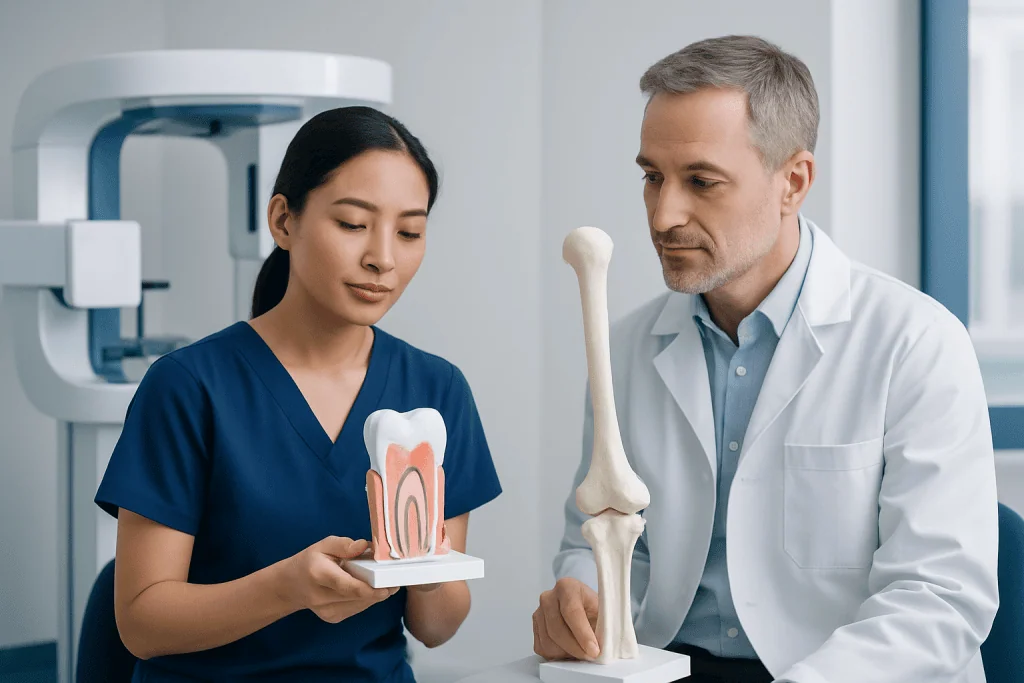
Teeth and bones can seem almost the same because both feel hard and strong and both rely on minerals for their strength. They also work closely together in the mouth and jaw. Teeth sit inside the jawbones, and healthy bone helps support them.
Another reason for confusion is that both teeth and bones can be seen on X-rays as dense structures. However, their composition is different. Bone contains collagen and living cells that support continuous repair. Teeth have several layers, and the outermost one, enamel, is the hardest substance in the human body but is not capable of true self-healing.
People may also hear that calcium helps both teeth and bones, which is true. Still, sharing minerals does not make them the same tissue. A helpful way to think about it is that bones are dynamic and constantly changing, while the visible parts of teeth are more like highly specialized, durable structures designed for biting and chewing.
How Teeth Are Built
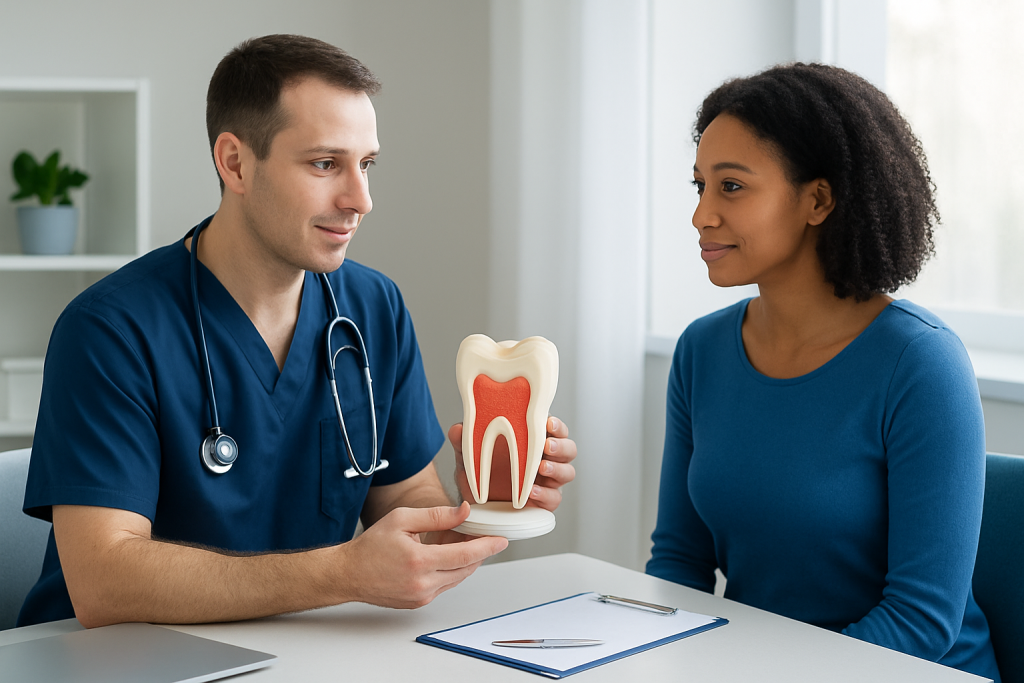
Each tooth has distinct layers, and understanding them helps explain why teeth are not bones. The outer layer is enamel, a very hard protective shell. Under enamel is dentin, which is less hard and contains tiny tubules that can transmit sensitivity. Covering the root is cementum, which helps anchor the tooth to surrounding tissues.
At the center is the pulp, which contains nerves, blood vessels, and connective tissue. This inner part is living tissue, which is why deep decay, trauma, or infection can cause significant pain. The pulp keeps the tooth nourished during development and contributes to its health, but it does not allow enamel to regenerate after damage.
Teeth are also supported by the periodontal ligament and the surrounding jawbone. This support system is one reason dental and bone health overlap. Conditions affecting the gums or jaw can weaken the structures that hold the tooth in place, even if the tooth itself is still present. Problems such as gum disease can gradually affect these tissues if not treated.
How Bones Differ from Teeth
Bones are living organs made of a mineralized matrix, collagen, blood vessels, and specialized cells. These cells continuously remove old bone and form new bone. This ability allows bones to adapt to stress, heal fractures, and respond to changes in the body’s needs over time.
Teeth do not function this way. Enamel has no living cells and no blood supply, so once it is worn away by decay, erosion, or trauma, the body cannot replace it. Dentin can respond to irritation to a limited extent, but this is not the same as full tissue regeneration. That is why cavities require fillings and why cracks may need restorative care.
This difference also explains why dental symptoms should not be ignored. A tooth may look intact from the outside while a problem develops inside or around it. A clinician may recommend treatments such as root canal treatment when the pulp is inflamed or infected, or dental implants when a missing tooth needs long-term replacement.
When Tooth or Jaw Symptoms Need Medical Review
Most people asking whether teeth are bones do not have a serious problem. Still, some symptoms deserve professional attention because they can point to decay, infection, injury, grinding, gum disease, or jaw joint disorders. Red flags include ongoing tooth pain, sensitivity that does not improve, swelling of the gums or face, pus, bleeding gums, a loose adult tooth, or a chipped or broken tooth.
Difficulty chewing, bad breath that persists despite brushing, mouth sores that do not heal, or pain near the jaw joint are also worth checking. If there is fever, spreading facial swelling, difficulty opening the mouth, or trouble swallowing, prompt medical or dental assessment is important because infections in the mouth can sometimes spread.
Jaw discomfort may come from the teeth, gums, jawbone, or the joint itself. In some cases, symptoms relate to temporomandibular joint disorders rather than the tooth structure alone. Early evaluation can help identify the source and guide appropriate care.
How a Dentist or Doctor Finds the Cause
If someone has symptoms along with questions about their teeth, the first step is usually a clinical examination. The clinician will ask when the symptoms started, whether there has been trauma, sensitivity to hot or cold, pain when biting, gum bleeding, grinding, or changes in eating habits and oral hygiene.
The mouth, gums, tongue, and jaw are then examined. The clinician may gently tap a tooth, check for mobility, look for signs of decay or cracks, and assess the gums for inflammation or recession. If jaw pain is present, they may also check how the jaw opens and closes and whether there is tenderness around the joint or chewing muscles.
Imaging is often helpful. Dental X-rays can reveal cavities between teeth, infections near the root, bone loss around teeth, or impacted teeth. Depending on the problem, treatment may involve monitoring, a filling, professional cleaning, wisdom tooth extraction, or referral for more advanced care. The goal is to identify whether the issue affects enamel, dentin, pulp, gums, or the supporting bone.
Treatment, Prevention, and Self-care
Treatment depends on the cause. Tooth decay may be managed with a filling, while deeper damage may need crown restoration or root canal treatment. Gum inflammation often improves with professional cleaning and better daily oral hygiene. Injuries such as chips, cracks, or missing teeth may need restorative dental procedures to protect function and appearance.
Prevention is especially important because enamel does not grow back. Brushing twice a day with fluoride toothpaste, cleaning between the teeth daily, reducing frequent sugary snacks and drinks, and attending regular dental checkups all help lower the risk of decay and gum disease. A mouthguard may be recommended for contact sports or nighttime grinding.
Bone health still matters for dental health because the jaw supports the teeth. A balanced diet, avoiding tobacco, and managing conditions that affect inflammation or healing can help protect both teeth and supporting structures. If symptoms continue despite home care, professional assessment is the safest next step. Near the end of the care pathway, some people may need multidisciplinary support; Acibadem International’s specialists in JCI-accredited hospitals diagnose and treat dental and jaw conditions for international patients.
Frequently asked questions
If teeth are not bones, what are they?
Teeth are specialized structures made of enamel, dentin, cementum, and pulp. They are designed for biting and chewing and are supported by the gums and jawbone. Although they contain minerals like bone, they are not the same type of tissue.
Why do teeth and bones both need calcium?
Calcium helps give both teeth and bones their hardness and strength. However, using the same mineral does not make them identical tissues. Teeth and bones use those minerals in different structures and have different abilities to repair themselves.
Can teeth heal themselves like bones do?
Not in the same way. Bone can remodel and heal because it contains living cells throughout the tissue. Tooth enamel cannot regenerate once it is lost, so cavities, chips, and erosion usually need dental treatment.
Are tooth problems related to bone problems?
Sometimes, but not always. Teeth and jawbone are closely connected, so gum disease or tooth loss can affect the supporting bone around the teeth. Still, many common dental problems begin in the tooth or gums rather than in the bone itself.
When should someone seek care for tooth symptoms?
A person should arrange a dental or medical evaluation if they have persistent tooth pain, swelling, bleeding gums, a loose adult tooth, a broken tooth, or sensitivity that does not improve. Urgent assessment is important for facial swelling, fever, trouble swallowing, or signs of spreading infection.
How do clinicians tell whether pain is from a tooth or the jaw?
They usually combine a history, physical examination, and dental imaging. They may look for decay, cracks, gum disease, bite problems, or joint tenderness. This helps determine whether the source is the tooth itself, the surrounding tissues, or the jaw joint.
References
- American Dental Association
- National Institute of Dental and Craniofacial Research
- Mayo Clinic
- Cleveland Clinic
- World Health Organization
This article is for general information only and is not a substitute for professional medical advice. Please consult a qualified doctor about your individual situation.
Explore treatments in Turkey — costs, top hospitals & a free quote
JCI-accredited · board-certified surgeons · reply within 24h
Add us as a Preferred Source to see more of our trusted health content across Google Search, AI Overviews and Discover.

More from the Health Library



Related Specialists

Prof. Dr. Hilal Ünal
General Surgery
Assoc. Prof. Dr. Ceren Yıldız Eren
Gynecology & Obstetrics
Prof. Dr. Duhan Fatih Bayrak
Cardiology
Prof. Dr. Filiz Saçan
Interventional Radiology