Areds: An Evidence-Based Guide for Patients

AREDS and AREDS2 supplements are designed for selected people with intermediate or advanced AMD, not for general eye-health prevention. AREDS2 is usually preferred because it replaces beta-carotene with lutein and zeaxanthin.
Key Takeaways
- AREDS and AREDS2 supplements are designed for selected people with intermediate or advanced AMD, not for general eye-health prevention.
- AREDS2 is usually preferred because it replaces beta-carotene with lutein and zeaxanthin.
- People who smoke or previously smoked should avoid beta-carotene-containing AREDS formulas.
- AREDS supplements do not restore lost vision or cure macular degeneration, but may help slow progression in eligible people.
- Regular eye examinations and prompt reporting of new visual symptoms remain essential.
AREDS refers to landmark eye-health studies that identified specific antioxidant and mineral supplements that may reduce the risk of advanced age-related macular degeneration (AMD) in certain patients. These supplements are not suitable for everyone, so an ophthalmologist should confirm whether they are appropriate.
What Does AREDS Mean?
AREDS stands for Age-Related Eye Disease Study. It refers to major clinical studies sponsored by the United States National Eye Institute that examined whether certain vitamins, antioxidants, and minerals could influence the course of age-related macular degeneration (AMD). The studies found that a specific high-dose supplement formula could lower the chance of progression to advanced AMD for some people who already had particular stages of the condition.
AMD affects the macula, the central part of the retina responsible for detailed vision used for reading, recognizing faces, and driving. It is a common cause of central vision loss with increasing age, although it does not usually cause complete blindness. The AREDS findings are relevant to AMD management, but they do not mean that supplements prevent AMD from developing or reverse existing retinal damage.
The original AREDS formula was later refined in the AREDS2 study. The newer formula replaced beta-carotene with lutein and zeaxanthin, nutrients naturally found in leafy green vegetables and in the retina. For most eligible patients, clinicians now generally recommend an AREDS2-based product rather than the original formulation.
Who May Benefit From AREDS2 Supplements?
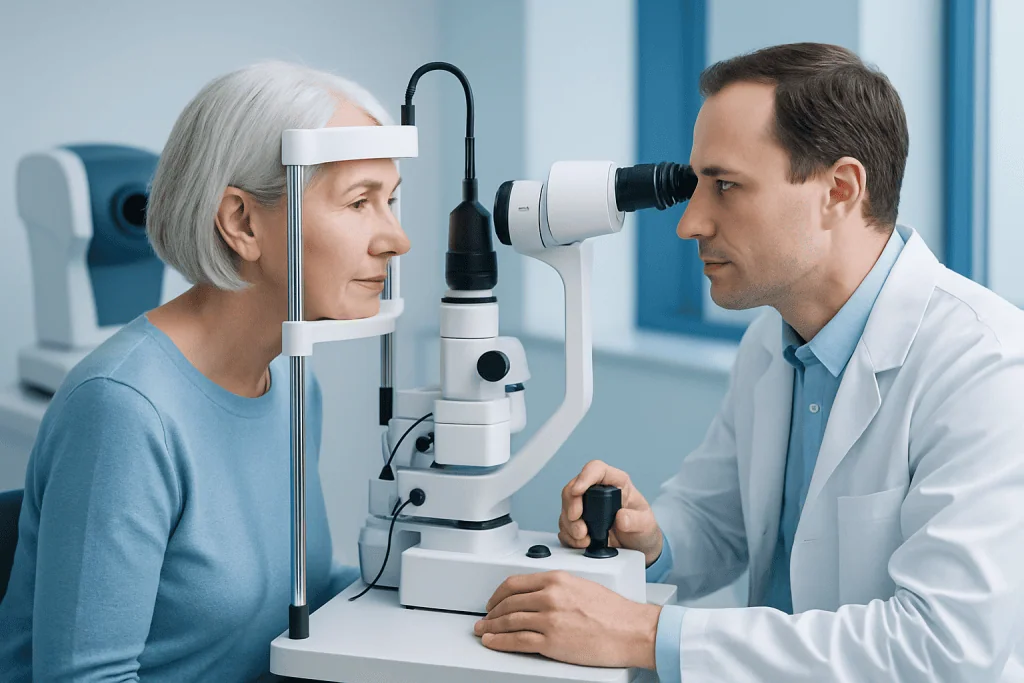
AREDS2 supplements may be considered for people with intermediate AMD in one or both eyes. They may also be recommended when one eye has advanced AMD and the other eye has intermediate AMD or earlier changes. An ophthalmologist determines the stage by examining the retina, often using retinal photographs and optical coherence tomography (OCT), a noninvasive imaging test.
Intermediate AMD commonly involves larger or more numerous deposits called drusen beneath the retina, or certain pigment changes. In this group, the AREDS studies showed that the formula could reduce the risk of progression to late AMD. It is important to understand that the expected benefit is lowering risk over time, not improving vision that has already been lost.
AREDS or AREDS2 supplements have not been shown to prevent AMD in people with healthy eyes, and they are not usually recommended for early AMD alone. They also do not replace medical treatment for wet AMD, the form in which abnormal blood vessels can leak beneath the macula. People diagnosed with AMD should discuss their individual stage and care plan with an eye specialist.
AREDS, AREDS2, and What Is in the Formula
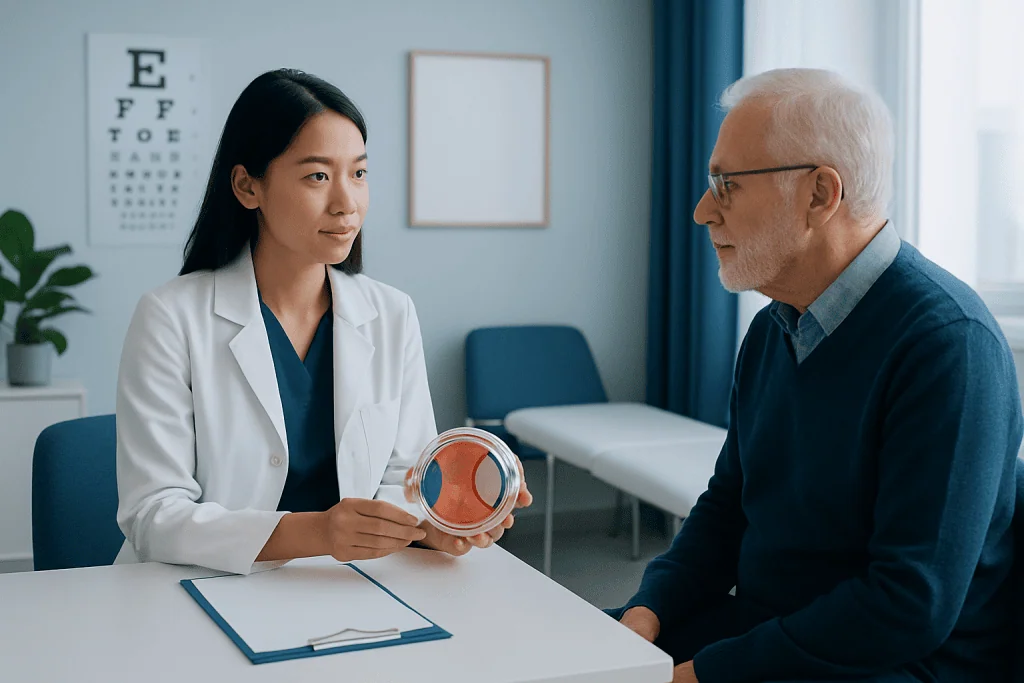
The original AREDS formulation contained antioxidant vitamins, zinc, copper, and beta-carotene. Copper was included because zinc can affect copper levels in the body. Although this formula demonstrated benefit in the study population, beta-carotene raised an important safety concern for people with a smoking history.
AREDS2 tested the addition of lutein and zeaxanthin and evaluated whether beta-carotene could be removed. The study supported using lutein and zeaxanthin in place of beta-carotene. This is the formulation most commonly recommended today because it retains the intended eye-health nutrients while avoiding the beta-carotene concern.
Products labeled for eye health are not all the same. A standard multivitamin, an omega-3 product, or a supplement containing small amounts of lutein may not match the formula studied in AREDS2. Patients should check the product label with their ophthalmologist, pharmacist, or primary care clinician rather than assuming any “vision vitamin” offers the same evidence-based benefit.
- AREDS2 products typically include vitamin antioxidants, zinc, copper, lutein, and zeaxanthin.
- They do not contain beta-carotene.
- They are intended to complement, not replace, a balanced diet and eye monitoring.
Important Safety Considerations
Even though AREDS2 ingredients are vitamins and minerals, the formula contains higher amounts than those found in many ordinary multivitamins. It is sensible to review all supplements and medicines with a qualified clinician before starting it. This helps avoid taking duplicate ingredients from more than one product and allows individual risks to be considered.
People who currently smoke or have smoked in the past should not use the original beta-carotene-containing AREDS formula. In research involving smokers, beta-carotene supplementation was associated with an increased risk of lung cancer. AREDS2 avoids beta-carotene and is generally the safer choice for this group, but a clinician should still confirm the most appropriate option.
Some people may experience digestive upset from zinc-containing supplements. Vitamin and mineral supplements can also be relevant for people with kidney disease, liver disease, bleeding disorders, or nutritional conditions, and for those taking medicines that affect blood clotting or other treatments with possible interactions. A patient should not stop prescribed medication or use an AREDS product as a substitute for medical care.
AREDS2 as Part of an AMD Care Plan
Supplements are only one part of AMD care. Regular dilated eye examinations allow clinicians to identify changes in the retina before symptoms become significant. Retinal imaging may be used to monitor drusen, pigment changes, fluid, and other signs that help distinguish dry AMD from wet AMD.
For people with wet AMD, prompt treatment is particularly important. Anti-VEGF medicines delivered into the eye can help control the abnormal blood vessels responsible for leakage in many cases. AREDS2 does not replace these treatments, although an ophthalmologist may recommend supplements alongside treatment when the person also meets the criteria for intermediate AMD.
Home monitoring may also be advised. An Amsler grid, a simple pattern of straight lines, can help a person notice new distortion, blurring, or missing areas in central vision. However, it cannot diagnose AMD or rule out progression. Any new change should be reported directly to an eye-care professional rather than waiting for the next routine appointment.
Lifestyle Measures That Support Eye Health
A healthy lifestyle supports overall vascular and retinal health, although it cannot guarantee that AMD will not develop or progress. Not smoking is one of the most important protective steps. Smoking is linked with a higher risk of AMD and can also increase the safety concerns associated with beta-carotene-containing supplements.
A balanced eating pattern can provide nutrients that support general health. Many clinicians encourage regular intake of dark green leafy vegetables, colorful fruits and vegetables, fish, legumes, whole grains, and sources of healthy fats. Maintaining healthy blood pressure, blood sugar, and cholesterol levels may also support eye and cardiovascular health.
Protecting the eyes from excessive ultraviolet exposure with appropriate sunglasses, staying physically active within personal ability, and attending routine health reviews are practical measures. These habits do not replace AREDS2 for an eligible patient, but they provide a broader foundation for health and can address several factors that may influence vision over time.
When to Seek Medical Care
A person should arrange an eye examination if they notice gradual difficulty reading, reduced contrast, blurred central vision, trouble recognizing faces, or a need for brighter light for close work. These symptoms can have many causes, including cataract, refractive changes, and AMD, so a professional assessment is needed rather than self-treating with supplements.
Urgent eye-care assessment is advisable for sudden or rapidly worsening central blur, straight lines that look bent or wavy, a new dark or blank area in vision, or a sudden change in one eye. These symptoms may indicate wet AMD or another retinal problem that requires timely evaluation. New flashes of light, a sudden shower of floaters, or a curtain-like shadow also require urgent assessment.
Acibadem International’s multidisciplinary specialists and JCI-accredited hospitals can assess retinal conditions and discuss evidence-based options for international patients. A person considering AREDS2 should bring details of their current medicines, supplements, smoking history, and eye diagnoses to their appointment so recommendations can be tailored safely.
Frequently asked questions
What is the difference between AREDS and AREDS2?
AREDS is the original study and supplement formula developed for selected people with AMD. AREDS2 is the updated version that replaced beta-carotene with lutein and zeaxanthin. AREDS2 is generally preferred, particularly for anyone who currently smokes or has smoked previously.
Can AREDS2 prevent macular degeneration?
No. AREDS2 has not been shown to prevent AMD in people without the condition. Its main evidence-based role is reducing the risk of progression to advanced AMD in people with intermediate AMD or advanced AMD in one eye.
Will AREDS2 improve vision?
AREDS2 does not restore vision that has already been lost from AMD. It may help reduce the chance of further progression in eligible people. Ongoing eye monitoring is still necessary because AMD can change despite supplement use.
Should everyone over age 50 take AREDS2 vitamins?
No. Age alone is not a reason to take AREDS2. An ophthalmologist should identify whether a person has the stage of AMD that is likely to benefit, while also considering medical history, smoking history, medicines, and other supplements.
Can a regular multivitamin replace AREDS2?
Usually not. Standard multivitamins generally do not contain the same combination and amounts of nutrients used in the AREDS2 research. Patients should compare labels carefully and seek professional advice before combining products.
Does AREDS2 treat wet macular degeneration?
AREDS2 is not a treatment for active wet AMD. Wet AMD often requires specialist assessment and may be treated with medicines injected into the eye to control abnormal blood vessels. AREDS2 may still be recommended in some people based on their AMD stage, but it does not replace retinal treatment.
References
- National Eye Institute
- American Academy of Ophthalmology
- National Institutes of Health Office of Dietary Supplements
- Age-Related Eye Disease Study Research Group
This article is for general information only and is not a substitute for professional medical advice. Please consult a qualified doctor about your individual situation.
Explore treatments in Turkey — costs, top hospitals & a free quote
JCI-accredited · board-certified surgeons · reply within 24h
Add us as a Preferred Source to see more of our trusted health content across Google Search, AI Overviews and Discover.

More from the Health Library



Related Specialists

Assoc. Prof. Dr. Sercan Yılmaz
Urology
Assoc. Prof. Dr. Berkin Toker
Orthopedic Surgery & Traumatology
Prof. Dr. Tansu Karaahmet
Cardiology
Dr. Güner Esra Kutlu
Pediatrics