Arm lift vs Liposuction: Which Is Right for You?

An arm lift, also called brachioplasty, removes excess upper-arm skin and may remove some fat. Arm liposuction removes localized fat but does not reliably tighten significant loose skin.
Key Takeaways
- An arm lift, also called brachioplasty, removes excess upper-arm skin and may remove some fat.
- Arm liposuction removes localized fat but does not reliably tighten significant loose skin.
- Good skin elasticity is important for a smooth result after liposuction alone.
- Some people benefit from a combined arm lift and liposuction approach.
- Both procedures involve scars, recovery time, and possible complications that should be discussed with a qualified plastic surgeon.
Arm lift vs liposuction is mainly a choice between treating loose, hanging skin and treating localized fat with good skin elasticity. A plastic surgeon can assess skin quality, fat distribution, health history, and personal goals to recommend the safest approach.
Arm lift vs liposuction: the main difference
When comparing arm lift vs liposuction, the key question is whether the main concern is excess skin, excess fat, or both. An arm lift is usually the more suitable option when the upper arms have loose or hanging skin, particularly after substantial weight loss or with age-related loss of skin elasticity. Liposuction may be appropriate when the skin is firm enough to contract after fat is removed.
Neither procedure is designed as a weight-loss treatment. Instead, they aim to improve the contour and proportion of the upper arm. The best choice depends on an in-person assessment, because the amount and location of fat, skin quality, muscle tone, scars from previous surgery, and overall health can all affect the likely result.
For a fuller explanation of the operation, preparation, and aftercare, readers can review arm lift surgery. A surgeon may recommend liposuction alone, an arm lift alone, or a combined approach when both excess fat and loose skin are present.
How each procedure works
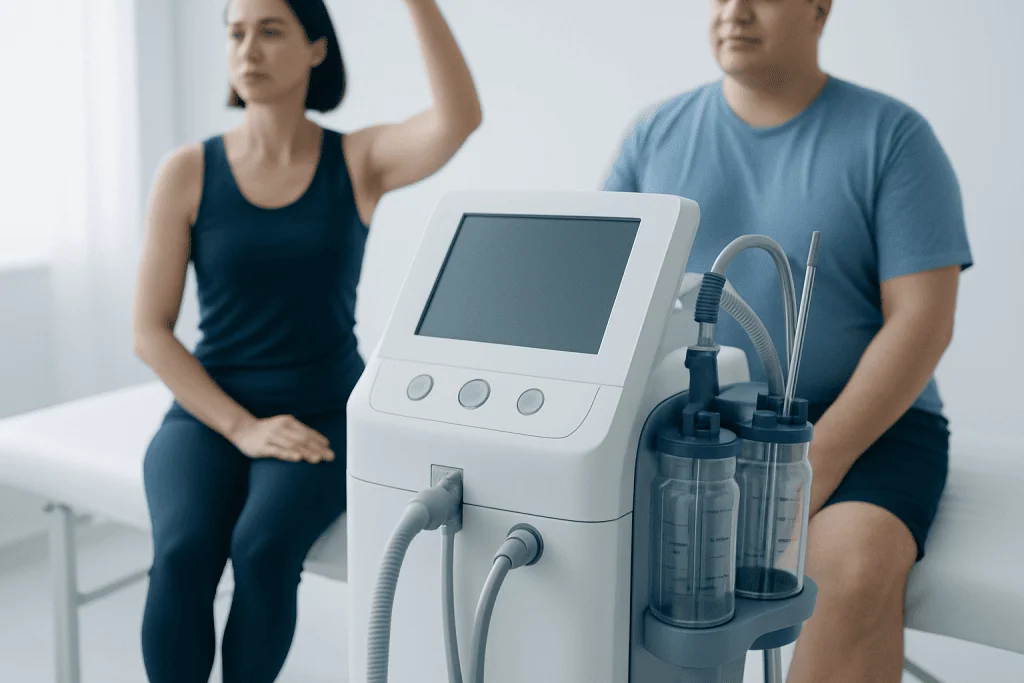
An arm lift, medically called brachioplasty, reshapes the upper arm by removing loose skin and, when needed, a limited amount of underlying fat. The surgeon makes an incision in a location selected to balance access with scar visibility. Depending on the degree of skin laxity, the incision may be shorter and placed near the armpit or may extend along the inner arm toward the elbow.
During arm liposuction, a surgeon makes small incisions and inserts a thin tube called a cannula beneath the skin. The cannula loosens and removes fat using suction. Because liposuction does not remove a large amount of skin, the skin must be able to retract reasonably well for the arm to look smooth after healing.
In a combined procedure, liposuction can first reduce excess fatty tissue, while brachioplasty removes and tightens the remaining loose skin. Combining techniques may be useful in selected patients, but it can also affect operative planning, recovery, and the discussion of risks. More information on liposuction can help patients understand the role of fat removal in body contouring.
Who may be a candidate for each option

People considering an arm lift often have visible skin laxity that does not improve with exercise. This may occur after major weight changes, pregnancy, or natural changes in collagen and skin elasticity over time. Candidates are generally in good overall health, have a stable weight, do not smoke or are willing to stop as advised, and have realistic expectations about scars and recovery.
Arm liposuction may be considered for people with localized upper-arm fat and relatively elastic skin. It tends to be less suitable when the skin already hangs or has marked wrinkling, because removing fat without removing excess skin can make looseness more noticeable. A surgeon may gently assess skin recoil during the consultation and review photographs or body changes over time.
Stable body weight matters for both options. Ongoing major weight loss can create additional skin laxity after surgery, while future weight gain may change the result. People with poorly controlled medical conditions, active skin infections, certain bleeding risks, or unrealistic expectations may need treatment of these issues or may be advised against elective surgery at that time.
- Arm lift is more often considered for significant loose skin, with or without excess fat.
- Liposuction is more often considered for localized fat with good skin elasticity.
- A combined approach may be considered when both concerns are substantial.
What happens before, during, and after surgery
Before either procedure, the surgeon reviews medical history, medicines and supplements, allergies, smoking or nicotine use, prior operations, and goals for upper-arm shape. A physical examination helps determine whether liposuction, brachioplasty, or both would best address the concern. Patients may be asked to adjust certain medicines only under guidance from their prescribing clinician and surgeon.
These procedures are commonly performed under anesthesia in an accredited surgical setting. For an arm lift, the surgeon makes planned incisions, removes excess skin and possibly fat, reshapes the tissue, and closes the incisions. For liposuction, small incisions are used to introduce fluid and a cannula before fat is suctioned out. The exact technique and length of surgery vary according to the planned treatment.
After surgery, dressings and a compression garment may be used to reduce swelling and support healing. Some patients go home the same day, while others may need a different plan based on the extent of surgery and their health needs. Written instructions should cover wound care, showering, pain management, arm movement, follow-up visits, and symptoms that require prompt medical advice.
Recovery timeline and expected results
Recovery differs between individuals and is usually more involved after an arm lift than after liposuction alone. Swelling, bruising, tightness, numbness, and discomfort are common early effects. Most people need to limit lifting, reaching, strenuous exercise, and repetitive arm movements initially, especially after brachioplasty, to protect the incision and reduce tension on healing tissues.
After liposuction, many people return to light daily activities relatively soon, but vigorous activity is usually delayed until the surgeon confirms that healing is progressing well. After an arm lift, return to work and normal activity depends on the physical demands of the job and the extent of surgery. Follow-up appointments are important for monitoring healing and adjusting activity recommendations.
Initial contour changes can be seen as swelling settles, but the final appearance develops gradually over weeks to months. Arm-lift scars also mature over time and may remain visible, although they often fade. Scar care should be individualized; patients should avoid unapproved products and protect healing scars from sun exposure as advised by their surgical team.
Benefits, limitations, and possible risks
The potential benefit of an arm lift is a more defined upper-arm contour when skin laxity is the principal concern. Its important limitation is the trade-off of a surgical scar, which may be longer when more skin needs to be removed. Liposuction may offer smaller scars and can improve fullness caused by excess fat, but it cannot reliably correct pronounced sagging skin.
All surgery carries risks. Possible complications include bleeding, infection, fluid collection, delayed wound healing, changes in skin sensation, asymmetry, contour irregularities, unfavorable scarring, blood clots, and anesthesia-related complications. Rarely, additional treatment or revision surgery may be needed. The individual level of risk depends on factors such as smoking, diabetes, circulation, body weight, medications, and the complexity of surgery.
A detailed consultation helps place these risks in context. Patients should ask where the procedure will be performed, what recovery support is available, what scars are expected, how complications are managed, and whether their goals are realistic for their anatomy. Choosing a qualified, experienced plastic surgeon and following pre- and postoperative instructions can support safer care.
Preparing well and supporting long-term results
Healthy lifestyle habits cannot remove substantial loose skin, but they can support overall wellbeing before and after body-contouring surgery. A stable weight, balanced nutrition, adequate protein intake where appropriate, regular movement, and avoiding tobacco and nicotine products can help the body prepare for healing. Any changes in diet, supplements, or prescribed medicines should be discussed with the care team.
After recovery, maintaining a stable weight helps preserve the contour achieved by surgery. Exercise can strengthen arm muscles and improve fitness, but it cannot tighten a large amount of stretched skin. Patients should resume activity gradually and only according to their surgeon’s advice.
At Acibadem International, multidisciplinary specialists in JCI-accredited hospitals assess and treat upper-arm contour concerns for international patients, with surgical plans tailored to individual anatomy, health, and goals.
When to seek medical care
Anyone considering arm contouring should arrange a consultation with a qualified plastic surgeon rather than relying on online images or a single procedure trend. An assessment is especially important after substantial weight loss, when loose skin and residual fat may occur together and the most appropriate approach is not always obvious.
After surgery, patients should contact their surgical team promptly if they develop worsening rather than improving pain, rapidly increasing swelling, persistent bleeding, fever, spreading redness, wound drainage, shortness of breath, chest pain, or one-sided leg swelling. These symptoms do not always indicate a serious problem, but they require timely medical assessment.
Urgent emergency care is appropriate for severe breathing difficulty, chest pain, fainting, or symptoms of a severe allergic reaction. Following the surgeon’s instructions and attending scheduled reviews are important parts of a safe recovery.
Frequently asked questions
Is an arm lift better than liposuction?
Neither procedure is universally better. An arm lift is generally more effective for significant loose or hanging skin, while liposuction is often more suitable for localized fat when the skin has good elasticity. A plastic surgeon can assess which option is likely to match the person's anatomy and goals.
Can liposuction tighten loose arm skin?
Liposuction can allow mildly loose, elastic skin to retract in some people, but it does not directly remove or tighten substantial excess skin. If there is marked skin laxity, liposuction alone may leave the arm looking looser. An arm lift may be recommended in that situation.
Can an arm lift and liposuction be done together?
Yes, they can be combined in selected patients when both excess fat and loose skin are present. The surgeon considers safety, skin quality, the amount of correction needed, and the patient's overall health. Combining procedures may offer a more complete contouring result but requires individualized planning.
Will there be scars after an arm lift?
Yes. An arm lift requires an incision to remove skin, so a scar is expected. Its length and placement depend on how much skin needs to be removed, and scars usually change gradually as they mature over time.
How long does recovery take after arm liposuction or an arm lift?
Recovery time varies with the procedure and the individual. Liposuction generally involves a shorter recovery than an arm lift, while brachioplasty often requires more time before heavy lifting and strenuous exercise can resume. The surgeon provides personalized activity guidance during follow-up visits.
Are arm lift results permanent?
The removed skin and fat do not return in the same way, but future weight changes, aging, and changes in skin elasticity can affect the upper-arm contour. Maintaining a stable weight and healthy habits can help preserve the result. No cosmetic procedure can stop natural aging.
References
- American Society of Plastic Surgeons
- American Society for Aesthetic Plastic Surgery
- National Health Service
- Mayo Clinic
This article is for general information only and is not a substitute for professional medical advice. Please consult a qualified doctor about your individual situation.
Arm Lift in Turkey — costs, top hospitals & a free quote
JCI-accredited · board-certified surgeons · reply within 24h
Add us as a Preferred Source to see more of our trusted health content across Google Search, AI Overviews and Discover.

Plastic, Reconstructive & Aesthetic Surgery
Reconstructive and aesthetic procedures for the face and body, performed by experienced surgeons.
35 specialists in this unit