Arthroscopy: What It Is, How It Works, and What It Can Treat

Arthroscopy uses a small camera and tiny instruments inserted through small skin incisions. It can help diagnose and treat joint problems such as torn cartilage, ligament injuries, inflammation, and loose fragments.
Key Takeaways
- Arthroscopy uses a small camera and tiny instruments inserted through small skin incisions.
- It can help diagnose and treat joint problems such as torn cartilage, ligament injuries, inflammation, and loose fragments.
- Common joints treated with arthroscopy include the knee and shoulder, but other joints can also be evaluated.
- Recovery is often faster than with open surgery, but rehabilitation is still important.
- Not every joint problem needs arthroscopy; treatment depends on symptoms, imaging, exam findings, and the person’s goals.
Arthroscopy is a minimally invasive procedure that lets doctors look inside a joint and, in many cases, treat the problem at the same time. It is commonly used for the knee, shoulder, ankle, hip, elbow, and wrist when symptoms such as pain, swelling, locking, or instability do not improve with simpler treatments.
Overview
Arthroscopy is a medical procedure used to examine and treat problems inside a joint. During the procedure, a surgeon inserts a thin instrument with a small camera, called an arthroscope, through a small incision in the skin. The camera sends images to a screen, allowing the surgeon to see structures inside the joint without making a large opening.
Because arthroscopy is minimally invasive, it usually causes less damage to surrounding tissue than traditional open surgery. This often means smaller scars, less pain after the procedure, and a shorter recovery period for many patients. However, recovery still depends on the joint involved, the condition being treated, and whether a repair was performed.
Arthroscopy can be used for both diagnosis and treatment. In some cases, it helps clarify the cause of joint symptoms when physical examination and imaging do not give a complete answer. In many others, it is performed with the goal of treating the problem at the same time, such as removing damaged tissue, repairing cartilage, or smoothing rough joint surfaces.
The procedure is most often used in the knee and shoulder, but it can also be done in the hip, ankle, elbow, and wrist. It is one of the most widely used approaches in modern orthopedic care, especially when symptoms limit daily activity, sports, work, or sleep.
How Arthroscopy Works
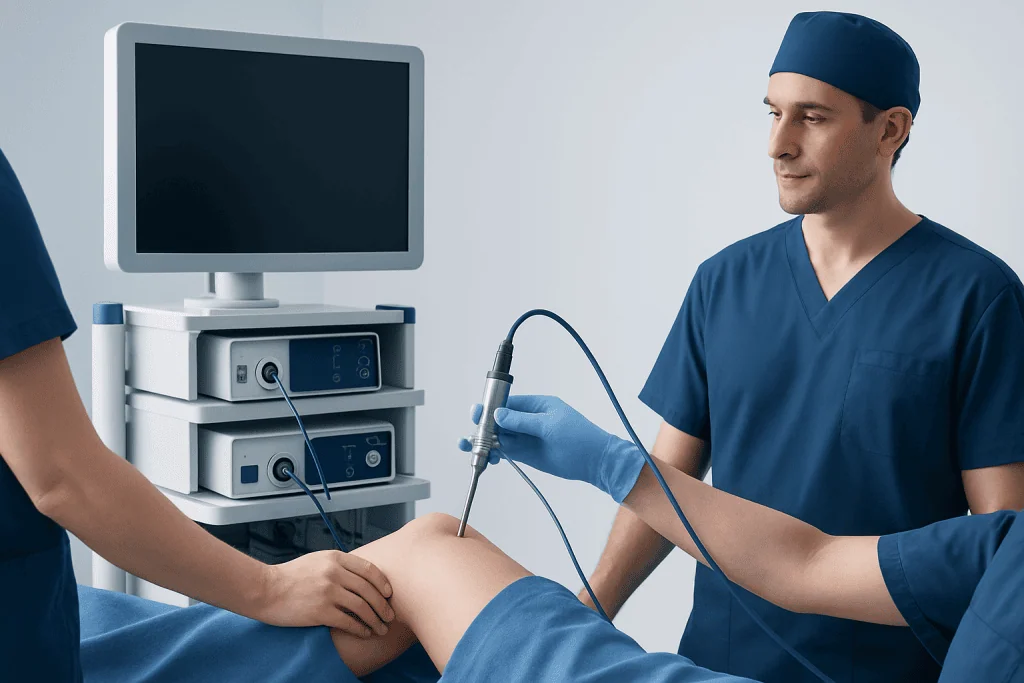
In arthroscopy, the surgeon makes one or more very small incisions around the joint. Through one incision, the arthroscope is inserted. Through other small openings, special instruments may be passed into the joint to examine tissues closely or carry out treatment. Sterile fluid is often used to gently expand the joint space and improve visibility.
The camera shows the inside of the joint in real time. This allows the surgeon to inspect cartilage, ligaments, tendons, the joint lining, and other structures for tears, inflammation, loose bodies, or wear. If a treatable problem is found, the surgeon may trim damaged tissue, repair a structure, remove inflamed tissue, or clean out loose fragments during the same procedure.
Arthroscopy may be done under general anesthesia, regional anesthesia, or local anesthesia with sedation, depending on the joint, the expected procedure, and the patient’s overall health. It may be performed as day surgery, meaning the person goes home the same day, although some situations require a longer period of observation.
After the procedure, the small incisions are closed with sutures, strips, or dressings. The joint may be wrapped, and crutches, a sling, or a brace may be recommended. Even though the incisions are small, arthroscopy is still a real surgical procedure and should be approached with appropriate preparation and follow-up care.
What Conditions Arthroscopy Can Treat
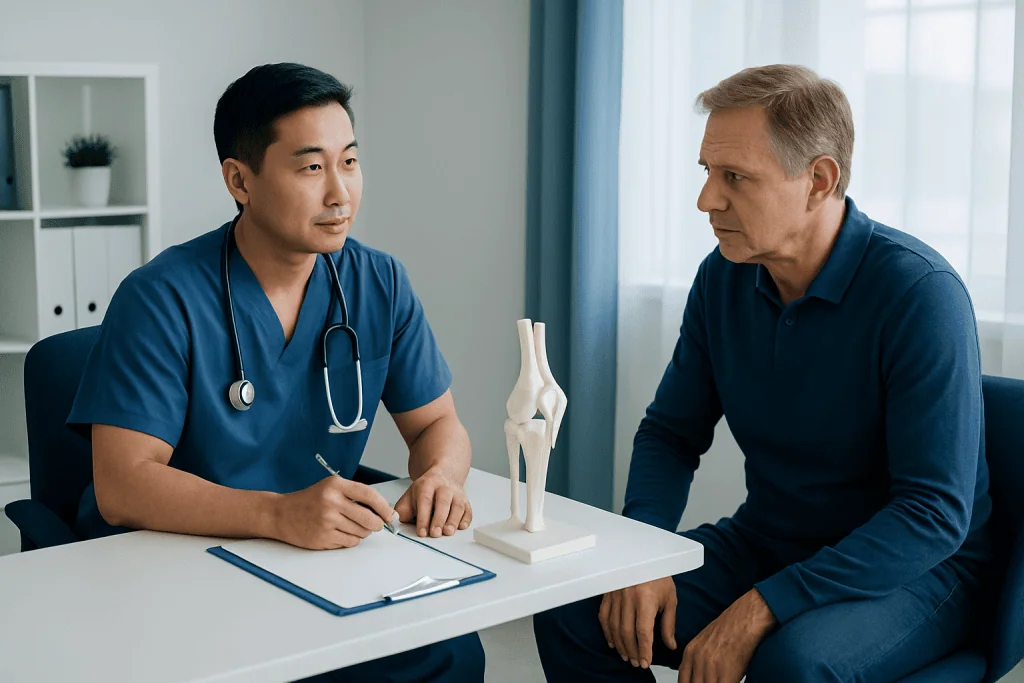
Arthroscopy can help manage a range of joint conditions. In the knee, it may be used for meniscus tears, loose cartilage fragments, some ligament-related problems, inflamed joint lining, or symptoms caused by mechanical catching or locking. In selected cases, it is part of the evaluation or treatment plan for knee pain that has not improved with rest, medication, physical therapy, or other conservative care.
In the shoulder, arthroscopy is commonly used to treat rotator cuff problems, labral tears, recurrent dislocation, inflammation, impingement, and some causes of stiffness. It may also support the treatment of shoulder pain when the source of symptoms is inside the joint or nearby soft tissues. Depending on the diagnosis, the surgeon may recommend shoulder arthroscopy to repair or stabilize damaged structures.
Other joints can also benefit from arthroscopy. In the ankle, it may help with loose bodies, cartilage damage, and chronic impingement. In the wrist or elbow, it can be used to evaluate persistent pain, remove inflamed tissue, or treat certain sports-related injuries. In the hip, arthroscopy may be used for labral tears and some forms of impingement in appropriately selected patients.
Not every condition is best treated arthroscopically. For example, advanced osteoarthritis may not improve with arthroscopy alone, and some injuries require open surgery or joint replacement instead. When symptoms are due to severe joint damage, other approaches such as knee replacement or hip replacement may be more appropriate than a minimally invasive procedure.
Symptoms and Situations That May Lead to Arthroscopy
Doctors may consider arthroscopy when a person has ongoing joint symptoms that interfere with normal life. These symptoms often include pain, swelling, stiffness, clicking, locking, giving way, or a reduced range of motion. The need for arthroscopy becomes more likely when symptoms persist despite rest, activity modification, anti-inflammatory treatment, or structured physical therapy.
Mechanical symptoms are especially important. A joint that locks, catches, or feels unstable may have a torn cartilage structure, loose fragment, or damaged stabilizing tissue. Athletes and physically active adults may also be evaluated for arthroscopy after a twisting injury, fall, or repetitive overhead movement that has caused persistent weakness or pain.
Arthroscopy is not based on symptoms alone. Many joint problems improve with nonsurgical care, and some imaging findings do not require surgery if they are not causing significant symptoms. The decision usually depends on how severe the symptoms are, how long they have lasted, what activities the person wants to return to, and whether there is a treatable problem inside the joint.
For some patients, arthroscopy is planned because imaging already shows a condition that is likely to benefit from minimally invasive treatment. For others, it is recommended after other options have been tried and symptoms still prevent comfortable walking, climbing stairs, lifting the arm, working, or participating in sports.
Diagnosis and Preoperative Assessment
Before arthroscopy is recommended, the doctor starts with a detailed medical history and physical examination. The patient is asked about the location of pain, how the symptoms started, what makes them worse, whether there is locking or instability, and how symptoms affect work, sleep, exercise, and daily activities.
Imaging tests are often part of the evaluation. X-rays can show bone alignment, arthritis, and fractures, while MRI is especially useful for looking at soft tissues such as ligaments, cartilage, menisci, labrum, and tendons. Ultrasound may also be used in some joints, especially for tendon-related problems around the shoulder. These tests help determine whether arthroscopy is likely to be beneficial.
Preoperative assessment also includes a review of general health. The surgeon and anesthesia team may ask about heart or lung disease, diabetes, allergies, prior surgeries, current medications, and any history of blood clots or bleeding problems. Patients may be advised to stop certain medications before surgery, depending on medical guidance.
In some cases, the surgeon may explain that arthroscopy is both diagnostic and therapeutic. This means the exact extent of damage may be confirmed once the camera is inside the joint, and treatment can then be tailored during the same operation. Clear communication about goals, expected recovery, and alternatives is an important part of informed decision-making.
Treatment, Recovery, and Rehabilitation
What happens during arthroscopy depends on the problem being treated. The surgeon may trim a torn meniscus, repair a ligament or labrum, remove loose fragments, smooth damaged tissue, or clean inflamed lining from the joint. For knee conditions, this may be done through knee arthroscopy when it is the right option based on symptoms and examination findings.
Recovery varies widely. Someone who has a simple cleanup procedure may return to light activities relatively quickly, while a person who has a tendon, cartilage, or ligament repair may need a sling, brace, limited weight-bearing, and a longer rehabilitation program. Swelling, mild discomfort, and temporary stiffness are common in the early days after surgery.
Physical therapy is often a key part of recovery. Exercises help restore movement, strengthen muscles around the joint, reduce swelling, and improve balance and control. Following the rehabilitation plan is important because returning to activity too early can slow healing or increase the chance of reinjury.
Potential risks exist with any surgery, including infection, bleeding, blood clots, stiffness, nerve or blood vessel injury, and ongoing symptoms. These complications are uncommon, but patients should understand them before the procedure. A qualified orthopedic surgeon can explain the likely benefits and limitations in the context of each individual case.
Self-care, Prevention, and When to See a Doctor
Not all joint problems can be prevented, but good joint care may lower the risk of injury and overuse. Helpful habits include warming up before exercise, strengthening the muscles that support the joint, using proper sports technique, increasing training gradually, and maintaining a body weight that reduces unnecessary stress on the knees and hips.
For people recovering from a minor joint injury, early self-care may include rest, ice, compression, elevation, and short-term activity modification, if advised by a doctor. Supportive footwear, joint-friendly exercise, and guided rehabilitation can also help reduce ongoing strain. If symptoms are improving, surgery may not be needed.
A doctor should be consulted when joint pain lasts more than a few weeks, keeps returning, or is severe enough to affect walking, lifting, sleeping, or daily tasks. Medical assessment is also important if the joint locks, gives way, becomes visibly swollen, or cannot move normally after an injury. These may suggest structural damage that needs expert evaluation.
Patients who are considering arthroscopy benefit from discussing all treatment options, including nonsurgical care and other forms of surgery when necessary. Near the end of the care pathway, some people may seek specialized assessment at centers such as Acibadem International, where multidisciplinary specialists in JCI-accredited hospitals diagnose and treat joint conditions for international patients.
Frequently asked questions
Is arthroscopy a surgery?
Yes. Arthroscopy is a surgical procedure, even though it uses small incisions and a camera rather than a large opening. It is considered minimally invasive, but it still requires careful planning, anesthesia, and recovery.
What joints can be treated with arthroscopy?
Arthroscopy is most commonly used in the knee and shoulder. It can also be performed in the hip, ankle, elbow, and wrist, depending on the condition and the surgeon’s assessment.
How long does it take to recover from arthroscopy?
Recovery depends on what was done during the procedure and which joint was treated. A simple procedure may allow a faster return to normal activity, while repairs of tendons, cartilage, or ligaments usually require a longer rehabilitation period.
Will arthroscopy cure arthritis?
Arthroscopy does not cure arthritis. In selected cases it may help treat specific mechanical symptoms inside a joint, but advanced arthritis often needs other forms of treatment such as medication, physical therapy, injections, or joint replacement.
Is arthroscopy painful?
Some pain, swelling, and stiffness are normal after arthroscopy, but these symptoms are usually manageable with the recovery plan provided by the medical team. The level of discomfort varies from person to person and depends on the extent of the procedure.
When is arthroscopy better than open surgery?
Arthroscopy may be preferred when the problem can be safely treated through small incisions with specialized instruments. It is not always the best option, though, because some injuries or advanced joint damage are better treated with open surgery or replacement procedures.
References
- American Academy of Orthopaedic Surgeons
- National Institute of Arthritis and Musculoskeletal and Skin Diseases
- National Health Service
- MedlinePlus
- American Orthopaedic Society for Sports Medicine
This article is for general information only and is not a substitute for professional medical advice. Please consult a qualified doctor about your individual situation.
Arthroscopy in Turkey — costs, top hospitals & a free quote
JCI-accredited · board-certified surgeons · reply within 24h
Add us as a Preferred Source to see more of our trusted health content across Google Search, AI Overviews and Discover.

Orthopedics & Spine
Care for bones, joints and the musculoskeletal system, including joint replacement, sports injuries and trauma.
125 specialists in this unit