Astigmatism: A Complete Medical Overview

Astigmatism is a refractive error, not a disease or infection. It commonly causes blurred or distorted vision, eye strain, and headaches.
Key Takeaways
- Astigmatism is a refractive error, not a disease or infection.
- It commonly causes blurred or distorted vision, eye strain, and headaches.
- A routine eye examination can diagnose astigmatism accurately.
- Glasses and contact lenses are common treatments, and some people may be candidates for refractive surgery.
- Children and adults should have vision changes evaluated, especially if symptoms affect daily activities.
Astigmatism is a common vision problem caused by an uneven curve in the cornea or lens, which makes light focus unevenly on the retina. It can affect children and adults, often occurs alongside nearsightedness or farsightedness, and is usually manageable with glasses, contact lenses, or other treatment options.
Overview
Astigmatism is a common refractive error that causes blurred or distorted vision because the front surface of the eye, called the cornea, or the lens inside the eye has an uneven curve. Instead of focusing light at a single sharp point on the retina, the eye focuses it at multiple points, which reduces clarity at near, far, or both distances.
This condition can be present from birth or develop over time. It may occur on its own or together with nearsightedness or farsightedness. Many people have a mild degree of astigmatism, and not everyone notices symptoms right away.
Astigmatism is not an eye infection and usually does not mean the eye is damaged. In most cases, it is a structural variation in the shape of the eye. With proper assessment and correction, most people can achieve clear, comfortable vision for reading, screen use, driving, and other daily activities.
How Astigmatism Affects Vision
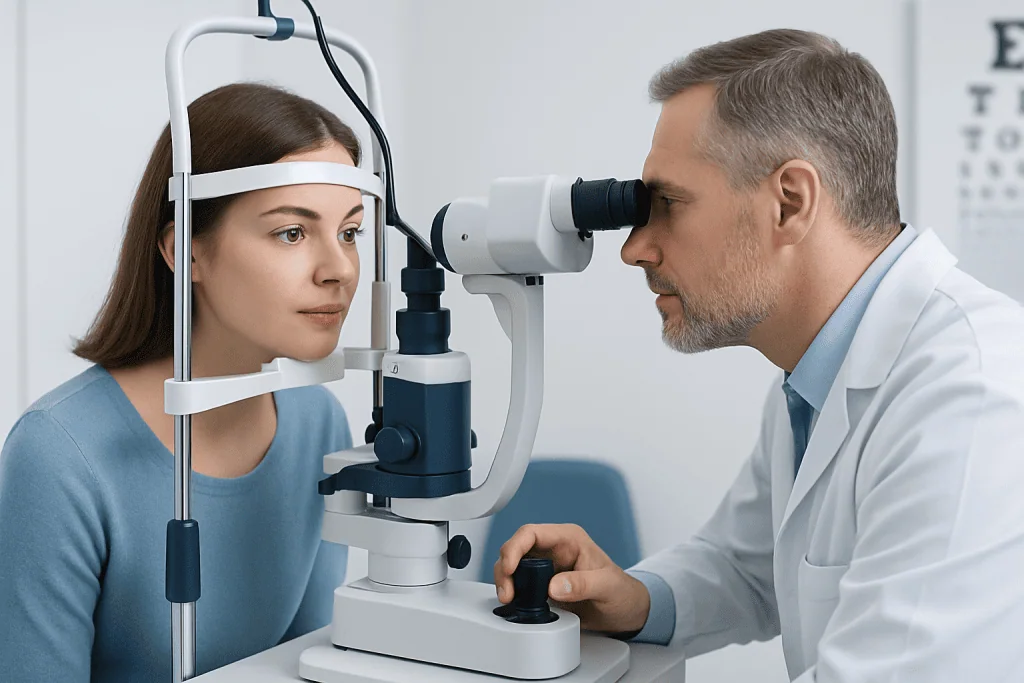
In a regularly curved eye, the cornea and lens bend incoming light evenly so the image focuses sharply on the retina. In astigmatism, the curve is more like an oval than a symmetrical round shape. Because of this, light rays bend unevenly and do not meet at one precise point.
This can make vision appear blurry, shadowed, stretched, or distorted. Some people notice trouble seeing road signs or subtitles, while others struggle more with reading fine print or working on screens for long periods. Symptoms may be subtle at first and become more noticeable when the eyes are tired.
Astigmatism can affect one eye or both eyes, and the amount may differ between them. It can also change gradually over time, which is why regular eye examinations are important even when symptoms seem mild.
Symptoms
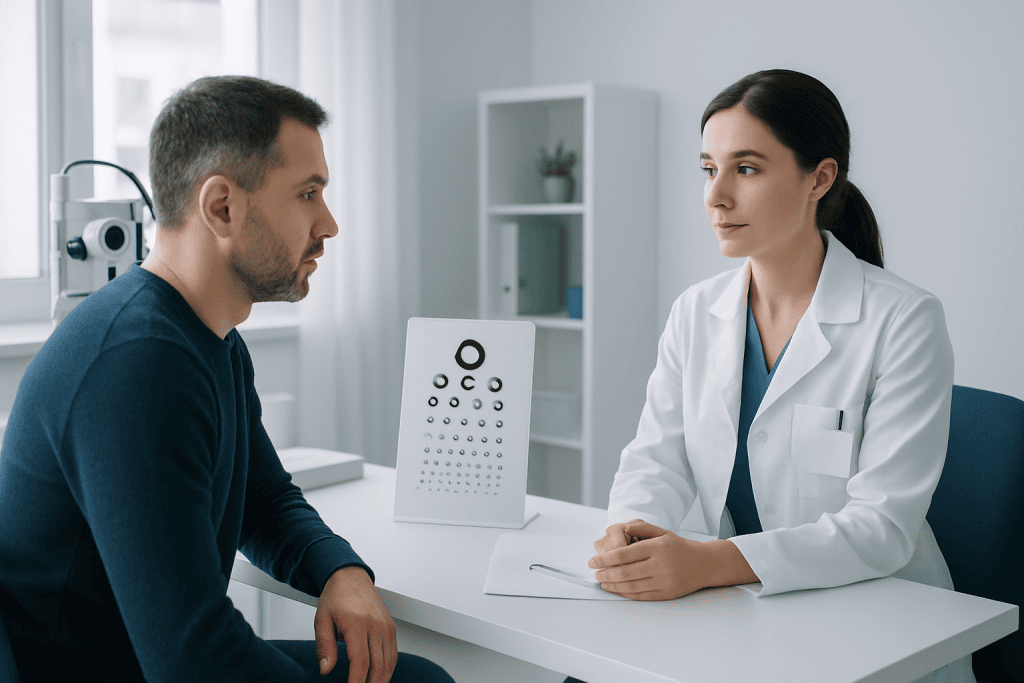
The most common symptom of astigmatism is blurred or distorted vision. Some people describe letters as looking smeared, doubled, or less crisp than usual. Vision may be unclear at distance, near, or both, depending on the type and degree of refractive error present.
Other symptoms often develop because the eyes are working harder to focus. These can include eye strain, squinting, headaches, and tired eyes, especially after reading, computer use, or driving. Night vision may also feel more difficult because lights can appear to glare or streak.
Children may not always say that their vision is blurry. Instead, they may sit close to screens, lose interest in reading, rub their eyes often, or seem to have trouble at school. A comprehensive eye exam is the best way to identify whether astigmatism is contributing to these issues.
- Blurred or distorted vision
- Difficulty seeing clearly at night
- Eye strain or discomfort
- Frequent squinting
- Headaches after visual tasks
- Tired eyes during reading or screen use
Causes and Risk Factors
Astigmatism usually happens because the cornea or lens is not evenly curved. In many cases, this is simply part of the way the eye develops and is not caused by anything a person did. It often runs in families, so a family history can increase the likelihood of having it.
Some people are born with astigmatism, while others develop changes later in life. Eye injury, certain eye surgeries, or conditions that alter the cornea’s shape can also contribute. One example is keratoconus, a condition in which the cornea becomes thinner and bulges outward, sometimes causing irregular astigmatism that may need more specialized care.
Astigmatism is not caused by reading in dim light, using a computer, or sitting too close to a screen, although these activities can make visual discomfort more noticeable if uncorrected astigmatism is already present. It is also important to distinguish astigmatism from other causes of blurred vision, such as cataracts or retinal disease, which require separate evaluation.
Diagnosis
Astigmatism is diagnosed through a routine eye examination. An eye doctor reviews symptoms, checks visual acuity, and uses specific instruments to measure how the eye focuses light. These tests are painless and usually take only a short time.
Refraction testing helps determine the lens power needed to sharpen vision. Keratometry or corneal topography may be used to measure the shape and curvature of the cornea more precisely, especially if irregular astigmatism is suspected or if contact lens fitting or surgery is being considered.
A full eye exam is important because blurred vision is not always caused by astigmatism alone. The doctor may also look for dry eye, cataracts, corneal problems, or retinal conditions. If vision changes are new or rapidly worsening, a prompt assessment can help clarify the cause and guide treatment safely.
Treatment Options
Treatment depends on how much astigmatism is present, whether symptoms are affecting daily life, and whether there are other eye conditions. Mild astigmatism may not need immediate treatment if vision is still comfortable. When correction is needed, glasses are often the simplest and most widely used option.
Contact lenses can also correct astigmatism. Toric soft lenses are designed specifically for this purpose, and rigid gas-permeable lenses may help some people achieve sharper vision, particularly if the cornea has an irregular shape. For people with coexisting cataracts, cataract surgery may improve vision and may also help address refractive error depending on the lens used.
Some adults may be candidates for refractive procedures that reshape the cornea, such as LASIK eye surgery or no-touch laser treatment. Suitability depends on factors such as corneal thickness, overall eye health, age, and prescription stability. An ophthalmologist can explain benefits, limitations, and whether surgery is appropriate.
When astigmatism is related to another condition, treatment may focus on the underlying cause as well. Near the end of the care pathway, patients who need advanced evaluation may benefit from a center with multidisciplinary eye specialists. Acibadem International’s JCI-accredited hospitals care for international patients with diagnostic and treatment needs related to refractive and corneal disorders.
Prevention and Self-care
Astigmatism itself usually cannot be prevented because it often reflects the natural shape of the eye. However, early detection and appropriate correction can prevent unnecessary eye strain and help support learning, work, and everyday safety. Routine eye checks are especially important for children, adults with changing vision, and anyone with a family history of significant eye problems.
Self-care focuses on reducing visual fatigue and using prescribed correction consistently. Good lighting, regular breaks during close work, and keeping glasses or contact lens prescriptions up to date can make a meaningful difference in comfort. Contact lens users should also follow hygiene instructions carefully to protect corneal health.
It can also help to pay attention to related symptoms such as glare, dry eye, or frequent headaches, as these may make astigmatism feel worse even when the prescription is only mildly changed. If vision remains unsatisfactory despite correction, a follow-up eye visit is appropriate to reassess the prescription or look for another cause.
When to Seek Medical Care
Medical care should be sought if blurred vision is persistent, worsening, or interfering with reading, driving, schoolwork, or screen use. An eye examination is also advisable if headaches, eye strain, or squinting occur regularly, especially after visual tasks.
Children should be evaluated if they sit unusually close to screens, avoid reading, complain of headaches, or seem to have trouble seeing the board at school. Adults should arrange an eye exam if their current glasses no longer seem effective or if night driving becomes difficult.
Urgent medical attention is important if blurred vision appears suddenly, affects only one eye, or is accompanied by eye pain, redness, flashes of light, new floaters, or a curtain-like shadow in vision. These symptoms may point to a problem other than simple astigmatism and should not be ignored.
Frequently asked questions
Is astigmatism a disease?
Astigmatism is not usually considered a disease. It is a refractive error, meaning the eye does not focus light evenly because of the shape of the cornea or lens. It is common and often manageable with vision correction.
Can astigmatism get worse over time?
Astigmatism can change over time, although the amount of change varies from person to person. Children’s eyes are still developing, and adults may notice changes with age or other eye conditions. Regular eye exams help detect these changes and keep correction up to date.
Do all people with astigmatism need glasses?
Not always. Mild astigmatism may not cause noticeable symptoms or may not require immediate correction. If blurred vision, eye strain, or headaches are present, glasses or contact lenses often improve comfort and visual clarity.
Can astigmatism cause headaches?
Yes, uncorrected astigmatism can contribute to headaches because the eyes work harder to focus. This is especially common after reading, computer use, or other prolonged visual tasks. An eye exam can help determine whether vision strain is part of the problem.
Is astigmatism the same as nearsightedness?
No. Nearsightedness means distant objects look blurry because light focuses in front of the retina, while astigmatism means light focuses unevenly because of an irregular curve in the eye. A person can have both conditions at the same time.
Can children have astigmatism?
Yes, astigmatism is common in children and may be present from birth. Some children do not realize their vision is blurred, so signs may include squinting, eye rubbing, headaches, or trouble with schoolwork. Pediatric vision screening and eye exams are important for early detection.
References
- American Academy of Ophthalmology
- National Eye Institute
- American Optometric Association
- Mayo Clinic
- National Health Service
This article is for general information only and is not a substitute for professional medical advice. Please consult a qualified doctor about your individual situation.
Astigmatism in Turkey — costs, top hospitals & a free quote
JCI-accredited · board-certified surgeons · reply within 24h
Add us as a Preferred Source to see more of our trusted health content across Google Search, AI Overviews and Discover.

Ophthalmology
Comprehensive eye care from laser vision correction to retina, cornea and cataract surgery.
75 specialists in this unitMore from the Health Library



Related Specialists

Dr. Serkan Tokgönül
Aesthetic Plastic & Reconstructive Surgery
Dr. Mustafa Demir
Ophthalmology
Prof. Dr. Erkin İsmail
General Surgery
Dr. Neşe Ergül
Pediatrics