At Home Laser Hair Removal: What Patients Need to Know

At home laser hair removal usually means light-based devices used to reduce hair growth over time, not permanent hair removal after one session. Results are often best for people with darker hair and lighter skin, though newer devices may be safer for a wider range of skin tones.
Key Takeaways
- At home laser hair removal usually means light-based devices used to reduce hair growth over time, not permanent hair removal after one session.
- Results are often best for people with darker hair and lighter skin, though newer devices may be safer for a wider range of skin tones.
- Common side effects include temporary redness, irritation, and discomfort; burns and pigment changes can happen if devices are used incorrectly.
- People with certain skin conditions, active infections, suspicious moles, or a history of light sensitivity should speak with a doctor before use.
- Patch testing, following the device instructions, and avoiding sun exposure before and after treatment can improve safety.
- Medical evaluation is important if hair growth is sudden, severe, or associated with hormonal symptoms such as irregular periods or acne.
At home laser hair removal can be a convenient way to reduce unwanted hair, but it does not work equally well for everyone and it is not risk-free. The best results depend on the device type, skin tone, hair color, correct technique, and knowing when professional advice is needed.
Overview: what at home laser hair removal really means
At home laser hair removal is a noninvasive method used to reduce unwanted hair growth with handheld light-based devices. In everyday use, many home devices are not true medical lasers but intense pulsed light (IPL) systems. Both approaches target pigment in the hair shaft and follicle, creating heat that can weaken the follicle and slow future growth.
For patients, the most important point is that home devices usually provide gradual hair reduction rather than immediate or complete hair removal. Hair grows in cycles, and light-based treatment works best when hair is in the active growth phase. Because not all hairs are in the same phase at the same time, repeated sessions are needed over weeks or months.
Home treatment can be suitable for some people who want a private, convenient option for areas such as the legs, underarms, upper lip, or bikini line. However, results vary widely. Skin tone, hair color, hormonal factors, and consistent use all affect how well treatment works and how safe it is.
Compared with treatment in a medical setting, home devices use lower energy levels for safety. That can make them more accessible, but it may also mean slower or less dramatic results. Patients who want a more individualized assessment may benefit from seeing a dermatologist or a specialist in dermatology care.
How it works and who may benefit most
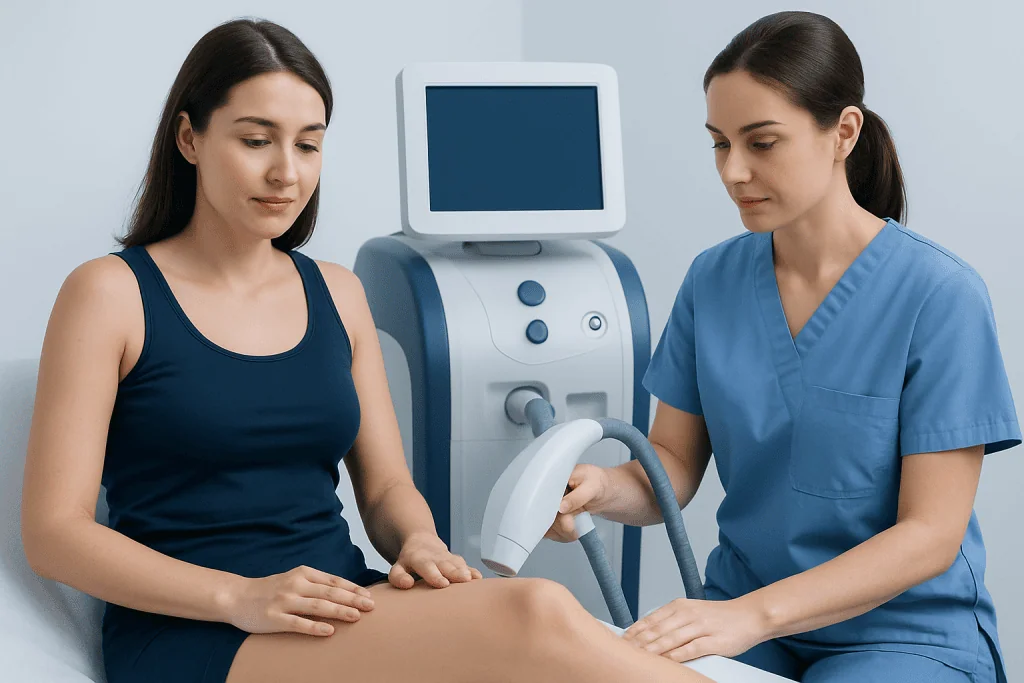
Light-based hair reduction works by targeting melanin, the pigment that gives hair its color. The light energy is absorbed by the hair, converted to heat, and delivered toward the follicle. If enough heat reaches the follicle without damaging surrounding skin, future hair growth can become finer, lighter, and less frequent.
This is why results are often best when there is a strong contrast between skin and hair color, such as dark hair on light skin. Very light blond, gray, white, or red hair often responds poorly because there is less pigment for the device to target. People with darker skin tones need extra caution because melanin in the skin can also absorb the light, increasing the risk of burns or discoloration if the wrong device or setting is used.
Some newer home devices include skin tone sensors and preset safety levels. These features may improve safety, but they do not replace careful reading of the instructions. Patients should still confirm that the device is designed for their skin tone and intended treatment area.
Home devices may be helpful for people with mild to moderate unwanted hair who are comfortable following a treatment schedule. They may be less satisfying for those with very coarse, hormonally driven, or rapidly recurring hair growth, especially if there is an underlying condition such as polycystic ovary syndrome.
Expected results, limits, and common misconceptions
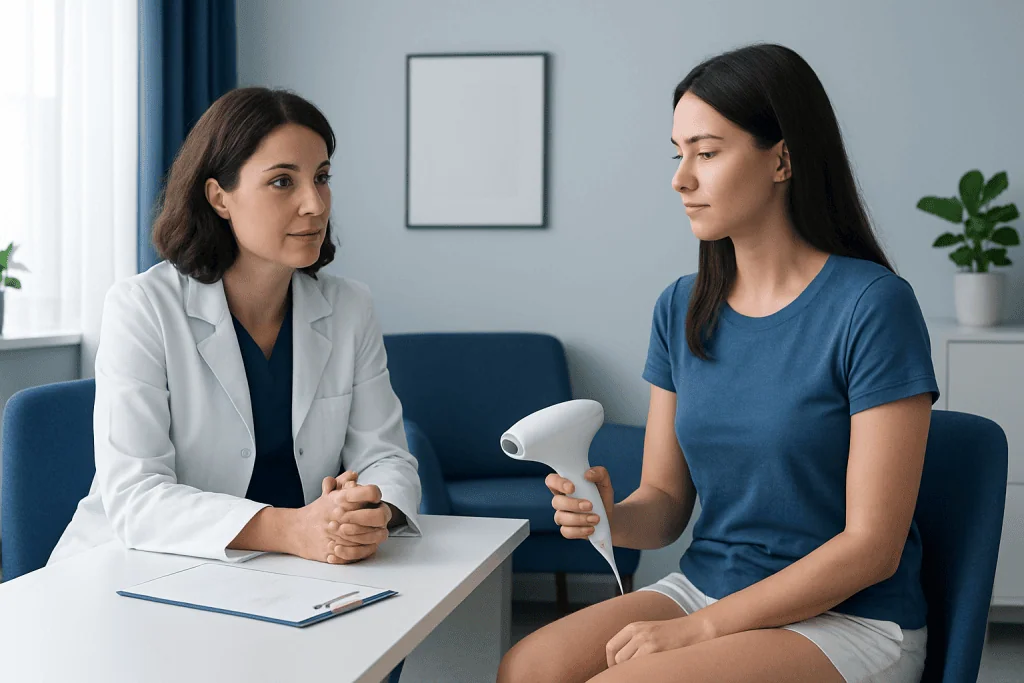
A common misunderstanding is that at home laser hair removal produces permanent hair removal after a few sessions. In reality, most patients should expect hair reduction, slower regrowth, and finer hair over time. Maintenance sessions are often needed because some follicles recover and hormonal changes can stimulate new hair growth.
Another misconception is that stronger sensation means better results. Discomfort is not a reliable sign of effectiveness. Using a device above the recommended setting can increase the risk of burns, blistering, and post-inflammatory pigment changes without improving outcome.
Patients should also know that body areas respond differently. Underarms and lower legs often respond better than the face, where hair growth can be influenced by hormones. In some cases, especially on the face or neck, light-based devices may not give the expected benefit and can occasionally lead to patchy or inconsistent reduction.
If there is severe, sudden, or male-pattern hair growth in women, treatment should not start with a home device alone. A doctor may need to look for hormonal or endocrine causes and discuss appropriate medical treatment, including evaluation through endocrinology.
Safety considerations before using a home device
Before starting treatment, patients should carefully review the device instructions, contraindications, and approved skin tone range. A patch test on a small area is an important first step, usually done at least a day before full treatment. This helps identify unusual sensitivity, irritation, or incorrect settings.
Skin should be clean, dry, and free of self-tanner, fragranced products, or irritating acids before treatment. Most devices are meant to be used on recently shaved skin, not on waxed or plucked hair, because the follicle target needs to remain in place. Patients should avoid using light-based devices over tattoos, dark moles, active rashes, broken skin, or areas with current infection.
Extra caution is needed in people who are taking medicines that increase photosensitivity, have a history of seizures triggered by flashing light, or have conditions such as eczema, psoriasis, or recurrent skin infections in the area being treated. Individuals with a history of abnormal scarring or pigment problems should consider medical advice before use.
Sun exposure matters as well. Tanned or sunburned skin is more vulnerable to side effects. For that reason, it is generally safer to avoid treatment right after heavy sun exposure and to protect treated areas with clothing or sunscreen afterward. If patients have a current skin condition or repeated irritation, evaluation by a skin specialist can help clarify whether home treatment is appropriate.
Possible side effects and how to reduce risk
The most common short-term side effects are mild redness, warmth, tingling, and temporary swelling around hair follicles. These effects often settle within hours. A cool compress and gentle fragrance-free moisturizer may help if the skin feels irritated.
More significant side effects can include burns, blistering, crusting, and changes in skin color, especially in darker skin tones or after use on skin that is recently tanned. Hyperpigmentation means the skin becomes darker; hypopigmentation means it becomes lighter. These changes may improve over time but can sometimes last for months.
Eye safety is also important. Devices should never be used near or around the eyes unless the product specifically states that it is safe for that area. Looking directly at the flash is not recommended. Sensitive areas such as the genitals should also be treated only if the device instructions clearly say they are suitable.
Risk can be reduced by following the treatment schedule, starting at a lower recommended intensity, avoiding overlapping flashes, and stopping if the skin becomes very painful. Patients should not continue treating through obvious irritation or injury. If a burn or blister develops, further use should be paused and medical advice should be sought.
When professional treatment may be a better option
Home devices are not the best fit for every patient. Professional treatment may be preferable when the skin tone and hair color combination makes home treatment less predictable, when a large area needs more efficient treatment, or when there is a history of skin reactions. A specialist can assess the skin, choose a suitable technology, and adjust settings more precisely.
Medical evaluation is also helpful when unwanted hair may reflect an underlying health issue rather than a cosmetic concern alone. Examples include sudden excess facial hair, irregular periods, infertility concerns, acne, weight changes, or thinning scalp hair. In these situations, a clinician may recommend assessment for hormonal causes, including PCOS.
Professional options may include office-based light or laser procedures as part of a broader aesthetic or dermatologic plan. For some patients, hair reduction may be discussed alongside other skin-focused care through medical aesthetics. The goal is not simply hair removal, but choosing the safest and most effective approach for the person’s skin and health profile.
Near the end of the care pathway, some international patients may seek coordinated assessment and treatment abroad. Acibadem International’s multidisciplinary specialists and JCI-accredited hospitals evaluate skin and hair concerns and provide treatment planning for suitable patients.
Practical self-care tips and when to seek medical care
Good technique improves both comfort and results. Patients should shave the area as directed, keep the skin dry, and move the device evenly without repeatedly flashing the same spot. Treatment sessions should follow the manufacturer schedule rather than being done more often in hopes of faster results.
After treatment, it is sensible to use gentle skincare, avoid harsh scrubs or active exfoliants for a short period, and limit sun exposure. If the skin feels warm or looks pink, a cool compress can be soothing. Waxing or plucking between sessions is usually discouraged because it removes the hair target from the follicle.
Medical care should be sought if there is severe pain, blistering, significant swelling, discharge, signs of infection, persistent pigment change, or a rash that does not improve. Patients should also speak with a doctor before continuing if hair growth is becoming more noticeable despite treatment, or if it is associated with irregular periods, acne, deepening voice, or other hormonal symptoms.
In general, home devices are best viewed as a convenience tool rather than a universal solution. Careful device selection, realistic expectations, and timely medical guidance can help patients decide whether at home laser hair removal is appropriate for them.
Frequently asked questions
Is at home laser hair removal the same as professional laser treatment?
Not exactly. Many home devices use IPL rather than the stronger medical lasers used in clinics, and they usually operate at lower energy levels. This can improve convenience and safety, but results may be slower or less pronounced than professional treatment.
Does at home laser hair removal work on all skin tones and hair colors?
No. Light-based devices usually work best on darker hair because the treatment targets pigment. People with very light, gray, white, or red hair may see limited benefit, and those with darker skin tones should make sure the device is specifically designed for their skin type.
How long does it take to see results?
Most people need repeated sessions over several weeks before they notice clear reduction in hair growth. Hair may become finer and grow back more slowly rather than disappearing completely. Maintenance sessions are often needed over time.
Can at home laser hair removal cause burns or skin damage?
Yes, it can if the device is unsuitable for the person’s skin tone, used at the wrong setting, or applied to tanned, irritated, or broken skin. Following the instructions, doing a patch test, and avoiding sun exposure around treatment can reduce the risk.
Should people with PCOS use home hair removal devices?
They can in some cases, but it is often helpful to have medical evaluation first. PCOS-related hair growth may continue because of ongoing hormonal stimulation, so home treatment alone may not address the cause. A doctor can help decide whether hormone assessment or additional treatment is needed.
What areas of the body are usually safest to treat at home?
Commonly treated areas include the legs, underarms, upper lip, and bikini line, but safety depends on the device instructions. Patients should avoid any area that the manufacturer lists as unsuitable, especially around the eyes, over tattoos, or on irritated skin.
References
- American Academy of Dermatology
- U.S. Food and Drug Administration
- National Health Service
- Mayo Clinic
- British Association of Dermatologists
This article is for general information only and is not a substitute for professional medical advice. Please consult a qualified doctor about your individual situation.
Hair transplant in Turkey — costs, graft counts & a free assessment
JCI-accredited · board-certified surgeons · reply within 24h
Add us as a Preferred Source to see more of our trusted health content across Google Search, AI Overviews and Discover.

More from the Health Library

4 Month Sleep Regression — Explained by Medical Evidence, Not Myths

Prazosin — Explained by Medical Evidence, Not Myths

Quetiapine Fumarate: An Evidence-Based Guide for Patients

Romberg Test — Explained by Medical Evidence, Not Myths

Static Stretching: What Patients Need to Know