Axial Skeleton: What Patients Need to Know
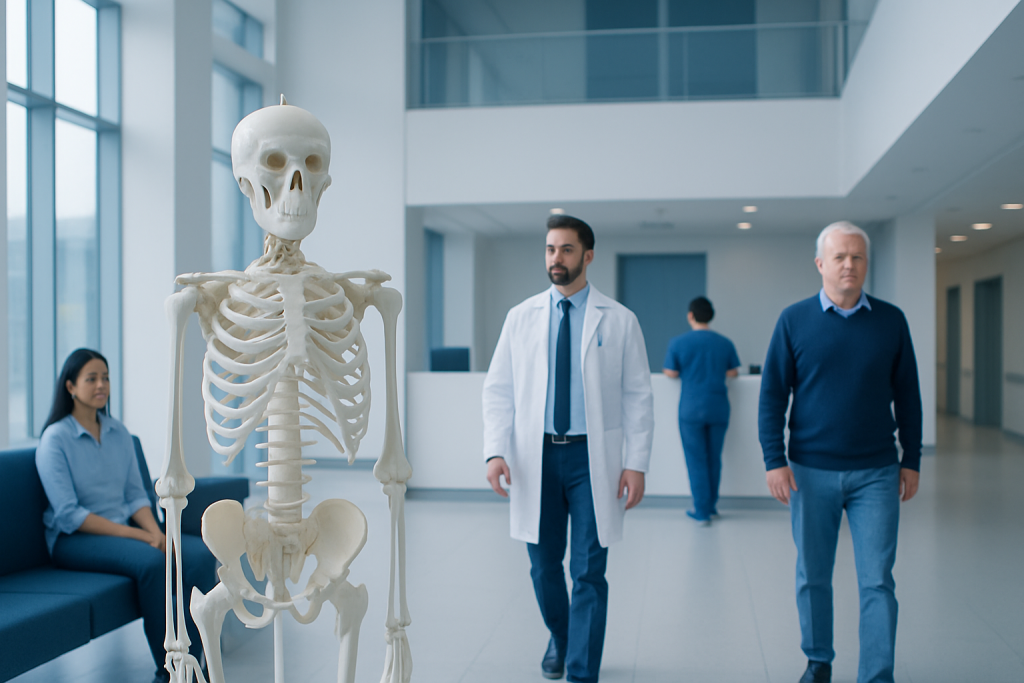
The axial skeleton forms the body’s central axis and includes 80 bones. It protects the brain, spinal cord, heart, and lungs.
Key Takeaways
- The axial skeleton forms the body’s central axis and includes 80 bones.
- It protects the brain, spinal cord, heart, and lungs.
- Common problems affecting the axial skeleton include fractures, arthritis, poor posture, and spinal disorders.
- Symptoms such as persistent pain, numbness, weakness, or breathing-related chest pain should be medically assessed.
- Bone health, exercise, posture, and timely diagnosis all help protect the axial skeleton.
The axial skeleton is the central framework of the body. It includes the skull, vertebral column, ribs, and sternum, and its main roles are support, posture, movement, and protection of vital organs.
Overview: what the axial skeleton is
The axial skeleton is the set of bones that forms the body’s central core. It includes the skull, the vertebral column (spine), the ribs, and the sternum (breastbone). In simple terms, these bones create the main supporting axis of the body and help hold the head, neck, and trunk in position.
The axial skeleton does more than provide shape. It protects some of the body’s most important structures, including the brain, spinal cord, heart, and lungs. It also works closely with muscles, joints, and the appendicular skeleton—the bones of the arms, legs, shoulders, and pelvis—to allow movement and balance.
For patients, understanding the axial skeleton can make it easier to recognize why problems such as neck pain, back pain, rib injuries, posture changes, or some breathing-related discomfort may need medical attention. While many symptoms are caused by minor strain or age-related wear, others can point to conditions involving the spine, bones, discs, or nerves.
Which bones are part of the axial skeleton?
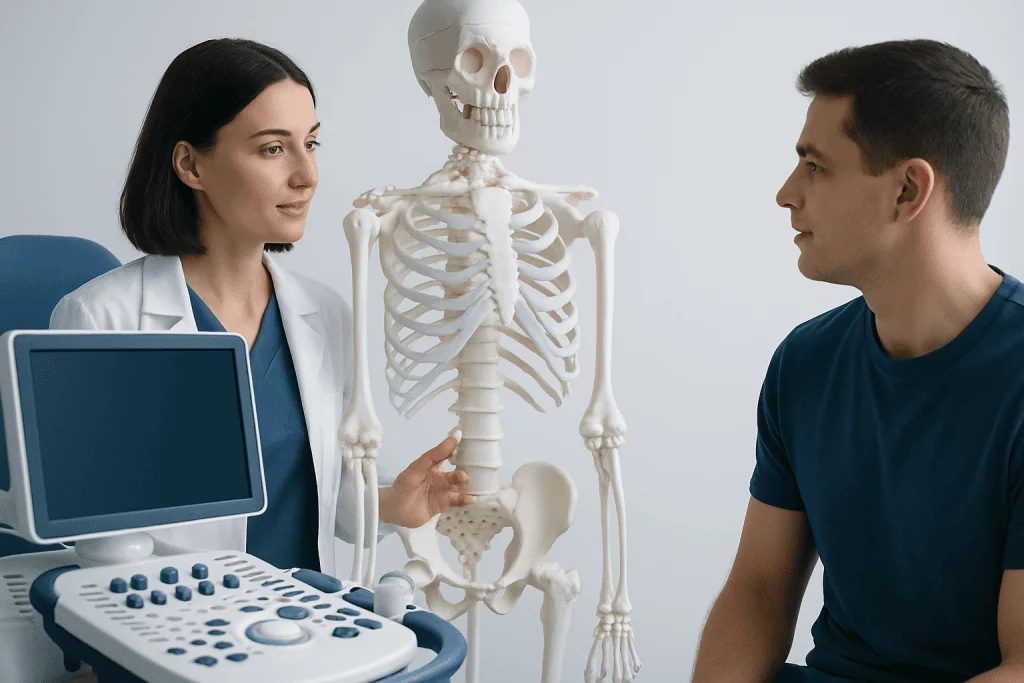
The axial skeleton is commonly described as having 80 bones. These are grouped into the skull, the bones associated with hearing, the hyoid bone in the neck, the vertebral column, and the thoracic cage made up of the ribs and sternum. Each area has a distinct role, but together they create a strong, protective central framework.
The main parts include:
- Skull: protects the brain and supports the face.
- Hyoid bone: helps support the tongue and swallowing muscles.
- Vertebral column: includes the cervical, thoracic, lumbar, sacral, and coccygeal regions.
- Ribs: form most of the rib cage and help protect the heart and lungs.
- Sternum: connects with several ribs at the front of the chest.
The spine is especially important because it combines strength with flexibility. It supports body weight, allows bending and rotation, and surrounds the spinal cord. The rib cage, meanwhile, moves with breathing and helps shield delicate organs in the chest.
What the axial skeleton does
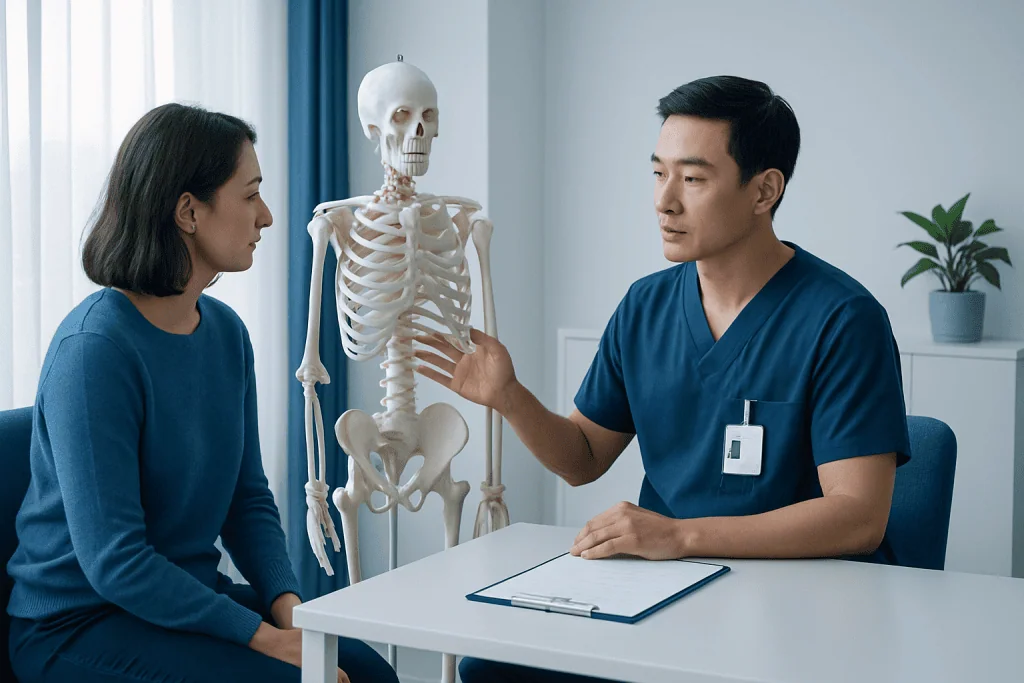
The axial skeleton has several essential functions. Its most basic role is structural support. By forming the body’s central axis, it helps a person stay upright, maintain posture, and coordinate movement with the limbs. Without this stable central framework, standing, walking, lifting, and turning would be much more difficult.
Another major function is protection. The skull protects the brain, the vertebrae protect the spinal cord, and the rib cage helps protect the heart and lungs. This is why injuries to the head, neck, chest, or back can be more concerning than injuries involving soft tissue alone.
The axial skeleton also supports breathing and muscle attachment. The ribs and sternum move slightly with each breath, while many muscles of the neck, back, chest, and abdomen attach to axial bones. These muscle attachments help with speaking, chewing, swallowing, breathing, posture, and spinal stability.
In everyday life, the axial skeleton works continuously in the background. Even sitting at a desk, turning the head, coughing, or taking a deep breath depends on healthy bones, joints, discs, and muscles along the body’s midline.
Common conditions that can affect the axial skeleton
Many health issues can involve the axial skeleton. Some are caused by injury, such as a rib fracture, whiplash, or a vertebral compression fracture. Others develop gradually over time, including osteoarthritis, spinal disc degeneration, poor posture, or age-related bone loss. The exact symptoms depend on which part of the axial skeleton is affected.
Spinal conditions are among the most common. These may include scoliosis, kyphosis, disc herniation, spinal stenosis, and inflammatory conditions such as ankylosing spondylitis. Bone strength problems like osteoporosis can make vertebrae and ribs more prone to fracture. Patients with long-term back pain may also have muscle strain or degenerative joint changes rather than a single serious disease.
In some cases, symptoms involve nearby nerves or the spinal cord. This can lead to pain that radiates into the arms or legs, numbness, tingling, weakness, or balance problems. Problems affecting the chest wall may cause pain with coughing, twisting, or deep breathing. Relevant conditions may include scoliosis or osteoporosis, depending on the person’s age, medical history, and symptoms.
Not all pain in the skull, spine, or rib cage comes from bone itself. Muscles, ligaments, discs, joints, and nerves can all contribute. That is why careful assessment is important when symptoms are persistent, severe, or affecting daily life.
Symptoms and warning signs
Symptoms involving the axial skeleton can vary widely. Common complaints include neck pain, back pain, chest wall pain, stiffness, reduced flexibility, tenderness over a bone, and discomfort with movement. Some patients notice that pain worsens after sitting for a long time, lifting, coughing, or sleeping in certain positions.
When the spine is involved, symptoms can extend beyond the back itself. A person may feel pain shooting into the shoulder, arm, buttock, or leg. Numbness, tingling, muscle weakness, changes in walking, or poor coordination may suggest irritation or compression of a nerve. This can happen with conditions such as herniated disc or narrowing around the spinal nerves.
Skull- or neck-related issues may cause headaches, jaw discomfort, or reduced neck movement, though many of these symptoms can also come from muscle tension or other non-bone causes. Rib or sternum problems may cause tenderness, pain with deep breaths, or discomfort after trauma. Persistent pain after even a minor injury should not be ignored, especially in older adults or people with fragile bones.
Some warning signs need prompt medical review. These include severe pain after a fall or accident, unexplained weight loss, fever with back pain, loss of bowel or bladder control, new weakness, or chest pain that could be related to the heart or lungs rather than the bones. These symptoms do not always mean a serious problem, but they should be evaluated without delay.
How doctors diagnose axial skeleton problems
Diagnosis begins with a detailed medical history and physical examination. A doctor will ask when the symptoms started, where the pain is located, what makes it better or worse, and whether there are any neurological symptoms such as numbness or weakness. Posture, range of motion, reflexes, muscle strength, and areas of tenderness may all be checked.
Imaging tests are often helpful when symptoms are ongoing, severe, or linked to trauma. X-rays can show fractures, alignment changes, scoliosis, arthritis, and some bone abnormalities. More detailed imaging may include CT scans or MRI scans. MRI is especially useful for discs, nerves, the spinal cord, and soft tissues, while CT can provide clearer detail for certain bone injuries.
In selected cases, doctors may also order bone density testing to assess fracture risk, blood tests to look for inflammation or infection, or nerve studies if symptoms suggest nerve involvement. Depending on the diagnosis, treatment planning may involve specialists in orthopedics, physical medicine, pain management, rheumatology, or neurosurgery.
When care is needed, some patients may benefit from treatments such as physical therapy and rehabilitation, while others may need advanced imaging or specialist review for spinal disorders. The goal is to identify the exact cause rather than treating all back, neck, or chest pain as the same problem.
Treatment, prevention, and self-care
Treatment depends on the cause. Many axial skeleton problems improve with conservative care such as rest, activity modification, guided exercise, posture correction, and pain-relieving medicines recommended by a doctor. Physical therapy can help strengthen supporting muscles, improve flexibility, and reduce strain on the neck, back, and rib cage.
For bone health, prevention is especially important. Adequate calcium and vitamin D intake, weight-bearing exercise, smoking cessation, and limiting excess alcohol can help maintain bone strength. People at risk of bone loss may need assessment for osteoporosis treatment. Good ergonomics at work, safe lifting techniques, and regular movement breaks can also reduce stress on the spine.
Some conditions need more targeted care. This may include bracing, injections, treatment for inflammatory disease, or surgery in selected cases. Patients with severe nerve compression, unstable fractures, or deformities may be referred for specialist procedures such as spine surgery when non-surgical care is not enough or when urgent treatment is required.
A short period of self-care may be reasonable for mild symptoms after overuse, but persistent or worsening symptoms deserve professional assessment. Near the end of the care pathway, patients seeking coordinated evaluation may also consider centers such as Acibadem International, where multidisciplinary specialists in JCI-accredited hospitals diagnose and treat bone, joint, and spine conditions for international patients.
When to seek medical care
Medical advice should be sought if pain in the head, neck, back, or chest wall lasts more than a few days, returns often, or interferes with sleep, work, walking, or normal movement. Care is also appropriate if there is visible deformity, pain after an injury, or symptoms that continue despite rest and basic self-care.
Prompt assessment is especially important for numbness, tingling, weakness, difficulty walking, loss of balance, or changes in bladder or bowel control. These may signal nerve or spinal cord involvement. Sudden severe chest pain, shortness of breath, or pain after major trauma should be treated as urgent because the cause may not be limited to the bones.
Older adults, people with osteoporosis, and patients with a history of cancer, infection, or long-term steroid use should be evaluated sooner if new spinal or rib pain develops. Early diagnosis can help prevent complications, improve pain control, and support safer recovery.
Frequently asked questions
What is the axial skeleton in simple terms?
The axial skeleton is the central framework of the body. It includes the skull, spine, ribs, and sternum, and it helps support posture while protecting major organs such as the brain, spinal cord, heart, and lungs.
How is the axial skeleton different from the appendicular skeleton?
The axial skeleton forms the body’s main axis, while the appendicular skeleton includes the arms, legs, shoulders, and pelvis. In general, the axial skeleton is more focused on support and protection, and the appendicular skeleton is more involved in limb movement.
How many bones are in the axial skeleton?
The axial skeleton is typically described as having 80 bones. These include the bones of the skull, the hyoid bone, the auditory ossicles, the vertebral column, and the thoracic cage made up of ribs and the sternum.
Can poor posture affect the axial skeleton?
Yes. Poor posture can place extra strain on the spine, neck, rib cage, muscles, and supporting ligaments. Over time, this may contribute to pain, stiffness, reduced mobility, and worsening of some existing spine problems.
What symptoms suggest an axial skeleton problem needs medical attention?
Persistent neck or back pain, rib pain after injury, numbness, tingling, weakness, or pain that affects breathing should be assessed by a doctor. Urgent care is especially important if there is severe trauma, trouble walking, or loss of bowel or bladder control.
Can axial skeleton conditions be treated without surgery?
Many can. Depending on the cause, treatment may include rest, physical therapy, posture correction, exercise, and medicines recommended by a clinician. Surgery is usually considered only for certain fractures, deformities, instability, or significant nerve compression.
This article is for general information only and is not a substitute for professional medical advice. Please consult a qualified doctor about your individual situation.
Joint and spine care in Turkey — expert assessment & treatment
JCI-accredited · board-certified surgeons · reply within 24h
Add us as a Preferred Source to see more of our trusted health content across Google Search, AI Overviews and Discover.

More from the Health Library

Acid Base Imbalance: A Complete Medical Overview

Antrum — Explained by Medical Evidence, Not Myths
Iliac: An Evidence-Based Guide for Patients

Pomegranate Seeds — Explained by Medical Evidence, Not Myths

Wheat Bran: An Evidence-Based Guide for Patients