

Back Ache Middle Explained: Common Triggers and Red Flags

Most middle back pain is mechanical, meaning it comes from muscles, joints, posture, or movement patterns. Pain after lifting, prolonged sitting, or awkward sleeping positions often improves with rest, gentle movement, and self-care.
Key Takeaways
- Most middle back pain is mechanical, meaning it comes from muscles, joints, posture, or movement patterns.
- Pain after lifting, prolonged sitting, or awkward sleeping positions often improves with rest, gentle movement, and self-care.
- Red flags include weakness, numbness, fever, unexplained weight loss, chest pain, breathing problems, or loss of bladder or bowel control.
- A doctor may use history, physical examination, and sometimes imaging to identify the cause of persistent or severe pain.
- Prevention focuses on posture, regular activity, core and back strength, and safe lifting habits.
Back ache middle usually refers to pain in the thoracic spine, the area between the neck and lower back. It is often linked to muscle strain, poor posture, or overuse, but some symptoms can point to a more serious spinal, nerve, or internal medical problem.
What back ache middle usually means
Back ache middle usually means pain in the thoracic spine, the section of the back between the shoulder blades and the lower ribs. In many people, this discomfort comes from strained muscles, irritated joints, poor posture, repetitive movements, or sitting for long periods. It can feel dull, tight, burning, sharp, or aching, and it may stay in one spot or spread around the ribs or chest wall.
The middle back is naturally more stable than the neck or lower back because it is connected to the rib cage. For that reason, middle back pain is somewhat less common than low back pain, but it still happens often. Everyday triggers include desk work, lifting, twisting, sports, carrying heavy bags, and sleeping in an awkward position.
Even though many cases are not serious, middle back pain should not be ignored if it is intense, keeps returning, follows an injury, or comes with other symptoms. Pain in this area can sometimes relate to spinal conditions such as a herniated disc or, less commonly, to problems involving the lungs, kidneys, digestive system, or heart. Looking at the pattern of symptoms helps guide what needs attention.
How middle back pain can feel
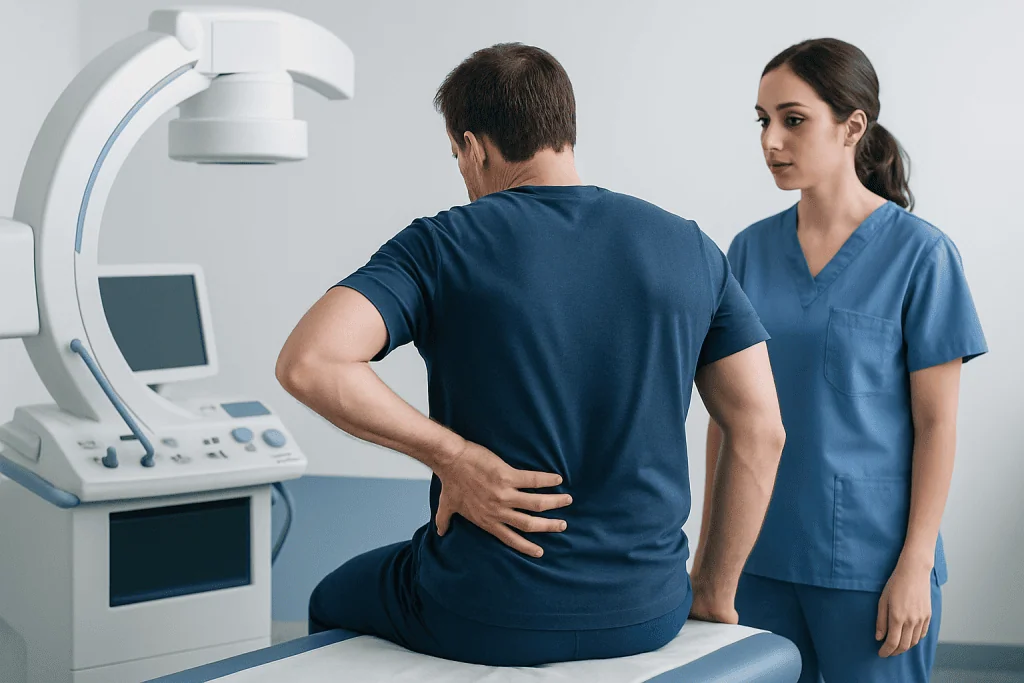
People describe back ache middle in different ways depending on the tissue involved. Muscle-related pain is often sore, tight, or cramping and may worsen after activity or prolonged posture. Joint irritation may cause stiffness, discomfort with twisting, and pain when taking a deep breath or reaching overhead. Nerve-related pain can feel burning, shooting, tingling, or electric.
The exact location also matters. Pain between the shoulder blades may be linked to posture, muscle tension, or the thoracic spine itself. Pain wrapping around the side of the chest can happen when nerves or joints near the ribs are irritated. Pain that seems deeper or is felt with coughing, breathing, or fever may suggest a cause outside the muscles and spine.
Symptoms that often help doctors narrow the cause include:
- Pain that starts after lifting, exercise, or a sudden twist
- Morning stiffness or stiffness after sitting
- Tenderness when pressing on the muscles or along the spine
- Pain that worsens with deep breathing, coughing, or sneezing
- Numbness, tingling, weakness, or pain spreading into the chest, abdomen, or legs
- Night pain, unexplained weight loss, fever, or general fatigue
Common triggers and risk factors

The most common cause of back ache middle is mechanical stress. This means the pain comes from muscles, ligaments, joints, discs, or nearby soft tissues rather than from infection or a major disease. A strained muscle from lifting, repetitive reaching, rowing, golf, or gym exercise is a frequent trigger. Long hours at a computer, rounded shoulders, and weak core muscles can also overload the thoracic region over time.
Joint and spine-related causes are also possible. The small joints between the vertebrae can become irritated, and the discs between the bones can bulge or degenerate. In some people, age-related wear, arthritis, or spinal curvature contributes to persistent pain. Inflammatory conditions can also affect the spine, especially if stiffness is worse in the morning and improves with movement.
Risk factors include poor ergonomics, a sedentary lifestyle, osteoporosis, smoking, obesity, previous back injury, and physically demanding work. Emotional stress may also increase muscle tension and make pain feel more intense. Less common but important causes include fractures, spinal infection, tumors, or referred pain from organs such as the gallbladder, pancreas, kidneys, lungs, or heart.
When symptoms suggest a structural spinal problem, doctors may consider further assessment and sometimes advanced care such as spine surgery if conservative treatment is not enough and a clear treatable cause is found.
Red flags that need prompt medical attention
Most middle back pain improves with time and simple care, but certain symptoms are warning signs. Severe pain after a fall, car accident, sports injury, or heavy lift may indicate a fracture or significant tissue injury. This is especially important in older adults and in people with osteoporosis or long-term steroid use.
Neurologic symptoms also deserve prompt evaluation. These include weakness, numbness, loss of coordination, trouble walking, and pain that travels with tingling around the chest or into the legs. Urgent care is needed if there is new loss of bladder or bowel control, saddle numbness, or rapidly worsening weakness, because these can signal pressure on the spinal cord or nerves.
Other red flags include fever, chills, unexplained weight loss, a history of cancer, pain that wakes a person at night, shortness of breath, chest pressure, or pain with coughing up blood. These symptoms do not always mean a serious illness, but they do mean the cause should be checked without delay. If chest pain, breathing difficulty, or fainting is present, emergency evaluation is important.
How doctors diagnose the cause
Diagnosis starts with a careful history. A doctor will usually ask when the pain began, where it is felt, what makes it better or worse, whether there was an injury, and whether there are nerve symptoms or signs of illness. The pattern of the pain often gives strong clues. For example, pain linked to movement and posture is more likely mechanical, while pain with fever or weight loss needs broader evaluation.
The physical examination may include checking posture, spinal movement, tenderness, muscle spasm, strength, reflexes, sensation, and how the ribs and shoulder blades move. The doctor may also look for signs that the pain is coming from the heart, lungs, abdomen, or kidneys rather than from the back itself.
Imaging is not always needed right away, especially if symptoms are mild and recent. However, persistent pain, trauma, neurologic findings, or red flags may lead to tests such as X-rays, MRI, CT, or blood work. MRI is especially useful when a disc, nerve, spinal cord, infection, or inflammation is suspected. If symptoms point to a disc-related problem, the evaluation may overlap with workups used for slipped disc conditions.
Treatment options for middle back pain
Treatment depends on the cause, severity, and duration of symptoms. For uncomplicated mechanical back ache middle, the first approach is usually conservative care. This may include short-term activity modification, gentle walking, stretching, heat or ice, posture correction, and over-the-counter pain relief if appropriate for the individual. Long periods of bed rest are generally discouraged because they can increase stiffness and slow recovery.
Physical therapy is often helpful, particularly when pain keeps returning or limits normal activities. Therapy may focus on thoracic mobility, posture, core strength, breathing mechanics, and shoulder blade control. For some people, targeted rehabilitation reduces strain on the middle back and helps prevent repeated flare-ups. In selected cases, doctors may also consider prescription medicines, injections, or other pain-management options.
If the pain is caused by a more specific spinal condition, treatment may be more individualized. This can include guided rehabilitation, interventional pain procedures, or evaluation by a spine specialist. People with persistent symptoms, progressive neurologic changes, or confirmed structural compression may be referred for herniated disc surgery or other procedures when non-surgical care has not been effective.
When middle back pain is due to a fracture, inflammatory disease, infection, osteoporosis, or an internal organ problem, treatment addresses that underlying cause. In complex cases, a multidisciplinary team may be involved. Near the end of the care pathway, some international patients choose centers such as Acibadem International, where multidisciplinary specialists in JCI-accredited hospitals diagnose and treat spine-related conditions.
Prevention and self-care strategies
Many episodes of back ache middle can be reduced by improving daily habits. Good posture does not mean staying rigid all day. Instead, it means changing position regularly, keeping the screen at eye level, relaxing the shoulders, and supporting the lower back when sitting for long periods. Small adjustments at work and during travel can lower strain on the thoracic spine.
Regular movement is one of the most effective prevention tools. Walking, swimming, light mobility work, and strengthening exercises for the back, abdomen, and shoulder girdle help distribute load more evenly. Safe lifting techniques are also important: bend at the hips and knees, keep the load close to the body, and avoid twisting while carrying weight.
Useful self-care steps include:
- Applying heat for muscle tightness or ice after an acute strain
- Taking short movement breaks during long periods of sitting
- Using a supportive mattress and pillow arrangement
- Building core and upper-back strength gradually
- Managing stress, which can increase muscle tension
- Stopping smoking and maintaining bone health, especially with age
If pain lasts more than a few weeks, keeps recurring, or limits sleep and normal function, self-care alone may not be enough. A clinician can help identify whether the problem is muscular, joint-related, nerve-related, or due to another medical condition.
When to seek medical care
Medical care is appropriate if middle back pain is severe, lasts longer than a few weeks, or repeatedly returns despite rest and home measures. It is also a good idea to seek advice if pain interferes with work, exercise, sleep, or routine daily activities. Early assessment can help prevent a short-term problem from becoming chronic.
Prompt medical review is especially important if the pain follows trauma, if there is numbness or weakness, or if the person has fever, weight loss, chest symptoms, or a known history of cancer or osteoporosis. A clinician can decide whether the cause is likely mechanical or whether testing is needed. If there are signs of significant nerve compression, advanced treatments such as minimally invasive spine surgery may be discussed in selected cases after full evaluation.
Emergency help should be sought for sudden chest pressure, trouble breathing, fainting, new loss of bladder or bowel control, or rapidly worsening weakness. These symptoms should not be assumed to be simple back pain. A qualified doctor can provide the safest next steps based on the full clinical picture.
Frequently asked questions
Is back ache middle usually serious?
Usually not. Many cases are caused by muscle strain, posture, overuse, or joint irritation and improve with time and simple self-care. It becomes more concerning when it is severe, persistent, follows an injury, or comes with neurologic or general symptoms such as weakness, fever, or weight loss.
Can poor posture cause middle back pain?
Yes. Sitting for long periods with rounded shoulders or an unsupported back can place extra stress on the thoracic muscles and joints. Over time, this may cause stiffness, aching, and muscle fatigue between the shoulder blades.
How do I know if middle back pain is muscular or nerve-related?
Muscular pain is often sore, tight, tender to touch, and worse after certain movements or activities. Nerve-related pain is more likely to burn, shoot, tingle, or travel around the chest or into other areas. A doctor can help tell the difference if symptoms are unclear or persistent.
Should I rest or keep moving with middle back pain?
Gentle movement is usually better than complete bed rest for simple mechanical pain. Short walks, changing position often, and light stretching may reduce stiffness and support recovery. However, painful activities should be limited, and a doctor should be consulted if movement causes severe or worsening symptoms.
When is imaging needed for back ache middle?
Imaging is not always needed right away for recent, mild pain without warning signs. It may be recommended if pain lasts, follows trauma, causes weakness or numbness, or is associated with fever, weight loss, or other red flags. The choice of X-ray, MRI, or CT depends on what the doctor suspects.
Can middle back pain come from something other than the spine?
Yes. Sometimes pain felt in the middle back is referred from the lungs, kidneys, digestive organs, or heart. This is why symptoms such as chest pain, breathing difficulty, fever, or abdominal complaints should be medically assessed.
References
- National Institute of Arthritis and Musculoskeletal and Skin Diseases
- American Academy of Orthopaedic Surgeons
- National Institute of Neurological Disorders and Stroke
- Mayo Clinic
- National Health Service
This article is for general information only and is not a substitute for professional medical advice. Please consult a qualified doctor about your individual situation.
Joint and spine care in Turkey — expert assessment & treatment
JCI-accredited · board-certified surgeons · reply within 24h
Add us as a Preferred Source to see more of our trusted health content across Google Search, AI Overviews and Discover.

More from the Health Library



Related Specialists

Dr. Betül Toygar
Physical Medicine & Rehabilitation
Dr. Serpil Pırmit
Dermatology
Dr. Aytaç Çalışkan
Cardiovascular Surgery
Dr. Özgür Özer
Gynecology & Obstetrics