Back Pain Surgeon: An Evidence-Based Patient Guide

Most back pain improves without surgery; a surgeon’s role includes identifying when surgery is unlikely to help. Surgery is considered when symptoms and examination findings match a clear structural problem, such as nerve compression or spinal instability.
Key Takeaways
- Most back pain improves without surgery; a surgeon’s role includes identifying when surgery is unlikely to help.
- Surgery is considered when symptoms and examination findings match a clear structural problem, such as nerve compression or spinal instability.
- The type of procedure, recovery time, and expected benefit depend on the diagnosis and whether decompression, fusion, or another operation is needed.
- After surgery, gradually increasing activity, following wound-care instructions, and attending rehabilitation support recovery.
- New weakness, loss of bladder or bowel control, fever, or worsening pain with concerning symptoms needs urgent medical assessment.
A back pain surgeon is a spine specialist, usually an orthopedic spine surgeon or neurosurgeon, who evaluates whether a structural spinal problem may benefit from surgery. Surgery is not the first treatment for most back pain, but it can be appropriate when imaging findings, symptoms, neurological examination, and treatment history point to a correctable cause.
What does a back pain surgeon do?
A back pain surgeon is a physician with specialist training in spinal conditions and operations. This may be an orthopedic surgeon who focuses on the spine or a neurosurgeon with spinal surgery expertise. Their main task is not simply to recommend surgery; it is to determine whether an operation is likely to address the specific source of a person’s pain, nerve symptoms, or loss of function.
Most low back pain does not require an operation. Muscle strain, age-related disc changes, and many episodes of non-specific pain often improve with time, movement, physiotherapy, education, and other non-surgical care. A surgeon may instead advise continued conservative treatment when scans do not show a surgically treatable problem or when the likely benefits of surgery do not outweigh its risks.
A surgical opinion becomes particularly useful when pain travels into a leg, numbness or weakness develops, walking becomes increasingly limited, or symptoms persist despite an appropriate trial of non-surgical treatment. A specialist considers the person’s symptoms, daily activities, physical examination, imaging results, general health, and personal goals before discussing options.
Why might someone be referred to a spine surgeon?
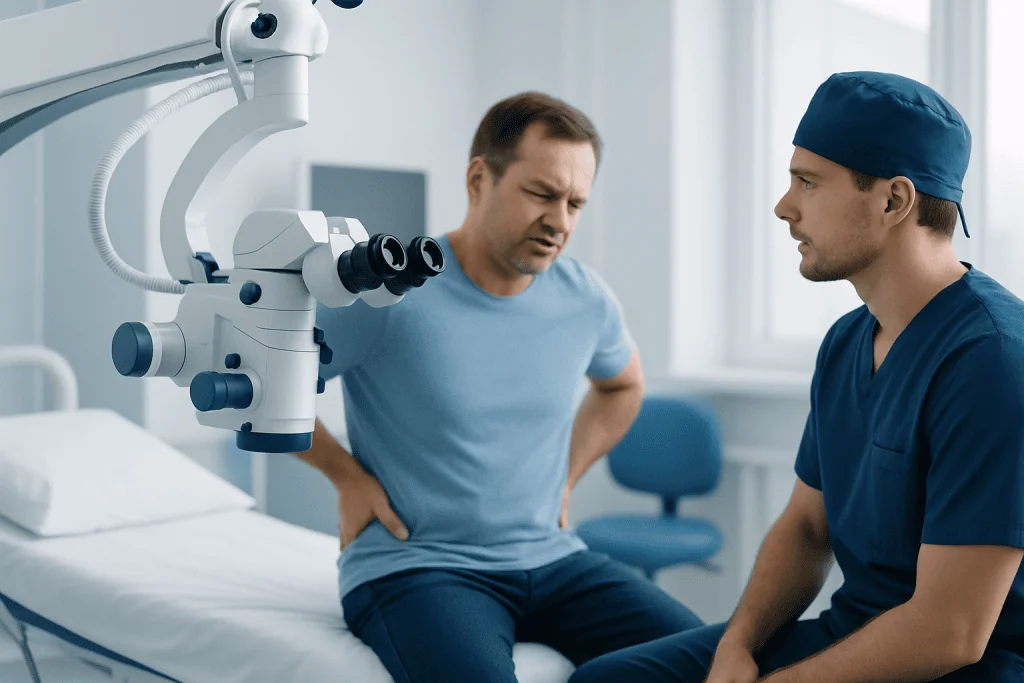
Referral is commonly considered for persistent symptoms caused by conditions that change the space available for spinal nerves or affect spinal stability. Examples include a herniated disc causing sciatica, spinal stenosis narrowing the spinal canal, spondylolisthesis, selected fractures, spinal infection, tumors, or deformity. The diagnosis must fit the symptom pattern; a scan finding alone does not necessarily explain pain or require surgery.
For example, a lumbar disc herniation may press on a nerve root and cause sharp leg pain, tingling, numbness, or weakness. Lumbar disc herniation can often be managed without surgery, but an operation may be discussed when disabling leg symptoms continue or neurological deficits are progressing. Similarly, surgery for spinal stenosis may be an option when nerve compression substantially limits walking or everyday function.
A surgeon may request or review MRI, CT, X-rays taken while standing, and occasionally nerve tests. They also assess factors that influence safety and recovery, including smoking, diabetes, bone health, weight, medications, previous operations, mood, sleep, and the demands of work or caregiving.
How spine surgery works and who may be a candidate
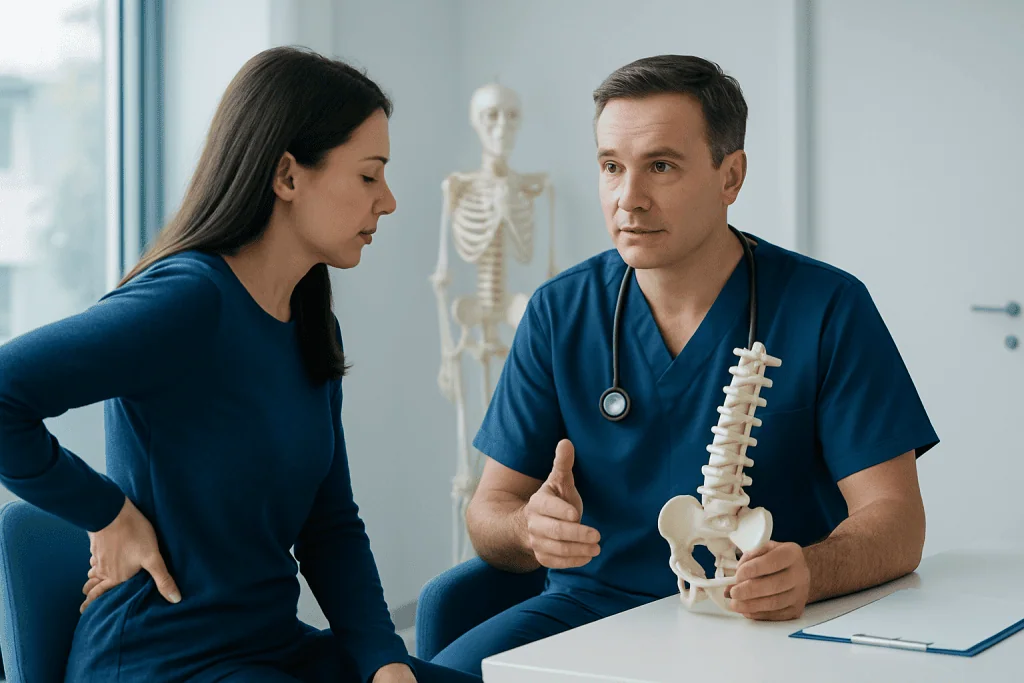
Spine operations generally have one or both of two aims: decompression and stabilization. Decompression creates more room for a compressed nerve by removing or reshaping the material causing pressure. Procedures can include discectomy or microdiscectomy for a disc herniation, and laminectomy for spinal stenosis. When the problem is mainly nerve compression, decompression may be performed without fusion.
Fusion stabilizes a spinal segment by encouraging two or more vertebrae to join into one solid unit of bone. It may be considered where there is instability, a vertebra has slipped forward, certain recurrent disc problems, deformity, or when decompression would make the spine unstable. During spinal fusion surgery, surgeons may use bone graft and implants such as screws and rods to hold the bones in position while fusion develops.
Good candidates usually have symptoms that clearly match the affected level on imaging, have tried suitable non-surgical care when safe to do so, and understand the realistic aim of surgery. Surgery often relieves leg pain from nerve compression more predictably than long-standing, non-specific back pain. It is also important that a person can participate in recovery and has medical conditions optimized before an elective operation.
- Potential benefits include reduced nerve pain, improved walking tolerance, restored or protected nerve function, and better ability to perform daily activities.
- Possible risks include infection, bleeding, blood clots, anesthesia reactions, dural tear, nerve injury, persistent symptoms, recurrent disc herniation, and the need for further surgery.
- Fusion-specific concerns include failure of the bones to fuse, implant-related issues, and extra strain on nearby spinal levels over time.
What happens before, during, and after back surgery?
Before an operation, the surgical team confirms the diagnosis and plans the procedure. This may include imaging review, blood tests, medication planning, anesthesia assessment, and advice about stopping smoking or improving nutrition and activity where possible. Patients should tell the team about all medicines and supplements, particularly blood thinners, diabetes medicines, and drugs that affect immunity or bone health.
On the day of surgery, anesthesia is used so the patient does not feel the operation. The surgeon makes an incision and uses imaging guidance and specialized instruments to reach the planned spinal level. For decompression, the surgeon removes the tissue or bone pressing on a nerve. For fusion, the area is prepared, bone graft is placed, and implants may be used to stabilize the segment. The surgical approach can be open, minimally invasive, or tailored to the individual anatomy and procedure.
Afterward, the patient is monitored for pain control, movement, wound healing, and nerve function. Some procedures allow discharge on the same day or after a short stay, while more extensive fusion surgery may require a longer hospital stay. Walking is usually encouraged early, but lifting, bending, twisting, driving, and return to work should follow the individual instructions of the surgeon and rehabilitation team.
Acibadem International’s multidisciplinary spine specialists at JCI-accredited hospitals assess and treat spinal conditions for international patients, coordinating surgical care with anesthesia, rehabilitation, and relevant medical specialties where needed.
How long does it take to recover from L4-L5 surgery?
Recovery from L4-L5 surgery varies according to the operation performed, the underlying condition, general health, and the physical demands of daily life. After a straightforward lumbar decompression or microdiscectomy, many people begin short walks soon after surgery and may return to light activities over several weeks. Nerve symptoms can improve quickly, although numbness and weakness may take longer to recover.
Recovery after L4-L5 fusion is usually more gradual because the bone must heal and join across the treated segment. Early healing takes weeks, while fusion maturation often continues for months. Return to desk-based work may be possible earlier than return to heavy lifting or physically demanding work, but the timing must be individualized by the surgical team.
Follow-up visits help assess wound healing, symptoms, movement, and—after fusion—progress toward bone healing. A rehabilitation plan may include walking, safe movement practice, core and hip strengthening at the appropriate stage, and guidance for returning to work or sport. Patients should avoid comparing their progress too closely with someone else’s, as recovery is not identical for every person.
How to sit on the toilet after back surgery?
After back surgery, it is generally helpful to avoid deep bending and twisting while sitting down or standing up. A raised toilet seat or toilet safety frame may make the movement easier, especially in the early recovery period. The care team can advise whether these aids are appropriate for the specific procedure and mobility needs.
To sit, the person can back up until they feel the toilet or raised seat behind their legs, reach for stable supports if available, and lower themselves slowly by bending at the hips and knees while keeping the trunk aligned. To stand, they should use the supports or armrests, push through the legs, and avoid sudden twisting. If a brace has been prescribed, it should be used as directed.
Constipation is common after surgery because of anesthesia, reduced movement, pain medicines, and changes in routine. Drinking fluids if permitted, eating fiber-containing foods, walking as advised, and using any bowel medicines recommended by the care team can help. Severe abdominal pain, persistent vomiting, or inability to pass stool or urine should be reported promptly.
Is lower back pain a common side effect after L4-L5 fusion surgery?
Some lower back discomfort is expected after L4-L5 fusion surgery because muscles, soft tissues, and bone have been affected by the operation. Incisional soreness and stiffness are commonly most noticeable in the early recovery period and should gradually improve with healing, gentle movement, and the pain-management plan provided by the clinical team.
However, pain should not simply be ignored. New, severe, steadily worsening, or different pain may need review, particularly if it occurs with fever, wound redness or drainage, increasing leg weakness, numbness around the groin or buttocks, or changes in bladder or bowel control. These symptoms do not always indicate a serious problem, but they need timely medical assessment.
Some people continue to have back pain after fusion, particularly when pain had several contributing causes before surgery. The surgeon should explain that a fusion is intended to treat a defined mechanical or nerve-related problem, not to guarantee the complete removal of all back discomfort. Follow-up and individualized rehabilitation are important parts of evaluating persistent symptoms.
What are the worst days after back surgery and when to seek medical care?
For many people, the first few days after back surgery are the most challenging. Surgical soreness, fatigue, interrupted sleep, reduced appetite, and constipation can be more noticeable as anesthesia effects wear off and normal activity has not yet resumed. Pain should be manageable with the prescribed plan, and gradual improvement rather than uninterrupted comfort is a more realistic expectation.
It is important to contact the surgical team for pain that is not controlled by the agreed plan, increasing wound redness, warmth, swelling, drainage, fever, calf pain or swelling, shortness of breath, or a new rash or medication concern. Early advice can help the team determine whether symptoms are part of expected healing or need treatment.
Urgent medical care is needed for new or worsening leg weakness, loss of sensation in the saddle area, inability to control urine or stool, inability to urinate, chest pain, severe breathing difficulty, or signs of a severe allergic reaction. Before surgery, urgent assessment is also appropriate for these neurological warning signs, major trauma, back pain with fever or unexplained weight loss, or pain in a person with a history of cancer, infection risk, or significant immune suppression.
For people considering an operation, a consultation for spine surgery can clarify the diagnosis, expected outcomes, alternatives, and recovery requirements. Questions about the reason for surgery, the planned level, non-surgical options, possible complications, and rehabilitation should be discussed openly with a qualified spine specialist.
Frequently asked questions
Should a person see a back pain surgeon for ordinary low back pain?
Not usually at the beginning. Most uncomplicated low back pain improves with time, staying appropriately active, physiotherapy, and other non-surgical approaches. A surgical assessment may be useful when symptoms persist, leg symptoms or weakness develop, or tests suggest a structural problem that may be treatable with surgery.
What is the difference between an orthopedic spine surgeon and a neurosurgeon?
Both can receive specialized training in spine surgery and may treat many of the same lumbar spine conditions. The best choice is often a surgeon with relevant experience in the diagnosed condition and proposed procedure. Patients can ask about the clinician’s training, surgical approach, expected benefits, risks, and alternatives.
Does an MRI showing disc degeneration mean surgery is needed?
No. Disc degeneration is common with aging and may be present in people without pain. A surgeon considers whether the MRI finding matches the person’s symptoms, examination, and response to non-surgical care before recommending an operation.
Can walking help after back surgery?
Walking is commonly encouraged early because it supports circulation, mobility, and gradual conditioning. The distance and pace should increase slowly and follow the surgical team’s instructions. Pain that becomes severe or is accompanied by new weakness, numbness, or wound concerns should be reported.
When can someone drive after lumbar surgery?
Driving should wait until the person can safely control the vehicle, move comfortably enough for emergency braking, and is no longer taking medicines that impair alertness. The exact timing varies by procedure, pain level, and individual recovery. The surgeon should give personalized clearance before driving resumes.
Will spinal fusion permanently limit movement?
Fusion removes movement at the treated spinal segment, but the overall effect depends on how many levels are fused and where they are located. Many people can return to ordinary daily activities after recovery. Rehabilitation and safe movement habits can help support function and confidence.
References
- National Institute for Health and Care Excellence
- American Academy of Orthopaedic Surgeons
- American Association of Neurological Surgeons
- National Institute of Neurological Disorders and Stroke
- North American Spine Society
This article is for general information only and is not a substitute for professional medical advice. Please consult a qualified doctor about your individual situation.
Joint and spine care in Turkey — expert assessment & treatment
JCI-accredited · board-certified surgeons · reply within 24h
Add us as a Preferred Source to see more of our trusted health content across Google Search, AI Overviews and Discover.

More from the Health Library

Related Specialists

Dr. Ulaankhuu Batgerel
Cardiology
Assoc. Prof. Dr. Seçkin Satılmış
Cardiology
Embriyolog Firuze Sönmez
Vitro Fertilization and Reproductive Medicine Center
Dr. Aykut Türken
Orthopedic Surgery & Traumatology