

Bad Breath: Dental Causes and How It Is Treated

Most persistent bad breath begins in the mouth, especially from bacteria on the tongue, teeth, gums, and dental appliances. Gum disease, untreated cavities, dry mouth, and trapped food around restorations are common dental causes.
Key Takeaways
- Most persistent bad breath begins in the mouth, especially from bacteria on the tongue, teeth, gums, and dental appliances.
- Gum disease, untreated cavities, dry mouth, and trapped food around restorations are common dental causes.
- Treatment depends on the cause and may include professional cleaning, periodontal therapy, cavity treatment, restoration repair, and improved home care.
- Mouthwash may help temporarily, but it does not replace brushing, flossing, tongue cleaning, and dental treatment when needed.
- Persistent bad breath should be evaluated by a dentist, especially if it occurs with bleeding gums, tooth pain, loose teeth, or dry mouth.
Bad breath, also called halitosis, is often linked to dental causes such as plaque, gum disease, tongue coating, cavities, dry mouth, or poorly fitting dental restorations. A dental check-up can identify the source and guide effective treatment and daily care.
Overview
Bad breath is a common concern that can affect confidence, social comfort, and daily quality of life. The medical term is halitosis. Although many people worry that bad breath comes from the stomach, most persistent cases are related to the mouth, including the teeth, gums, tongue, saliva, and dental appliances.
In the mouth, naturally occurring bacteria break down food particles, dead cells, and proteins. This process can release volatile sulfur compounds, which are gases with an unpleasant smell. When plaque builds up, gum inflammation develops, the tongue is heavily coated, or the mouth becomes dry, these odor-producing bacteria can increase.
Bad breath is usually manageable once the cause is identified. A dentist can examine the mouth, assess oral hygiene, check for gum disease or cavities, and review habits that may contribute to odor. Treatment often combines professional dental care with consistent self-care at home.
Symptoms and Signs

The main symptom is an unpleasant smell from the mouth that may be noticed by the person or by others. Some people also experience a bad taste, a dry or sticky feeling in the mouth, a coated tongue, or the feeling that their breath is worse after waking, fasting, smoking, or drinking coffee.
Dental-related bad breath may occur together with other oral signs. These include red or swollen gums, bleeding when brushing or flossing, plaque or tartar buildup, tooth sensitivity, tooth pain, food getting trapped between teeth, or discomfort around crowns, bridges, dentures, or orthodontic appliances.
Morning breath is common and usually improves after brushing, eating, drinking water, and normal saliva flow returns. Persistent bad breath that continues despite regular brushing and flossing is more likely to need dental assessment. It is also important to know that some people may worry about bad breath even when others do not notice it; a dentist can help provide an objective evaluation.
Dental Causes and Risk Factors
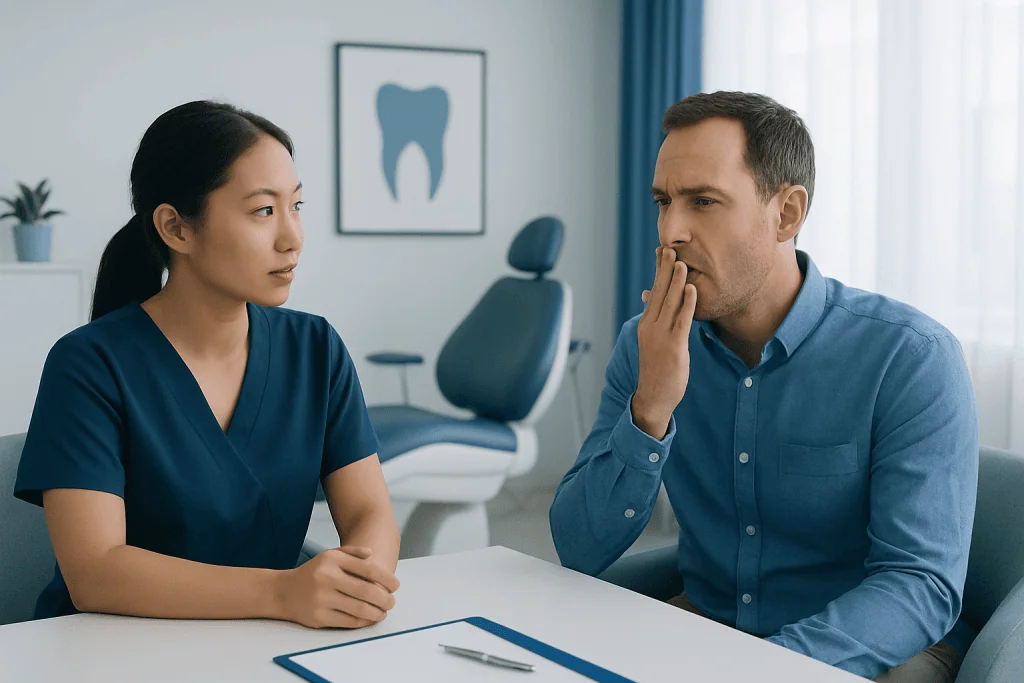
The most common dental cause of bad breath is bacterial buildup. Plaque can collect along the gumline, between teeth, around fillings, and on the surface of the tongue. The back of the tongue is a frequent source because its uneven surface can hold bacteria, food debris, and dead cells.
Gum disease is another important cause. In gingivitis, the gums become inflamed and may bleed. If it progresses to periodontitis, deeper pockets can form around the teeth, creating areas where bacteria are harder to clean. These pockets can produce persistent odor and may also lead to gum recession or tooth mobility if untreated.
Other dental contributors include untreated cavities, cracked teeth, infected teeth, poorly fitting crowns or bridges, overhanging fillings, impacted wisdom teeth, and dentures that are not cleaned properly. Orthodontic brackets, aligners, mouthguards, and retainers can also trap plaque if they are not cleaned as directed.
Dry mouth, or xerostomia, increases the risk of bad breath because saliva helps wash away bacteria and food particles. Dry mouth may be related to dehydration, mouth breathing, smoking, alcohol, some medications, salivary gland conditions, or certain medical treatments. Diet, tobacco use, and irregular dental visits can further increase the likelihood of persistent oral odor.
Diagnosis: How Dentists Evaluate Bad Breath
Diagnosis begins with a conversation about when the bad breath occurs, oral hygiene habits, diet, smoking or vaping, medications, dry mouth symptoms, and dental history. The dentist may ask whether the odor is constant or intermittent, whether it is worse in the morning, and whether there are signs such as gum bleeding, pain, or food trapping.
A careful oral examination follows. The dentist checks the teeth, gums, tongue, saliva flow, dental restorations, dentures, and any areas where plaque or tartar may collect. Gum measurements may be taken to assess periodontal pockets. Dental X-rays may be recommended if cavities, bone loss, impacted teeth, or infection are suspected.
Some clinics may use odor assessment tools or tests that detect sulfur compounds, but a detailed clinical examination is often the most useful step. If the mouth appears healthy and bad breath remains unexplained, the dentist may suggest evaluation by a medical doctor or ENT specialist to check for sinus, throat, digestive, metabolic, or medication-related causes.
Treatment Options
Treatment depends on the source of the odor. If plaque and tartar are present, professional dental cleaning can remove deposits that cannot be eliminated with brushing alone. The dentist or dental hygienist may also provide personalized instruction on brushing technique, interdental cleaning, and tongue cleaning.
If gum disease is the cause, periodontal treatment may be needed. This can include deep cleaning procedures such as scaling and root planing, management of gum pockets, and follow-up maintenance visits. Treating gum inflammation often improves odor because it reduces the bacterial environment that produces unpleasant gases.
Cavities, leaking fillings, cracked teeth, or infected teeth should be treated according to the diagnosis. This may involve fillings, replacement of faulty restorations, root canal treatment, extraction of teeth that cannot be saved, or management of impacted wisdom teeth. Dentures, bridges, retainers, aligners, and mouthguards may need adjustment, repair, or improved cleaning routines.
Mouth rinses can be helpful in selected cases, especially those designed to reduce bacteria or neutralize odor compounds. However, they are usually an addition to treatment rather than a cure. Products that strongly mask odor may provide short-term freshness but do not address gum disease, cavities, or dry mouth. A dentist can recommend an appropriate rinse based on the patient’s oral condition.
Prevention and Daily Self-Care
Good daily oral care is the foundation of preventing bad breath. Brushing twice a day with fluoride toothpaste helps remove plaque from the teeth and gumline. Cleaning between the teeth once a day with floss, interdental brushes, or another dentist-recommended tool is important because a toothbrush cannot reach all contact areas.
Tongue cleaning can make a meaningful difference for many people. A tongue scraper or toothbrush can be used gently from back to front to remove coating. People with a strong gag reflex can start farther forward and gradually work back as tolerated, without causing discomfort or injury.
Helpful habits include drinking enough water, limiting tobacco use, reducing frequent sugary snacks, and cleaning removable dentures or appliances every day. Dentures should be removed and stored as advised by the dentist, and aligners or retainers should be cleaned according to professional instructions. Regular dental check-ups help detect tartar, early gum disease, cavities, and restoration problems before they become persistent sources of odor.
- Brush teeth and gumline thoroughly twice daily.
- Clean between teeth once daily.
- Clean the tongue gently, especially the back surface.
- Stay hydrated and address dry mouth symptoms.
- Clean dentures, retainers, aligners, and mouthguards daily.
- Schedule routine dental visits for prevention and early treatment.
When to See a Dentist or Doctor
A dental appointment is recommended if bad breath lasts for more than a few weeks despite consistent brushing, flossing, and tongue cleaning. It is also important to see a dentist if bad breath occurs with bleeding gums, swollen gums, loose teeth, toothache, pus, a broken tooth, dry mouth, or food frequently getting trapped around dental work.
People who wear dentures, retainers, aligners, or other appliances should seek advice if they notice odor, irritation, sores, or a change in fit. Appliance-related plaque buildup can often be corrected with cleaning guidance, adjustment, or replacement when necessary.
If a dentist finds that the teeth, gums, and oral tissues are healthy, medical evaluation may be appropriate. Sinus infections, tonsil stones, reflux, uncontrolled diabetes, certain medications, and other health conditions can contribute to breath changes. Coordinated care helps ensure the underlying cause is not missed.
At Acibadem International, multidisciplinary dental and medical specialists in JCI-accredited hospitals can diagnose and treat bad breath for international patients when dental or wider health evaluation is needed. Patients should always seek individualized advice from a qualified dentist or doctor for symptoms that persist or cause concern.
Frequently asked questions
Is bad breath usually caused by the stomach?
Most persistent bad breath starts in the mouth rather than the stomach. Bacteria on the tongue, teeth, gums, and dental appliances are common sources. If a dental examination is normal, a doctor may evaluate other possible causes such as reflux, sinus problems, or medications.
Can gum disease cause bad breath?
Yes. Gum disease can create inflamed gum tissue and deeper pockets around teeth where odor-producing bacteria collect. Treating gum disease with professional cleaning, periodontal care, and improved home hygiene often helps reduce bad breath.
Does mouthwash cure bad breath?
Mouthwash may reduce bacteria or provide temporary freshness, but it does not cure dental problems such as tartar buildup, cavities, gum disease, or poorly fitting restorations. The best approach is to identify the cause and treat it directly. A dentist can recommend a rinse that is appropriate for the person’s oral health.
Why is bad breath worse in the morning?
During sleep, saliva flow decreases, allowing bacteria and odor compounds to build up. This is why morning breath is common and often improves after brushing, tongue cleaning, drinking water, and eating. If odor continues throughout the day, a dental check-up is advisable.
Can dry mouth make breath smell bad?
Yes. Saliva helps wash away food particles and bacteria, so dry mouth can make bad breath more noticeable. Dry mouth may be linked to dehydration, mouth breathing, smoking, medications, or salivary gland problems, and a dentist or doctor can help identify the cause.
How can a person tell if they have bad breath?
It can be difficult to judge one’s own breath accurately because people become used to their own smells. A trusted family member, dentist, or hygienist can give more reliable feedback. Dentists can also look for objective signs such as tongue coating, gum disease, plaque buildup, or dry mouth.
References
- American Dental Association
- World Health Organization
- National Institute of Dental and Craniofacial Research
- European Federation of Periodontology
- Mayo Clinic
This article is for general information only and is not a substitute for professional medical advice. Please consult a qualified doctor about your individual situation.
Persistent digestive symptoms? Get evaluated in Turkey
JCI-accredited · board-certified surgeons · reply within 24h
Add us as a Preferred Source to see more of our trusted health content across Google Search, AI Overviews and Discover.

Dental & Oral Health
Full-scope dental care from implants and aesthetics to oral and maxillofacial surgery.
158 specialists in this unitRelated Treatments
More from the Health Library



Related Specialists

Assoc. Prof. Dr. Ferit Bayram
Oral & Dental Health
Dt. Alara Naz Kenir
Oral & Dental Health
Dt. Gonca Katmer
Oral & Dental HealthDt. Doğa Baysal
Oral & Dental Health