Ball-sacking: What Patients Need to Know

Ball-sacking is not a formal diagnosis; it usually refers to a drooping, enlarged, or uncomfortable scrotum. Scrotal position changes naturally with temperature, exercise, age, and muscle relaxation.
Key Takeaways
- Ball-sacking is not a formal diagnosis; it usually refers to a drooping, enlarged, or uncomfortable scrotum.
- Scrotal position changes naturally with temperature, exercise, age, and muscle relaxation.
- Pain, sudden swelling, a lump, redness, fever, or nausea can point to a medical problem needing prompt care.
- Doctors may use an exam and ultrasound to distinguish normal variation from conditions such as hernia, hydrocele, varicocele, or torsion.
- Self-checks and supportive underwear may help with awareness and comfort, but persistent symptoms deserve medical evaluation.
Ball-sacking is a non-medical term people use to describe a scrotum or testicles that seem unusually low, loose, swollen, or uncomfortable. In many cases this reflects normal anatomy and temperature-related changes, but new pain, swelling, lumps, or one-sided changes should be checked by a doctor.
What ball-sacking means
Ball-sacking is an informal phrase, not a medical diagnosis. People usually use it to describe testicles or scrotal skin that seem to hang lower than expected, feel heavier, look fuller, or become more noticeable during daily activity. The term may also be used when there is discomfort, rubbing, or concern about a visible change.
In many people, some degree of scrotal drooping is completely normal. The scrotum is designed to move up and down to help regulate testicular temperature, which is important for sperm production. Warm temperatures, relaxation, aging, and body position can all make the scrotum look looser or lower at times.
Even so, a noticeable change should not automatically be dismissed. Ball-sacking can sometimes reflect swelling, fluid collection, enlarged veins, a hernia, or less commonly an urgent condition such as testicular torsion. The key question is whether the appearance is a long-standing normal pattern or a new change accompanied by pain, heaviness, or a lump.
Normal changes versus possible symptoms
The scrotum naturally changes throughout the day. It may hang lower in heat, after a warm shower, during exercise recovery, or when the body is relaxed. It may also tighten in cold conditions or with stress because of the cremaster and dartos muscles. Mild asymmetry is common too, and one testicle often sits slightly lower than the other.
Symptoms that suggest more than a normal variation include a new dragging sensation, visible swelling, one-sided enlargement, sharp or persistent pain, tenderness, skin redness, or a feeling of heaviness. Some people also notice a smooth fluid-like swelling, enlarged twisting veins, or a lump inside the scrotum.
Associated symptoms can offer clues. For example, groin bulging may suggest a hernia, burning with urination may point to infection, and nausea with sudden severe testicular pain raises concern for emergency conditions. If symptoms are new, worsening, or affecting daily life, a clinical examination is a sensible next step.
- Usually normal: mild drooping, temporary looseness in heat, slight left-right difference
- Needs attention: sudden pain, rapid swelling, a new lump, skin redness, fever, or vomiting
- Worth discussing: ongoing heaviness, discomfort when walking, fertility concerns, or repeated scrotal swelling
Common causes and risk factors

One common reason for concern about ball-sacking is simple anatomy. Scrotal skin and supporting tissues can become looser with age, weight changes, or repeated heat exposure. This may cause discomfort from friction or a heavier feeling without indicating serious disease.
Medical causes include hydrocele, which is a collection of fluid around the testicle; varicocele, which is enlargement of veins in the scrotum; and inguinal hernia, in which tissue pushes through a weak point in the groin. Infections such as epididymitis can also lead to swelling and tenderness. These conditions vary in urgency and treatment.
Less common but important causes include trauma, testicular torsion, and tumors. Torsion happens when the spermatic cord twists, reducing blood flow to the testicle. It usually causes sudden, severe pain and is a medical emergency. A tumor may present as a firm lump or change in testicular size rather than generalized sagging alone. People with prior groin surgery, heavy lifting, injury, or a history of undescended testicle may have a higher risk of certain problems, including testicular cancer.
Some men who describe ball-sacking are actually noticing changes related to inguinal hernia or enlarged veins known as varicocele. Because these conditions can overlap in symptoms, self-diagnosis is not always reliable.
How doctors evaluate scrotal changes
Assessment starts with a medical history. A doctor will usually ask when the change began, whether it is one-sided or both-sided, whether pain is present, and whether symptoms are linked to exercise, coughing, urination, sex, fever, or injury. Fertility history and prior surgeries may also be relevant.
The physical examination often includes looking and gently feeling the scrotum and groin while standing and lying down. The doctor may check for tenderness, fluid, a hernia bulge, enlarged veins, skin changes, or a discrete mass. This examination can provide many clues, but imaging is often used to confirm the diagnosis.
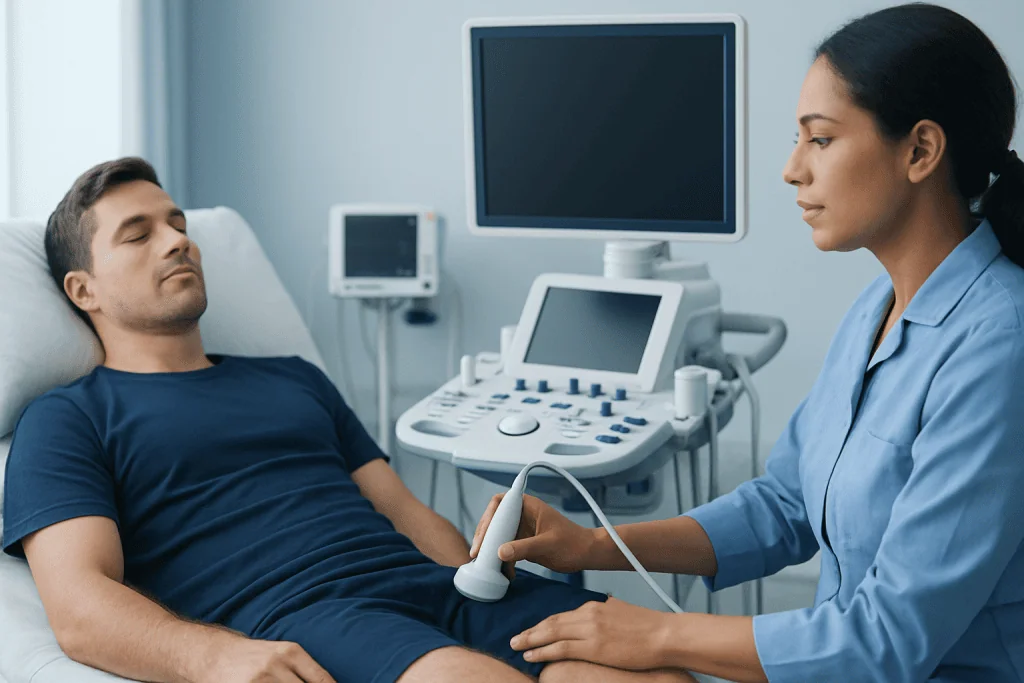
Scrotal ultrasound is the most common imaging test because it can show blood flow, fluid collections, enlarged veins, inflammation, or suspicious masses without radiation. Urine tests or blood tests may be added when infection or other underlying conditions are suspected. If the problem seems related to the urinary tract, a patient may be referred for further urology care.
Treatment options depend on the cause
Treatment for ball-sacking is aimed at the underlying reason rather than the appearance alone. Normal anatomical drooping usually does not need medical treatment. When discomfort is mild, practical measures such as supportive underwear, reducing friction, and avoiding prolonged heat may be enough.
If there is infection or inflammation, treatment may involve rest, scrotal support, pain relief, and medicines prescribed by a doctor. Hydroceles may simply be monitored if they are small and not troublesome, while larger or persistent hydroceles can sometimes require a procedure. Varicoceles may also be observed, but treatment may be considered if they cause pain, testicular shrinkage, or fertility concerns. In selected cases, management may include varicocele treatment.
Hernias often need surgical assessment, especially if they enlarge, cause pain, or cannot be pushed back. A symptomatic groin bulge may lead to hernia repair. Sudden severe pain from suspected torsion requires urgent emergency care because delaying treatment may threaten the testicle. If a suspicious mass is found, prompt specialist evaluation is essential and may involve testicular cancer treatment pathways after diagnosis is confirmed.
Self-care, comfort, and prevention
Although not all causes can be prevented, a few habits can support scrotal comfort and help a person notice changes early. Well-fitting supportive underwear may reduce movement-related discomfort, especially during walking, exercise, or prolonged standing. Breathable fabrics can also help limit heat and moisture.
Regular self-awareness is useful. This does not need to become a source of anxiety, but it helps to know what is normal for one’s body. A monthly testicular self-check after a warm shower may make it easier to notice a new lump, persistent swelling, or a one-sided change. Any finding that feels different from usual should be reviewed by a clinician rather than assumed to be harmless.
Avoiding direct injury is also important. Protective gear during contact sports, prompt attention after trauma, and seeking care for persistent groin strain or swelling can lower the chance of complications. Good hydration, treatment of urinary infections, and not ignoring groin bulges may also help prevent avoidable problems from getting worse.
When to seek medical care
Immediate medical care is important if ball-sacking is accompanied by sudden severe testicular or scrotal pain, rapid swelling, nausea, vomiting, faintness, or a testicle that sits higher than usual. These symptoms can occur with torsion or other urgent problems and should not wait for a routine appointment.
Medical review is also appropriate within a reasonable timeframe if there is a new lump, one-sided enlargement, persistent heaviness, skin redness, fever, pain with urination, or a groin bulge that becomes more obvious with coughing or lifting. Even when the cause turns out to be minor, checking it early can prevent discomfort and clarify whether treatment is needed.
For international patients who need evaluation, Acibadem International’s multidisciplinary specialists and JCI-accredited hospitals diagnose and treat scrotal, groin, and men’s health conditions using imaging, medical therapy, and surgery when appropriate.
Frequently asked questions
Is ball-sacking normal?
Often, yes. The scrotum normally loosens and tightens to regulate temperature, so hanging lower at some times of day can be completely normal. It is more concerning when the change is new, one-sided, painful, swollen, or associated with a lump.
Why do the testicles hang lower in warm weather?
Heat relaxes the scrotal muscles, allowing the testicles to sit farther from the body. This helps keep them at a temperature suitable for sperm production. Cold temperatures usually cause the scrotum to tighten instead.
Can ball-sacking cause pain?
Normal drooping by itself may cause mild rubbing or a heavy sensation, but it usually does not cause significant pain. Pain suggests that another issue may be present, such as infection, varicocele, hernia, trauma, or torsion. Persistent or sudden pain should be medically assessed.
Does ball-sacking affect fertility?
Simple scrotal looseness does not necessarily affect fertility. However, some underlying causes, especially varicocele or certain testicular disorders, can sometimes influence sperm quality or testicular function. If fertility is a concern, a urologist can advise on testing and treatment.
How is the cause of ball-sacking diagnosed?
Doctors usually combine a physical examination with a review of symptoms and timing. A scrotal ultrasound is commonly used because it can show fluid, blood flow, enlarged veins, inflammation, or masses. Urine or blood tests may also be used when infection or another condition is suspected.
When is ball-sacking an emergency?
It is an emergency when there is sudden severe testicular pain, rapid swelling, nausea, vomiting, or a high-riding testicle. These features can suggest testicular torsion, which needs urgent treatment to protect the testicle. Emergency assessment is safer than waiting to see if the pain settles.
References
- American Urological Association
- Urology Care Foundation
- National Institute of Diabetes and Digestive and Kidney Diseases
- Mayo Clinic
- National Health Service
This article is for general information only and is not a substitute for professional medical advice. Please consult a qualified doctor about your individual situation.
Explore treatments in Turkey — costs, top hospitals & a free quote
JCI-accredited · board-certified surgeons · reply within 24h
Add us as a Preferred Source to see more of our trusted health content across Google Search, AI Overviews and Discover.

More from the Health Library

Monistat 7 — Explained by Medical Evidence, Not Myths

Mallet Finger: An Evidence-Based Guide for Patients

Spinal Cord Injury: An Evidence-Based Guide for Patients
Ear Irrigation: What Patients Need to Know

Transglutaminase: What Patients Need to Know