Mallet Finger: An Evidence-Based Guide for Patients

Mallet finger happens when the extensor tendon at the fingertip is torn or pulls off a small piece of bone. A drooping fingertip after a jammed finger or blow to the fingertip is a common sign.
Key Takeaways
- Mallet finger happens when the extensor tendon at the fingertip is torn or pulls off a small piece of bone.
- A drooping fingertip after a jammed finger or blow to the fingertip is a common sign.
- Early, uninterrupted splinting is a standard treatment for many cases and often needs to be worn continuously for several weeks.
- X-rays may be needed to look for an associated fracture or joint misalignment.
- Some mallet finger injuries require surgery, especially if the joint is unstable or a large bone fragment is involved.
- Prompt medical assessment helps reduce the chance of long-term stiffness or deformity.
Mallet finger is an injury to the tendon that straightens the tip of a finger, often causing the fingertip to droop and making active straightening difficult or impossible. In many cases, early diagnosis and continuous splinting can lead to good healing, while some injuries need specialist treatment.
Overview
Mallet finger is a common hand injury in which the tendon that straightens the fingertip is damaged at the last joint of the finger, called the distal interphalangeal joint. As a result, the tip of the finger bends downward and cannot be fully straightened by the person using the hand. The injury may affect soft tissue only, or it may involve a small fracture where the tendon attaches to the bone.
This problem often follows a sudden force to the end of a straight finger, such as being struck by a ball, catching a fingertip in clothing or bedding, or a simple household accident. Although it may seem minor at first, mallet finger benefits from early assessment because treatment works best when started promptly and followed carefully.
Mallet finger is different from general finger sprains because the main issue is loss of active extension at the fingertip rather than pain alone. It is also distinct from more complex hand injuries that affect the middle joint or multiple tendons. In some cases, a doctor may also evaluate for related problems such as trigger finger if symptoms are not typical, but these are separate conditions with different causes and treatment.
Symptoms and How It Feels
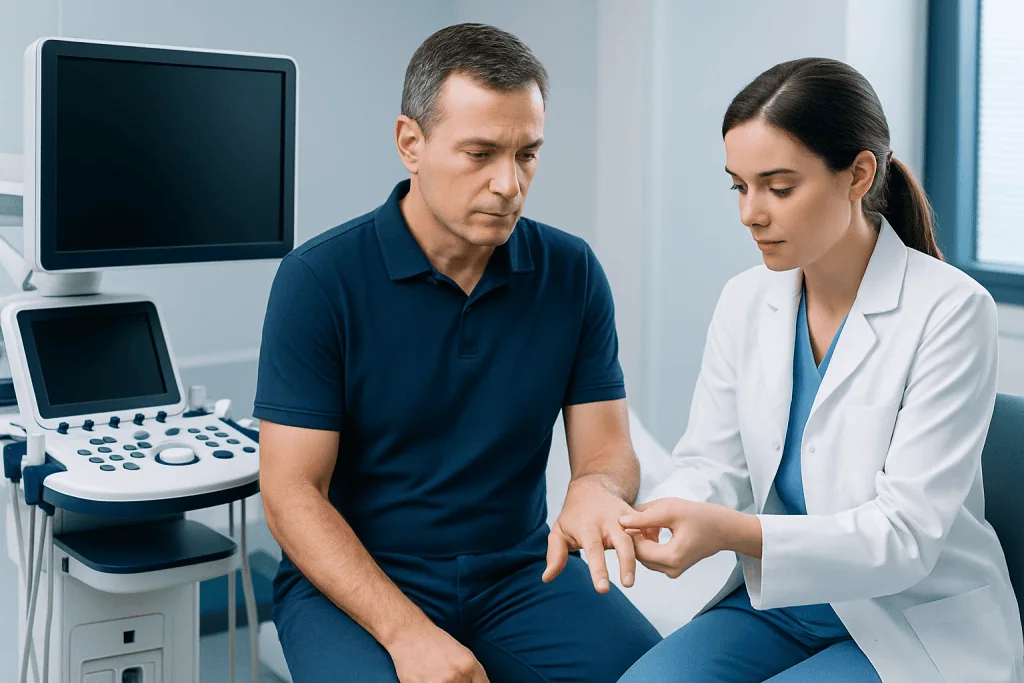
The most recognizable sign of mallet finger is a drooping fingertip. The person may notice that the end joint remains bent and does not lift up on its own, even though it can often be pushed straight with the other hand. Pain and swelling are usually present soon after the injury, but the discomfort may be mild compared with the visible change in finger position.
Other symptoms can include tenderness over the back of the fingertip joint, bruising, stiffness, and difficulty with tasks that need fingertip control. For example, typing, buttoning clothes, or picking up small objects may feel awkward. If the injury affects the dominant hand or the thumb-like pinch function of the index finger, everyday activities may be more noticeably limited.
Symptoms can vary depending on whether only the tendon is injured or whether a piece of bone has also been pulled away. A fracture-related mallet injury may cause more swelling and sometimes a sense of joint instability. If the finger looks markedly crooked, numb, very swollen, or the skin is cut, the injury needs prompt medical review.
Causes and Risk Factors

Mallet finger usually occurs when an extended fingertip is forced to bend suddenly. Sports injuries are a frequent cause, especially in basketball, volleyball, baseball, and other activities where a ball can strike the tip of the finger. It can also happen during routine tasks such as making a bed, tucking in sheets, or catching the finger on an object.
The direct cause is injury to the extensor tendon that normally straightens the last joint of the finger. In some cases, the tendon tears. In others, the tendon remains attached but pulls off a small piece of bone from the end of the finger, known as an avulsion fracture. Both forms can produce the same drooping appearance.
Anyone can develop mallet finger, but the risk may be higher in people who play ball sports, work with their hands, or have had previous finger injuries. Delayed treatment can increase the chance of stiffness, persistent droop, or a secondary deformity at the middle joint over time. Because hand injuries can overlap, some patients may also be evaluated by specialists in hand surgery when the pattern of injury is more complex.
How Mallet Finger Is Diagnosed
Diagnosis starts with the history of the injury and a physical examination. A clinician will usually ask how the finger was hurt, whether the fingertip can be straightened actively, and whether there is numbness, an open wound, or deformity in other parts of the finger. The classic finding is inability to actively extend the fingertip while passive straightening is still possible.
An X-ray is commonly recommended. This helps determine whether the injury involves a fracture and whether the joint surfaces remain properly aligned. Imaging is important because some bony mallet injuries look similar to simple tendon injuries from the outside, yet treatment planning may differ if a large fragment or joint subluxation is present.
Advanced imaging is not needed for most straightforward cases, but it may be considered if the diagnosis is uncertain or if recovery does not progress as expected. Early evaluation is useful because mallet finger treatment depends not only on the type of injury but also on how long ago it occurred and whether the splint can be applied correctly from the start.
Treatment Options
For many patients, the main treatment is continuous splinting of the fingertip joint in a straight or slightly overextended position. The splint must usually be worn all the time, day and night, for several weeks so that the tendon ends can heal in the correct position. Even a brief bend at the fingertip during the early healing period can interrupt progress, which is why careful instructions on splint use, skin care, and hygiene are important.
Doctors may use different splint designs based on the finger shape, the skin condition, and patient comfort. During treatment, the middle joint can usually keep moving, while the fingertip joint is protected. Follow-up visits help check the skin, ensure the splint is fitting properly, and monitor for any remaining droop or signs that healing is not progressing as expected. In selected cases, structured support from physical therapy and rehabilitation may help restore hand function after immobilization.
Surgery is not needed for every mallet finger, but it may be advised when there is a large avulsion fracture, joint misalignment, an open injury, or failure of non-surgical treatment. Surgical methods vary and may include pinning or repair techniques to restore alignment and tendon function. Some patients with more extensive fractures may also need assessment within orthopedic surgery services, depending on the injury pattern and the structures involved.
After the initial continuous splinting phase, the fingertip may still need part-time splint use, often at night, while motion is reintroduced gradually. Mild residual extension lag can remain even with proper treatment, but many people regain good function for daily activities. Recovery is usually better when treatment starts early and the splint is worn exactly as instructed.
Recovery, Prevention, and Self-care
Recovery from mallet finger requires patience because tendon healing is slow. It is common for the finger to feel stiff after weeks in a splint, and some swelling may linger for a time. The care team may advise gentle exercises once it is safe to begin moving the fingertip again, but these should only start when a clinician confirms that healing is stable.
At home, good splint care matters. The splint should stay dry and fit securely without causing pressure sores. If the skin becomes red, broken, painful, or very itchy, the person should contact a clinician rather than adjusting the treatment plan alone. Any temporary removal for skin care should be done exactly as instructed so the fingertip does not bend.
Prevention focuses on hand protection and early attention to finger injuries. Using proper sports technique, taping or protective gear when appropriate, and not ignoring a drooping fingertip may help limit long-term problems. If a finger has been injured repeatedly or remains painful and stiff, further review may be needed to rule out other tendon or joint conditions.
When to Seek Medical Care
Medical care should be sought if the fingertip droops after an injury, especially if it cannot be straightened actively. Prompt assessment is also important when pain, swelling, or bruising develops around the last finger joint after a blow to the fingertip. Early treatment can improve the likelihood of proper healing and may reduce the chance of a lasting deformity.
Urgent review is needed if there is an open wound, visible deformity, severe swelling, numbness, signs of poor circulation, or if the finger appears out of position. Children, athletes, and people whose work depends heavily on hand function may also benefit from timely specialist evaluation. If symptoms persist despite splinting or the diagnosis is uncertain, a hand specialist may recommend additional imaging or a different treatment approach.
Near the end of the care pathway, it may help patients to know that Acibadem International’s multidisciplinary specialists and JCI-accredited hospitals diagnose and treat hand conditions for international patients. The right plan depends on the individual injury, so professional assessment remains essential.
Frequently asked questions
Can mallet finger heal without surgery?
Yes. Many mallet finger injuries heal well with continuous splinting when treatment starts promptly and the splint is worn exactly as instructed. Surgery is usually considered only for selected cases, such as unstable fractures, joint misalignment, open injuries, or unsuccessful non-surgical treatment.
How long does a mallet finger splint need to stay on?
The exact schedule depends on the injury and the clinician’s advice, but continuous splinting often lasts several weeks. In many cases, part-time or night splinting continues afterward while movement is reintroduced gradually. It is important not to remove the splint or bend the fingertip unless a clinician has explained how to do so safely.
What happens if mallet finger is left untreated?
Without treatment, the fingertip may remain drooped and the joint may become stiff. Over time, some people develop a more complex finger posture change involving another joint. Function may still be acceptable in mild cases, but untreated injuries are more likely to leave a lasting deformity.
Is an X-ray necessary for mallet finger?
An X-ray is often recommended because it can show whether the tendon pulled off a small piece of bone and whether the joint is aligned correctly. This information helps guide treatment. Even when the finger does not look severely injured, imaging can be useful.
Can a person still move the finger with mallet finger?
Usually the person can bend the fingertip, but cannot actively straighten it fully at the last joint. Other finger joints may move normally. Because movement patterns vary, a medical assessment is helpful to confirm the diagnosis.
When should someone see a doctor for a jammed finger?
A doctor should assess a jammed finger if the fingertip droops, straightening is difficult, swelling is significant, or pain does not improve. Immediate care is especially important if there is an open cut, numbness, severe deformity, or concern about a fracture. Early review helps make sure the right treatment starts without delay.
This article is for general information only and is not a substitute for professional medical advice. Please consult a qualified doctor about your individual situation.
Joint and spine care in Turkey — expert assessment & treatment
JCI-accredited · board-certified surgeons · reply within 24h
Add us as a Preferred Source to see more of our trusted health content across Google Search, AI Overviews and Discover.

More from the Health Library

Barley Tea Benefits — Explained by Medical Evidence, Not Myths

Fresh Kurkuma: What Patients Need to Know

Rf Muscle: An Evidence-Based Guide for Patients

Pelvic Obliquity: An Evidence-Based Guide for Patients

Meaning of Welts — Explained by Medical Evidence, Not Myths