Banana Hair Mask — Explained by Medical Evidence, Not Myths

A banana hair mask may provide short-term softness and slip, especially on dry hair lengths. There is limited clinical research on banana applied to hair or scalp.
Key Takeaways
- A banana hair mask may provide short-term softness and slip, especially on dry hair lengths.
- There is limited clinical research on banana applied to hair or scalp.
- Bananas do not reverse hair loss, mend split ends, or treat dandruff or scalp inflammation.
- Residue from poorly blended banana can be difficult to remove and may cause tangling.
- Patch testing and avoiding application to irritated or broken skin can reduce the risk of irritation.
- Persistent shedding, scalp pain, scaling, or patchy hair loss should be assessed by a clinician.
A banana hair mask can act as a temporary conditioning treatment for some people, mainly by helping hair feel softer and more manageable. Medical evidence does not support claims that banana masks repair damaged hair, stimulate hair growth, cure dandruff, or treat scalp conditions.
What a Banana Hair Mask Can—and Cannot—Do
A banana hair mask is a home treatment made by applying mashed or blended banana to the hair, sometimes mixed with ingredients such as yogurt, honey, oils, or conditioner. It may make the hair feel temporarily softer or easier to comb because moisture and coating ingredients can improve slip along the hair shaft. This is a cosmetic effect rather than a medical treatment.
Bananas contain water, carbohydrates, small amounts of vitamins and minerals, and natural plant compounds. However, there is little high-quality clinical evidence that applying banana to the scalp or hair improves hair growth, repairs structural damage, cures dandruff, or prevents hair loss. Hair is made largely of keratin, and once a hair shaft is damaged, it cannot biologically heal itself.
A person who enjoys using a banana hair mask may use it occasionally if it is comfortable and easy to rinse out. It is best viewed as an optional conditioning ritual, not a substitute for proven hair and scalp care or medical assessment when symptoms are persistent.
Why Hair May Feel Softer After a Mask
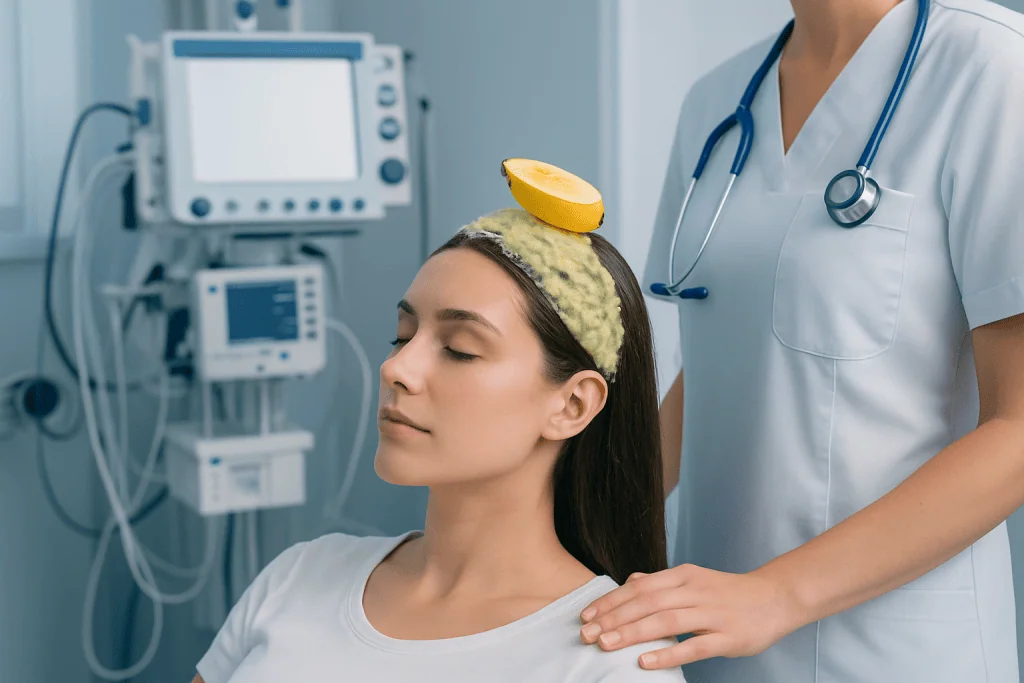
Hair that feels dry, rough, or tangled often has a lifted or damaged outer cuticle. Water, oils, and conditioning agents can temporarily reduce friction between strands and help the cuticle lie flatter. This can make hair appear smoother, feel softer, and be easier to detangle after washing.
In a banana hair mask, the perceived benefit may come partly from moisture and partly from any added ingredients. For example, a standard rinse-out conditioner contains ingredients designed to coat hair evenly and rinse away predictably. By comparison, the particles and fibers in banana may be unevenly distributed, particularly when it is only mashed rather than thoroughly blended.
Short-term cosmetic improvement should not be confused with hair repair. Split ends do not fuse back together, and a mask cannot change the growth cycle of the hair follicle beneath the scalp. Regular gentle hair handling, conditioning, and limiting heat or chemical exposure are generally more reliable ways to reduce breakage.
What Medical Evidence Says About Popular Claims

Online claims often describe banana as rich in nutrients that can strengthen hair, promote rapid growth, or eliminate dandruff. Nutrients are important for overall health and normal hair growth when consumed as part of a balanced diet, particularly if a person has an identified deficiency. Yet nutrients in a food do not necessarily reach or affect the hair follicle when the food is placed on the scalp.
There is no strong clinical evidence that a banana hair mask treats common causes of shedding, including androgenetic hair loss, telogen effluvium, autoimmune hair loss, thyroid-related changes, or nutritional deficiency. Likewise, dandruff is commonly associated with scalp inflammation and sensitivity to naturally occurring yeast; it usually responds better to appropriately selected medicated shampoos than to food-based masks.
People with ongoing thinning or increased shedding may benefit from a structured evaluation for hair loss. The most appropriate care depends on the pattern, duration, medical history, medications, diet, recent illness, and examination findings.
Possible Risks and Practical Limitations
A banana hair mask is not risk-free simply because it is homemade. Banana can leave small particles trapped in the hair, especially in curly, coily, fine, porous, or densely textured hair. Removing residue may require repeated washing or combing, which can increase tangling and breakage.
Some people may develop irritation or an allergic reaction. Symptoms can include itching, burning, redness, swelling, hives, or a rash. People with a known banana allergy should not use banana on the skin or scalp. Those with latex allergy should also be cautious, as some individuals can have cross-reactivity with certain fruits, including banana.
Food mixtures can also be difficult to preserve hygienically. A freshly prepared mask should be used promptly and discarded afterward rather than stored for later use. It should not be applied to skin that is broken, infected, severely inflamed, or affected by an unexplained rash.
- Avoid adding irritating ingredients such as undiluted essential oils, lemon juice, baking soda, or harsh alcohols.
- Keep the mixture away from the eyes and stop using it if stinging or itching develops.
- Use a wide-tooth comb and gentle rinsing rather than forceful brushing if particles remain.
If Someone Chooses to Try a Banana Hair Mask
For a lower-risk approach, a person can first test a very small amount of a freshly prepared, finely blended mixture on a small area of skin, such as the inner arm, and wait for a reaction. This does not guarantee that the scalp will tolerate it, but it may identify obvious sensitivity. Anyone who has previously reacted to banana should avoid the product entirely.
The mixture is best kept simple. Thoroughly blending a small amount of ripe banana with a familiar rinse-out conditioner may be easier to distribute and remove than using banana alone. It should be applied mainly to the mid-lengths and ends of the hair rather than rubbed aggressively into the scalp, then rinsed out carefully with lukewarm water.
There is no medically established schedule for banana masks. Occasional use is reasonable if the hair and scalp tolerate it, but more frequent application is unlikely to create greater benefit. For regular conditioning, products formulated for the person’s hair type are often more predictable and less likely to leave residue.
Better-Supported Hair and Scalp Care
Hair care works best when it is matched to the underlying concern. For dryness and breakage, gentle shampooing, conditioner after washing, reduced heat styling, protective handling, and avoiding tight hairstyles can help limit mechanical damage. A leave-in conditioner or detangling product may be helpful for people whose hair tangles easily.
For flakes or itching, an anti-dandruff shampoo with an evidence-based active ingredient may be more appropriate than a food-based mask. A pharmacist or clinician can help a person choose an option based on symptoms, age, skin sensitivity, and other scalp conditions. Persistent scaling can have several causes and should not be self-diagnosed.
Hair loss treatments depend on the diagnosis. Some people may be candidates for medical evaluation and treatments such as hair transplant procedures when appropriate, while others may need treatment for a hormonal, nutritional, inflammatory, or medication-related cause. A qualified clinician can explain which options are evidence-based for the individual situation.
When to Seek Medical Care
Medical advice is recommended for sudden or substantial shedding, widening of the hair part, a receding hairline, round patches of hair loss, or loss of eyebrows or body hair. Assessment is also important when hair changes occur after a major illness, childbirth, surgery, weight change, new medicine, or a restrictive diet.
A person should seek care promptly for scalp pain, pus, crusting, bleeding, severe itching, swelling, fever, or a spreading rash. These symptoms may indicate inflammation, infection, or another scalp disorder that requires targeted treatment rather than a home remedy.
Acibadem International’s multidisciplinary specialists and JCI-accredited hospitals diagnose and treat hair and scalp concerns for international patients. A dermatologist can help distinguish cosmetic hair dryness from conditions that need medical care and can recommend a safe, individualized plan.
Frequently asked questions
Does a banana hair mask help hair grow faster?
There is no reliable clinical evidence that applying banana to the hair or scalp makes hair grow faster. Hair growth is influenced by genetics, hormones, health conditions, nutrition, medications, and scalp health. Ongoing thinning or shedding should be discussed with a clinician.
Can a banana hair mask repair damaged hair?
It may temporarily make damaged hair feel smoother or easier to comb, but it cannot repair the hair shaft biologically. Split ends and significant chemical or heat damage cannot be permanently reversed with a mask. Trimming damaged ends and using gentle conditioning practices can reduce further breakage.
Can banana treat dandruff?
Banana is not an established treatment for dandruff. Dandruff often responds to medicated shampoos chosen for the person’s symptoms and scalp sensitivity. Persistent flaking, redness, or itching may need assessment by a healthcare professional.
Is a banana hair mask safe for the scalp?
Many people may tolerate it, but irritation, allergy, and difficult-to-remove residue are possible. It should not be used by someone with a banana allergy, and caution is sensible for people with latex allergy. Stinging, itching, rash, or swelling are reasons to rinse it out and stop using it.
How often can a person use a banana hair mask?
There is no evidence-based frequency because banana masks have not been shown to provide a medical hair benefit. If a person chooses to use one and has no irritation or residue problems, occasional use is generally more practical than frequent use. Regular conditioner is usually a more consistent option for routine care.
What is the best way to remove banana from hair?
Rinsing slowly with lukewarm water, applying conditioner for slip, and gently detangling with fingers or a wide-tooth comb may help. Repeated forceful brushing can worsen tangling and breakage. If residue remains or the scalp becomes irritated, washing with a gentle shampoo and avoiding further masks is sensible.
References
- American Academy of Dermatology Association
- American Academy of Allergy, Asthma & Immunology
- National Institutes of Health Office of Dietary Supplements
- Mayo Clinic
- DermNet
This article is for general information only and is not a substitute for professional medical advice. Please consult a qualified doctor about your individual situation.
Hair transplant in Turkey — costs, graft counts & a free assessment
JCI-accredited · board-certified surgeons · reply within 24h
Add us as a Preferred Source to see more of our trusted health content across Google Search, AI Overviews and Discover.