Barium Swallow Test: An Evidence-Based Guide for Patients
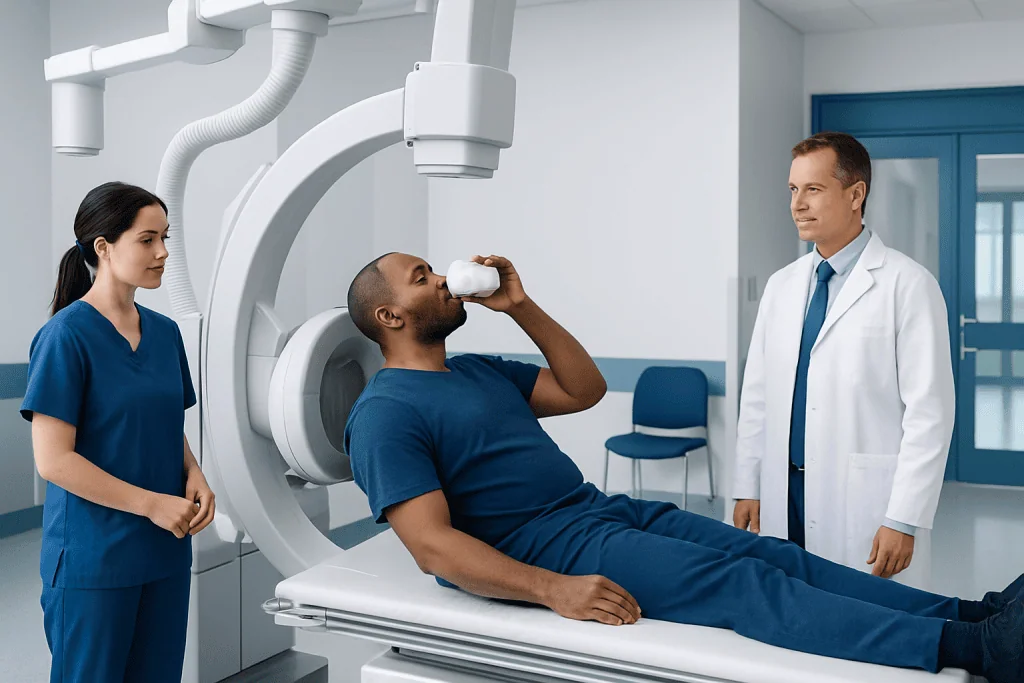
A barium swallow test uses X-rays and a contrast liquid to show the structure and movement of the throat and esophagus. It can help evaluate swallowing difficulty, reflux, narrowing, ulcers, hiatal hernia, and other upper digestive tract problems.
Key Takeaways
- A barium swallow test uses X-rays and a contrast liquid to show the structure and movement of the throat and esophagus.
- It can help evaluate swallowing difficulty, reflux, narrowing, ulcers, hiatal hernia, and other upper digestive tract problems.
- The test is usually quick, non-surgical, and does not require sedation in most cases.
- Preparation may include fasting and temporarily avoiding certain medicines, depending on the doctor’s instructions.
- Results may lead to further testing, such as endoscopy, if more detail or tissue sampling is needed.
A barium swallow test is a commonly used imaging exam that helps doctors see how liquid moves from the mouth and throat into the esophagus and upper stomach. It is often recommended for swallowing problems, reflux symptoms, unexplained chest discomfort, or suspected structural changes in the upper digestive tract.
Overview: what a barium swallow test is
A barium swallow test is an imaging study that helps doctors examine the throat, esophagus, and sometimes the upper part of the stomach. During the test, the patient drinks a liquid containing barium, a contrast material that coats the lining of the upper digestive tract. X-ray images are then taken while the barium moves downward, allowing the care team to see both structure and function.
This test is especially useful when a person has symptoms such as difficulty swallowing, food feeling stuck, regurgitation, long-standing heartburn, or unexplained discomfort with eating and drinking. Because it shows the movement of swallowing in real time, it can reveal problems that are not always obvious from symptoms alone.
Unlike some other digestive tests, a barium swallow does not involve sedation, incisions, or tissue samples. It is often used as an early step in evaluation because it is relatively simple and can help guide whether further assessment, such as gastroenterology evaluation or endoscopy, may be helpful.
Why doctors order this test
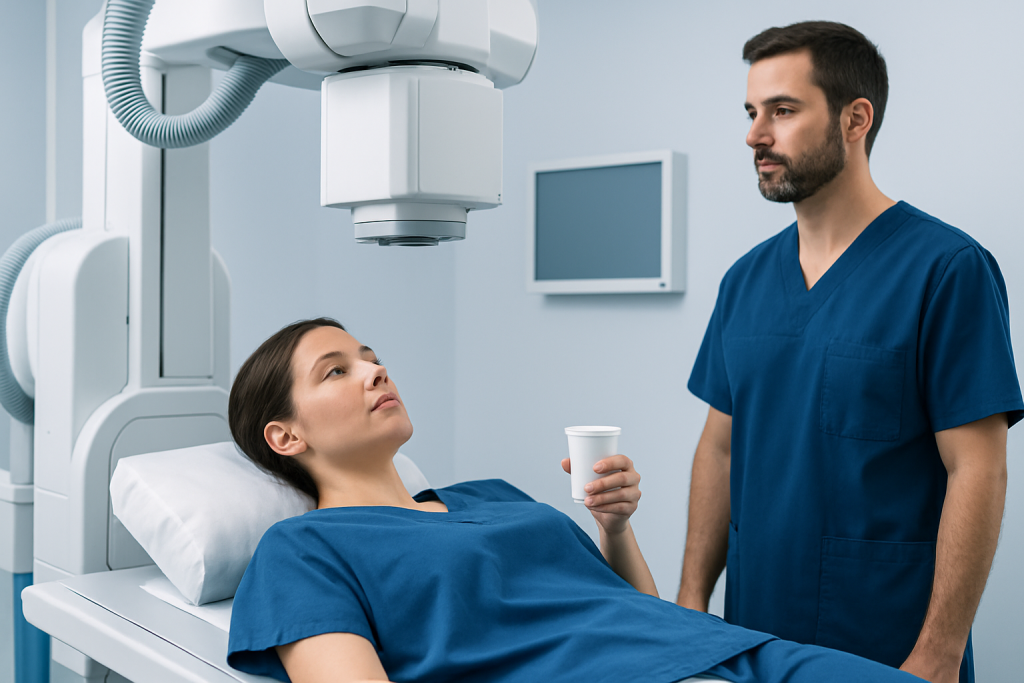
Doctors may recommend a barium swallow test when they need to understand why swallowing is uncomfortable, slow, or difficult. The exam can help identify narrowing, irritation, ulcers, pouches, abnormal movement of the esophagus, or pressure from nearby structures. It may also help assess symptoms that occur after meals, such as coughing, choking, or the sensation of food sticking in the chest.
The test is commonly used in the assessment of dysphagia, which is the medical term for swallowing difficulty. It may also support the evaluation of chronic reflux symptoms, suspected reflux disease, hiatal hernia, esophageal rings, or conditions affecting muscle coordination. In some cases, it is ordered after treatment to check how the esophagus is functioning or whether a narrowing has improved.
A barium swallow is not the only test for upper digestive symptoms, but it answers some questions particularly well. It can show the shape of the swallowing passage and the flow of contrast through it, which makes it useful when the main concern is how the swallowing process works rather than simply how the tissue looks on close inspection.
What symptoms and conditions it can help evaluate

A barium swallow test may be used when symptoms suggest a problem in the upper digestive tract. These symptoms can include trouble starting a swallow, frequent throat clearing after eating, pain when swallowing, chest discomfort linked to meals, a persistent feeling of fullness in the throat, hoarseness, or repeated regurgitation of food or liquid.
It can also help investigate symptoms that overlap with other conditions. For example, long-standing heartburn may relate to reflux, but some people also have strictures, ulcers, or changes in esophageal movement that need a closer look. When the problem seems higher in the throat, the test may help identify aspiration risk or coordination issues, especially if coughing occurs during meals.
Conditions that may be considered during evaluation include:
- Esophageal narrowing or stricture
- Hiatal hernia
- Swallowing disorders and muscle movement problems
- Esophageal inflammation or ulcers
- Structural pouches or rings
- Signs that may suggest esophageal cancer and require further testing
A barium swallow does not confirm every diagnosis on its own. Instead, it helps doctors narrow the possibilities and decide whether treatment, monitoring, or additional tests such as endoscopy or manometry are needed.
How to prepare and what happens during the exam
Preparation is usually straightforward. Many patients are asked not to eat or drink for several hours before the test so the throat and esophagus can be seen more clearly. The imaging team may also advise whether regular medicines should be taken as usual or delayed until after the exam. Following the specific instructions from the hospital or clinic is important because details can vary.
During the test, the patient stands or sits near a fluoroscopy machine, which is a type of X-ray that records moving images. The radiologist or technologist asks the patient to swallow barium liquid and sometimes a barium-coated tablet or thicker mixture, depending on the reason for the exam. Several images are taken from different angles while the patient swallows and changes position.
The exam is usually completed within a short visit, although timing can vary if additional views are needed. Most people do not need anesthesia or sedation, and they can usually return home soon afterward. The barium may taste chalky or thick, but the procedure is generally well tolerated.
Patients should tell the care team before the test if they are pregnant, may be pregnant, have severe constipation, have a known bowel blockage, or have had previous swallowing-related aspiration problems. These details help the team choose the safest approach.
Understanding the results and possible next steps
The images are reviewed by a radiologist, who looks at how the barium moves and whether the outlines of the throat and esophagus appear normal. The report may describe narrowing, delayed passage, reflux of contrast, abnormal contractions, ulcers, a hernia, or changes that need more evaluation. Results are then discussed with the referring doctor in the context of the person’s symptoms and medical history.
A normal result can still be helpful because it may rule out major structural problems and guide attention toward other possible causes of symptoms. If the test shows signs of a blockage, significant narrowing, aspiration, or suspicious irregularity, the doctor may recommend further assessment. This can include endoscopy to directly view the lining and, if needed, collect a tissue sample.
In some cases, the next step may be treatment for reflux, changes in eating habits, swallowing therapy, or additional studies to examine muscle function more closely. When results suggest a complex or persistent upper digestive problem, coordinated care through general surgery or other specialist services may be part of the plan.
Risks, limitations, and recovery after the test
A barium swallow test is generally safe, but like any medical exam, it has some limitations and possible side effects. Because it uses X-rays, there is a small amount of radiation exposure. For most adults, this level is considered acceptable when the test is medically indicated. The test does not involve instruments passing into the esophagus, which many patients find reassuring.
After the exam, stools may look white or pale for a day or two because of the barium. Mild constipation can occur, so drinking extra fluids afterward is often recommended unless a doctor has advised fluid restriction. Some patients are also encouraged to eat fiber-rich foods to help the barium pass more easily.
The test does not replace endoscopy in every situation. It cannot provide a biopsy, and very subtle surface changes may be better seen with direct visualization. In addition, if a person has severe swallowing difficulty or a high risk of inhaling material into the lungs, the care team may choose a modified study or another approach for safety.
When to seek medical care
A person should seek medical care if swallowing becomes painful, food repeatedly feels stuck, or coughing and choking happen often during meals. Medical review is also important for ongoing heartburn, unexplained weight loss, repeated vomiting, anemia, or chest discomfort that seems related to swallowing. These symptoms do not always mean a serious condition, but they do deserve timely evaluation.
Urgent medical attention is needed if someone cannot swallow their saliva, has sudden severe chest pain, shows signs of dehydration, or seems to have food completely stuck in the throat or chest. Trouble breathing after eating or drinking should also be treated as urgent. Prompt assessment can help prevent complications and identify the cause quickly.
For international patients who need evaluation of swallowing or upper digestive symptoms, Acibadem International’s multidisciplinary specialists and JCI-accredited hospitals provide diagnosis and treatment planning in a coordinated setting.
Frequently asked questions
Is a barium swallow test the same as an endoscopy?
No. A barium swallow test uses X-rays and a contrast liquid to show how swallowing works and how the esophagus is shaped. Endoscopy uses a flexible camera to look directly at the lining and can also take biopsies if needed.
How long does a barium swallow test take?
The test is usually completed during a short outpatient visit, often within 15 to 30 minutes, though timing can vary. Extra images or position changes may make it a little longer. Most people go home the same day without recovery time.
Can a barium swallow test detect acid reflux?
It can sometimes show reflux of contrast material or structural problems related to reflux, such as a hiatal hernia or stricture. However, it does not measure acid exposure over time. If reflux remains a concern, the doctor may recommend other tests as well.
What should a patient do after a barium swallow test?
Most patients can return to normal activities right away unless they were given different instructions. Drinking fluids afterward often helps clear the barium from the digestive tract. Pale stools and mild constipation can happen temporarily.
Is the barium swallow test safe during pregnancy?
Because the test uses X-rays, pregnancy should always be discussed with the doctor and imaging team beforehand. In many cases, alternative tests may be preferred if a patient is pregnant or could be pregnant. The safest option depends on the urgency of the symptoms and the clinical question.
Will the test show why food gets stuck when swallowing?
It often helps identify common reasons, such as narrowing, abnormal muscle movement, or structural changes in the esophagus. Still, some causes need further testing to confirm. The doctor may combine the barium swallow findings with symptoms, physical examination, and other studies.
This article is for general information only and is not a substitute for professional medical advice. Please consult a qualified doctor about your individual situation.
Persistent digestive symptoms? Get evaluated in Turkey
JCI-accredited · board-certified surgeons · reply within 24h
Add us as a Preferred Source to see more of our trusted health content across Google Search, AI Overviews and Discover.

More from the Health Library

Ashwagandha Testosterone — Explained by Medical Evidence, Not Myths

Arginine and: An Evidence-Based Guide for Patients

Flat Warts Virus: What Patients Need to Know

Hydrogen Peroxide Mouthwash: What Patients Need to Know

Audiologist: A Complete Medical Overview