Bears Sleep Screening Tool: How It Works, Results and What to Expect

BEARS stands for Bedtime problems, Excessive daytime sleepiness, Awakenings during the night, Regularity and duration of sleep, and Snoring. The tool is designed for children and adolescents, with questions adjusted for different age groups.
Key Takeaways
- BEARS stands for Bedtime problems, Excessive daytime sleepiness, Awakenings during the night, Regularity and duration of sleep, and Snoring.
- The tool is designed for children and adolescents, with questions adjusted for different age groups.
- A positive screen does not diagnose a sleep disorder; it identifies symptoms that deserve closer evaluation.
- Sleep diaries, physical examination, questionnaires, and sleep studies may be used after screening when clinically appropriate.
- Persistent snoring, breathing pauses, daytime sleepiness, or major changes in behavior or learning should be discussed with a healthcare professional.
The BEARS sleep screening tool is a structured set of questions clinicians use to identify possible sleep problems in children and adolescents. It is a screening conversation rather than a diagnostic sleep test, helping families and healthcare professionals decide whether further assessment may be needed.
Overview: What Is the BEARS Sleep Screening Tool?
The BEARS sleep screening tool is a brief, clinician-led screening method for identifying common sleep concerns in children and adolescents. It asks practical questions about five areas of sleep: bedtime problems, excessive daytime sleepiness, awakenings during the night, regularity and duration of sleep, and snoring. The name BEARS is formed from the first letters of these five domains.
It is commonly used during a routine pediatric visit, particularly when a parent, caregiver, teacher, or child reports tiredness, behavior changes, difficulty waking, snoring, or disrupted sleep. The questions can be asked in a few minutes and are adapted to the child’s developmental stage, allowing the clinician to speak with parents of younger children and directly with older children or teenagers.
Importantly, BEARS is not a sleep study and cannot confirm conditions such as obstructive sleep apnea, insomnia, or restless legs syndrome. Instead, it provides a clear starting point for recognizing patterns and deciding whether sleep habits, medical factors, or specialist assessment should be explored further.
How the BEARS Screening Tool Works
BEARS organizes a sleep history into five categories that can otherwise be missed during a short health consultation. Each category points to a different type of concern and helps clinicians understand how sleep may affect daytime health, mood, learning, growth, and family life.
- B — Bedtime problems: difficulty settling, bedtime resistance, anxiety around sleep, or needing a parent present to fall asleep.
- E — Excessive daytime sleepiness: falling asleep unintentionally, struggling to wake, needing frequent naps, or appearing unusually tired.
- A — Awakenings during the night: frequent waking, nightmares, pain, breathing symptoms, or difficulty returning to sleep.
- R — Regularity and duration: varying sleep schedules, delayed sleep times, insufficient total sleep, or large differences between school days and weekends.
- S — Snoring: habitual snoring, loud breathing, gasping, pauses in breathing, or restless sleep.
A clinician will consider the answers alongside the child’s age, medical history, medications, growth, school performance, emotional wellbeing, and family sleep patterns. The results are interpreted as a clinical discussion, not as a single numerical score or pass-or-fail result.
Who May Benefit From BEARS Sleep Screening?

BEARS may be useful for children and teenagers at preventive health visits and for those with symptoms that could be related to poor sleep. Sleep difficulties may present differently at different ages. Young children may resist bedtime or wake repeatedly, while school-age children may become irritable or have attention difficulties. Adolescents may have irregular schedules, delayed sleep timing, or daytime fatigue.
Screening can be especially helpful when there is loud or frequent snoring, mouth breathing during sleep, witnessed pauses in breathing, restless sleep, morning headaches, bedwetting after toilet training, difficulty concentrating, or unexpected sleepiness. A sleep review may also be appropriate for children with obesity, enlarged tonsils, allergic nasal symptoms, asthma, developmental conditions, neuromuscular conditions, or certain craniofacial differences.
Not every child who has an occasional poor night needs medical testing. However, symptoms that are frequent, persistent, worsening, or affecting daytime functioning should be reviewed. A healthcare professional can distinguish common temporary sleep disruption from signs that may require more detailed assessment.
What Happens During Screening and After the Results?
The BEARS process usually begins with a clinician asking a parent or caregiver age-appropriate questions. In older children and adolescents, the young person is often asked directly about bedtime, use of screens, school-day and weekend sleep, tiredness, and whether they notice snoring or awakenings. This approach can reveal concerns that are not always raised spontaneously.
If the screen suggests a potential issue, the next step depends on the symptoms. The clinician may recommend a sleep diary for one or two weeks, adjustments to routines, assessment of nasal or throat symptoms, or evaluation of medications and mental health factors. They may also ask about sleep environment, caffeine intake, exercise, and screen use before bed.
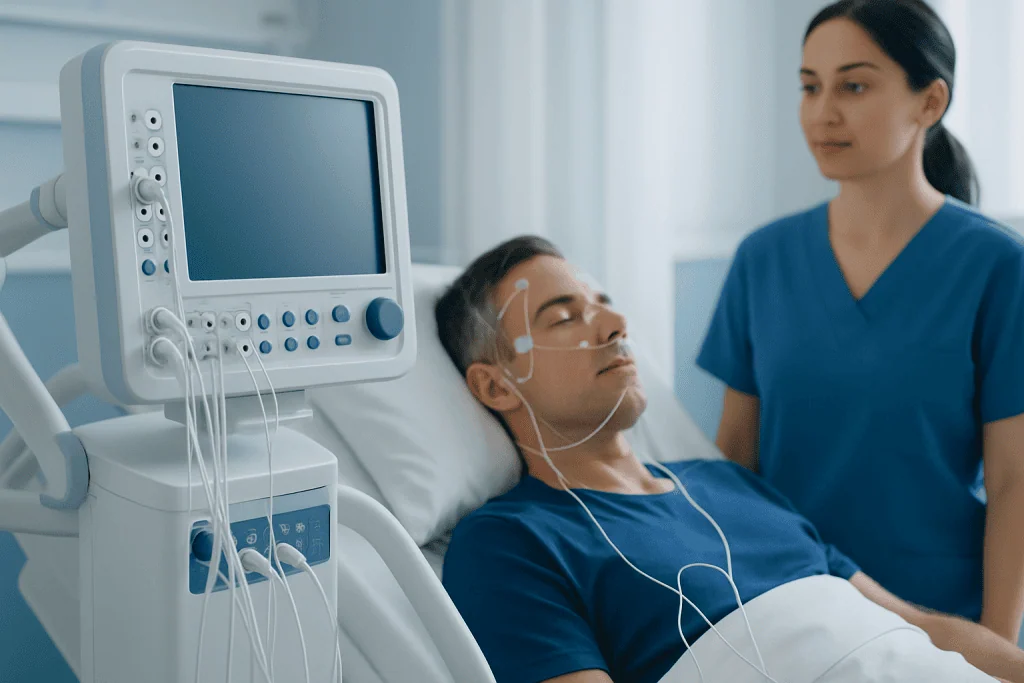
When symptoms raise concern for a breathing-related sleep disorder, a formal sleep study may be recommended. A sleep study, also called polysomnography, records sleep and breathing patterns and can help clarify whether a child has obstructive sleep apnea or another sleep-related condition. Results are reviewed in the context of the person’s overall health rather than in isolation.
What Is the Most Effective Screening Tool for Sleep Apnea?
There is no single questionnaire that can diagnose sleep apnea with certainty. For children, a careful clinical history that includes snoring, witnessed breathing pauses, gasping, restless sleep, daytime symptoms, and examination of the nose, throat, and growth pattern is essential. Screening tools such as BEARS can help ensure that snoring and sleepiness are discussed, but they do not replace diagnostic testing.
When obstructive sleep apnea is suspected, overnight polysomnography is generally considered the most comprehensive diagnostic test. It measures breathing, oxygen levels, sleep stages, heart rate, body movements, and other signals during sleep. In selected cases, a clinician may use home-based testing or other assessments, but the appropriate choice depends on age, symptoms, and medical history.
Snoring is common and does not always mean sleep apnea. Still, habitual snoring combined with pauses in breathing, gasping, labored breathing, poor daytime function, or concerns about growth should be assessed. More information about sleep apnea can help families understand why evaluation is important.
How Many Hours a Day Do Bears Sleep?
Actual bears can sleep or rest for many hours, but the amount varies widely by species, season, age, food availability, and whether the animal is hibernating. During hibernation, some bear species remain in a den for prolonged periods with substantially reduced activity and metabolism. This animal behavior is unrelated to the BEARS sleep screening tool.
In the screening tool, “BEARS” is an acronym rather than a reference to animal sleep. The acronym is meant to help clinicians remember the five areas of pediatric sleep that should be discussed: bedtime problems, excessive daytime sleepiness, awakenings, regularity and duration, and snoring.
For children and teenagers, recommended sleep duration depends on age and individual needs. A healthcare professional can help interpret whether a child’s sleep schedule and daytime wellbeing suggest they are getting sufficient restorative sleep.
How to Score Sleep Quality Scale?
The BEARS sleep screening tool does not use a universal point-based scoring scale. Rather than adding points to create a total score, clinicians identify concerning answers within each of the five domains and assess their frequency, severity, duration, and impact on daytime life.
Other sleep questionnaires may use numerical scoring. For example, some measure subjective sleep quality, sleep latency, nighttime waking, sleep duration, daytime impairment, or risk factors for sleep-disordered breathing. Each questionnaire has its own instructions, cutoffs, intended age group, and limitations, so scores should be interpreted according to the validated tool rather than compared across different scales.
A sleep diary can add useful detail by recording bedtime, estimated time asleep, wake time, nighttime awakenings, naps, snoring observations, and daytime fatigue. Families should avoid self-diagnosing from a score alone and should discuss results with a qualified clinician, particularly if symptoms are ongoing.
What Conditions Can a Sleep Test Detect?
A formal sleep test may help diagnose several sleep-related disorders, depending on the type of test and the symptoms being investigated. Overnight polysomnography is often used to assess obstructive sleep apnea, central sleep apnea, sleep-related low oxygen levels, abnormal movements during sleep, and some parasomnias. It can also identify sleep disruption that may be contributing to daytime sleepiness.
In appropriate circumstances, testing may contribute to the assessment of periodic limb movement disorder, narcolepsy, hypersomnia, circadian rhythm sleep-wake disorders, and certain nighttime behaviors. Some disorders require additional evaluations, such as daytime nap testing, actigraphy, neurological assessment, mental health assessment, or laboratory testing.
Not all sleep concerns require a sleep study. Behavioral insomnia, inconsistent sleep schedules, and environmental sleep disruption are often identified through a detailed history and sleep diary. The testing plan should be individualized so that it answers a specific clinical question while avoiding unnecessary procedures.
Benefits, Limits, and When to Seek Medical Care
The main benefit of BEARS is that it is brief, child-centered, and broad enough to identify concerns beyond snoring alone. It can prompt early discussion of sleep routines, fatigue, nighttime symptoms, and the effects of poor sleep on school and family life. It also supports appropriate referral when symptoms suggest a medical sleep disorder.
Its limitation is that it is a screening tool, not a diagnosis. A child may need further assessment even if symptoms are not captured fully in a brief conversation, and a positive answer does not necessarily indicate a disorder. A detailed medical assessment is particularly important when sleep concerns coexist with chronic illness, developmental differences, or significant daytime difficulties.
Families should seek medical care if a child has regular loud snoring, witnessed breathing pauses, gasping or choking during sleep, blue or gray color changes, marked difficulty waking, excessive daytime sleepiness, or sleep problems affecting safety, learning, mood, or daily life. Urgent medical advice is appropriate for severe breathing difficulty or concerning color changes. Acibadem International’s multidisciplinary specialists and JCI-accredited hospitals can assess sleep-related concerns and coordinate care for international patients when further evaluation is needed.
Frequently asked questions
Is the BEARS sleep screening tool a diagnostic test?
No. The BEARS sleep screening tool is a short clinical questionnaire used to identify possible sleep concerns in children and adolescents. It helps determine whether sleep habits, a medical review, or diagnostic testing may be appropriate.
At what age can the BEARS sleep screening tool be used?
BEARS was developed for pediatric sleep screening and can be adapted for preschool-aged children, school-aged children, and adolescents. The questions are adjusted so that caregivers answer for younger children and older children can describe their own sleep patterns.
Does snoring always mean a child has sleep apnea?
No. Snoring can occur without obstructive sleep apnea, particularly during colds or nasal congestion. Regular snoring with breathing pauses, gasping, restless sleep, daytime tiredness, or behavior changes should be discussed with a healthcare professional.
What should parents bring to a sleep assessment?
A sleep diary covering one or two weeks can be very helpful. Parents may also bring details about snoring, breathing pauses, medications, medical history, school concerns, bedtime routines, and videos of unusual sleep behaviors if safely recorded.
What happens after a positive BEARS screen?
The clinician will review which sleep areas were concerning and how they affect the child during the day. Next steps may include sleep routine advice, treatment of contributing medical issues, a sleep diary, referral to a specialist, or a sleep study when indicated.
Can teenagers complete the BEARS questions themselves?
Yes. Teenagers are often able to provide important information about their sleep schedule, daytime sleepiness, bedtime habits, caffeine use, and screen use. Their answers are usually considered together with observations from parents or caregivers.
References
- American Academy of Sleep Medicine
- American Academy of Pediatrics
- National Heart, Lung, and Blood Institute
- Centers for Disease Control and Prevention
- Sleep Foundation
This article is for general information only and is not a substitute for professional medical advice. Please consult a qualified doctor about your individual situation.
Explore treatments in Turkey — costs, top hospitals & a free quote
JCI-accredited · board-certified surgeons · reply within 24h
Add us as a Preferred Source to see more of our trusted health content across Google Search, AI Overviews and Discover.