Bedbug Bites — Explained by Medical Evidence, Not Myths

Bedbug bites usually cause itchy, red bumps that may appear in clusters or lines on exposed skin. The bites themselves do not confirm bedbugs; other insect bites and skin conditions can look similar.
Key Takeaways
- Bedbug bites usually cause itchy, red bumps that may appear in clusters or lines on exposed skin.
- The bites themselves do not confirm bedbugs; other insect bites and skin conditions can look similar.
- Treatment focuses on relieving itch, preventing skin damage from scratching, and addressing any secondary infection.
- Finding and removing bedbugs from the sleeping area is essential to stop new bites.
- Medical care is important if there is severe swelling, signs of infection, or an uncertain diagnosis.
Bedbug bites are itchy skin reactions caused by small blood-feeding insects, not by poor hygiene. Most bites improve on their own with symptom relief and careful skin care, but the pattern of bites can be confused with other rashes, so diagnosis is based on both the skin findings and evidence of bedbugs in the environment.
What bedbug bites are and what they usually mean
Bedbug bites are skin reactions that happen after a bedbug feeds on blood, most often at night. In many people, the result is a group of itchy, red bumps that appear hours to days later. The bites can be uncomfortable, but they are usually not dangerous and often improve within one to two weeks with simple care.
A common myth is that bedbug bites happen because a home or hotel is dirty. In fact, bedbugs can live in many environments as long as they have access to people and hiding places such as mattresses, bed frames, furniture seams, luggage, and cracks in walls. Their presence says more about exposure than cleanliness.
Another important point is that the skin reaction varies from person to person. Some people develop obvious, itchy welts, while others have barely any marks at all. This is one reason a doctor does not diagnose bedbug bites from a photo alone; the full history and the environment matter.
How bedbug bites look and feel
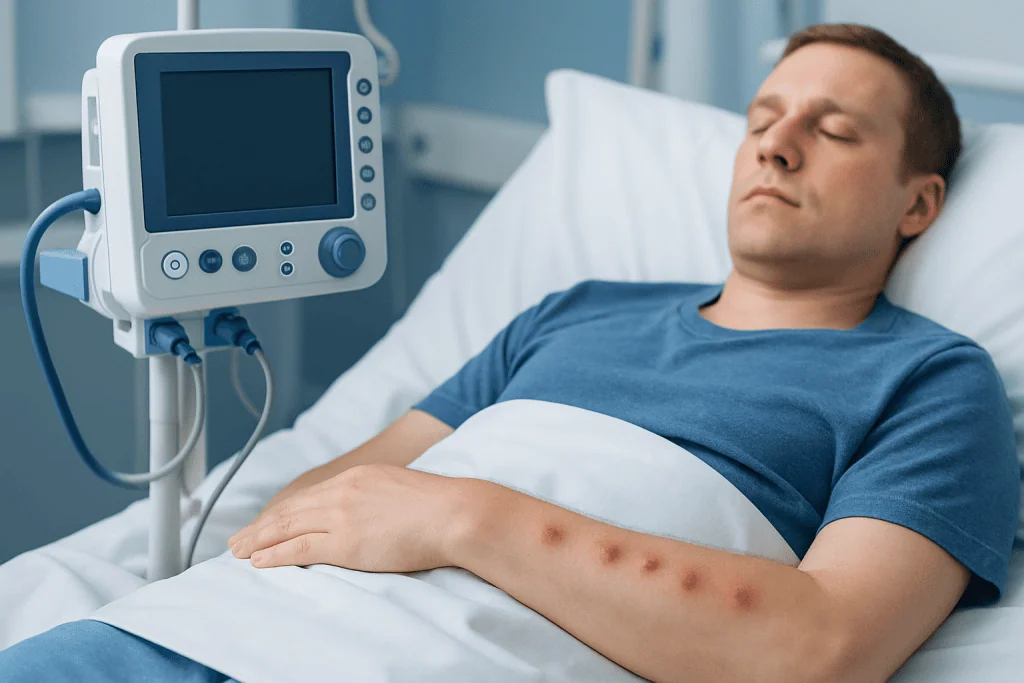
Bedbug bites often appear as small red bumps or raised welts, usually on skin that is uncovered during sleep. Common areas include the face, neck, arms, hands, lower legs, and feet. The bites may be isolated, clustered, or arranged in a rough line, which happens when the insect feeds more than once while moving across the skin.
Itching is the most common symptom. Some people notice burning, mild swelling, or a small darker spot in the center of the bite. Reactions can be more noticeable in children or in people who are especially sensitive to insect saliva. Scratching may break the skin and lead to irritation or infection.
Bedbug bites are not unique in appearance. Mosquito bites, flea bites, allergic rashes, hives, contact dermatitis, and conditions such as eczema can look similar. For that reason, a repeating pattern of bites after sleep, especially along with signs of insects in the bedroom, is often more informative than the skin changes alone.
- Small itchy red bumps or welts
- Clusters or lines of bites
- Most often on exposed skin
- Symptoms starting hours to days after exposure
- Worsening discomfort due to scratching rather than the bite itself
What causes them and why some people react more than others

Bedbug bites are caused by Cimex species, tiny wingless insects that feed on blood. They are attracted by warmth, body heat, and exhaled carbon dioxide rather than dirt. Bedbugs hide during the day and usually emerge at night, which is why many people first suspect them after waking with new itchy marks.
The skin reaction comes from the body’s response to proteins in the insect’s saliva. This immune response differs widely between individuals. A person who has never reacted before may develop stronger symptoms after repeated exposure, while another person living in the same room may show very little rash.
Risk of exposure increases with recent travel, secondhand furniture, shared living spaces, and buildings where bedbugs can move between units. However, anyone can encounter them. It is also possible to misread unrelated itching as bedbug bites, especially if anxiety about infestation becomes high, so careful assessment is important.
How doctors tell bedbug bites from other skin problems
There is no single blood test or skin test that confirms bedbug bites in everyday practice. Doctors usually diagnose them by combining the appearance of the rash with the timing of symptoms and clues from the sleeping environment. Questions may include when the bites started, whether they happen overnight, whether others in the home are affected, and whether there has been recent travel or used furniture.
Doctors also look for other explanations. Flea bites often affect the ankles and lower legs. Mosquito bites may occur after outdoor exposure. Contact dermatitis may relate to a new soap, detergent, or fabric. Itchy plaques, scaling, or recurrent dry rash may suggest conditions such as psoriasis or eczema rather than insect bites.
When the diagnosis is uncertain, a dermatologist may examine the skin more closely, especially if symptoms are severe, prolonged, or recurring without clear evidence of bedbugs. If scratching has caused skin damage, evaluation may also focus on signs of bacterial infection, such as increasing redness, warmth, tenderness, crusting, or pus.
Relief and treatment options
Most bedbug bites do not need emergency treatment. Care is mainly aimed at reducing itch, calming inflammation, and protecting the skin while it heals. Washing the area gently with soap and water, applying a cool compress, and avoiding scratching can help. A doctor or pharmacist may recommend anti-itch or anti-inflammatory creams, and in some cases oral antihistamines for bothersome itching.
If scratching leads to open skin, keeping the area clean becomes especially important. Sometimes a clinician may prescribe stronger topical treatment if the reaction is more severe, or antibiotics if there is a secondary skin infection. For persistent or unclear rashes, specialist assessment through dermatology care may be useful to confirm the cause and guide treatment.
Treatment also includes stopping further exposure. That means inspecting and addressing the environment, not just the skin. Bedding should be washed and dried on high heat when appropriate, clutter reduced around sleeping areas, and professional pest control considered if infestation is suspected. Without environmental treatment, new bites often continue even if the rash itself is being managed.
People who develop marked swelling, widespread hives, or breathing symptoms need urgent medical assessment because these features may suggest a significant allergic reaction. In rare cases where itching is intense or skin infection develops, care may involve broader medical support and, if necessary, evaluation in allergy and immunology or primary care settings.
Prevention, home measures, and myths to avoid
The best prevention is early identification and control of the insects. After travel, checking luggage, clothing, and mattress seams can help reduce the chance of bringing bedbugs home. When buying secondhand furniture, careful inspection is important, especially around seams, folds, and wooden joints where insects may hide.
At home, mattress and box-spring encasements, regular vacuuming of cracks and crevices, reducing clutter around the bed, and keeping luggage off sleeping surfaces during travel may lower risk. If infestation is suspected, professional pest management is often more effective than repeated home remedies because bedbugs are good at hiding and can be difficult to eliminate completely.
Several myths can make the problem harder to solve. Bedbugs do not jump like fleas and they do not fly. Their presence does not mean a person is unclean. Also, finding itchy bites does not automatically prove bedbugs; a rash can have many causes, and using harsh chemicals on the skin or in the home without guidance may do more harm than good.
If the rash keeps returning or there are concerns about another skin condition, a physician may recommend a broader skin evaluation, sometimes including specialist dermatology assessment to rule out look-alike conditions and discuss safe symptom control.
When to seek medical care
Medical care is appropriate when the diagnosis is uncertain, the itching is severe, or the skin is becoming more inflamed instead of gradually settling. A clinician can help distinguish bedbug bites from allergic rash, eczema, hives, or infection and recommend treatment that is safe for the person’s age, skin type, and health history.
Prompt medical attention is important if there are signs of skin infection such as spreading redness, increasing pain, warmth, pus, crusting, or fever. Care is also needed for large local reactions, swelling around the eyes, widespread hives, dizziness, wheezing, or trouble breathing, which may indicate a more serious allergic response.
In some cases, the physical bites are only part of the problem. Repeated night-time biting can disturb sleep and increase stress or anxiety. If symptoms are affecting daily life, medical support can help address both the skin reaction and overall well-being. Near the end of a care pathway, patients who need coordinated evaluation can also be seen by Acibadem International, where multidisciplinary specialists in JCI-accredited hospitals diagnose and treat skin and allergy-related concerns for international patients.
What to expect during recovery
For most people, bedbug bites improve gradually over several days to two weeks. The itch often settles before the marks fully fade. Darker post-inflammatory spots can last longer, especially in people with deeper skin tones or in areas that were scratched heavily.
The main reasons recovery takes longer are repeated exposure and skin damage from scratching. New bites may appear while old ones are fading if the source has not been removed. This can create the false impression that one bite is spreading, when in reality there are new bites happening over time.
If there are no further bites and the skin is protected, the outlook is generally good. A doctor should reassess any rash that is not improving, becomes painful, spreads in an unusual pattern, or is accompanied by other symptoms that do not fit a simple insect-bite reaction.
Frequently asked questions
How can someone tell if bedbug bites are really from bedbugs?
The bites alone are not enough to prove bedbugs because many rashes and insect bites look similar. The most helpful clues are itchy bumps appearing after sleep, often on exposed skin, plus environmental signs such as insects, dark spots on bedding, or recent exposure during travel.
Do bedbug bites spread disease?
Bedbug bites are mainly a skin and comfort problem, causing itching and irritation. The bigger medical issues are scratching, secondary skin infection, sleep disruption, and occasional allergic reactions rather than routine disease transmission.
How long do bedbug bites last?
Many bedbug bites improve within several days and fade over one to two weeks. In some people, especially if the area is scratched a lot, discoloration or irritation can last longer.
What is the best treatment for bedbug bites?
Treatment usually focuses on symptom relief: gentle cleansing, cool compresses, and anti-itch measures recommended by a clinician or pharmacist. The other essential part is removing the source of exposure, because new bites can keep appearing if bedbugs remain in the environment.
Can bedbug bites become infected?
Yes, but usually because scratching breaks the skin rather than because of the bite itself. Signs of infection include increasing redness, warmth, pain, crusting, pus, or fever, and these symptoms should be assessed by a doctor.
Should someone go to the emergency room for bedbug bites?
Most bedbug bites do not require emergency care. Urgent evaluation is needed if there is trouble breathing, wheezing, dizziness, widespread hives, severe facial swelling, or another sign of a significant allergic reaction.
References
- Centers for Disease Control and Prevention
- American Academy of Dermatology
- Mayo Clinic
- National Health Service
- World Health Organization
This article is for general information only and is not a substitute for professional medical advice. Please consult a qualified doctor about your individual situation.
Explore treatments in Turkey — costs, top hospitals & a free quote
JCI-accredited · board-certified surgeons · reply within 24h
Add us as a Preferred Source to see more of our trusted health content across Google Search, AI Overviews and Discover.

More from the Health Library



Related Specialists

Prof. Dr. M. Nadir Şener
Orthopedic Surgery & Traumatology
Dyt. Burcu Akbeyaz Özger
Nutrition & Diet
Dr. Süheyla Yeldan Vatansever
Pediatrics
Dr. Atilla Damlacık
Radiology