Best Bone Cancer Treatment Centers: How It Works, Results and What to Expect

Bone cancer care is usually planned by a multidisciplinary team, often including orthopedic oncologists, medical oncologists, radiation oncologists, pathologists and rehabilitation specialists. Surgery is central to treatment for many primary bone cancers; chemotherapy and radiotherapy may be used before or after surgery depending on the tumor type.
Key Takeaways
- Bone cancer care is usually planned by a multidisciplinary team, often including orthopedic oncologists, medical oncologists, radiation oncologists, pathologists and rehabilitation specialists.
- Surgery is central to treatment for many primary bone cancers; chemotherapy and radiotherapy may be used before or after surgery depending on the tumor type.
- A biopsy interpreted by experienced bone-tumor pathologists is essential before definitive treatment is planned.
- Treatment outcomes depend mainly on the cancer type, stage, location, response to therapy and whether complete tumor removal is possible.
- Persistent bone pain, a growing lump, unexplained fracture or new pain at night should be assessed promptly by a clinician.
The best bone cancer treatment centers are those with experienced sarcoma and orthopedic oncology teams that can accurately diagnose the tumor, assess whether it has spread, and coordinate surgery, systemic treatment and rehabilitation. Care is individualized because bone cancers vary widely by type, location, stage, age and overall health.
Overview: how to choose a bone cancer treatment center
The best bone cancer treatment centers do not rely on one treatment alone. They bring together specialists in sarcoma, orthopedic oncology, medical oncology, radiation oncology, radiology, pathology, reconstructive surgery, pain care and rehabilitation to create a plan for the individual patient. This coordinated approach is important because primary bone cancers are uncommon, can resemble other bone conditions, and may require complex surgery as well as systemic treatment.
A suitable center should have experience with the specific suspected tumor, access to advanced imaging and image-guided biopsy, specialist pathology review, and a multidisciplinary tumor board. Patients may also wish to ask how the team plans limb preservation, reconstruction, rehabilitation, fertility considerations where relevant, and long-term monitoring. A second pathology or treatment opinion can be particularly valuable when the diagnosis is uncertain or surgery is extensive.
Primary bone cancer starts in bone. It differs from bone metastasis, which occurs when a cancer that began elsewhere spreads to bone. The treatment plan, outlook and clinical specialists involved may differ between these situations. Common primary bone cancers include osteosarcoma, Ewing sarcoma and chondrosarcoma.
How bone cancer treatment works
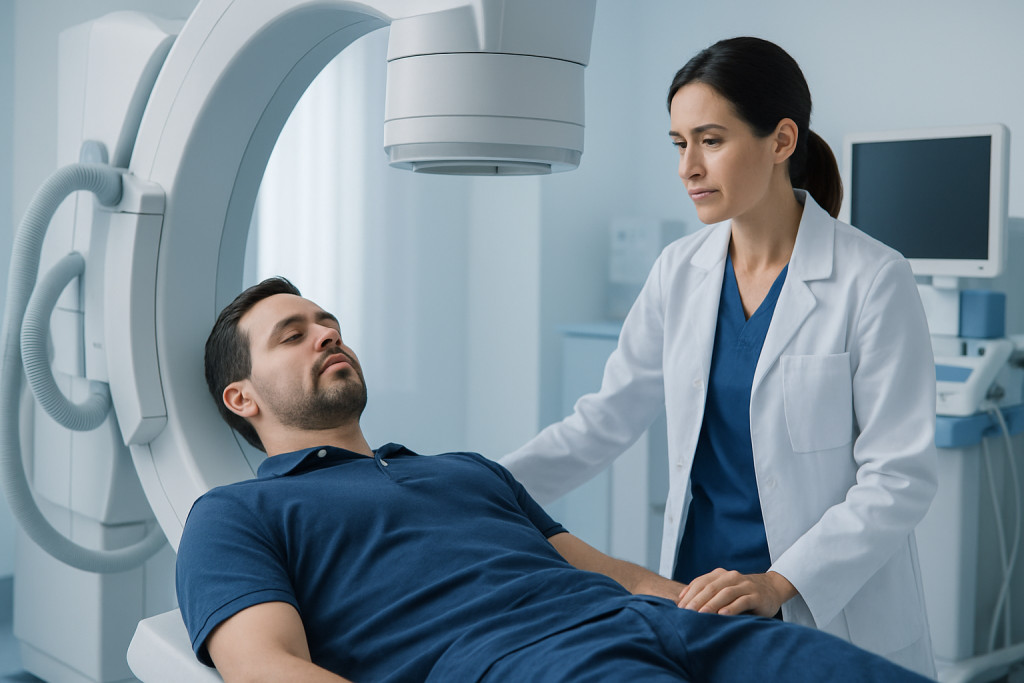
Bone cancer treatment aims to remove or control the tumor, prevent or treat spread, preserve function whenever safely possible, and manage symptoms. The plan is based on the exact tumor type and grade, its location and size, whether it has spread, the patient’s age and general health, and the expected response to available treatments. For many people, several treatments are used in a carefully planned sequence.
Surgery is often the main local treatment for primary bone cancer. The surgeon removes the tumor with a margin of healthy-looking tissue where possible. Limb-sparing surgery may replace the removed bone or joint with an implant, bone graft or other reconstruction. Amputation is less common than in the past but may be the safest way to achieve complete tumor removal in some cases.
Chemotherapy uses medicines that travel through the bloodstream to treat cancer cells. It is commonly used for osteosarcoma and Ewing sarcoma, often before surgery to shrink or assess the tumor response and after surgery to address microscopic cells that may remain elsewhere in the body. Radiotherapy may be used for selected tumors, such as Ewing sarcoma, when surgery is not possible or cannot fully remove the cancer, or to help control symptoms. Some patients may also be considered for targeted medicines, immunotherapy or clinical trials depending on their diagnosis.
Candidacy and the assessment before treatment

Every person with suspected or confirmed bone cancer should have an individualized assessment rather than being considered for a single standard procedure. A specialist team reviews the tumor’s pathology, imaging, stage and relationship to nearby joints, blood vessels, nerves and organs. They also consider physical function, other medical conditions, previous treatments, personal priorities and support needs.
The work-up commonly includes X-rays followed by magnetic resonance imaging (MRI) of the affected area. Computed tomography (CT), chest imaging, bone scans or PET imaging may be used to assess whether disease has spread. Blood tests help evaluate general health and readiness for treatment, although they cannot confirm bone cancer on their own.
A biopsy confirms the diagnosis. It should ideally be planned by the team that may perform definitive surgery, because the biopsy route can affect later surgical options. A needle biopsy is often used, while some cases require an open biopsy. The tissue is examined by a pathologist with expertise in sarcoma and bone tumors, sometimes with molecular testing to identify genetic changes that help classify the cancer.
- Patients may be candidates for limb-sparing surgery when the tumor can be removed safely while preserving a useful limb.
- Chemotherapy candidacy depends on tumor type, treatment goals, organ function and overall health.
- Radiotherapy may be considered when a tumor is radiosensitive, surgery would cause unacceptable harm, or symptoms need local control.
- Reconstructive and rehabilitation planning should begin before surgery whenever possible.
Step by step: what treatment and recovery may involve
After diagnosis and staging, the multidisciplinary team discusses the recommended sequence of care. For cancers that are sensitive to chemotherapy, treatment may begin with several cycles before surgery. During this period, scans and clinical examinations help the team assess response and prepare for the operation. For other tumor types, surgery may be the first treatment.
During surgery, the goal is to remove the cancer completely while preserving function where it is oncologically safe. Reconstruction may involve a metal endoprosthesis, an allograft or autograft, joint reconstruction, soft-tissue coverage, or another approach tailored to the bone involved. The removed tumor is examined to confirm surgical margins and, where relevant, the degree of response to preoperative treatment.
Hospital recovery varies substantially with the operation, tumor location and reconstruction. Early care focuses on pain relief, wound healing, preventing blood clots and infection, and beginning safe movement. Physiotherapists and occupational therapists guide mobility, strength, joint motion and daily activities. Some patients need crutches, a brace or other support for weeks to months, and recovery of endurance and function can continue over many months.
Follow-up usually includes regular clinical visits and imaging to look for local recurrence, spread to the lungs or other sites, and complications related to reconstruction. Follow-up schedules are most frequent in the first years after treatment and are then adjusted over time. Bone cancer treatment should include both cancer surveillance and long-term attention to mobility, emotional wellbeing, school or work needs, and late effects of therapy.
Benefits, risks and realistic expectations
The main benefit of specialist treatment is a coordinated plan designed to achieve the best possible cancer control while protecting function and quality of life. When tumors are localized and can be completely treated, the goal is often cure. When cancer has spread or cannot be fully removed, treatment may still slow progression, relieve symptoms, preserve mobility and support daily life.
Risks differ by treatment. Surgery can involve bleeding, infection, blood clots, wound problems, nerve or blood-vessel injury, reduced strength or movement, differences in limb length in growing children, and future issues with an implant or graft. Reconstructive operations may occasionally require further procedures. The surgical team should explain the likely functional result, alternatives and rehabilitation requirements before consent.
Chemotherapy can cause fatigue, nausea, appetite changes, mouth sores, low blood counts and greater infection risk. Some medicines can affect the heart, kidneys, nerves, hearing or fertility, so monitoring is an important part of treatment. Radiotherapy may cause skin irritation, tiredness, stiffness and effects on nearby tissues; in children and young adults, potential effects on growth are carefully considered. Supportive medicines and regular assessment can help manage many side effects.
There is no single outcome that applies to all bone cancers. Meaningful discussions about results should be based on the person’s specific diagnosis, stage and response to treatment rather than broad averages. Patients are encouraged to ask what the planned treatment is intended to achieve, how success will be assessed, and what support is available if the plan needs to change.
What is the most successful treatment for bone cancer?
The most successful treatment depends on the type and stage of bone cancer. For many localized primary bone cancers, complete surgical removal by an experienced orthopedic oncology team is a key part of curative treatment. Osteosarcoma and Ewing sarcoma are commonly treated with a combination of chemotherapy and surgery, while chondrosarcoma is more often managed primarily with surgery because many forms respond less well to conventional chemotherapy.
Radiotherapy has an important role for selected tumors, especially Ewing sarcoma, tumors in difficult locations, or situations where surgery cannot safely remove all disease. For cancer that has spread, treatment may include systemic therapy, surgery or radiotherapy to selected sites, and symptom-focused care. The strongest treatment plan is therefore not a universal regimen but one matched to expert pathology review and multidisciplinary assessment.
Patients should be cautious of claims that one therapy is best for every bone cancer. Accurate diagnosis is the first step toward selecting appropriate care, and specialist centers can also advise whether a clinical trial is suitable.
Does bone cancer spread quickly and what is life expectancy with treatment?
Bone cancer does not behave the same way in every person. Some tumors are more aggressive and may spread earlier, while others grow more slowly. Osteosarcoma and Ewing sarcoma can spread to the lungs or other bones, which is why staging is completed promptly and treatment is coordinated without unnecessary delay. Chondrosarcoma includes different grades, with higher-grade tumors generally carrying a greater risk of spread than lower-grade tumors.
Life expectancy with treatment cannot be predicted accurately from the diagnosis name alone. It depends on whether the cancer is localized or metastatic, its subtype and grade, the possibility of complete removal, response to chemotherapy or radiotherapy, and the person’s overall health. Many patients with localized disease can be treated with curative intent, while metastatic or recurrent cancer is more complex but may still respond to individualized treatment.
Clinicians may discuss survival estimates from groups of patients, but these numbers cannot determine an individual outcome. A treating oncologist can provide the most relevant explanation after reviewing staging scans, pathology and treatment response. It is reasonable to ask how the team will monitor response and how the plan may be adapted if scans show persistent or recurrent disease.
What oncologists may not have time to explain, and when to seek medical care
It is understandable to feel that important questions remain after an oncology appointment. This is usually not because information is being withheld; bone cancer decisions are complex, and conversations often occur over several visits. Patients can ask for plain-language explanations of the diagnosis, treatment goal, expected timeline, alternatives, possible effect on fertility or physical function, need for rehabilitation, and signs that should prompt urgent contact with the team. Bringing a family member, taking notes and requesting written information can help.
Medical care should be sought promptly for persistent or worsening bone pain, pain that regularly wakes a person at night, an enlarging lump, unexplained swelling, reduced ability to use a limb, or a fracture after minimal injury. These symptoms are commonly caused by conditions other than cancer, but they deserve evaluation. A person already receiving treatment should contact their oncology team urgently for fever, chills, sudden shortness of breath, chest pain, uncontrolled pain, heavy bleeding, new weakness, or rapidly increasing swelling.
There is no proven way to prevent most primary bone cancers. After diagnosis, practical self-care includes attending planned appointments, following activity and wound-care instructions, maintaining nutrition and hydration as tolerated, avoiding tobacco, and seeking emotional and social support. Acibadem International’s multidisciplinary specialists and JCI-accredited hospitals diagnose and treat bone cancer for international patients, with care plans coordinated across relevant specialties.
Frequently asked questions
What makes a bone cancer treatment center a good choice?
A strong center has a multidisciplinary sarcoma team, experienced orthopedic oncology surgeons, specialist pathology review and access to appropriate imaging, systemic therapies and rehabilitation. It should also explain the diagnosis and treatment sequence clearly and support shared decision-making. Experience with the specific tumor type is particularly important.
Is a biopsy always needed before bone cancer treatment?
A biopsy is usually needed to confirm the tumor type before definitive treatment begins. It should be planned carefully, ideally by the specialist team that may perform surgery, because the biopsy path can affect the surgical approach. Imaging may strongly suggest a diagnosis, but tissue examination is generally required.
Can bone cancer be treated without amputation?
Many patients can have limb-sparing surgery, in which the tumor is removed and the bone or joint is reconstructed. Whether this is safe depends on the tumor’s location, size and involvement of nerves, blood vessels and surrounding tissues. In some cases, amputation remains the safest option for complete tumor control.
What is the most successful treatment for bone cancer?
For many localized bone cancers, surgery to completely remove the tumor is central to successful treatment. Chemotherapy is commonly combined with surgery for osteosarcoma and Ewing sarcoma, while radiotherapy is used in selected situations. The best approach depends on the confirmed cancer subtype and stage.
Does bone cancer spread quickly?
Some primary bone cancers can spread, particularly to the lungs, but the pace varies considerably by tumor type, grade and individual biology. Staging tests assess for spread at diagnosis, and treatment is planned promptly when cancer is confirmed. Not every bone tumor is aggressive or cancerous.
What is the life expectancy for bone cancer patients with treatment?
Life expectancy varies greatly and should be discussed using the individual’s tumor type, stage, treatment response and overall health. Localized disease is often approached with curative intent, while metastatic or recurrent disease may need more complex treatment. Group survival figures cannot reliably predict one person’s outcome.
References
- National Cancer Institute
- American Cancer Society
- European Society for Medical Oncology
- National Comprehensive Cancer Network
- World Health Organization
This article is for general information only and is not a substitute for professional medical advice. Please consult a qualified doctor about your individual situation.
Joint and spine care in Turkey — expert assessment & treatment
JCI-accredited · board-certified surgeons · reply within 24h
Add us as a Preferred Source to see more of our trusted health content across Google Search, AI Overviews and Discover.