Best Exercises for Upper Body — Explained by Medical Evidence, Not Myths

The most effective upper body routines combine push, pull, press, and carry patterns. Compound exercises usually provide more overall benefit than isolated movements alone.
Key Takeaways
- The most effective upper body routines combine push, pull, press, and carry patterns.
- Compound exercises usually provide more overall benefit than isolated movements alone.
- Proper technique, gradual progression, and recovery matter as much as exercise selection.
- A balanced plan should train the chest, back, shoulders, and arms while protecting the neck and spine.
- Pain during exercise is not something to ignore; persistent or sharp pain needs medical assessment.
The best exercises for upper body health and strength are not a single “perfect” move, but a balanced group of pushing, pulling, pressing, and carrying exercises performed with good technique. Medical and sports-science evidence supports compound movements, gradual progression, and joint-friendly form over fitness myths or extreme routines.
Overview: what the best upper body exercises really are
The best exercises for upper body development are the ones that train major movement patterns safely and consistently: horizontal pushing, horizontal pulling, vertical pushing, vertical pulling, and loaded carrying. In practical terms, that often means exercises such as push-ups, rows, overhead presses, pulldowns or pull-ups, and farmer’s carries, supported by simpler arm and shoulder exercises when needed. This approach is more evidence-based than chasing trends, because it builds strength across multiple muscle groups while improving coordination and everyday function.
Research in exercise science consistently shows that strength gains depend less on one “magic” exercise and more on choosing effective movements, using proper form, and progressing gradually over time. A well-designed upper body routine should strengthen the chest, upper back, shoulders, and arms in balance. This balanced approach can also help reduce overuse strain that may occur when a person focuses only on mirror muscles such as the chest or biceps.
For most healthy adults, the most useful upper body exercises are compound movements. These are exercises that involve more than one joint and muscle group at the same time. They are efficient, functional, and adaptable for beginners and advanced exercisers alike. Isolation exercises still have value, but they usually work best as additions rather than the foundation of a program.
How medical evidence evaluates upper body exercises
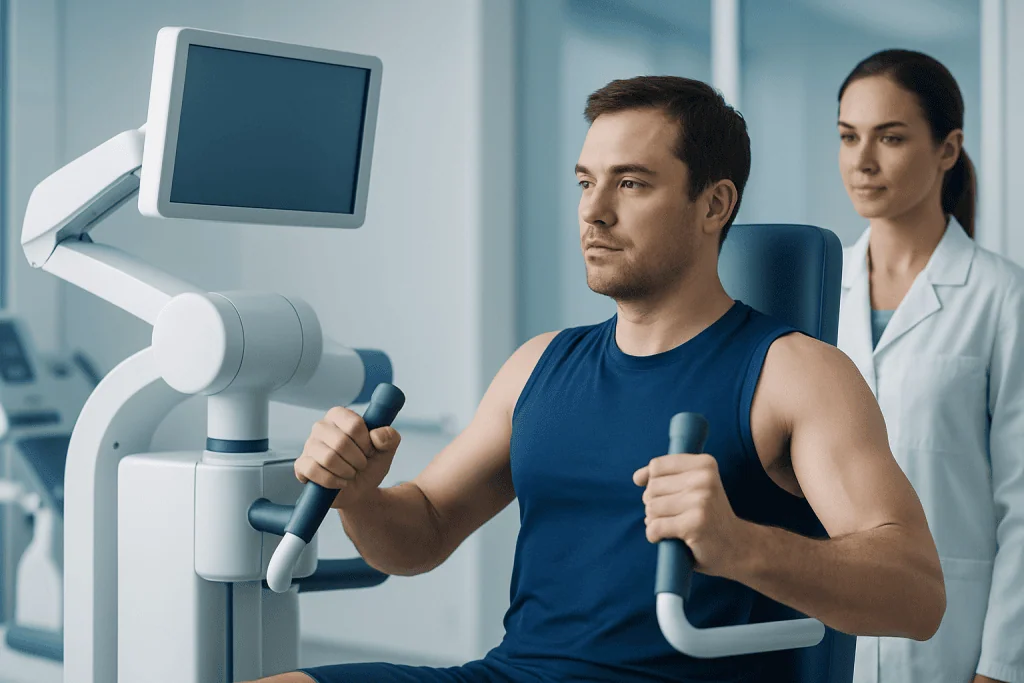
Medical and rehabilitation experts tend to judge exercises by several factors: safety, function, effectiveness, and suitability for the individual. An exercise is not “best” simply because it feels hard or is popular online. It should train important muscles through a controlled range of motion, fit the person’s current ability, and avoid unnecessary joint stress.
Evidence-based exercise programming also recognizes that different goals may require different choices. Someone aiming to improve general health may benefit most from a short, balanced program done two or three times a week. Someone recovering from pain or injury may need modified movements, lighter resistance, or supervised rehabilitation. For example, shoulder discomfort can sometimes be linked to rotator cuff irritation or posture-related overload, and those cases may need evaluation similar to care for rotator cuff problems before routine strengthening continues.
Another important point from medical literature is that no single exercise is essential. If a person cannot tolerate standard push-ups or overhead pressing, similar movement patterns can often be trained using machines, resistance bands, cables, or altered body positions. The best exercise is therefore the best-tolerated effective option, not necessarily the most advanced one.
The core exercise patterns that matter most

Rather than thinking only in terms of body parts, it is often more helpful to think in movement patterns. Horizontal pushing includes exercises such as push-ups, chest presses, and bench presses. Horizontal pulling includes seated rows, dumbbell rows, cable rows, and band rows. These two patterns help balance the front and back of the upper body, which is important for shoulder comfort and posture.
Vertical pushing and pulling are also valuable when tolerated. Overhead presses can strengthen the shoulders, upper chest, and triceps, while pulldowns or pull-ups train the upper back, lats, and arms. Not everyone needs heavy overhead work, especially if they have shoulder stiffness, neck pain, or poor control of shoulder blade movement. In those cases, a clinician or physiotherapist may recommend alternatives or a more gradual build-up, sometimes as part of physical therapy and rehabilitation.
Loaded carries are often overlooked but strongly supported by functional training principles. Exercises such as farmer’s carries challenge grip, shoulder stability, trunk control, and posture at the same time. They can be a practical way to build strength for daily tasks like lifting bags or carrying children. Scapular control exercises, such as face pulls or band pull-aparts, may also complement the main patterns by improving upper-back endurance and shoulder positioning.
- Push: push-ups, chest press, incline press
- Pull: rows, pulldowns, assisted pull-ups
- Press: overhead press, landmine press
- Carry: farmer’s carry, suitcase carry
- Accessory work: biceps curls, triceps extensions, rear-delt raises
Best exercises for upper body by goal
For general strength and health, a simple routine built around push-ups, rows, pulldowns, and carries is often enough. These exercises cover the major upper body muscle groups and can be adjusted for different fitness levels. Beginners may start with wall push-ups, machine rows, and light dumbbells, while more experienced exercisers can progress to harder variations or heavier loads.
For muscle growth, the best exercises are usually those that allow controlled repetitions through a comfortable range of motion with enough resistance to create muscular fatigue without sacrificing technique. Dumbbell presses, cable rows, lat pulldowns, machine chest presses, and lateral raises are commonly useful because they are stable and easy to progress. Isolation work for the biceps and triceps can be added after the larger movements.
For joint comfort or recovery, gentler options may be better. Incline push-ups, chest-supported rows, neutral-grip pulldowns, landmine presses, and resistance-band work can reduce strain on the shoulders and neck. If pain is limiting function, medical review may be needed to rule out issues involving the shoulder, neck, or spine, including conditions related to herniated disc symptoms when pain radiates down the arm.
For older adults, the best routine is one that prioritizes consistency, posture, and safe progression. Machines, resistance bands, and supervised free-weight exercises can all be effective. The goal is not only muscle strength but also preserving independence in daily tasks such as lifting, reaching, pushing, and pulling.
Common myths and mistakes to avoid
One common myth is that more exercises automatically mean better results. In reality, a small number of well-chosen movements performed regularly is usually more effective than a long, inconsistent routine. Overloading the same joints with too much volume, especially pressing movements, can lead to shoulder irritation rather than faster progress.
Another misconception is that upper body training should always be intense to be effective. Evidence does not support the idea that pain, extreme soreness, or “burn” is necessary for benefit. Muscles can become stronger through a range of training styles, provided the exercises are challenging enough, repeated consistently, and progressed gradually.
Poor technique is another major problem. Common examples include shrugging the shoulders during pressing or pulling, arching the lower back excessively, flaring the elbows too much, and moving too quickly to control the weight. These patterns may reduce training quality and can place extra stress on the neck, shoulders, and spine. When needed, supervision, mirrors, or video feedback can help improve form.
It is also a mistake to ignore the rest of the body. Upper body exercise works best as part of a full fitness plan that includes lower-body strength, mobility, balance, and aerobic activity. In some cases, people with persistent pain may benefit from structured assessment and, if indicated, targeted interventions such as orthopedic rehabilitation or specialist review.
How to build a safe and effective upper body routine
Most adults can begin with two or three upper body sessions per week on non-consecutive days. A practical structure is to include one horizontal push, one horizontal pull, one vertical push or shoulder-friendly alternative, one vertical pull, and one carry or posture-focused exercise. Each movement can be performed for a few sets with controlled repetitions, leaving room for good technique rather than training to failure every time.
Warm-up matters, especially for the shoulders and upper back. A few minutes of light aerobic activity followed by shoulder circles, band pull-aparts, scapular retraction drills, and gentle range-of-motion work can help prepare the joints and muscles. Heavy weights are not required at first. The load should feel challenging but manageable, with smooth breathing and steady control.
Progression should be gradual. A person can progress by adding a small amount of weight, performing an extra repetition, improving range of motion, or choosing a slightly harder variation. Recovery is equally important. Muscles need time, protein intake, hydration, sleep, and rest between sessions to adapt. Persistent fatigue, falling performance, or ongoing pain may mean the routine is too aggressive.
People with previous injury, recent surgery, severe deconditioning, or chronic pain should seek individualized guidance before starting. Near the end of the care pathway, some patients may also work with teams experienced in sports medicine and athlete health to return safely to exercise. Acibadem International’s multidisciplinary specialists and JCI-accredited hospitals also diagnose and treat musculoskeletal conditions for international patients when expert assessment is needed.
When to seek medical care
Mild muscle fatigue after exercise is common, but pain is different from effort. A person should seek medical advice if upper body exercise causes sharp pain, sudden weakness, joint instability, marked swelling, numbness, or tingling. Pain that spreads from the neck into the shoulder or arm, or symptoms that persist despite rest and activity modification, also deserve evaluation.
Medical care is especially important if there was a fall, heavy lifting injury, popping sensation, visible deformity, or inability to raise the arm normally. These features can suggest a more significant injury involving muscles, tendons, joints, or the cervical spine. Chest pain, shortness of breath, dizziness, or exercise intolerance should not be assumed to be a simple muscle problem and need prompt assessment.
People with osteoporosis, inflammatory joint disease, heart disease, recent surgery, or neurologic conditions should ask a clinician what types of upper body exercise are appropriate. A qualified doctor or physiotherapist can help adapt the program so that exercise remains beneficial, safe, and sustainable.
Frequently asked questions
What are the best exercises for upper body strength?
The best exercises for upper body strength usually include a mix of pushing, pulling, pressing, and carrying movements. Examples include push-ups, rows, pulldowns or pull-ups, overhead presses, and farmer’s carries. The most effective combination depends on the person’s goals, fitness level, and joint tolerance.
Are push-ups enough for upper body training?
Push-ups are an excellent exercise, but they are not enough on their own for a balanced upper body program. They mainly train pushing muscles such as the chest, shoulders, and triceps. Most people also benefit from pulling exercises to strengthen the back and support shoulder health.
How often should upper body exercises be done?
For many adults, two or three sessions per week is a practical and effective starting point. This usually allows enough recovery time between sessions while still providing regular stimulus for strength gains. Frequency may vary based on age, training experience, and total exercise load.
What if upper body exercises hurt the shoulders?
Shoulder discomfort during exercise can be related to poor technique, too much volume, limited mobility, or an underlying shoulder condition. Stopping the painful movement, reducing load, and checking form are sensible first steps. If pain persists, a clinician or physiotherapist should assess the shoulder before training continues.
Do older adults benefit from upper body strength exercises?
Yes, upper body strengthening can be very helpful for older adults. It supports daily activities such as lifting, reaching, carrying, and pushing, and it may improve confidence and independence. Exercises should be adapted to the individual and progressed safely.
Is soreness a sign of a good workout?
Not necessarily. Mild soreness can happen, especially after a new exercise, but severe soreness is not required for strength or health benefits. A good workout is better judged by safe technique, appropriate challenge, and steady progress over time.
References
- World Health Organization
- American College of Sports Medicine
- National Institute of Arthritis and Musculoskeletal and Skin Diseases
- Centers for Disease Control and Prevention
- National Strength and Conditioning Association
This article is for general information only and is not a substitute for professional medical advice. Please consult a qualified doctor about your individual situation.
Joint and spine care in Turkey — expert assessment & treatment
JCI-accredited · board-certified surgeons · reply within 24h
Add us as a Preferred Source to see more of our trusted health content across Google Search, AI Overviews and Discover.