

Biopsy for Cancer Diagnosis: Types, Risks, and Results
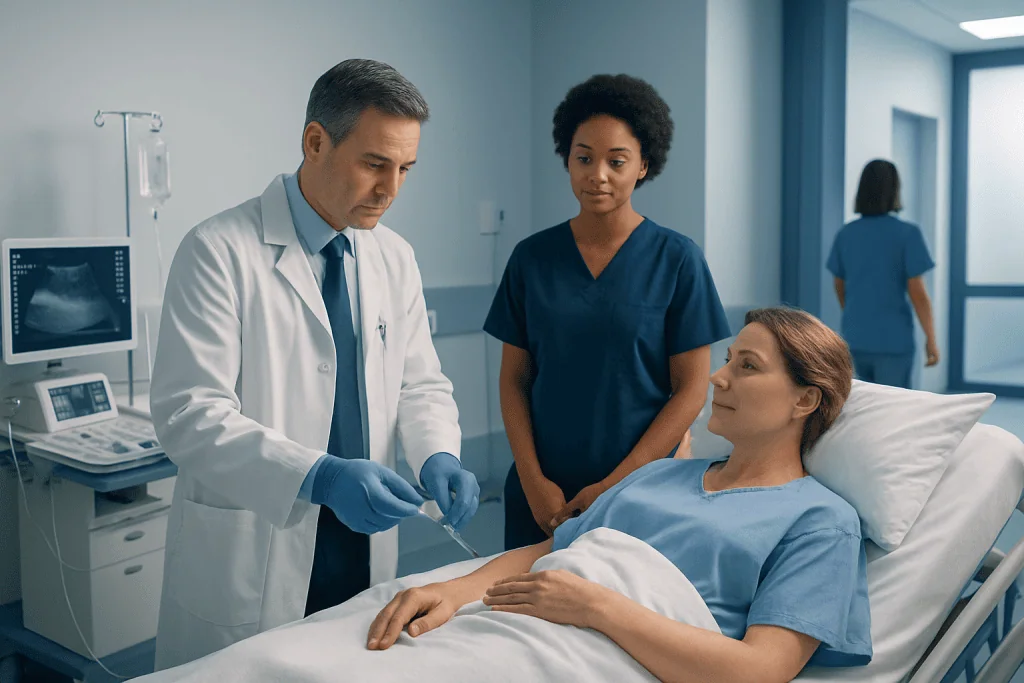
A biopsy allows a pathologist to study cells or tissue under a microscope and often confirms whether cancer is present. Common biopsy types include needle biopsy, surgical biopsy, endoscopic biopsy, skin biopsy, and bone marrow biopsy.
Key Takeaways
- A biopsy allows a pathologist to study cells or tissue under a microscope and often confirms whether cancer is present.
- Common biopsy types include needle biopsy, surgical biopsy, endoscopic biopsy, skin biopsy, and bone marrow biopsy.
- Many biopsies are minimally invasive and are performed with local anesthesia, imaging guidance, or sedation when needed.
- Risks are usually low but may include pain, bruising, bleeding, infection, or procedure-specific complications.
- Biopsy results can identify cancer type, grade, biomarkers, and sometimes genetic features that help guide treatment.
A biopsy is a medical procedure that removes a small sample of tissue or cells so specialists can examine it for cancer and other diseases. It is often the most reliable way to confirm a cancer diagnosis and guide the most appropriate treatment plan.
Overview
A biopsy for cancer diagnosis is a procedure in which a doctor removes a small amount of tissue, fluid, or cells from an area of concern. The sample is sent to a pathology laboratory, where a specialist doctor called a pathologist examines it under a microscope and may perform additional tests. This information helps determine whether cells are benign, precancerous, cancerous, inflammatory, or related to another condition.
Imaging tests such as ultrasound, CT, MRI, PET scans, or mammography can show a lump, thickening, or abnormal area, but imaging alone usually cannot confirm exactly what the cells are. A biopsy provides direct tissue information, which is why it is considered a cornerstone of cancer diagnosis. In many cases, it also gives important details about the type of cancer and how it may behave.
The word “biopsy” can sound worrying, but the procedure is commonly performed and is often planned carefully to be as safe and comfortable as possible. The method used depends on where the abnormal area is located, how large it is, the patient’s overall health, and what information the medical team needs to make an accurate diagnosis.
Types of Biopsy Used in Cancer Diagnosis
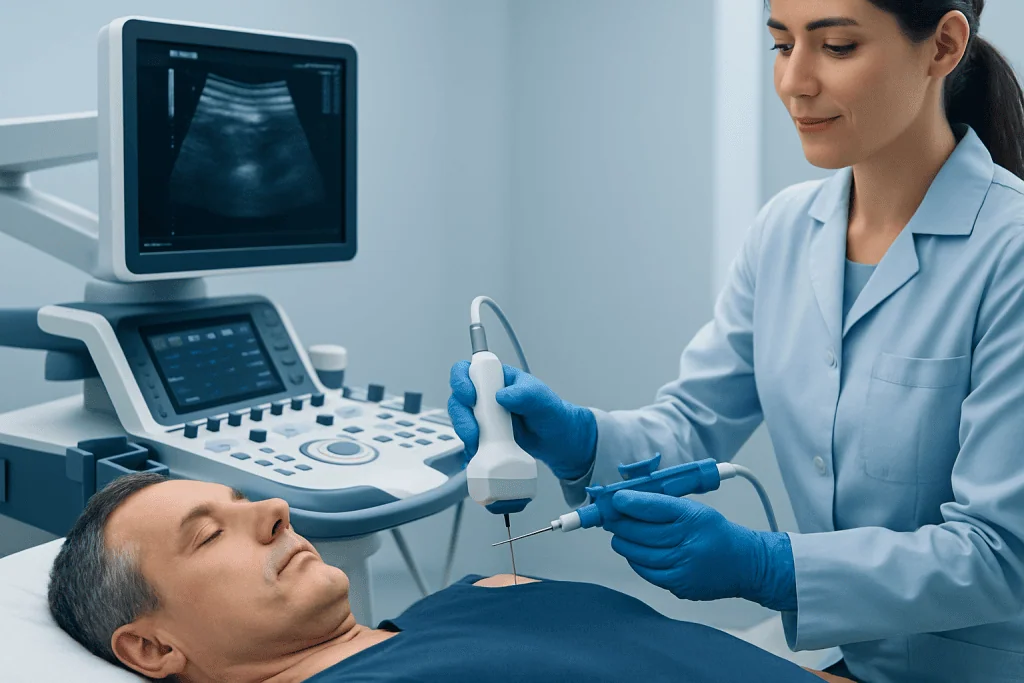
There are several cancer biopsy types, ranging from simple office-based procedures to more advanced image-guided or surgical techniques. The best option is chosen by the treating doctor, often in discussion with radiologists, surgeons, oncologists, and pathologists. The goal is to obtain enough high-quality tissue while minimizing discomfort and risk.
Common biopsy types include:
- Fine needle aspiration biopsy: A very thin needle is used to remove cells or fluid. It is often used for thyroid nodules, lymph nodes, breast lumps, or superficial masses.
- Core needle biopsy: A slightly larger needle removes a small cylinder of tissue. This often provides more architectural detail than fine needle aspiration and is widely used for breast, prostate, liver, lung, and soft tissue lesions.
- Surgical biopsy: A surgeon removes part of an abnormal area, called an incisional biopsy, or the entire suspicious area, called an excisional biopsy.
- Endoscopic biopsy: A flexible camera is inserted into an organ system, such as the stomach, colon, bladder, or lungs, and tiny instruments collect tissue samples.
- Skin biopsy: A shave, punch, or excisional technique may be used for suspicious moles, rashes, or skin growths.
- Bone marrow biopsy: A sample of bone marrow, usually from the hip bone, is taken to evaluate blood cancers and some unexplained blood abnormalities.
Some biopsies are performed with imaging guidance. Ultrasound, CT, mammography, MRI, or fluoroscopy can help the doctor guide the needle precisely to the target area. Image guidance is especially useful when the abnormality is small, deep inside the body, or close to important organs.
How to Prepare and What Happens During the Procedure
Preparation depends on the type of biopsy and where it will be performed. Patients may be asked about allergies, current medicines, previous bleeding problems, pregnancy status, implanted medical devices, and past reactions to anesthesia or sedation. It is especially important to tell the doctor about blood thinners, aspirin, anti-inflammatory medicines, herbal supplements, or any medication that affects clotting, because some may need to be adjusted before the procedure.
For many needle, skin, or superficial biopsies, local anesthesia is used to numb the area. The patient may feel pressure, pushing, or brief discomfort, but sharp pain is usually minimized. For endoscopic or surgical biopsies, sedation or general anesthesia may be used depending on the procedure, the patient’s condition, and the expected duration.
During the biopsy, the medical team cleans the skin or prepares the relevant body area using sterile technique. If imaging guidance is needed, the doctor uses real-time images to position the needle or instrument. One or more samples may be collected to increase diagnostic accuracy. Afterward, pressure, a small bandage, stitches, or a dressing may be applied, depending on the biopsy type.
Before going home, patients usually receive instructions about activity, wound care, bathing, pain control, and warning signs to watch for. Some people can return to normal activities the same day, while others may need short observation or a longer recovery period after sedation or surgery.
Understanding Biopsy Results and the Pathology Report
Biopsy results are written in a pathology report. The report may describe the type of tissue sampled, whether abnormal or malignant cells are present, and how the cells look compared with normal cells. If cancer is found, the report may identify the cancer type, such as carcinoma, lymphoma, melanoma, sarcoma, or another category. This classification is essential because different cancers require different treatment approaches.
The pathology report may also include the grade of the tumor. Grade describes how abnormal the cancer cells appear and may provide clues about how quickly the cancer is likely to grow or spread. Grade is different from stage. Stage usually describes the extent of cancer in the body and may require imaging, physical examination, surgery, blood tests, or additional procedures to determine.
Additional laboratory tests may be performed on the biopsy sample. These may include immunohistochemistry, hormone receptor testing, HER2 testing in some breast or stomach cancers, molecular testing, cytogenetic testing, or next-generation sequencing in selected cases. Such tests can help identify markers that may guide targeted therapy, immunotherapy, chemotherapy, hormonal therapy, or clinical trial options.
Sometimes a biopsy result is inconclusive. This does not necessarily mean that something was missed; it may mean that the sample was too small, did not contain the target tissue, or needs further testing. In these cases, the doctor may recommend repeat biopsy, a different biopsy method, additional imaging, or close follow-up based on the full clinical picture.
Risks and Safety Considerations
Most biopsies are safe, and serious complications are uncommon. However, every medical procedure has potential risks. The risk level depends on the organ being sampled, the biopsy technique, the patient’s overall health, and whether there are conditions such as bleeding disorders, severe lung disease, infection, or immune system problems.
Possible biopsy risks include pain or tenderness, bruising, bleeding, infection, swelling, scarring, or a reaction to local anesthesia, sedation, or contrast material if used. Certain procedures have specific risks. For example, a lung biopsy may rarely cause air to leak around the lung, called pneumothorax. A liver or kidney biopsy may require careful monitoring for bleeding. Endoscopic biopsies have small risks related to sedation or irritation of the organ being examined.
Many patients ask whether a biopsy can spread cancer. For most cancers and biopsy methods, this is considered very unlikely. Doctors choose biopsy pathways carefully, particularly for tumors where surgical planning is important. The benefit of obtaining an accurate diagnosis generally outweighs the very small risk of tumor cell displacement in appropriately performed procedures.
Safety is improved by careful planning, sterile technique, imaging guidance when appropriate, and post-procedure monitoring. Patients can reduce risk by following instructions about medications, fasting, transportation after sedation, wound care, and when to seek medical advice.
Recovery and Self-care After a Biopsy
Recovery after a biopsy varies from person to person. Mild soreness, bruising, or a small amount of swelling can be normal after many needle or skin biopsies. The doctor may recommend rest, avoiding heavy lifting for a short time, and using simple pain relief if appropriate. Patients should follow the specific instructions given by their care team rather than applying general advice to every biopsy type.
Keeping the biopsy site clean and dry as instructed helps reduce infection risk. If stitches, adhesive strips, or a pressure dressing are used, the care team will explain when they should be removed or changed. After sedation, patients should not drive, operate machinery, drink alcohol, or make major decisions until the effects have fully worn off, according to medical advice.
It is also helpful for patients to ask when results are expected and how they will be communicated. Waiting for biopsy results can feel stressful. Writing down questions, bringing a trusted companion to the results appointment, and asking for clear explanations of unfamiliar terms can make the process easier.
If cancer is diagnosed, the biopsy is usually the beginning of a treatment-planning process rather than an immediate final answer. Additional imaging, blood tests, genetic or molecular tests, or consultations with oncology specialists may be recommended before a personalized plan is made.
When to See a Doctor
A doctor should evaluate any new lump, persistent swelling, unexplained bleeding, changing mole, abnormal screening test, non-healing sore, unexplained weight loss, persistent cough, or symptom that does not improve as expected. These signs do not always mean cancer, but they may need medical assessment. If imaging or examination shows an abnormal area, the doctor may recommend biopsy to clarify the diagnosis.
After a biopsy, patients should contact their healthcare team if they develop increasing pain, heavy or persistent bleeding, fever, worsening redness, pus, shortness of breath, dizziness, fainting, or swelling that is rapidly increasing. Emergency care may be needed for severe breathing difficulty, chest pain, or uncontrolled bleeding.
Patients should also seek clarification if they do not understand their pathology report or if results are delayed beyond the expected time. It is reasonable to ask what the biopsy showed, whether the sample was adequate, whether additional testing is pending, and what the next steps will be.
For international patients, Acibadem International’s multidisciplinary specialists and JCI-accredited hospitals provide diagnostic evaluation and treatment planning for many cancers, including biopsy coordination when clinically appropriate. Patients should consult a qualified doctor to decide which biopsy method and follow-up plan are best for their individual situation.
Frequently asked questions
Is a biopsy always needed to diagnose cancer?
In many cases, a biopsy is needed to confirm cancer because it allows direct examination of cells or tissue. Imaging and blood tests can suggest cancer, but they often cannot prove the exact diagnosis. There are exceptions in selected situations, and the decision depends on the cancer type, location, and the patient’s overall condition.
How long do biopsy results take?
Some results may be available within a few days, while more complex testing can take longer. Special stains, molecular tests, or outside expert review may extend the timeline. The healthcare team should explain when to expect results and whether any additional tests are pending.
Does a biopsy hurt?
Many biopsies cause only brief discomfort because local anesthesia is used to numb the area. Patients may feel pressure, pulling, or soreness afterward. More involved biopsies may be done with sedation or anesthesia to improve comfort.
Can a biopsy cause cancer to spread?
For most biopsy procedures, spreading cancer through the biopsy tract is considered very unlikely. Doctors plan the safest route and technique based on the suspected cancer and future treatment needs. The information gained from biopsy is usually essential for choosing the right treatment.
What happens if the biopsy is negative but the doctor is still concerned?
A negative biopsy means no cancer was found in the sample examined, but it must be interpreted with imaging, examination findings, and symptoms. If concern remains, the doctor may recommend repeat biopsy, a different biopsy technique, additional imaging, or close follow-up. This helps reduce the chance of missing an important diagnosis.
What should patients ask after receiving biopsy results?
Useful questions include whether the sample was adequate, what diagnosis was made, whether cancer grade or biomarkers were reported, and whether additional tests are needed. Patients can also ask how the result affects treatment options and whether a multidisciplinary review is recommended. Bringing a written question list can help make the appointment more productive.
References
- National Cancer Institute
- American Cancer Society
- World Health Organization
- College of American Pathologists
- European Society for Medical Oncology
This article is for general information only and is not a substitute for professional medical advice. Please consult a qualified doctor about your individual situation.
Oncology care in Turkey — second opinion and treatment plan
JCI-accredited · board-certified surgeons · reply within 24h
Add us as a Preferred Source to see more of our trusted health content across Google Search, AI Overviews and Discover.

Medical Oncology Department
Medical treatment of cancer with chemotherapy, immunotherapy and targeted therapies under a multidisciplinary tumor board.
60 specialists in this unitMore from the Health Library


Related Specialists

Assoc. Prof. Dr. Emre Günay
General Surgery
Dr. Ebru Özdemir
General Surgery
Dr. Hande Aygün
Infectious Diseases & Clinical Microbiology
Prof. Dr. Hülya Dede
Gynecology & Obstetrics