Biopsy of Adrenal Gland: Procedure, Recovery and Results
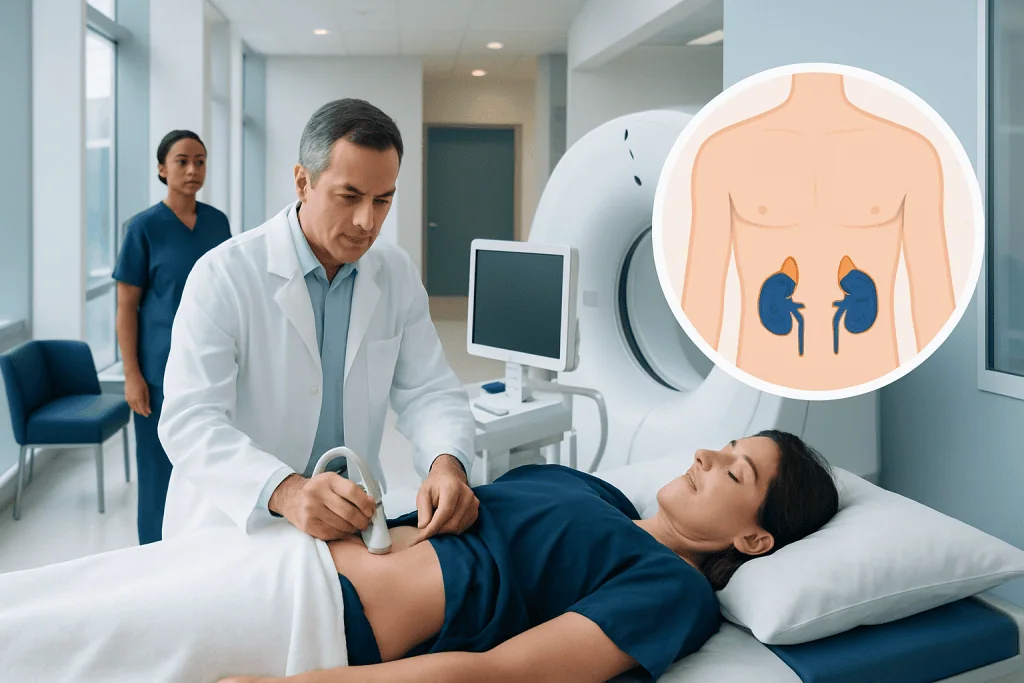
Most adrenal gland biopsies are performed with a needle using CT or ultrasound guidance. Hormone testing is essential before biopsy, especially to rule out a hormone-producing pheochromocytoma.
Key Takeaways
- Most adrenal gland biopsies are performed with a needle using CT or ultrasound guidance.
- Hormone testing is essential before biopsy, especially to rule out a hormone-producing pheochromocytoma.
- The procedure can help confirm whether an adrenal lesion represents spread from another cancer, infection or another condition.
- Mild soreness is common after the biopsy; serious complications such as bleeding are uncommon but possible.
- Pathology results commonly take several business days and may require additional testing.
A biopsy of adrenal gland is a minimally invasive, image-guided procedure that removes a small tissue sample from an adrenal mass for laboratory examination. It is not needed for every adrenal finding and is usually considered only after hormone testing and detailed imaging have clarified that it can safely answer an important clinical question.
Overview: what is a biopsy of adrenal gland?
A biopsy of adrenal gland is a procedure in which a radiologist uses a thin needle to collect a small sample of tissue from an adrenal gland or an adrenal mass. The sample is examined by a pathologist to look for cancer cells, infection, inflammation or other changes. Most biopsies are performed through the skin, using computed tomography (CT) or, less commonly, ultrasound to guide the needle accurately.
The adrenal glands are small glands located above the kidneys. They make hormones involved in blood pressure, stress responses, metabolism and salt balance. An adrenal mass may be found during imaging performed for another reason, sometimes called an adrenal incidentaloma. Imaging and blood or urine tests can often provide enough information without a biopsy, so biopsy is used selectively rather than routinely.
A biopsy is most useful when a person has a cancer elsewhere in the body and the clinical team needs to determine whether an adrenal lesion is related to that cancer. It may also be considered when infection or another unusual diagnosis is suspected. For lesions that appear to be primary adrenal cancer, surgery is often preferred over needle biopsy when appropriate because biopsy may not reliably distinguish all adrenal tumors and can carry specific risks.
How adrenal biopsy decisions are made

Before recommending a biopsy, clinicians review the person’s symptoms, medical history, previous cancer diagnoses and imaging findings. CT, MRI or PET scans may show whether a lesion has features more consistent with a benign adenoma, metastasis or another type of mass. Endocrinology, radiology, oncology, urology and endocrine surgery specialists may contribute when the findings are complex.
Hormone evaluation is a critical part of candidacy assessment. In particular, doctors must exclude pheochromocytoma, a rare adrenal tumor that releases stress hormones. Inserting a needle into an unrecognized pheochromocytoma may trigger a dangerous surge in blood pressure and heart rate. Blood or urine testing is therefore generally performed before an adrenal biopsy is considered.
Doctors also assess bleeding risk by reviewing blood-thinning medicines, platelet levels and clotting tests when indicated. A biopsy may be postponed or avoided if bleeding risk cannot be managed safely, if the lesion is difficult to access, or if the result is unlikely to change treatment decisions. Related assessment of adrenal cancer may be appropriate when imaging or clinical findings raise concern.
- A biopsy may be considered when the result would change the treatment plan.
- It is generally avoided until pheochromocytoma has been excluded.
- Some adrenal masses can be followed with imaging or treated surgically without biopsy.
Step by step: how the procedure works

Most adrenal biopsies are outpatient procedures performed by an interventional radiologist. Before the procedure, the patient is asked to follow instructions about eating and drinking, allergies and regular medicines. The team will explain the plan, review imaging, obtain consent and establish an intravenous line if sedation or medication is needed.
The patient lies in a position that provides the safest route to the adrenal gland, often on the stomach or side. CT images are commonly taken during the procedure to map the needle path and avoid nearby organs, blood vessels and the lung. The skin is cleaned, covered with sterile drapes and numbed with local anesthetic. Some people also receive medication to help them relax while remaining able to respond to instructions.
Through a small skin puncture, the radiologist advances the biopsy needle while checking its position on imaging. Several tiny samples may be taken to give the laboratory enough material for examination and, where needed, specialized staining or molecular tests. Pressure and a dressing are applied afterward. The actual tissue sampling is often brief, although preparation, imaging and observation mean the full visit may take several hours.
Image-guided needle techniques are part of interventional radiology care, where procedures are planned around the individual’s anatomy, laboratory results and clinical needs.
Is an adrenal gland biopsy painful?
An adrenal gland biopsy is usually not described as sharply painful because local anesthetic is used to numb the skin and deeper tissues. People may feel a brief sting from the anesthetic injection, then pressure, movement or a short pinch as the needle is positioned. Sedation can help reduce anxiety or discomfort when clinically appropriate.
Afterward, mild tenderness, bruising or aching near the puncture site is common for a few days. Simple pain relief may be recommended by the treating team, but patients should ask which medicines are suitable because some anti-inflammatory medicines can increase bleeding risk. Severe or worsening pain is not expected and should be reported promptly.
Good communication during the procedure matters. Patients should tell the team if they feel unexpected pain, dizziness, shortness of breath, palpitations or nausea. The radiologist can pause, reassess and provide supportive care as needed.
Recovery timeline, benefits and possible risks
After the biopsy, the patient is monitored while blood pressure, pulse and the puncture site are checked. Depending on the needle route, sedation and personal risk factors, observation may last a few hours. Many people go home the same day with a responsible adult if they received sedation. Rest is usually advised for the remainder of the day, with a gradual return to usual light activity according to the discharge instructions.
Strenuous exercise, heavy lifting and driving after sedation should be avoided for the period specified by the clinical team, often at least until the next day. Keeping the dressing clean and dry and watching for new swelling or bleeding are practical aftercare steps. The care team will provide individualized instructions, especially for people taking anticoagulants or antiplatelet medicines.
The main benefit is diagnostic clarity that may guide cancer treatment, infection treatment or follow-up planning. Risks include bleeding, bruising, infection, injury to nearby structures, a collapsed lung if the needle path is near the chest, and an inconclusive sample. Rarely, significant bleeding or other complications require additional monitoring or treatment. The team weighs these risks against the value of the information expected from the biopsy.
How long is bed rest after a renal biopsy? A renal biopsy is different from an adrenal biopsy and commonly requires a longer period of flat bed rest and monitoring because the kidney has a rich blood supply. The exact duration varies by hospital and individual bleeding risk, but it is often several hours. For an adrenal biopsy, activity restrictions and observation depend on the access route and sedation; patients should follow the specific instructions given by their radiology team.
Understanding adrenal biopsy results
The tissue sample is sent to a pathology laboratory, where it is processed, stained and examined under a microscope. The report may identify benign tissue, metastatic cancer, inflammation, infection or another diagnosis. Sometimes the sample does not contain enough representative cells to provide a definite answer, and the clinician may recommend repeat sampling, further imaging, surgery or follow-up instead.
Initial results commonly take several business days, but timing varies with the laboratory and the tests required. The referring doctor interprets the pathology result alongside scan findings, hormone tests and the person’s overall health. A result should not be viewed in isolation, as even a technically successful biopsy is only one part of adrenal mass evaluation.
Do biopsy results take longer if it’s cancer? Not necessarily. Some cancers can be recognized on standard microscopic examination relatively quickly, while others need immunohistochemistry, comparison with a prior cancer or molecular testing to determine the tumor type and likely origin. These additional tests may also be needed for noncancerous conditions, so a longer wait does not by itself indicate cancer.
How serious is cancer in the adrenal gland? The seriousness depends on the exact type of cancer, whether it began in the adrenal gland or spread there from another organ, hormone production, tumor size and whether it has spread. Primary adrenal cancer is rare, while adrenal metastases may occur in people with certain cancers. Specialist assessment is important because treatment and outlook differ greatly between these conditions; options may include surgery, systemic therapy, radiation therapy or close monitoring.
When to seek medical care
Patients should contact their care team urgently after an adrenal biopsy if they develop increasing or severe abdominal, flank, back, shoulder or chest pain; heavy bleeding from the puncture site; fainting; marked dizziness; shortness of breath; fever; or a rapidly enlarging bruise or swelling. These symptoms do not always mean a serious complication, but they require prompt assessment.
Medical advice is also important for persistent vomiting, new palpitations, very high blood pressure symptoms such as severe headache or visual changes, or any concern about a medication restart after the procedure. If symptoms are severe or sudden, emergency care should be sought.
Acibadem International’s multidisciplinary specialists and JCI-accredited hospitals support international patients who need evaluation and treatment planning for adrenal conditions, including coordinated imaging, endocrinology, oncology, pathology and surgical care. Where a confirmed diagnosis requires it, adrenalectomy may be discussed as part of an individualized plan.
Frequently asked questions
Why is an adrenal gland biopsy not done for every adrenal mass?
Many adrenal masses can be characterized by CT or MRI features and hormone testing without taking a tissue sample. A biopsy is generally considered only when it is likely to change management, such as confirming spread from a known cancer. It is also important to exclude a hormone-producing pheochromocytoma before needle biopsy.
Do I need to stop blood thinners before an adrenal biopsy?
Some blood-thinning medicines may need to be paused before the procedure to reduce bleeding risk, but this should only be done under the direction of the prescribing clinician and biopsy team. The correct plan depends on the medicine, the reason it is prescribed and the person’s medical history. Patients should provide a complete medication and supplement list well in advance.
Can an adrenal biopsy spread cancer?
Needle-track tumor seeding is considered uncommon, but it is one reason clinicians use adrenal biopsy selectively. For a suspected primary adrenal cancer that may be removable with surgery, biopsy may not be the preferred first step. The care team considers the potential benefit of tissue confirmation against procedure-specific risks.
Can I eat and drink before an adrenal gland biopsy?
Instructions vary according to whether sedation is planned and the hospital’s safety protocol. Some patients may need to avoid food for a set period before the procedure, while clear fluids may be allowed until a specified time. The radiology department will give individualized instructions before the appointment.
When can normal activities resume after an adrenal biopsy?
Many people return to light daily activities within one or two days, provided they feel well and have no complications. Heavy lifting, strenuous exercise and driving after sedation should be delayed according to the discharge instructions. Recovery may take longer if there is pain, bruising, a medical condition affecting clotting or another individual concern.
What happens if the adrenal biopsy result is inconclusive?
An inconclusive result means the sample did not provide enough reliable information to make a diagnosis. The doctor may recommend reviewing the imaging again, repeating the biopsy, arranging additional hormone tests or considering surgical evaluation. The next step depends on why the biopsy was needed and how suspicious the lesion appears.
References
- American College of Radiology
- Endocrine Society
- National Cancer Institute
- Radiological Society of North America
- European Society of Endocrinology
This article is for general information only and is not a substitute for professional medical advice. Please consult a qualified doctor about your individual situation.
Medical weight-loss options in Turkey — costs & eligibility
JCI-accredited · board-certified surgeons · reply within 24h
Add us as a Preferred Source to see more of our trusted health content across Google Search, AI Overviews and Discover.
Check your numbers in seconds
BMI, calories, due date, blood pressure and 30+ more clinical calculators — free, instant, doctor-reviewed ranges.