Black Spots on Skin: An Evidence-Based Guide for Patients

Most black spots on skin are harmless pigment changes, but not all dark lesions are the same. Sun exposure, acne, eczema, injury, medications, and hormonal changes can all contribute to dark spots.
Key Takeaways
- Most black spots on skin are harmless pigment changes, but not all dark lesions are the same.
- Sun exposure, acne, eczema, injury, medications, and hormonal changes can all contribute to dark spots.
- A skin exam helps distinguish hyperpigmentation from moles, bruising, infections, or skin cancer.
- Treatment depends on the cause and may include sun protection, topical medicines, procedures, or simple observation.
- Prompt medical review is important for spots that change quickly, bleed, itch persistently, or have uneven borders.
Black spots on skin are usually caused by extra pigment, healing after inflammation, sun exposure, aging, or minor bleeding under the skin. Most are benign, but new, changing, painful, bleeding, or irregular spots should be checked by a doctor to confirm the cause and guide treatment.
Overview: what black spots on skin usually mean
Black spots on skin most often refer to areas that look darker than the surrounding skin. In many cases, these marks are caused by increased melanin, the natural pigment that gives skin its color. Common examples include post-inflammatory hyperpigmentation after acne or eczema, sun-related spots, and age-related pigment changes.
However, the term can also describe other findings that are not true pigmentation. A dark spot may be a mole, a scab, a small collection of dried blood, a wart, a fungal infection, or, less commonly, a skin cancer. Because these possibilities can look similar at home, appearance alone does not always give a reliable diagnosis.
This is why it helps to think of black spots on skin as a symptom rather than a single condition. The key questions are when the spot appeared, whether it has changed, whether there are symptoms such as pain or itching, and whether there is a clear trigger such as a rash, sun exposure, shaving, or an injury.
For many people, careful skin care and sun protection are enough. Still, any spot that is new, evolving, asymmetric, very dark, or different from other marks on the body deserves a professional skin assessment.
How black spots can look and feel
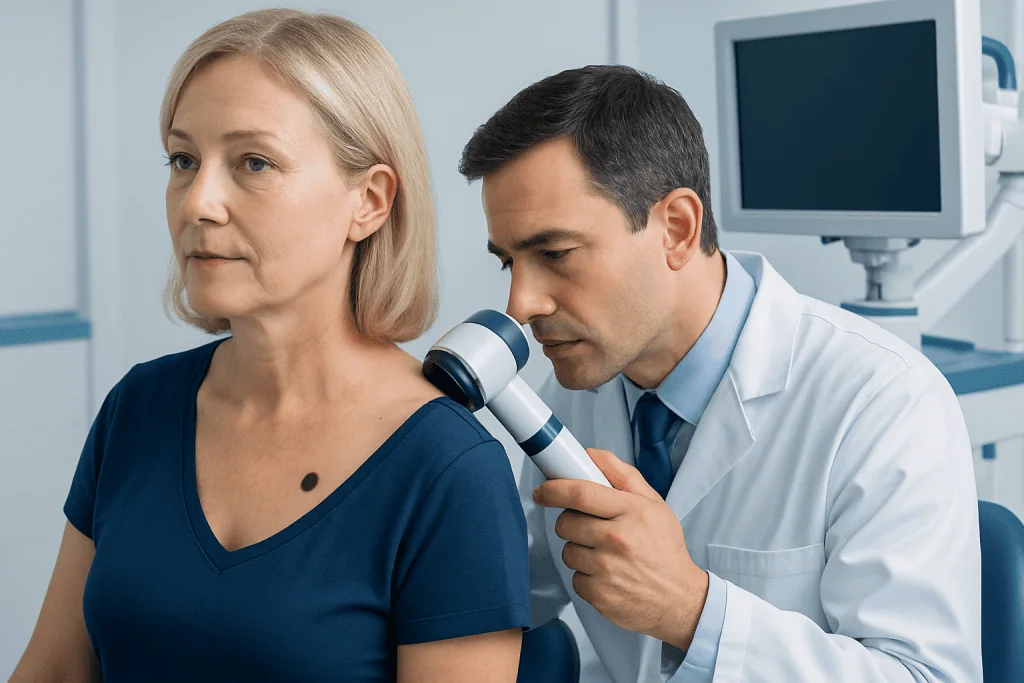
Dark spots vary widely in color, size, and texture. Some are flat and brown-black, while others are raised, rough, scaly, or crusted. They may appear one at a time or in clusters. The spot may stay the same for years, or it may fade, darken, enlarge, or change shape over time.
Some pigment spots do not cause any symptoms. Others may come with itch, tenderness, dryness, or a burning feeling if they follow inflammation or irritation. A dark mark left behind after acne, insect bites, a rash, or friction is often flat and does not have sharply elevated edges.
Certain visual clues can help describe a spot, although they cannot replace an examination. Features worth noting include whether the color is even or mixed, whether the edges are smooth or irregular, and whether the surface is flat, velvety, rough, or ulcerated.
- Flat dark marks after acne or eczema often suggest post-inflammatory hyperpigmentation.
- Small sun-related spots may appear on the face, hands, shoulders, or chest.
- Raised waxy lesions can be consistent with benign growths such as seborrheic keratoses.
- Very dark or rapidly changing spots need medical review to exclude melanoma or other skin disease.
Common causes and risk factors

The most frequent cause of black spots on skin is hyperpigmentation. This happens when the skin produces or deposits more melanin in one area. It often develops after inflammation, such as acne, eczema, dermatitis, burns, cuts, or friction from shaving and tight clothing. In these cases, the original problem may heal, but the dark mark remains for weeks or months.
Sun exposure is another major factor. Ultraviolet light can deepen existing spots and trigger new ones, especially in people with a history of melasma, freckles, or sun spots. Hormonal changes, pregnancy, and some medications can also affect pigmentation. People with darker skin tones may be more prone to visible post-inflammatory hyperpigmentation because melanocytes can respond more strongly to irritation.
Not all dark spots are due to pigment. Small black or purple marks can come from bleeding under the skin after minor trauma. Some infections may produce dark crusts or discoloration. Benign skin growths and moles can also appear dark. In some cases, a dark spot may be an early sign of skin cancer, including skin cancer, especially if it changes over time.
Risk factors that make evaluation more important include a personal or family history of skin cancer, frequent sunburns, use of tanning beds, immunosuppression, chronic skin inflammation, and spots that arise without a clear cause. The pattern matters too: widespread darkening may point to an underlying medical issue, while a single unusual lesion raises a different set of questions.
How doctors diagnose the cause
Diagnosis begins with a medical history and a close skin examination. A doctor will ask when the spot started, whether it followed a rash or injury, whether it has changed, and whether there are symptoms such as pain, bleeding, itching, or scaling. They will also ask about sun exposure, medications, skin products, and any personal or family history of unusual moles or skin cancer.
During the exam, the clinician looks at color, border, symmetry, size, and texture. A handheld dermatoscope may be used to see structures in the skin more clearly. This can help distinguish benign pigment changes from moles, vascular spots, infections, and suspicious lesions.
If the diagnosis is uncertain or the lesion has concerning features, a skin biopsy may be recommended. This means taking a small sample, or sometimes removing the entire spot, so it can be examined under a microscope. A biopsy is often the most accurate way to confirm whether a lesion is harmless or needs further treatment.
When dark spots are part of a broader skin problem, doctors may also evaluate for inflammatory conditions such as eczema, acne-related changes, or fungal disease. In selected cases, blood tests or other investigations may be considered if there are signs of a hormonal, metabolic, or systemic cause.
Treatment options depend on the cause
There is no single treatment for black spots on skin because management depends on what the spot actually is. If the cause is post-inflammatory hyperpigmentation, treatment often focuses on calming the underlying skin problem and preventing the mark from getting darker. Daily broad-spectrum sunscreen is one of the most important steps because ultraviolet light can prolong or worsen discoloration.
For pigment spots, doctors may suggest topical treatments such as lightening agents, retinoids, or anti-inflammatory creams, depending on the diagnosis and skin type. These should be used under guidance because overly strong products or inappropriate combinations can irritate the skin and make discoloration worse. If acne is contributing, managing breakouts may reduce future spots; in some cases this can involve acne treatment.
Procedural options may help selected patients when topical care is not enough. These can include chemical peels, laser approaches, or cryotherapy for certain benign lesions. Because procedures can themselves trigger pigmentation changes in some skin tones, an individualized plan is important. Natural-looking goals and careful aftercare matter more than rapid treatment.
If a doctor suspects a suspicious mole or other lesion, they may recommend removal or sampling through skin biopsy or another dermatologic procedure. If cancer is confirmed, treatment is tailored to the type and stage of the disease. Patients who need specialist care may also benefit from a formal dermatology evaluation to guide both diagnosis and long-term skin monitoring.
Prevention and self-care
Many dark spots can be prevented or minimized by protecting the skin barrier and reducing triggers that lead to inflammation. Gentle cleansing, regular moisturizing, and avoiding harsh scrubs or picking at the skin can lower the chance that acne, bites, shaving bumps, or rashes will leave marks behind. This is especially important for people who know their skin tends to pigment easily.
Sun protection is central to prevention. Daily use of broad-spectrum sunscreen, protective clothing, hats, and shade helps stop spots from darkening and reduces the risk of UV-related skin damage. Sunscreen is useful even when treatment is aimed at old pigment marks, because ongoing sun exposure can slow fading.
Self-treatment should be cautious. Over-the-counter products that promise fast bleaching may contain ingredients that irritate the skin or are not suitable for every skin tone. Home remedies such as lemon juice, abrasive exfoliation, or frequent scrubbing can worsen inflammation and deepen discoloration.
People with recurrent rashes, acne, or ingrown hairs should address the underlying problem rather than focusing only on the dark marks. A structured skin-care plan often works better than trying multiple products at once. Near the end of the care journey, some patients choose specialist support; Acibadem International’s multidisciplinary specialists in JCI-accredited hospitals diagnose and treat skin conditions for international patients.
When to seek medical care
A doctor should assess any dark spot that is new, rapidly changing, unusually dark, or clearly different from a person’s other moles or marks. Review is also important if a lesion bleeds, crusts repeatedly, becomes painful, itches persistently, or develops an irregular border or multiple colors. These signs do not automatically mean cancer, but they should not be ignored.
Medical care is also advised if black spots appear after a rash that is not improving, if there are many new spots without a clear reason, or if discoloration affects sensitive areas such as the lips, nails, or genitals. A spot under a nail or on the sole of the foot may need careful assessment because some serious conditions can occur in these areas.
People with a history of skin cancer, immune suppression, frequent intense sun exposure, or a strong family history of atypical moles should have a lower threshold for evaluation. Early assessment is often simpler and more reassuring than waiting and wondering.
If the cause is uncertain, a qualified clinician can decide whether observation is appropriate or whether further steps are needed. That may include photography for monitoring, treatment of an underlying inflammatory disorder, or biopsy of a suspicious lesion.
Frequently asked questions
Are black spots on skin usually serious?
Most black spots on skin are not serious and are often related to pigment changes after inflammation, sun exposure, or aging. Even so, a spot that is new, changing, bleeding, or irregular should be checked by a doctor to make sure it is benign.
Can acne leave black spots on skin?
Yes. Acne commonly causes post-inflammatory hyperpigmentation, especially after deeper pimples or picking at the skin. These marks are not true scars, but they can last for months and often darken with sun exposure.
Do black spots on skin go away on their own?
Some do fade gradually, especially if they are related to healing after inflammation. The process can be slow, and sun exposure may delay improvement, so consistent sun protection is important.
How can someone tell if a black spot might be skin cancer?
Warning signs include asymmetry, uneven borders, multiple colors, growth over time, bleeding, crusting, or a spot that looks different from others. These features are not a diagnosis by themselves, but they are strong reasons to arrange a skin examination.
Should dark spots be treated at home with bleaching products?
It is best to be careful with home bleaching or peeling products. Some can irritate the skin, worsen discoloration, or be unsafe for certain skin types, so professional guidance is often the safer approach.
Can sunscreen really help with black spots on skin?
Yes. Sunscreen helps prevent spots from getting darker and supports gradual fading of pigment caused by acne, eczema, melasma, and sun damage. It is one of the most important parts of both treatment and prevention.
This article is for general information only and is not a substitute for professional medical advice. Please consult a qualified doctor about your individual situation.
Explore treatments in Turkey — costs, top hospitals & a free quote
JCI-accredited · board-certified surgeons · reply within 24h
Add us as a Preferred Source to see more of our trusted health content across Google Search, AI Overviews and Discover.

More from the Health Library

Conjunctiva: A Complete Medical Overview

Amniotomy: An Evidence-Based Guide for Patients

Inositol — Explained by Medical Evidence, Not Myths

Tarceva Insulin: A Complete Medical Overview

Stool Exam for Occult Blood: What Patients Need to Know