Blepharitis: Eyelid Inflammation and Long-Term Care

Blepharitis affects the eyelid edges and is often related to bacteria, clogged oil glands, skin conditions or eyelash mites. Common symptoms include burning, itching, crusty eyelashes, watery eyes, sensitivity to light and a gritty feeling.
Key Takeaways
- Blepharitis affects the eyelid edges and is often related to bacteria, clogged oil glands, skin conditions or eyelash mites.
- Common symptoms include burning, itching, crusty eyelashes, watery eyes, sensitivity to light and a gritty feeling.
- Daily eyelid hygiene is the foundation of long-term care and may reduce the frequency and severity of flare-ups.
- An eye doctor may recommend artificial tears, medicated eyelid cleansers, antibiotic or anti-inflammatory treatment depending on the cause.
- Medical care is important if symptoms are painful, one-sided, worsening, associated with vision changes or do not improve with routine care.
Blepharitis is a common, usually long-term inflammation of the eyelid margins that can cause redness, crusting, irritation and dry eye symptoms. With correct diagnosis, regular eyelid care and medical treatment when needed, most people can control flare-ups and protect eye comfort.
Overview
Blepharitis is inflammation of the eyelid margins, the area where the eyelashes grow. It is one of the most frequent causes of red, irritated eyelids and can affect people of any age. Although it can feel uncomfortable and may recur over time, blepharitis is usually manageable with steady eyelid care and appropriate medical guidance.
The condition is often classified as anterior or posterior blepharitis. Anterior blepharitis affects the front edge of the eyelid around the eyelashes and is commonly linked to bacteria or dandruff-like skin scaling. Posterior blepharitis affects the inner edge of the eyelid, where the meibomian glands release oils that help stabilize the tear film. When these glands are blocked or inflamed, the eyes may feel dry, gritty or watery.
Blepharitis is not the same as a simple eye infection, although bacteria may contribute to it. It is often a chronic inflammatory condition with periods of improvement and flare-up. The goal of care is not only to relieve current symptoms but also to maintain healthy eyelid margins and reduce future irritation.
Symptoms of Blepharitis
Symptoms can be mild and intermittent or persistent enough to affect daily comfort. Many people notice symptoms more strongly in the morning because crusting and oily debris can collect along the lashes during sleep. The eyelids may look red, swollen or greasy, and the eyelashes may stick together.
Common symptoms include burning, stinging, itching, a gritty or foreign-body sensation, watery eyes, dry eye symptoms, light sensitivity and blurred vision that improves with blinking. Some people develop small flakes around the eyelashes that resemble dandruff. Others may notice foamy tears, redness along the eyelid edge or frequent need to rub the eyes.
Blepharitis can also contribute to related eyelid problems. Blocked oil glands may lead to styes or chalazia, which are tender or firm eyelid bumps. Long-standing inflammation can sometimes affect eyelash direction or cause eyelashes to fall out, although this is not typical in mild cases. Any new eyelid lump, persistent swelling or vision change should be assessed by an eye care professional.
Causes and Risk Factors

Blepharitis usually develops when the normal balance of the eyelid margin is disrupted. Bacteria that naturally live on the skin can overgrow around the eyelashes and contribute to irritation. In posterior blepharitis, the meibomian glands may produce thickened oil or become blocked, leading to an unstable tear film and inflammation.
Skin and inflammatory conditions can increase the risk. Seborrheic dermatitis, which causes oily scaling of the scalp and face, is a common association. Rosacea, a chronic skin condition that may cause facial redness and sensitivity, can also affect the eyelids and meibomian glands. Allergies, exposure to smoke or pollution, contact lens wear, eye makeup residue and poor eyelid hygiene may aggravate symptoms in some people.
Another possible contributor is Demodex, a microscopic mite that can live in eyelash follicles. Small numbers are common, but overgrowth may be linked to cylindrical dandruff at the base of lashes and persistent eyelid inflammation. Because different causes can look similar, diagnosis by an eye doctor helps guide the most appropriate care.
Diagnosis
Blepharitis is usually diagnosed through a clinical eye examination. The eye doctor asks about symptoms, duration, previous treatments, contact lens use, skin conditions and any medications or cosmetics used around the eyes. The pattern of symptoms can help distinguish blepharitis from allergy, conjunctivitis, dry eye disease or other eyelid conditions.
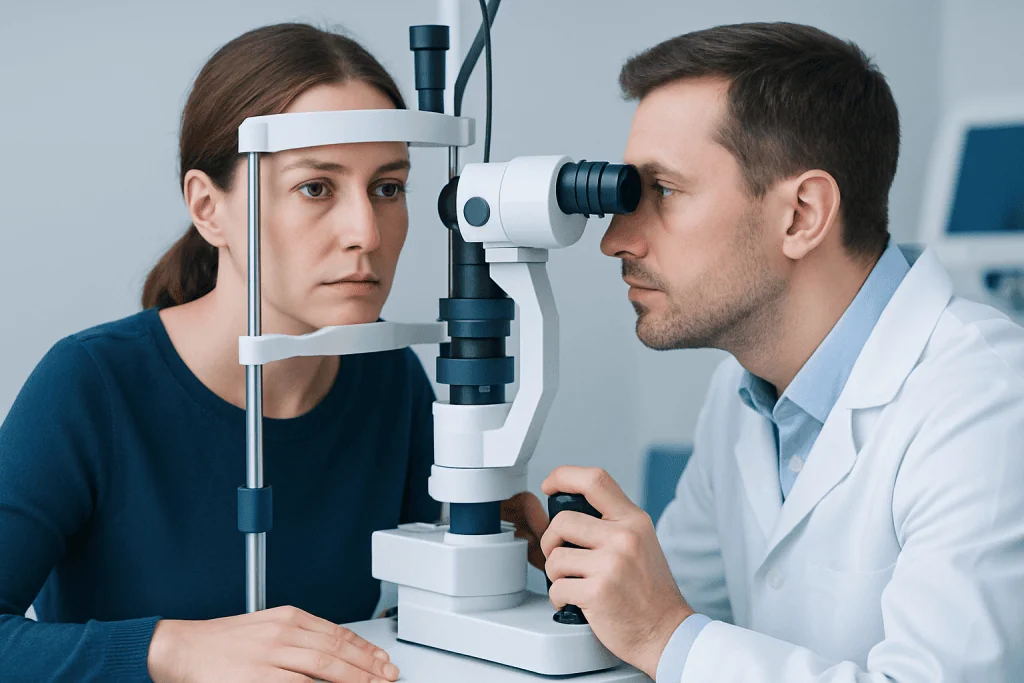
During the examination, the doctor may use a slit lamp microscope to look closely at the eyelid margins, eyelashes, tear film and surface of the eye. Signs such as crusting, redness, blocked meibomian glands, thickened eyelid secretions or eyelash debris support the diagnosis. The doctor may gently press on the eyelids to evaluate the quality of oil released by the glands.
Laboratory tests are not usually needed. In unusual, severe or treatment-resistant cases, a sample of eyelid debris or discharge may be taken to check for specific bacteria or other causes. If an eyelid lesion does not heal or has an atypical appearance, additional evaluation may be recommended to rule out other conditions.
Treatment Options
Treatment is tailored to the type and severity of blepharitis. For many people, the main treatment is consistent eyelid hygiene, including warm compresses and gentle cleaning of the eyelid margins. This helps soften crusts, loosen blocked oils and reduce irritating debris around the lashes. Improvement may take time, so regular care is usually more effective than short, occasional efforts.
Artificial tears or lubricating eye drops may be recommended when blepharitis is associated with dry eye symptoms. Preservative-free products may be preferred for frequent use, especially in sensitive eyes. If inflammation or bacterial overgrowth is significant, an eye doctor may prescribe topical antibiotic ointments or drops, anti-inflammatory eye drops, or oral medications in selected cases such as rosacea-related meibomian gland dysfunction.
For Demodex-related blepharitis, the doctor may recommend specific eyelid cleansers or treatments designed to reduce mite overgrowth. In-office procedures to warm, massage or clear the meibomian glands may be considered for some patients with chronic gland blockage. Patients should not use leftover eye medicines, steroid drops or antibiotic drops without medical advice, because inappropriate use can cause side effects or delay correct treatment.
Prevention and Daily Self-Care
Because blepharitis often behaves as a long-term condition, daily self-care is central to prevention. A simple routine can help keep the eyelid margins clean and support the tear film. The routine should be gentle; scrubbing too hard or using harsh products can worsen irritation.
A typical eyelid hygiene routine may include:
- Applying a warm compress to closed eyelids for several minutes to soften crusts and oils.
- Gently massaging the eyelid margins as advised by an eye care professional, especially if oil glands are blocked.
- Cleaning the lash line with a doctor-recommended eyelid wipe, cleanser or diluted gentle solution.
- Rinsing carefully if instructed and drying with a clean towel.
- Avoiding eye makeup during flare-ups and replacing old cosmetics that may be contaminated.
People who wear contact lenses may need to limit lens use during flare-ups and follow strict lens hygiene. Managing related conditions such as dandruff, rosacea or allergies can also reduce recurrence. Adequate sleep, hand hygiene, avoiding eye rubbing and protecting the eyes from smoke, dust and dry air may improve comfort.
Long-Term Outlook and Possible Complications
The outlook for blepharitis is generally good, but patience is important. Symptoms often improve with a steady routine, then return if eyelid care is stopped. For this reason, many patients benefit from thinking of blepharitis care like dental hygiene: a small daily habit that helps prevent larger problems.
Untreated or poorly controlled blepharitis may contribute to chronic dry eye, recurrent styes, chalazia, irritation of the cornea or contact lens intolerance. Inflammation can also make the eyes feel tired during reading, screen use or driving. These complications are usually manageable when recognized early and treated appropriately.
Follow-up visits help the doctor adjust the plan if symptoms persist. Some people need a maintenance routine only a few times per week after improvement, while others require daily care. The best schedule depends on the severity, associated skin conditions and response to treatment.
When to See a Doctor
A person should see an eye doctor if eyelid redness, crusting, burning or irritation does not improve with careful hygiene, or if symptoms keep returning. Medical assessment is also important when there is eye pain, increasing swelling, light sensitivity, discharge, a new eyelid lump, contact lens discomfort or any change in vision. Children with persistent eyelid inflammation should also be evaluated.
Urgent care is recommended if there is significant eye pain, sudden vision loss, a suspected eye injury, severe light sensitivity or swelling that spreads around the eye. These symptoms may suggest a condition other than routine blepharitis and require prompt examination.
For international patients seeking evaluation, Acibadem International provides access to multidisciplinary specialists and JCI-accredited hospitals that diagnose and treat eyelid and ocular surface conditions, including blepharitis. Patients should consult a qualified ophthalmologist for an individualized diagnosis and treatment plan.
Frequently asked questions
Is blepharitis contagious?
Blepharitis itself is usually not considered contagious in the way that viral conjunctivitis can be. It often results from inflammation, oil gland dysfunction, skin conditions or an imbalance of normal eyelid bacteria. Good hand hygiene and avoiding shared eye makeup are still recommended.
Can blepharitis be cured permanently?
Blepharitis often has a chronic or recurring pattern, so permanent cure is not always the goal. Most people can control symptoms well with regular eyelid hygiene and treatment during flare-ups. A doctor can help identify triggers and create a maintenance plan.
How long does blepharitis take to improve?
Mild symptoms may begin to improve within days to a few weeks of consistent eyelid care. More persistent cases, especially those linked to meibomian gland dysfunction or rosacea, may take longer and may require prescription treatment. Regular follow-up helps ensure the plan is working.
Can makeup be used with blepharitis?
During an active flare-up, it is usually best to avoid eye makeup because it can trap debris and worsen irritation. Old mascara, eyeliner and brushes should be replaced, as they may harbor bacteria. Once symptoms are controlled, hypoallergenic products and careful removal may reduce irritation.
Does blepharitis cause dry eyes?
Blepharitis can contribute to dry eye symptoms, especially when the meibomian glands do not release enough healthy oil into the tear film. Without a stable oil layer, tears evaporate more quickly. Lubricating drops and gland-focused eyelid care may help.
Should children with crusty eyelids be checked for blepharitis?
Yes, persistent crusting, redness or eyelid irritation in children should be assessed by a healthcare professional. Children may rub their eyes frequently, which can worsen irritation. A doctor can confirm the cause and recommend safe eyelid care for the child’s age.
References
- American Academy of Ophthalmology
- Mayo Clinic
- National Eye Institute
- American Optometric Association
- Cochrane Library
This article is for general information only and is not a substitute for professional medical advice. Please consult a qualified doctor about your individual situation.
Explore treatments in Turkey — costs, top hospitals & a free quote
JCI-accredited · board-certified surgeons · reply within 24h
Add us as a Preferred Source to see more of our trusted health content across Google Search, AI Overviews and Discover.