Blind in One Eye: An Evidence-Based Guide for Patients

Vision loss in one eye is a symptom rather than a diagnosis, with causes ranging from treatable eye problems to vascular or neurological conditions. Sudden, painless or painful loss of vision requires urgent same-day medical evaluation.
Key Takeaways
- Vision loss in one eye is a symptom rather than a diagnosis, with causes ranging from treatable eye problems to vascular or neurological conditions.
- Sudden, painless or painful loss of vision requires urgent same-day medical evaluation.
- The outlook depends strongly on the cause, how quickly treatment begins and whether vision loss is partial or complete.
- People with permanent vision loss in one eye can often adapt well with eye protection, rehabilitation and practical safety strategies.
- Regular eye examinations help detect conditions such as glaucoma, diabetic eye disease and retinal problems before major vision loss occurs.
Being blind in one eye may be temporary, partial or permanent, and the cause can involve the eye itself, the optic nerve or the brain. Sudden loss of vision in one eye should be treated as an urgent medical concern, because prompt assessment may protect remaining sight and identify serious underlying conditions.
Blind in One Eye: What It Can Mean
Being blind in one eye means having severely reduced or absent vision from one eye while vision in the other eye is present. It may describe a sudden change, a gradual decline, or a longstanding difference in vision that began at birth or after an earlier illness or injury. Some people lose central detail but retain side vision; others notice a dark curtain, blur, blind spot or complete darkness.
This symptom is also called monocular vision loss. It is important to distinguish it from loss of one side of the visual field in both eyes, which may point to a problem in the brain rather than in one eye. Covering one eye at a time can help a person describe what they are experiencing, but it should not delay medical care if the change is new.
Sudden visual loss is especially important because some causes can threaten sight permanently without timely treatment. Even when vision returns after a few minutes, an urgent assessment is needed. Temporary episodes can sometimes signal reduced blood flow to the eye or brain and may be associated with stroke risk.
How Vision Loss in One Eye May Feel
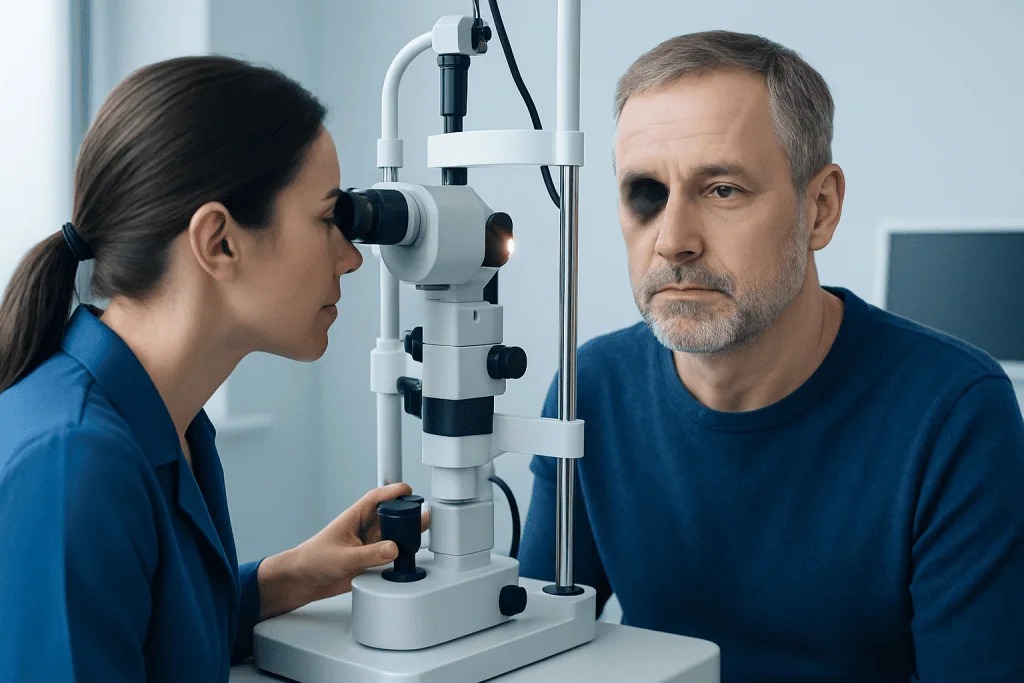
The symptoms vary according to which part of the visual system is affected. Vision may become cloudy, dim, distorted or hazy. A person may see flashing lights, new floaters, wavy lines, a central blank spot, or a shadow moving across the field of view. The eye can look normal from the outside even when a significant internal problem is present.
Pain is an important clue, but it does not determine how serious the cause is. A painful red eye with nausea, halos around lights or headache may occur with acute angle-closure glaucoma. Eye pain that worsens with movement and reduced color brightness can occur with optic neuritis. However, retinal detachment, retinal artery blockage and some other urgent causes are often painless.
Gradual loss may be harder to notice because the stronger eye compensates. People may first recognize it when reading, driving, judging steps, pouring liquids, playing sports or covering their better-seeing eye. Reduced depth perception is common when only one eye provides useful vision.
- Sudden dark curtain, shadow or missing area of vision
- Flashes of light or a sudden shower of floaters
- New severe eye pain, redness, headache, nausea or vomiting
- Vision loss with facial weakness, speech difficulty, dizziness or limb weakness
Common Causes and Risk Factors

Causes can arise in the clear front surface of the eye, the lens, retina, optic nerve, blood vessels or visual pathways in the brain. A scratch or infection of the cornea, inflammation inside the eye, cataract and trauma can affect vision. Cataracts usually cause a gradual, painless blur rather than sudden blindness.
Retinal conditions are important causes of abrupt or progressive monocular vision loss. Retinal detachment may cause flashes, floaters and a curtain-like shadow. A retinal tear can sometimes be treated before it progresses. Blockage of a retinal artery or vein can reduce vision suddenly and may be related to vascular risk factors such as high blood pressure, diabetes, high cholesterol, smoking or heart disease.
Glaucoma damages the optic nerve, most often gradually and without early symptoms. In contrast, acute angle-closure glaucoma develops quickly and can cause severe pain and visual disturbance. Optic neuritis, often linked with inflammation, can cause reduced vision and altered color perception. In adults over 50, giant cell arteritis is a medical emergency because it can cause sudden vision loss and may also affect the other eye.
Risk is higher with diabetes, uncontrolled blood pressure, cardiovascular disease, older age, previous eye surgery, severe nearsightedness, eye injury, autoimmune disease, a family history of glaucoma, and certain medications. These factors do not confirm a cause, but they help clinicians decide which tests and treatments may be needed promptly.
How Doctors Find the Cause
A clinician will ask when the vision change began, whether it was sudden or gradual, whether it is painful, and whether there were flashes, floaters, headache, weakness or other symptoms. They will also review medical conditions, medications, recent procedures, injuries and personal or family eye history. The timing of symptoms can provide valuable information, so it is useful to note the last time vision was normal.
An eye examination commonly includes testing visual acuity, pupils, eye movements, color vision, eye pressure and peripheral vision. The clinician may dilate the pupil to examine the retina and optic nerve. Imaging tests such as optical coherence tomography, retinal photographs, fluorescein angiography, ultrasound, or visual field testing may be used depending on the suspected condition.
If a blood-flow problem, inflammation or neurological cause is possible, assessment may include blood tests, blood pressure measurement, heart and blood-vessel evaluation, and brain or orbit imaging. Sudden retinal artery blockage or transient monocular vision loss may require urgent stroke-related assessment. The goal is not only to explain the visual symptom, but also to identify conditions that could affect the other eye or overall health.
Treatment and Outlook
Treatment depends entirely on the diagnosis. Some conditions respond best when care begins quickly. For example, retinal tears or detachments may need laser treatment, freezing treatment or surgery. Acute angle-closure glaucoma requires urgent lowering of eye pressure, followed by treatment to reduce the chance of recurrence. Eye infections, inflammatory disorders and certain corneal problems may be managed with targeted medicines or procedures.
When vascular disease is suspected, clinicians address the immediate eye problem and evaluate contributors such as hypertension, diabetes, cholesterol disorders, abnormal heart rhythm and smoking. Treatment may include measures to reduce future vascular events. Suspected giant cell arteritis is treated urgently because early therapy can help protect vision in the other eye.
Not every type of vision loss can be reversed. If damage to the retina or optic nerve is permanent, the focus shifts toward protecting the better-seeing eye and supporting independence. Low-vision services can provide magnifiers, lighting advice, mobility support, assistive technology and strategies for work, school and daily living.
Prognosis varies widely. Some people recover fully or partially, while others have lasting impairment. A diagnosis made early and regular follow-up with an ophthalmologist offer the best opportunity to preserve remaining vision and manage the underlying condition appropriately.
Living Safely With Vision in One Eye
People with useful vision in only one eye can usually continue many daily activities, although the brain may need time to adapt to reduced depth perception and a smaller field of view on one side. Turning the head more deliberately, allowing extra time on stairs and checking blind spots before crossing roads or changing lanes can improve safety.
Protecting the better-seeing eye is particularly important. An ophthalmologist may recommend protective eyewear for sports, home repairs, gardening, laboratory work or other activities with a risk of eye injury. Sunglasses that block ultraviolet radiation can improve comfort outdoors, but they do not replace safety eyewear when impact protection is needed.
Regular eye examinations are important even if the remaining eye feels normal. Good control of diabetes, blood pressure and cholesterol, not smoking, and following prescribed treatment for glaucoma or other eye conditions can support long-term eye health. People should ask their clinician about driving requirements in their country, as visual standards and adaptation periods differ.
Acibadem International’s multidisciplinary specialists and JCI-accredited hospitals diagnose and treat eye and related neurological or vascular conditions for international patients. An individualized assessment can help clarify the cause of vision loss and the most appropriate follow-up plan.
When to Seek Medical Care
New sudden loss of vision in one eye should be assessed urgently, ideally the same day, even if it improves. Emergency care is especially important for a curtain or shadow over vision, new flashes and floaters, severe eye pain, a red eye with nausea, or vision loss after an eye injury. Do not drive yourself if vision is significantly impaired.
Call emergency services immediately if vision changes occur with weakness or numbness on one side of the body, facial drooping, difficulty speaking, confusion, loss of balance, a sudden severe headache, or chest pain. These symptoms may indicate a stroke or another serious condition requiring emergency treatment.
Prompt medical review is also needed for gradual worsening, persistent blur, increasing blind spots, trouble seeing colors, or recurrent brief episodes of dimming vision. A routine eye examination is appropriate for stable, longstanding vision differences, but new symptoms should not be assumed to be due to aging, glasses needs or fatigue.
Frequently asked questions
Can blindness in one eye be temporary?
Yes. Some episodes of vision loss in one eye are temporary, but they still require prompt medical evaluation. Temporary dimming or blackout can be linked to reduced blood flow, migraine-related symptoms or other conditions, and a clinician needs to identify the cause.
Is sudden blindness in one eye a stroke warning sign?
It can be. Sudden loss of vision may result from a blocked retinal blood vessel or a temporary interruption of blood flow, which can be associated with stroke risk. Urgent assessment is important, particularly when there are other neurological symptoms or cardiovascular risk factors.
Can stress cause blindness in one eye?
Stress can affect comfort, headaches and awareness of visual symptoms, but it should not be assumed to be the cause of new vision loss. A new blind spot, darkness, blur or other change needs an eye examination to rule out physical causes that may require treatment.
Can a person drive if they are blind in one eye?
Many people can drive safely with vision in one eye after adapting, but legal visual requirements differ by country and region. A clinician or licensing authority can advise on visual acuity, field-of-vision standards and whether a period of adaptation is needed.
Will vision return after a retinal detachment?
A retinal detachment needs urgent specialist care. Treatment can often reattach the retina, but visual recovery depends on factors such as how long the retina was detached and whether the central retina was involved.
How can the good eye be protected?
Regular comprehensive eye examinations, management of diabetes and blood pressure, and avoidance of smoking can help protect eye health. Protective polycarbonate eyewear is advisable during activities where eye injury is possible, especially for people who rely on one eye for vision.
References
- American Academy of Ophthalmology
- National Eye Institute
- American Stroke Association
- National Health Service
- Mayo Clinic
This article is for general information only and is not a substitute for professional medical advice. Please consult a qualified doctor about your individual situation.
Explore treatments in Turkey — costs, top hospitals & a free quote
JCI-accredited · board-certified surgeons · reply within 24h
Add us as a Preferred Source to see more of our trusted health content across Google Search, AI Overviews and Discover.
Check your numbers in seconds
BMI, calories, due date, blood pressure and 30+ more clinical calculators — free, instant, doctor-reviewed ranges.