Blowing Raspberries: What Patients Need to Know

Blowing raspberries is commonly a normal developmental behavior in infants. In babies, it can help practice lip, tongue, and breath control needed for feeding and speech.
Key Takeaways
- Blowing raspberries is commonly a normal developmental behavior in infants.
- In babies, it can help practice lip, tongue, and breath control needed for feeding and speech.
- Persistent new raspberry-blowing in an older child or adult should be interpreted in context, especially if other symptoms are present.
- Medical evaluation is important if the behavior appears suddenly with weakness, speech change, swallowing problems, or developmental concerns.
- Parents usually do not need to stop normal raspberry-blowing unless it interferes with feeding or is linked to distress.
Blowing raspberries usually refers to making a buzzing sound by blowing air through relaxed lips. In babies, it is most often a normal part of oral-motor development and early communication, while in older children or adults it may have social, behavioral, or medical explanations depending on the situation.
Overview: what blowing raspberries usually means
Blowing raspberries means pushing air through the lips to make a vibrating, buzzing sound. In infants, this is usually a healthy and expected behavior rather than a sign of illness. Many babies discover it as they explore how their mouth, tongue, lips, and breath work together.
Parents often notice blowing raspberries around the same period that babies become more vocal, drool more, and show interest in copying sounds and facial expressions. It can happen during play, while lying on the back, or during social interaction with caregivers. This behavior may look messy because it often mixes with saliva, but that alone is not usually a concern.
Outside infancy, blowing raspberries can have different meanings. It may be playful, attention-seeking, or part of a habit. Less commonly, when it appears suddenly in an older child or adult along with other symptoms, it can reflect a problem affecting speech, oral control, or the nervous system, such as stroke.
Why babies blow raspberries
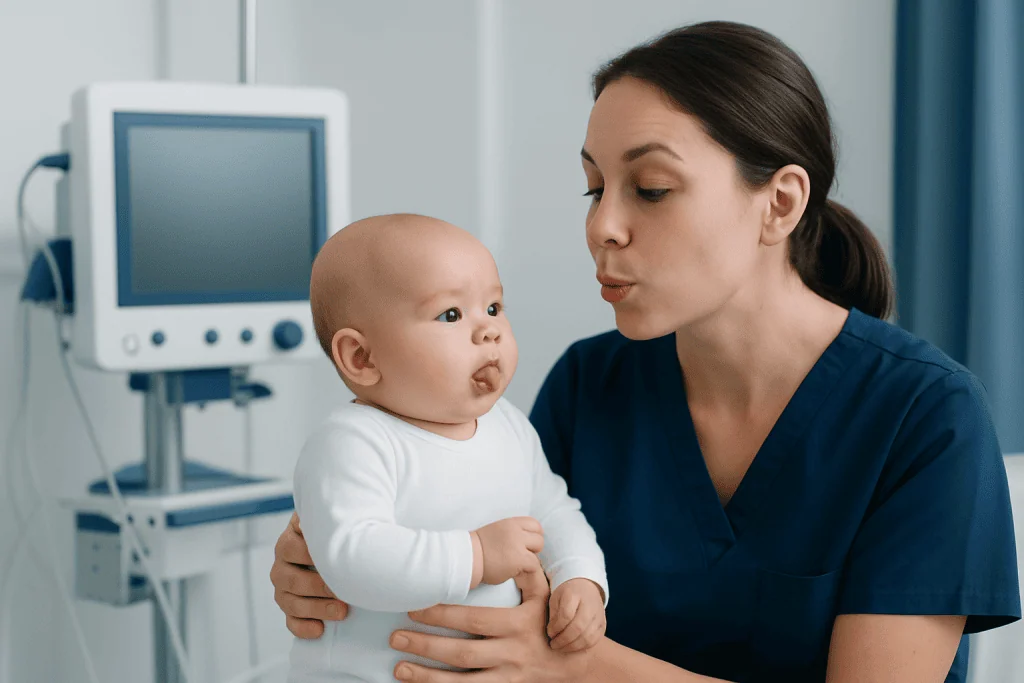
For babies, blowing raspberries is often part of normal oral-motor development. It helps them experiment with lip closure, airflow, tongue position, and muscle coordination. These are all important building blocks for later babbling, chewing, drinking from a cup, and speech development.
This stage is also linked to social learning. Babies enjoy cause and effect, and they quickly notice that a raspberry sound gets a reaction from parents. Smiles, laughter, and imitation can encourage them to repeat the behavior. In that sense, raspberries are not only a motor skill but also an early communication tool.
Drooling often increases at the same time because the mouth is very active. This does not necessarily mean teething is the cause, although teething can occur during the same period. In most cases, a baby who is feeding well, gaining weight, and meeting milestones does not need treatment for raspberry-blowing alone.
- It may support practice for future speech sounds.
- It can reflect growing awareness of lips and tongue.
- It is often part of playful social interaction.
- It commonly appears during a normal developmental window.
When blowing raspberries may be more than a phase

Context matters. In an older child, frequent raspberry-blowing may simply be a playful behavior, a way to seek attention, or a response to sensory needs. However, if it is accompanied by delays in communication, trouble chewing, unusual drooling, or limited social interaction, a clinician may consider a broader developmental assessment.
In adults, blowing raspberries is not usually discussed as a medical symptom on its own. But a new inability to control lip movements, changes in speech clarity, facial weakness, or unusual mouth movements deserve attention. These symptoms can reflect problems involving facial muscles, cranial nerves, or the brain.
Similar oral behaviors can also appear with some neurologic conditions, movement disorders, or after brain injury. A doctor may evaluate for related issues such as swallowing difficulty, slurred speech, facial asymmetry, or changes in coordination. If there are concerns about communication or oral function, further assessment may be helpful through neurological rehabilitation or speech-focused support when appropriate.
Associated symptoms to watch for
Most babies who blow raspberries are otherwise completely well. The behavior is generally reassuring when it happens in a child who feeds comfortably, makes eye contact, responds to voices, and continues to progress in motor and communication milestones. In these situations, observation is usually enough.
Warning signs depend on age. In infants, parents should look at the whole picture rather than the sound itself. Difficulty latching, choking with feeds, poor weight gain, very weak crying, or marked floppiness should not be dismissed as a simple phase. In older children and adults, new drooping of the face, one-sided weakness, confusion, or sudden speech changes need prompt medical review.
Symptoms that may deserve closer attention include:
- Feeding difficulties or frequent coughing during feeds
- Poor weight gain or dehydration
- Persistent excessive drooling beyond what is expected for age
- Delayed babbling, limited sound-making, or regression in milestones
- New facial weakness, slurred speech, or swallowing problems
- Abnormal repetitive movements, loss of awareness, or sudden behavior change
How doctors assess the cause
Evaluation starts with age, timing, and associated symptoms. For a healthy infant, a doctor may simply confirm that the behavior fits normal development. They may ask about feeding, growth, hearing, social engagement, babbling, and motor milestones. A basic physical examination usually focuses on the mouth, tongue movement, muscle tone, and general neurologic development.
If there are concerns in a child, the assessment may include hearing evaluation, developmental screening, and review of feeding and speech patterns. Depending on the findings, the child may be referred to pediatrics, speech and language therapy, neurology, or developmental specialists. The goal is not to label a normal behavior as a disorder, but to identify any broader issue if one is present.
In an adult with sudden or unexplained oral-motor changes, doctors may perform a neurologic examination and decide whether urgent testing is needed. Brain imaging such as MRI may be considered if there is concern about a central nervous system cause. If symptoms suggest an emergency neurologic event, urgent assessment and, in selected cases, stroke treatment may be needed without delay.
Management and what families can do at home
When blowing raspberries is part of normal infant development, no treatment is needed. Caregivers can respond with eye contact, smiling, talking, and imitation. This supports early communication while allowing the baby to practice oral movements naturally. Gentle face-to-face play is often the best approach.
Parents do not usually need to stop the behavior unless it is happening during feeding and causing coughing, frustration, or poor intake. If a baby is very distracted while eating, reducing stimulation and feeding in a calm environment may help. If drool causes skin irritation, keeping the area clean and dry can protect the skin.
If an older child or adult has oral-motor difficulty rather than playful raspberry-blowing, treatment depends on the underlying cause. Support may include pediatric assessment, speech and swallowing therapy, or neurologic care. Near the end of the care pathway, some families may seek coordinated evaluation at centers such as Acibadem International, where multidisciplinary specialists in JCI-accredited hospitals assess and treat international patients with developmental, speech, and neurologic concerns.
When to seek medical care
Medical advice is recommended if blowing raspberries is accompanied by poor feeding, choking, weak sucking, persistent vomiting, poor growth, or delayed milestones in a baby. A parent should also speak with a clinician if the child seems to lose skills they previously had, stops babbling, or does not respond to sounds or social interaction as expected.
Urgent medical care is needed if an older child or adult develops sudden changes such as facial drooping, slurred speech, arm or leg weakness, confusion, severe dizziness, or trouble swallowing. These symptoms may point to a neurologic emergency and should not be monitored at home. In that setting, clinicians may evaluate for conditions including stroke and other acute neurologic disorders.
Even when the situation is not urgent, it is reasonable to ask a doctor if the behavior feels unusual, persistent, or disruptive. Families know their child best, and a brief professional assessment can offer reassurance or identify when extra support is useful.
Frequently asked questions
Is blowing raspberries normal in babies?
Yes. In most babies, blowing raspberries is a normal developmental behavior that appears as they explore sounds, mouth movements, and social interaction. It is usually not a sign of a health problem when the baby is otherwise feeding, growing, and developing well.
At what age do babies usually start blowing raspberries?
Many babies begin sometime in the middle of the first year, although the exact timing varies. Some start earlier and some later, and timing alone is usually less important than the child's overall development and responsiveness.
Does blowing raspberries mean a baby is teething?
Not necessarily. Babies may blow raspberries during the same period that teething and drooling increase, but the behavior itself is mainly related to oral exploration and motor practice. It should not be used on its own as proof that teeth are coming in.
Can blowing raspberries help with speech development?
It may support early speech-related skills because it involves breath control and coordination of the lips and tongue. While it is not a formal speech exercise, it is often part of the normal progression toward babbling and more varied sounds.
Should parents stop a baby from blowing raspberries?
Usually no. It is generally a harmless and useful part of development. Parents may simply redirect the baby if it interferes with feeding or creates a lot of mess at an inconvenient time.
When is blowing raspberries a reason for concern?
It deserves medical attention if it comes with feeding problems, poor growth, delayed milestones, loss of skills, or limited communication. In older children or adults, sudden new raspberry-like mouth movements with weakness, slurred speech, or facial drooping need prompt medical evaluation.
References
- American Academy of Pediatrics
- Centers for Disease Control and Prevention
- National Institute of Neurological Disorders and Stroke
- National Institute on Deafness and Other Communication Disorders
- World Health Organization
This article is for general information only and is not a substitute for professional medical advice. Please consult a qualified doctor about your individual situation.
Explore treatments in Turkey — costs, top hospitals & a free quote
JCI-accredited · board-certified surgeons · reply within 24h
Add us as a Preferred Source to see more of our trusted health content across Google Search, AI Overviews and Discover.

More from the Health Library



Related Specialists

Fzt. Ceren Keser
Physical Medicine & Rehabilitation
Dt. Ayşegül Coşkun
Oral & Dental Health
Dr. Karım Nabıyev
General Surgery
Dr. İsmet Cengiç
Radiology