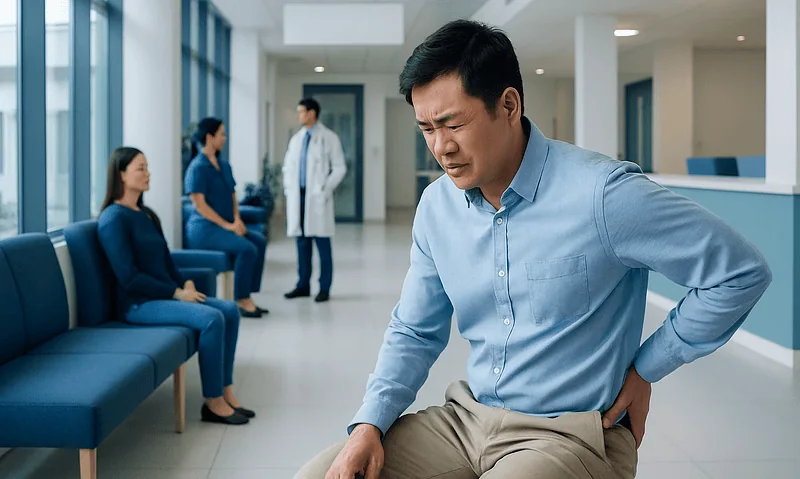
Blue Testicles: An Evidence-Based Guide for Patients

Blue balls refers to temporary discomfort after prolonged sexual arousal without ejaculation. It is usually mild, short-lived, and not considered dangerous.
Key Takeaways
- Blue balls refers to temporary discomfort after prolonged sexual arousal without ejaculation.
- It is usually mild, short-lived, and not considered dangerous.
- Rest, distraction, walking, and time often relieve symptoms.
- Severe, persistent, or one-sided testicular pain is not typical and needs medical evaluation.
- Conditions such as testicular torsion, infection, or a hernia can mimic blue balls.
Blue balls is a common, nonmedical term for temporary aching or heaviness in the testicles after sexual arousal that does not lead to orgasm or ejaculation. In most cases it is harmless and settles with time, but sudden, severe, or one-sided pain should be assessed by a doctor because other conditions can cause similar symptoms.
Overview: what blue balls means
Blue balls is a nonmedical term commonly used to describe aching, pressure, heaviness, or mild pain in the testicles after sexual arousal that does not end in orgasm or ejaculation. The medical phrase sometimes used for this is epididymal hypertension, although it is not a formal disease diagnosis. For most people, the discomfort is temporary and fades without treatment.
During sexual arousal, blood flow increases to the genitals. This is a normal body response. If arousal continues for some time and then stops, some people may notice a lingering sense of fullness or dull aching in the scrotum or lower pelvis before the body returns to its usual state.
It is important to separate this common, self-limited discomfort from true testicular pain caused by another condition. Blue balls should not be used to dismiss symptoms that are intense, persistent, or unusual. If the pain is strong, sudden, one-sided, or accompanied by swelling, nausea, fever, or urinary symptoms, another cause must be considered.
Symptoms and what it may feel like
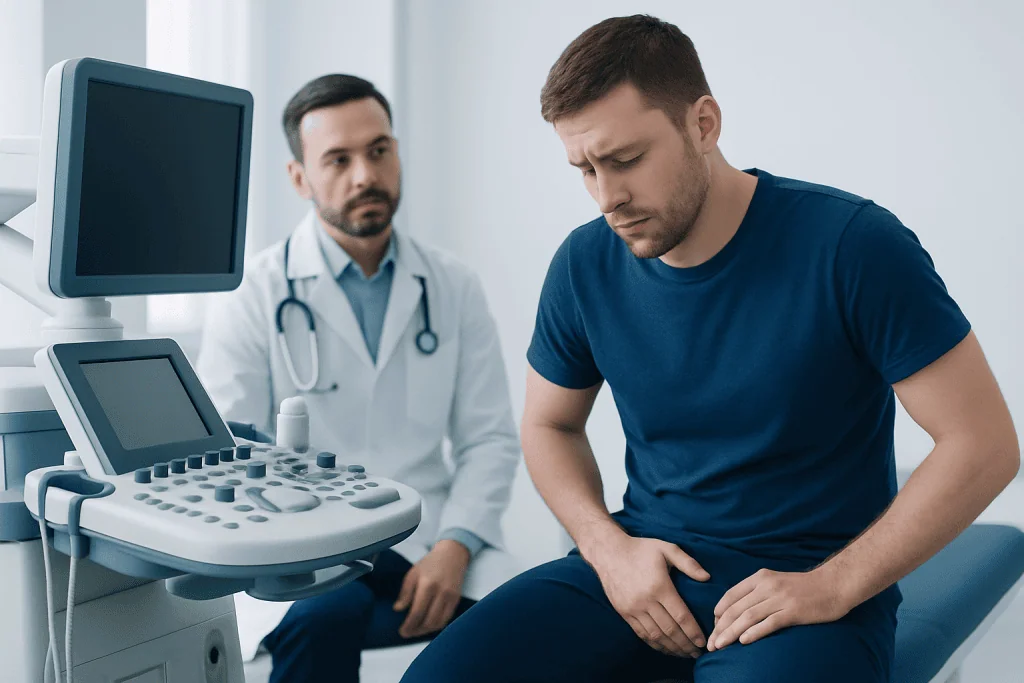
People who describe blue balls usually report a dull ache rather than sharp pain. The sensation may affect one or both testicles, but many people notice a general heaviness or pressure in the scrotum instead of a clearly localized problem. Some also feel mild pelvic tension or lower abdominal discomfort.
Typical features are that symptoms begin after sexual arousal, especially if arousal lasts for a while, and then improve gradually. The discomfort often eases after orgasm, but it can also settle without ejaculation as blood flow and muscle tension return to baseline over time.
Symptoms that fit more with ordinary blue balls may include:
- Mild to moderate aching in the testicles
- A heavy or full feeling in the scrotum
- Temporary pelvic pressure
- Discomfort that improves within a short time
Symptoms that are less typical include severe pain, obvious swelling, redness, fever, vomiting, pain with urination, a new lump, or pain that does not improve. These signs suggest the discomfort may not be simple post-arousal aching and should be checked by a clinician.
Why it happens and common myths

The most widely accepted explanation is that sexual arousal increases blood flow to the penis and testicles. At the same time, muscles in the pelvic area may tense. If there is no orgasm or ejaculation, these changes still reverse naturally, but some people may feel temporary discomfort while this happens. This is why blue balls is generally understood as a short-term physical sensation, not an injury.
There are also social myths around blue balls that can be misleading. It is not a medical emergency simply because ejaculation did not occur. It does not mean someone has been harmed by sexual frustration, and it should never be used to pressure a partner into sexual activity. Consent and comfort remain essential in any sexual situation.
Another misconception is that every ache in the scrotum after intimacy must be blue balls. In reality, the scrotum and groin can hurt for many different reasons, including muscle strain, infection, inflammation, or conditions such as testicular torsion. Because some of these causes need urgent treatment, context and symptom pattern matter.
Other conditions that can look similar
Temporary post-arousal discomfort is usually harmless, but testicular or scrotal pain has a broad range of causes. Some are minor, while others need prompt care. This is why persistent or severe pain should not be assumed to be blue balls.
Doctors may consider conditions such as infection, inflammation, trauma, hernia, kidney stones, or referred pain from nearby structures. One important condition to rule out is testicular torsion, where the spermatic cord twists and blood supply to the testicle is reduced. Torsion often causes sudden, severe, usually one-sided pain and can be a surgical emergency. Another possible cause is varicocele, an enlargement of veins in the scrotum that may cause a dragging or heavy sensation.
Some people may also have epididymitis, an inflammation of the epididymis that can cause pain and swelling, sometimes with urinary symptoms or fever. In other cases, a inguinal hernia can produce groin discomfort or a bulge that becomes more noticeable with standing, coughing, or straining.
Because symptoms can overlap, it is safer to seek medical advice if the discomfort is different from previous episodes, lasts longer than expected, or comes with new signs such as swelling, redness, discharge, or a lump.
How doctors evaluate testicular discomfort
Most people with straightforward blue balls do not need formal testing. However, when symptoms are severe, prolonged, recurrent, or not clearly linked to arousal, a doctor will usually ask about the timing, exact location of pain, recent sexual activity, trauma, urinary symptoms, fever, and any previous scrotal problems.
A physical examination is often the most important first step. The doctor may examine the scrotum, testicles, groin, and abdomen to look for tenderness, swelling, asymmetry, a hernia, or signs of infection. If there is concern about another diagnosis, urine tests or imaging may be recommended.
One common imaging test is scrotal ultrasound, which can help assess blood flow, swelling, cysts, varicocele, or other structural causes of pain. In selected cases, broader urology evaluation may be appropriate, especially for recurring symptoms, fertility concerns, or unexplained discomfort.
The key aim of diagnosis is not to confirm blue balls as a disease, but to make sure a more important condition is not being missed. That is especially true when symptoms are sudden, intense, or accompanied by vomiting, fever, or visible changes in the scrotum.
Relief, treatment, and self-care
When the discomfort is truly due to blue balls, it usually improves with time and simple self-care. Many people feel better after sexual arousal ends and the body gradually returns to its usual state. This may take a short period rather than resolving instantly.
General measures that may help include walking, changing position, using relaxation or breathing techniques, taking a warm shower, or distracting attention away from arousal. Some people find that orgasm relieves symptoms, but it is not medically required. Symptoms can settle without ejaculation.
It is best to avoid rough handling or repeatedly checking the area, as this may increase tenderness or anxiety. Supportive underwear can sometimes make the scrotum feel more comfortable. If pain is more than mild, persists, or keeps returning, a doctor should review it rather than relying on self-diagnosis.
If another cause is found, treatment depends on that diagnosis. Management may range from rest and medication to more specific care from a specialist. In patients with continuing scrotal or testicular concerns, urology care can help identify the cause and guide treatment safely.
When to seek medical care
Blue balls should be mild, temporary, and self-limited. Medical care is important if symptoms do not fit that pattern. A clinician should assess pain that is severe, one-sided, suddenly starts, or does not improve within a reasonable period.
Urgent medical attention is especially important if there is nausea, vomiting, fever, redness, marked swelling, a new lump, trauma, or pain with urination. These features may point to torsion, infection, bleeding, or another condition that should not wait.
It is also sensible to speak with a doctor if scrotal discomfort keeps recurring, causes anxiety, affects daily life, or is difficult to distinguish from other symptoms. A proper examination can provide reassurance when the cause is harmless and prompt treatment when it is not.
Near the end of the care pathway, some patients may benefit from multidisciplinary assessment. Acibadem International’s specialists in JCI-accredited hospitals diagnose and treat urologic conditions for international patients when further evaluation is needed.
Frequently asked questions
Is blue balls a real medical condition?
Blue balls is a common informal term rather than a formal disease diagnosis. It usually describes temporary aching or heaviness in the testicles after sexual arousal without ejaculation. The sensation is recognized by many people, but it is generally considered short-lived and not dangerous.
Can blue balls be dangerous?
By itself, blue balls is not usually dangerous and often settles on its own. The main concern is that other causes of testicular pain can seem similar at first. Sudden, severe, persistent, or one-sided pain should be assessed urgently.
Does ejaculation have to happen to relieve blue balls?
No. While some people find that orgasm relieves the discomfort, symptoms can also improve without ejaculation. Time, relaxation, walking, and letting arousal pass are often enough.
How long does blue balls usually last?
There is no exact time that applies to everyone, but it is typically short-lived. The discomfort should gradually improve as blood flow and muscle tension return to normal. If it lasts longer than expected or worsens, medical advice is a good idea.
Can women or people without testicles experience something similar?
Some people use terms like pelvic congestion or arousal-related pelvic discomfort to describe a similar feeling after prolonged sexual arousal. The anatomy is different, but the general idea of temporary pressure or aching after arousal can occur in different bodies. Persistent pelvic pain should still be medically assessed.
How can someone tell blue balls from a more serious problem?
Blue balls is usually linked to sexual arousal and feels like a mild to moderate ache or heaviness that improves with time. More concerning signs include severe pain, swelling, redness, fever, vomiting, urinary symptoms, a lump, or pain that is clearly on one side. Those symptoms need prompt medical evaluation.
References
- American Urological Association
- Urology Care Foundation
- National Health Service
- Cleveland Clinic
- Merck Manual Consumer Version
This article is for general information only and is not a substitute for professional medical advice. Please consult a qualified doctor about your individual situation.
Heart care in Turkey — expert evaluation and treatment
JCI-accredited · board-certified surgeons · reply within 24h
Add us as a Preferred Source to see more of our trusted health content across Google Search, AI Overviews and Discover.