Bony Spur on Knee: What Patients Need to Know
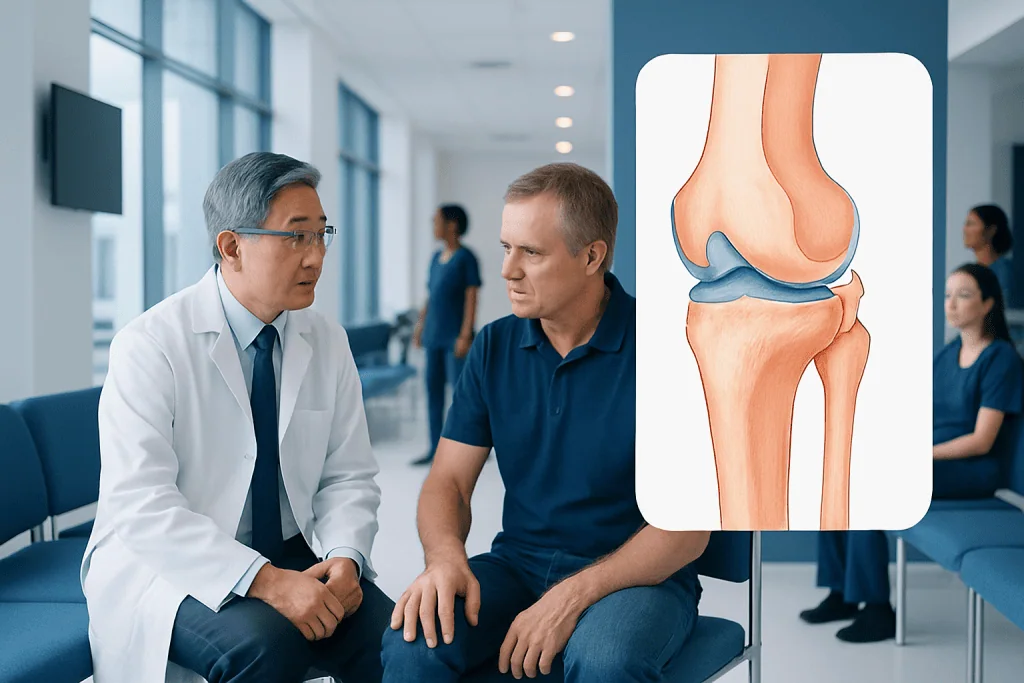
A bony spur on knee is usually a sign of joint wear or irritation rather than a separate disease. Many knee bone spurs are painless and are found on X-rays done for other reasons.
Key Takeaways
- A bony spur on knee is usually a sign of joint wear or irritation rather than a separate disease.
- Many knee bone spurs are painless and are found on X-rays done for other reasons.
- Symptoms, when present, often come from the underlying joint problem such as osteoarthritis, not just the spur itself.
- Treatment may include exercise, weight management, pain relief, physical therapy, injections, or surgery in selected cases.
- Medical review is important if knee pain is persistent, the joint locks, or walking becomes difficult.
A bony spur on knee is an extra area of bone growth, also called an osteophyte, that usually forms as the joint responds to wear, inflammation, or long-term stress. Some knee bone spurs cause no symptoms, while others can contribute to pain, stiffness, swelling, or a catching sensation and may need treatment depending on how much they affect daily life.
Overview: What a Bony Spur on the Knee Means
A bony spur on knee is a small extra growth of bone that develops along the edges of the joint. Doctors often call it an osteophyte. These growths commonly appear when the knee is exposed to long-term stress, cartilage wear, inflammation, or age-related joint changes. In many people, a bone spur is part of the body’s attempt to stabilize a joint that has become irritated or less smooth over time.
Not every knee bone spur causes symptoms. Some are found by chance on an X-ray or MRI done for knee pain, swelling, or injury. When symptoms do happen, they may include stiffness, aching, reduced range of motion, or a sensation that the knee catches during movement. The amount of discomfort does not always match the size of the spur.
It is also important to understand that a bone spur is often linked to another condition rather than existing on its own. A common example is knee osteoarthritis, in which cartilage gradually breaks down and the joint reacts by forming extra bone. This means treatment usually focuses on the whole knee joint, not only on the spur itself.
Common Symptoms and How They Feel
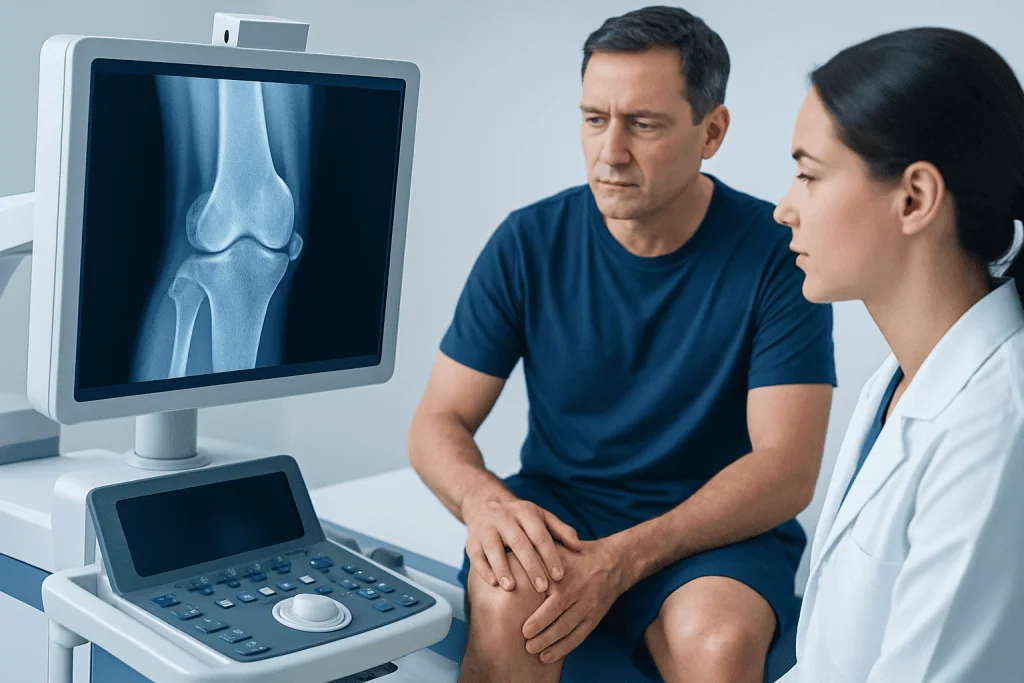
Symptoms of a bony spur on knee vary from person to person. Some people feel a dull ache around the joint, especially after walking, climbing stairs, standing for long periods, or getting up after sitting. Others notice morning stiffness or a knee that feels tight and less flexible than before.
If the spur rubs against nearby tissues or affects how the joint moves, it may cause a catching, grinding, or locking sensation. There can also be swelling, tenderness, or a feeling that the knee does not move smoothly. In some cases, the joint may feel unstable, though instability can also come from muscle weakness, ligament problems, or arthritis.
Symptoms may become more noticeable during activity and improve somewhat with rest, but persistent pain is not something a person should ignore. Because knee pain has many possible causes, a bone spur may be only one part of the picture. Meniscus injury, tendon irritation, inflammation, and cartilage loss can produce similar complaints, so proper assessment matters.
- Achy or sharp knee pain
- Stiffness after rest or in the morning
- Swelling around the joint
- Reduced bending or straightening
- Grinding, clicking, or catching sensations
- Discomfort during walking, stairs, kneeling, or squatting
Why Bone Spurs Form: Causes and Risk Factors
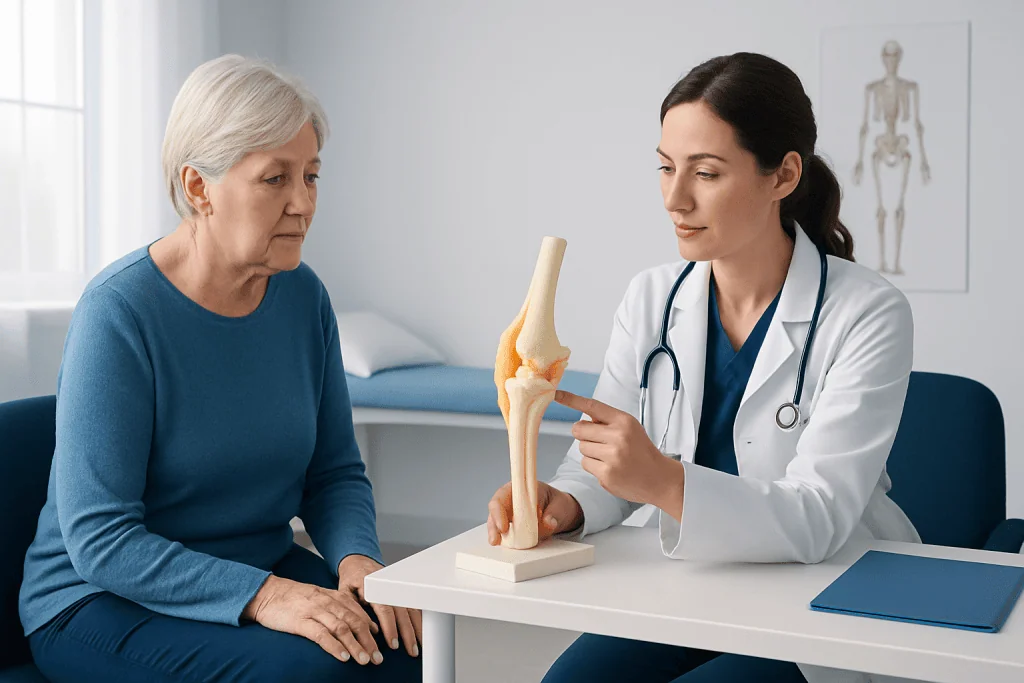
The most common reason a bony spur on knee develops is ongoing joint degeneration, especially osteoarthritis. As cartilage thins, the body may respond by producing extra bone at the joint margins. This is not usually a sudden event. It tends to happen gradually over months or years.
Other causes can include previous knee injury, repetitive stress, chronic inflammation, altered joint alignment, or aging-related wear. A past ligament tear, meniscus injury, or fracture can change how force moves through the knee, which may increase the chance of bone spur formation over time. Conditions that inflame joints can also contribute.
Several factors raise risk. These include older age, excess body weight, physically demanding work, sports with repeated knee loading, and weak muscles around the knee and hip. Family history may play a role in how likely a person is to develop osteoarthritis. If symptoms stem from advanced joint damage, the broader issue may overlap with knee arthritis.
Bone spurs can form in different parts of the knee, including around the kneecap, the inner or outer joint line, or the back of the knee. Their location may influence symptoms. For example, a spur near the patella may be more noticeable when climbing stairs, while one that interferes with motion may make bending or straightening harder.
How Doctors Diagnose a Knee Bone Spur
Diagnosis begins with a medical history and physical examination. The doctor will ask when symptoms started, what makes them better or worse, whether there is swelling or locking, and whether there has been any past injury. During the exam, they check tenderness, range of motion, swelling, walking pattern, joint alignment, and signs of instability.
X-rays are often the first imaging test used to look for a bony spur on knee. They can show osteophytes, joint space narrowing, changes in alignment, and other signs of wear. However, an X-ray alone does not explain every symptom. Many people have visible spurs without significant pain, while others have pain from soft tissue problems that may not appear clearly on plain films.
If symptoms suggest damage to cartilage, ligaments, or the meniscus, additional imaging may be useful. MRI can provide a better view of soft tissues and help identify whether another issue is contributing to pain or locking. In more complex cases, doctors may also use MRI scanning or other imaging tools to guide treatment decisions.
The goal of diagnosis is not only to confirm that a spur is present, but also to understand whether it is the main reason for symptoms. This whole-joint approach helps avoid unnecessary treatment and supports a more accurate plan for pain relief and improved function.
Treatment Options: From Conservative Care to Surgery
Treatment depends on symptoms, the underlying cause, and how much the knee problem affects daily activities. If a bone spur is not causing pain or limiting movement, it may not need active treatment. When symptoms are mild to moderate, doctors usually begin with conservative care aimed at reducing pain, easing inflammation, and improving knee mechanics.
Common first steps include activity modification, structured exercise, physical therapy, and weight management when appropriate. Strengthening the quadriceps, hamstrings, hip muscles, and core can reduce stress on the knee and improve joint support. Some people also benefit from supportive footwear, braces, or walking aids, depending on the pattern of pain and stability.
Medicines may be recommended for symptom relief, such as over-the-counter pain relievers or anti-inflammatory drugs when suitable for the individual. In some cases, doctors may consider image-guided injections to reduce inflammation or pain for a period of time. If symptoms remain difficult, a specialist may discuss options such as knee replacement for severe joint damage, or in selected cases robotic orthopedic surgery as part of surgical planning and treatment.
Surgery to remove a spur alone is not always the best answer, because the main problem may be widespread arthritis rather than a single piece of extra bone. However, if a specific spur is clearly causing mechanical symptoms such as recurrent locking or blocked movement, an orthopedic surgeon may recommend a procedure tailored to the person’s anatomy, goals, and overall knee condition.
Prevention and Self-Care for Long-Term Knee Health
Not every bone spur can be prevented, especially when aging and inherited factors are involved, but knee-friendly habits can reduce strain and help slow joint wear. Regular low-impact exercise is one of the most helpful strategies. Walking on even surfaces, cycling, swimming, and guided strengthening can support the muscles that protect the knee.
Maintaining a healthy body weight lowers pressure on the joint during daily movement. Good movement habits also matter. Warming up before exercise, using correct technique during sports, and avoiding sudden increases in training intensity can reduce overload. If work involves repetitive kneeling, squatting, or heavy lifting, adjusting technique and taking breaks may help.
Self-care during flare-ups may include brief rest from aggravating activity, ice, compression, and elevation if swelling is present. Gentle range-of-motion exercises can prevent the knee from becoming more stiff. A person should be careful not to stay inactive for too long, because prolonged rest can weaken muscles and worsen function.
For people living with recurring knee pain, a physical therapist or orthopedic specialist can help build a personalized plan. Near the end of the care pathway, if specialist assessment is needed, Acibadem International’s multidisciplinary teams in JCI-accredited hospitals evaluate and treat knee conditions for international patients using evidence-based orthopedic care.
When to Seek Medical Care
A person should seek medical advice if knee pain lasts more than a few weeks, keeps returning, or begins to interfere with walking, work, exercise, or sleep. Assessment is also important if the knee becomes increasingly stiff, swollen, or hard to fully bend or straighten.
Urgent medical attention is needed if the knee suddenly locks, cannot bear weight, gives way after an injury, looks noticeably deformed, or is associated with fever, marked redness, or severe swelling. These features may suggest a problem other than a simple bone spur and deserve prompt evaluation.
Early review can be helpful even when symptoms are mild, because the focus is often on treating the underlying joint issue before function declines. A doctor can explain whether imaging is necessary, rule out other causes, and guide safe options for exercise, pain management, and possible referral to orthopedics or rehabilitation.
Frequently asked questions
Is a bony spur on knee the same as arthritis?
No. A bone spur is an extra growth of bone, while arthritis is a broader joint condition. However, knee bone spurs commonly develop as part of osteoarthritis, so the two are often related.
Can a knee bone spur go away on its own?
A bone spur usually does not disappear on its own. Even so, symptoms can improve with exercise, weight management, physical therapy, and other treatments that reduce stress on the knee. The focus is often on controlling pain and improving movement rather than removing the spur.
Do all knee bone spurs cause pain?
No. Many bone spurs cause no symptoms and are found incidentally on imaging. Pain often comes from the underlying joint wear, inflammation, or nearby tissue irritation rather than the spur alone.
What is the best exercise for a bony spur on knee?
There is no single best exercise for everyone. Low-impact activities such as walking, cycling, swimming, and guided strengthening for the thigh and hip muscles are commonly helpful. A doctor or physical therapist can suggest exercises based on pain level, flexibility, and the condition of the joint.
When is surgery needed for a bony spur on knee?
Surgery is usually considered only when symptoms remain significant despite conservative treatment or when the spur contributes to mechanical problems such as locking. The best procedure depends on whether the main issue is an isolated spur, cartilage damage, or more advanced arthritis.
How is a bony spur on knee diagnosed?
Doctors diagnose it using a history, physical examination, and imaging, most often an X-ray. If there is concern about cartilage, meniscus, or ligament injury, MRI may be used to provide more detail.
References
- American Academy of Orthopaedic Surgeons
- National Institute of Arthritis and Musculoskeletal and Skin Diseases
- Arthritis Foundation
- Mayo Clinic
- National Health Service
This article is for general information only and is not a substitute for professional medical advice. Please consult a qualified doctor about your individual situation.
Joint and spine care in Turkey — expert assessment & treatment
JCI-accredited · board-certified surgeons · reply within 24h
Add us as a Preferred Source to see more of our trusted health content across Google Search, AI Overviews and Discover.

More from the Health Library

Perinatologist — Explained by Medical Evidence, Not Myths

Emgality: What Patients Need to Know

Cardiomegaly: An Evidence-Based Guide for Patients

Posterior Cul De Sac: A Complete Medical Overview

Ataxia: An Evidence-Based Guide for Patients

Chocolate Almond Milk: What Patients Need to Know
Physical Medicine & Rehabilitation Specialists at Acibadem

Büşra Zeybek
Physical Medicine & Rehabilitation
Fzt. Çağlar Dal
Physical Medicine & Rehabilitation
Assoc. Prof. Dr. Çağrı Örs
Orthopedic Surgery & Traumatology
Fzt. Canberk Altan
Physical Medicine & Rehabilitation