

Botox Frown Lines — Explained by Medical Evidence, Not Myths
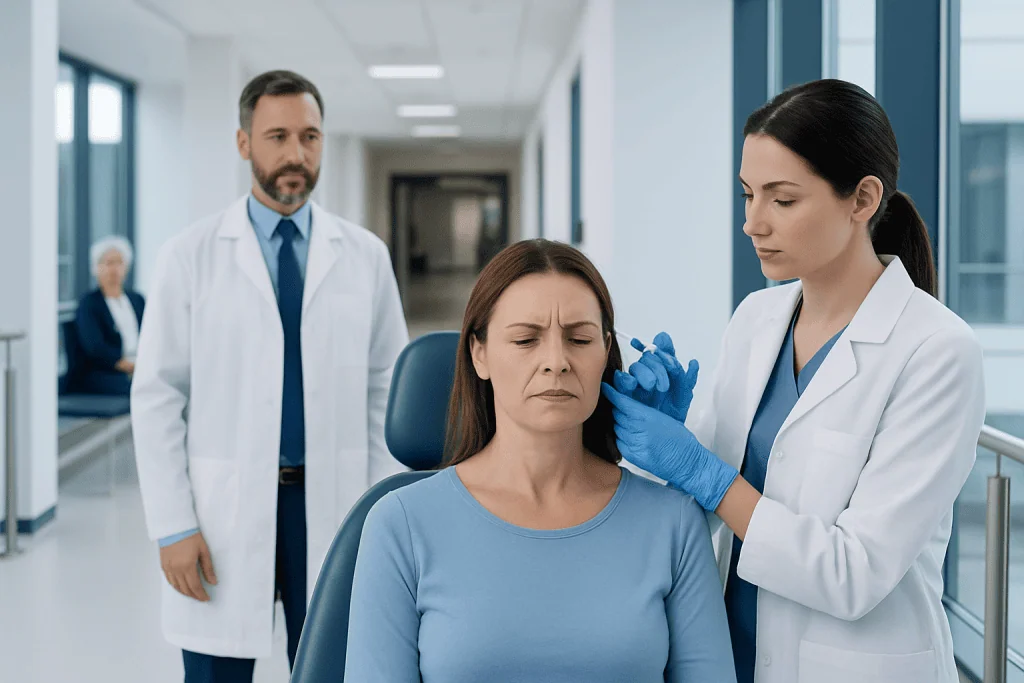
Botox works on dynamic frown lines caused by repeated muscle movement, not all wrinkles. Results usually begin within several days and are temporary, commonly lasting around 3 to 4 months.
Key Takeaways
- Botox works on dynamic frown lines caused by repeated muscle movement, not all wrinkles.
- Results usually begin within several days and are temporary, commonly lasting around 3 to 4 months.
- A qualified clinician should assess facial symmetry, eyelid position, muscle strength, and medical history before treatment.
- Side effects are usually mild and short-lived, but drooping of the eyelid or brow can occur if treatment is not well planned.
- People who are pregnant, breastfeeding, have certain neuromuscular conditions, or have infection at the injection site may need to avoid treatment.
Botox frown lines treatment is a medical procedure that relaxes the muscles creating vertical lines between the eyebrows, often called glabellar lines. For the right candidate, it can temporarily soften these lines and prevent them from deepening, but results, risks, and suitability depend on facial anatomy, medical history, and expert technique.
Overview: what botox frown lines treatment actually does
Botox frown lines treatment is used to soften the vertical lines that form between the eyebrows when a person frowns, concentrates, or squints. These lines are commonly called glabellar lines or “11 lines.” The treatment uses botulinum toxin type A to temporarily reduce the activity of specific facial muscles, so the skin above them creases less during expression.
Medical evidence supports this treatment for dynamic wrinkles, meaning lines mainly caused by repeated muscle movement. It does not fill the skin or remove excess tissue. Instead, it relaxes targeted muscles for a limited time. This is why the treatment can be helpful for some people, while others with deeper static wrinkles, significant skin laxity, or volume loss may need a different approach.
A careful explanation matters because there are many myths around Botox. It does not have to create an unnatural or expressionless look when used conservatively and precisely. The aim is usually to reduce overactive muscle pull while preserving natural facial movement and balance.
How frown lines form and why Botox may help
Frown lines develop from a combination of muscle activity, skin aging, and genetics. The main muscles involved are the corrugator and procerus muscles, which pull the eyebrows inward and downward. Over time, repeated movement can leave visible lines even when the face is at rest.
Sun exposure, smoking, stress-related facial tension, and natural loss of collagen can make these lines more noticeable. In younger adults, the lines may appear only during expression. In older adults, the same lines may become etched into the skin and may not fully disappear even after the muscles are relaxed.
Botox may help because it blocks the signal between the nerve and the treated muscle for a temporary period. As the muscle contracts less strongly, the skin has a chance to remain smoother. It is most effective for movement-related lines, and it may also help slow further deepening when performed at appropriate intervals by an experienced clinician.
When frown lines are part of broader facial aging, a clinician may discuss whether other options are more suitable or whether a combined plan is better. In some cases, related concerns such as medical aesthetics or surgical options like facelift treatment may be considered, depending on the person’s goals and anatomy.
Who may be a suitable candidate

Suitable candidates are usually adults who are bothered by frown lines between the eyebrows and want a temporary, non-surgical treatment. Good candidates generally have realistic expectations and understand that Botox softens lines but does not stop the aging process or permanently erase wrinkles.
A proper consultation should review several points: facial muscle pattern, brow position, eyelid anatomy, skin quality, previous cosmetic procedures, medications, and medical history. This assessment helps reduce the risk of an overtreated appearance or unwanted changes in brow or eyelid position.
Botox may not be suitable for everyone. People who are pregnant or breastfeeding are commonly advised to postpone treatment because safety data are limited. It may also be avoided in those with infection at the injection site, allergy to product components, or certain neuromuscular disorders where muscle-weakening effects could be problematic.
People with asymmetry, heavy upper eyelids, or a history of eyelid drooping need especially careful evaluation. In these cases, expert planning is important because relaxing the wrong muscle group can worsen pre-existing concerns rather than improve them.
What to expect before, during, and after treatment
Before treatment, the clinician will usually examine the face at rest and during expression. The person may be asked to frown, raise the eyebrows, and close the eyes tightly so the provider can map muscle strength and pattern. This step is one reason treatment should be individualized rather than copied from a standard chart.
During the procedure, small amounts of botulinum toxin are injected into selected points in the glabellar region. The process is usually brief. Most people describe the discomfort as mild and temporary. Normal activities can often be resumed soon afterward, though the clinician may advise avoiding vigorous rubbing of the area and following simple aftercare instructions for the rest of the day.
Results are not immediate. Improvement often starts within a few days and becomes clearer over 1 to 2 weeks. The effect is temporary, and muscle activity gradually returns. Follow-up may be useful to assess balance, symmetry, and whether the treatment outcome matches the original goal.
Because frown lines can coexist with other facial concerns, some patients benefit from a broader assessment by specialists in plastic and reconstructive surgery. In selected cases, associated skin concerns may overlap with conditions evaluated in skin cancer clinics, particularly when a persistent lesion or changing mark near the brow is mistaken for a wrinkle or scar.
Benefits, limitations, and common myths
The main benefit of Botox for frown lines is temporary softening of dynamic lines with no surgical incisions and little downtime. Many people also appreciate that treatment can be adjusted over time. When performed well, the result can look refreshed rather than noticeably “done.”
However, there are limits. Botox does not tighten loose skin, add lost facial volume, or fully erase deeper static lines. It also does not produce permanent change. For some people, combining approaches may be more appropriate than relying on one treatment alone.
One common myth is that Botox is unsafe when used medically. In reality, botulinum toxin has well-established medical and aesthetic uses when prescribed and administered correctly. Another myth is that stronger treatment is always better. In fact, overly aggressive dosing can interfere with natural expression and may increase the chance of an imbalanced look.
A further misunderstanding is that Botox and fillers are interchangeable. They are not. Botox reduces muscle-driven movement, while fillers restore or add volume in selected areas. A careful clinician explains this difference clearly and recommends only what fits the patient’s anatomy and goals.
Risks, side effects, and safety considerations
Most side effects are mild and temporary. These can include brief redness, swelling, tenderness, or small bruises at the injection sites. Some people also notice a temporary headache or a sensation of tightness in the treated area. These effects usually improve within days.
Less common but important risks include drooping of the eyelid or brow, asymmetry, undercorrection, overcorrection, or an unnatural feeling of heaviness. These problems can happen if injection points, dose, or muscle selection are not well matched to the person’s facial structure. This is why training and anatomical knowledge matter.
People should also tell the clinician about all medicines and supplements they use, any previous facial procedures, and any history of nerve or muscle disorders. An honest medical history helps reduce preventable complications and supports safer planning.
Anyone considering treatment should choose a licensed healthcare professional experienced in facial anatomy and injection safety. Treatment in non-medical settings may increase the risk of counterfeit products, poor assessment, and avoidable complications.
When to seek medical care
Medical advice should be sought before treatment if the person has a neuromuscular condition, significant eyelid drooping, recent facial surgery, an active skin infection, or uncertain expectations about what Botox can achieve. A doctor can help decide whether this treatment is appropriate or whether another option would be safer or more effective.
After treatment, prompt medical review is sensible if there is marked eyelid drooping, troubling asymmetry, difficulty swallowing, difficulty speaking, shortness of breath, or widespread weakness. These reactions are uncommon, but they should not be ignored. Urgent symptoms should be assessed without delay.
It is also worth arranging follow-up if the result seems uneven, if the lines remain more visible than expected after the full effect should have developed, or if a new bump, scaly patch, or non-healing spot appears near the treated area. Not every concern around the brow is a cosmetic line, and sometimes another skin or eye condition needs assessment.
Prevention, long-term care, and specialist support
Although facial expressions are natural and healthy, some habits can reduce how quickly frown lines deepen. Daily sun protection is one of the most important steps because ultraviolet exposure contributes to collagen loss and skin aging. Avoiding smoking, managing stress, sleeping well, and using a skincare routine suited to the skin type may also support overall skin quality.
People interested in maintaining results should understand that repeat treatment is usually needed because the effect wears off over time. A sensible schedule should be decided with a qualified clinician rather than through frequent unsupervised treatments. The goal is facial balance and safety, not simply stronger muscle suppression.
For anyone uncertain whether their concern is mainly muscular, skin-related, or structural, a consultation with experienced specialists can clarify the options. Acibadem International’s multidisciplinary specialists in JCI-accredited hospitals diagnose and treat aesthetic and medical facial concerns for international patients, helping determine whether Botox, another aesthetic approach, or further evaluation is most appropriate.
Long-term satisfaction usually comes from realistic expectations, careful assessment, and treatment that respects the person’s natural features. In this sense, good care is less about following trends and more about applying medical evidence to the individual face.
Frequently asked questions
How long does Botox for frown lines last?
The effect is temporary and commonly lasts about 3 to 4 months, although this varies from person to person. Muscle strength, metabolism, dose, and treatment technique can all influence duration. A clinician can advise on realistic timing after examining the face.
Does Botox remove frown lines completely?
Not always. Botox is most effective for dynamic lines caused by muscle movement, and deeper lines that are visible at rest may soften rather than disappear. The result depends on skin quality, age, anatomy, and how established the lines are.
When will results be visible?
Results do not appear immediately after treatment. Many people notice early improvement within a few days, with the full effect often becoming clearer after 1 to 2 weeks. A follow-up visit may be useful if symmetry or degree of correction needs review.
Is Botox for frown lines safe?
When administered by a qualified medical professional after an appropriate assessment, it is generally considered safe for suitable candidates. Like any medical procedure, it can cause side effects and is not right for everyone. Safety depends on correct diagnosis, product handling, dosing, and injection technique.
Can Botox make the face look frozen?
It can if the treatment is excessive or poorly planned, but that is not the goal of evidence-based care. Conservative treatment tailored to facial anatomy usually aims to soften harsh movement while preserving natural expression. Clear communication about the desired look is important.
Who should avoid Botox for frown lines?
People with infection at the planned injection site, certain neuromuscular disorders, or known allergy to the product should generally avoid treatment. Many clinicians also recommend postponing treatment during pregnancy and breastfeeding because evidence is limited. A full medical history is essential before making a decision.
This article is for general information only and is not a substitute for professional medical advice. Please consult a qualified doctor about your individual situation.
Explore treatments in Turkey — costs, top hospitals & a free quote
JCI-accredited · board-certified surgeons · reply within 24h
Add us as a Preferred Source to see more of our trusted health content across Google Search, AI Overviews and Discover.

More from the Health Library

Bloody Discharge: What Patients Need to Know
Malocclusion: What Patients Need to Know

Vytorin — Explained by Medical Evidence, Not Myths

Causes of Cramps on Feet: An Evidence-Based Guide for Patients

Purina: What Patients Need to Know

Antibacterial Mouthwash — Explained by Medical Evidence, Not Myths
Aesthetic Plastic & Reconstructive Surgery Specialists at Acibadem

Dr. Cem Öz
Aesthetic Plastic & Reconstructive Surgery
Dr. Ceyhun Cesur
Aesthetic Plastic & Reconstructive Surgery
Prof. Dr. Çiğdem Ünal Gülmeden
Aesthetic Plastic & Reconstructive Surgery
Assoc. Prof. Dr. Erdem Güven (m)
Aesthetic Plastic & Reconstructive Surgery