Brace and Cast: An Evidence-Based Patient Guide

Casts and braces limit harmful movement so injured tissues can heal in a safer position. The best option depends on the location, stability and severity of an injury, as well as the person’s age and daily needs.
Key Takeaways
- Casts and braces limit harmful movement so injured tissues can heal in a safer position.
- The best option depends on the location, stability and severity of an injury, as well as the person’s age and daily needs.
- Swelling, numbness, worsening pain, color changes or a wet or damaged cast should be assessed promptly.
- Follow-up visits and imaging may be needed to confirm that healing remains on track.
- Patients should not adjust, cut or place objects inside a cast or brace without clinical advice.
A brace and cast are forms of immobilization used to protect a broken bone, injured joint, or healing soft tissue. A cast provides firmer, more continuous support, while a brace can allow adjustable support and, in selected cases, earlier movement during recovery.
Overview: what is a brace and cast used for?
A brace and cast are medical devices used to support and protect an injured part of the body. They are commonly used after fractures, sprains, tendon injuries, joint dislocations, surgery, and some long-term musculoskeletal conditions. Their central purpose is to reduce movement that could worsen an injury while allowing the body’s natural healing processes to take place.
A cast is a rigid shell, usually made from plaster or fiberglass, that closely surrounds a limb. It is generally chosen when more consistent immobilization is needed. A brace is usually removable or adjustable and may be made from fabric, plastic, metal supports, or molded materials. It can provide compression, stability, motion control, or protection while allowing clinicians to reassess the area more easily.
This brace guide explains how clinicians choose between these options, what fitting usually involves, and how patients can protect their recovery. The device itself is only one part of care: diagnosis, appropriate positioning, rehabilitation and follow-up are also important.
How braces and casts support healing
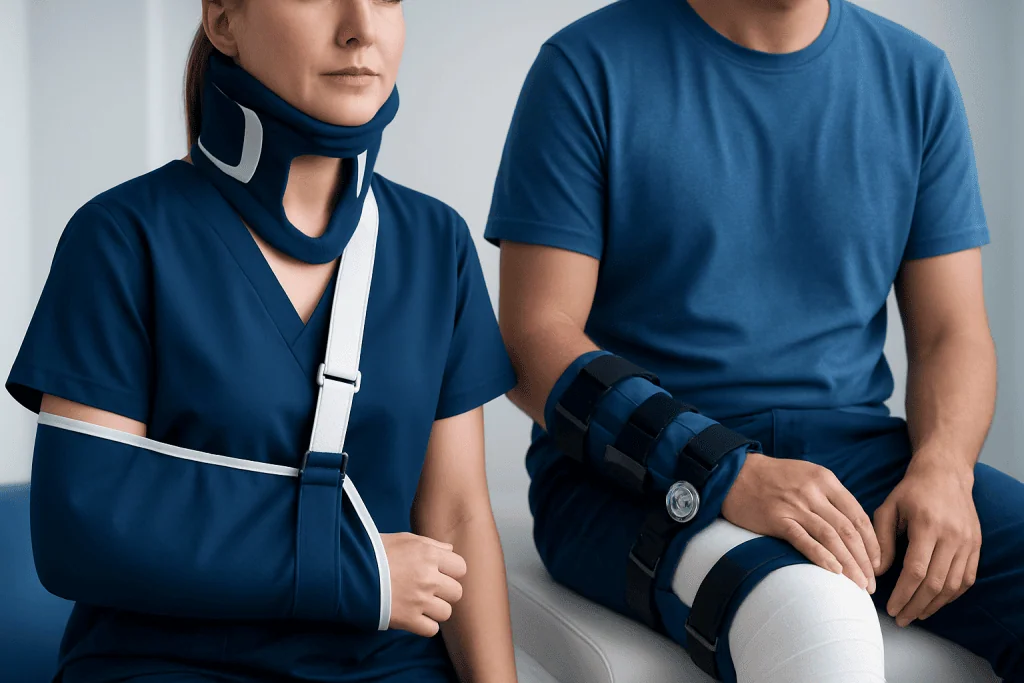
Bone healing requires stability. When a fracture is held in an appropriate position, the body can form new tissue across the break and gradually remodel it into stronger bone. A cast can reduce bending, twisting and impact at the injured area. In some fractures, this support is used after a clinician has realigned the bone, a process called reduction.
Soft tissues also benefit from protection. Ligaments, tendons and muscles may need a short period of controlled rest after injury or surgery. A functional brace can limit motions that strain healing tissue while permitting safe movement in other directions. This approach may help reduce stiffness and loss of muscle strength when it is medically appropriate.
Good brace evidence does not mean that one device is best for every injury. Research-informed care considers the type and location of the injury, imaging findings, swelling, skin condition, activity demands and the ability to attend follow-up. The care team accesses and applies evidence based practice for interventions with patients, while adapting the plan to individual clinical needs.
Who may need a brace or cast?
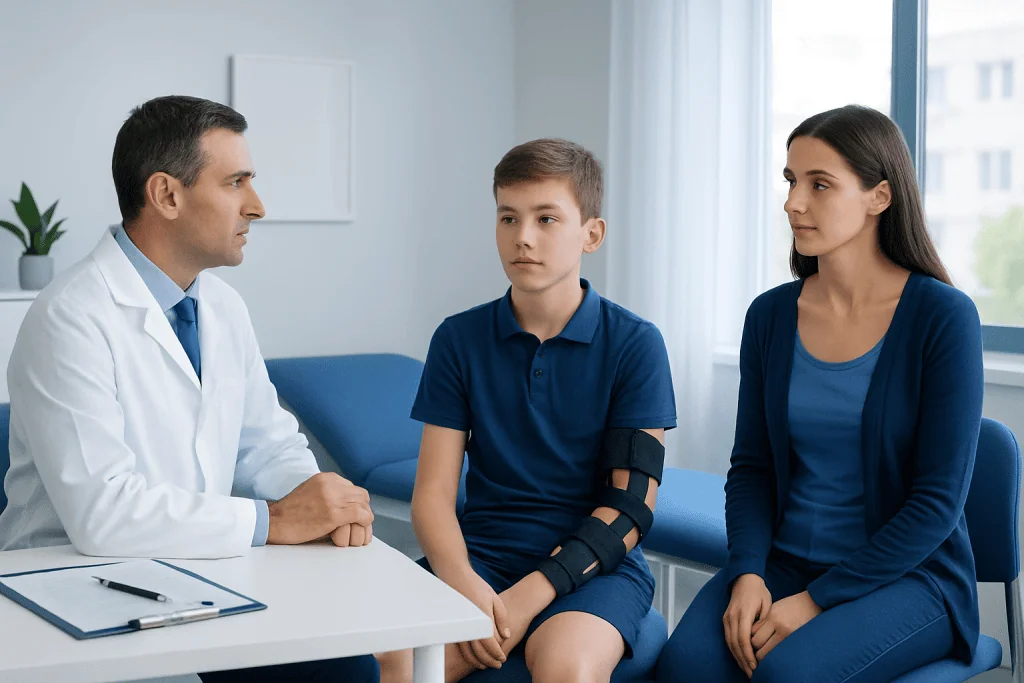
Braces and casts are commonly considered for stable fractures of the wrist, hand, forearm, ankle, foot or lower leg; certain childhood fractures; sports-related sprains; and recovery following orthopedic procedures. Some injuries need only a splint at first, particularly when swelling is expected. A splint supports part of the limb and can be loosened more easily than a full cast.
A cast may be appropriate when an injury needs more rigid protection or when keeping the bone in alignment is a priority. A brace may be suitable for selected stable injuries, later stages of healing, or rehabilitation after surgery. Some patients transition from a cast to a brace as symptoms improve and imaging confirms progress.
Not every fracture or joint injury can be managed with external support alone. Displaced, unstable, open or complex fractures may require urgent reduction, surgical fixation, or specialist treatment. For example, persistent wrist pain after a fall should be assessed because some injuries are related to scaphoid fractures, which may need specific imaging and management.
- Children, older adults and people with osteoporosis may need particularly careful assessment.
- Diabetes, reduced sensation, poor circulation or skin conditions can affect device choice and monitoring.
- People who smoke or use nicotine should discuss this with their clinician, as nicotine can interfere with bone healing.
Fitting process: what happens step by step
Before applying a brace or cast, a clinician examines the injury and checks circulation, sensation, skin condition and movement. X-rays are frequently used for suspected fractures, and other tests may be needed for injuries involving ligaments, tendons or cartilage. If a bone is out of position, it may need to be realigned before immobilization.
For a cast, the limb is positioned carefully. A soft protective layer is placed next to the skin, followed by padding. Plaster or fiberglass material is then wrapped around the limb and shaped to support the injured area. The material hardens over time. The clinician checks finger or toe color, warmth, sensation and movement before the patient leaves.
For a brace, the clinician selects the correct size and design, then adjusts straps, hinges or supports to achieve a secure but comfortable fit. The patient should be shown how to wear it, when it may be removed, and whether weight-bearing or specific movements are allowed. Instructions vary considerably, so advice from the treating team should take priority over general information.
During fitting, temporary discomfort from holding an injured area still can occur, but severe pain, tingling or a feeling that the device is too tight should be reported immediately. A well-fitting device should support the injury without compromising blood flow or causing persistent pressure on the skin.
Benefits, limitations and possible risks
The main benefit of a brace or cast is protection. By limiting unsafe motion, immobilization can relieve pain, help maintain alignment and create more favorable conditions for healing. Braces can be lighter and more adjustable than casts, and may support a carefully planned return to movement or activity.
However, immobilization also has limitations. Muscles can weaken and joints can become stiff when they are not used. Skin irritation, pressure sores, itching and swelling may occur. A cast can be inconvenient for bathing, work, travel and daily tasks, while a removable brace may be less protective if it is not worn as prescribed.
Rarely, a cast or brace may become too tight because of swelling. Warning signs include increasing pain not relieved by prescribed treatment, numbness, burning, pale or blue fingers or toes, inability to move them, or severe swelling beyond the device. These symptoms require urgent medical assessment because circulation or nerve function may be affected.
A device cannot correct every problem on its own. Follow-up examinations help confirm that healing is progressing and that the support remains appropriate. Clinicians may change the cast, adjust the brace, repeat imaging, or recommend rehabilitation depending on the injury and recovery stage.
Recovery timeline and everyday care
Recovery time varies with the bone or joint involved, the severity of injury, age, general health and whether surgery was needed. Some minor injuries improve over weeks, while complex fractures may take months to heal and regain full function. The treating clinician can provide the most useful timeline after reviewing the injury and follow-up imaging.
Patients should keep a cast clean and dry unless they have been given a specifically waterproof design and instructions for its use. They should not insert pens, rulers or other objects inside a cast to scratch itching, as this can injure the skin and raise infection risk. Cool air from a hair dryer may sometimes ease itching, but patients should avoid hot air, which can burn skin.
A brace should be worn exactly as directed. If removal is allowed, the skin should be checked for redness, blisters or rubbing. Straps should be snug but not overly tight. Patients should follow advice about bathing, driving, lifting, sports, work duties and weight-bearing; returning too soon can delay healing or cause reinjury.
Rehabilitation may begin while a brace or cast is still in use, depending on the injury. Simple exercises for unaffected joints may help maintain circulation and mobility. After immobilization ends, guided exercises or physical therapy can help restore range of motion, strength, balance and confidence in using the affected area.
When to seek medical care
Medical assessment is important after a significant fall, direct blow, twisting injury, or sudden pain with deformity, inability to use a limb, or difficulty bearing weight. Fractures are not always obvious, and an injury that looks like a sprain can sometimes involve a bone, tendon or joint surface.
Urgent care is needed for an open wound near a suspected fracture, a visibly deformed limb, uncontrolled bleeding, or a cold, pale, blue or numb hand or foot. People should also seek urgent advice if pain or swelling worsens substantially after a cast or brace is applied, or if fingers or toes cannot be moved normally.
Contact the treating team promptly if a cast cracks, softens, becomes wet, develops a foul smell, causes rubbing, or feels loose after swelling goes down. For a brace, persistent skin injury, loss of support, broken components or worsening symptoms should also be reviewed. Patients should not attempt to remove a cast at home unless a clinician has explicitly instructed them to do so.
Acibadem International’s multidisciplinary specialists and JCI-accredited hospitals diagnose and treat bone, joint and soft-tissue injuries for international patients, including assessment, immobilization and rehabilitation planning when needed.
Frequently asked questions
What is the difference between a brace and a cast?
A cast is rigid and usually stays in place continuously to provide strong immobilization. A brace is commonly adjustable or removable and may allow controlled movement. The best choice depends on the injury’s stability, location and stage of healing.
Can a brace replace a cast for a fracture?
For some stable fractures, a brace or boot may be an appropriate alternative to a cast. Other fractures need a cast, reduction or surgery to maintain alignment. A clinician should make this decision after examination and, usually, imaging.
How tight should a brace feel?
A brace should feel supportive and secure without causing numbness, tingling, color changes, increasing pain or marked swelling below it. Straps may need adjustment as swelling changes. Persistent discomfort or skin pressure should be assessed by the treating team.
What should a patient do if a cast gets wet?
The patient should contact the clinical team for advice, especially if the cast is plaster or becomes soft, cracked or uncomfortable. A wet cast can irritate skin and may no longer support the injury properly. It should not be dried with high heat or altered at home.
Is pain normal after a cast or brace is applied?
Mild soreness may occur after an injury and during the first period of immobilization. Pain that is rapidly worsening, severe, or accompanied by numbness, burning, pale or blue fingers or toes, or inability to move them needs urgent medical assessment.
When can someone return to sport after using a brace or cast?
Return to sport depends on healing, strength, range of motion, balance and the risk of reinjury in that activity. Feeling better does not always mean that tissue healing is complete. A clinician or rehabilitation professional should provide individualized clearance and a gradual return plan.
References
- American Academy of Orthopaedic Surgeons
- National Institute for Health and Care Excellence
- Centers for Disease Control and Prevention
- Mayo Clinic
- OrthoInfo
This article is for general information only and is not a substitute for professional medical advice. Please consult a qualified doctor about your individual situation.
Joint and spine care in Turkey — expert assessment & treatment
JCI-accredited · board-certified surgeons · reply within 24h
Add us as a Preferred Source to see more of our trusted health content across Google Search, AI Overviews and Discover.