Brain Disorders That Can Affect Sleep

Sleep depends on several brain regions that control alertness, breathing, movement, and sleep stages. Neurological conditions can cause insomnia, daytime sleepiness, REM sleep behavior changes, restless movements, or sleep-disordered breathing.
Key Takeaways
- Sleep depends on several brain regions that control alertness, breathing, movement, and sleep stages.
- Neurological conditions can cause insomnia, daytime sleepiness, REM sleep behavior changes, restless movements, or sleep-disordered breathing.
- Diagnosis often combines medical history, neurological assessment, sleep studies, and sometimes brain imaging or lab tests.
- Treatment focuses on the underlying brain disorder while also improving sleep quality and safety.
- New or worsening sleep symptoms, especially with neurological changes, should be assessed by a qualified doctor.
Brain disorders can interfere with the body’s sleep-wake system in many ways, leading to insomnia, excessive sleepiness, unusual movements, breathing problems, or changes in behavior during sleep. Understanding the neurological causes of sleep problems can help people seek the right evaluation and treatment.
Overview
Sleep is not a passive process. It is carefully organized by the brain through networks that regulate alertness, sleep timing, breathing, muscle tone, movement, and dreaming. When a neurological condition affects these networks, sleep can become lighter, shorter, fragmented, or unusually intense. Some people develop trouble falling asleep, while others feel overwhelmingly sleepy during the day or act out their dreams at night.
Brain disorders that can affect sleep include neurodegenerative diseases, stroke, epilepsy, traumatic brain injury, brain tumors, movement disorders, autonomic disorders, and conditions that affect the brainstem or hypothalamus. Sleep problems may appear early in a neurological illness, or they may develop later as the condition progresses. In some cases, sleep changes are among the first clues that something neurological is happening.
Because sleep and brain health influence each other, poor sleep can also worsen memory, mood, concentration, balance, and quality of life. Daytime fatigue may increase the risk of accidents, and disturbed sleep can place stress on families and caregivers. A patient-friendly, step-by-step evaluation can often identify the cause and guide effective treatment.
How the Brain Controls Sleep
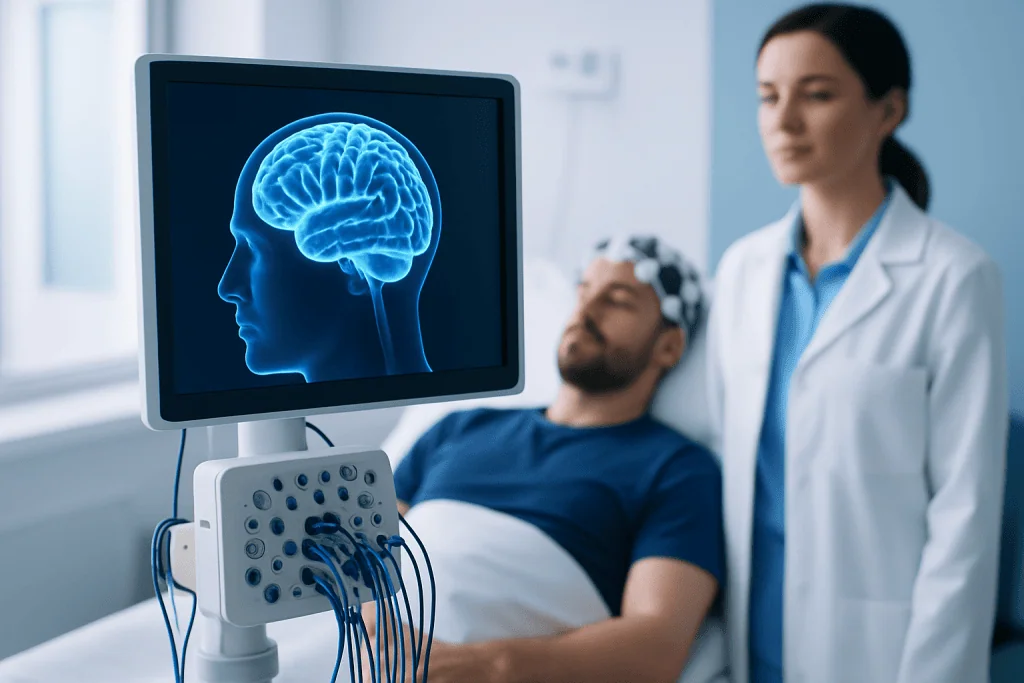
Several parts of the brain work together to control sleep. The hypothalamus helps regulate the body clock and the timing of sleep and wakefulness. The brainstem helps control breathing, muscle tone, and transitions between sleep stages. Deep brain structures and chemical messengers such as melatonin, orexin, dopamine, serotonin, and gamma-aminobutyric acid all contribute to healthy sleep.
When these systems are disrupted, different sleep problems can result. Damage to the brain’s alertness systems may cause excessive daytime sleepiness. Problems in areas that normally keep the body still during dreaming can lead to dream-enactment behaviors. Disorders affecting motor control may trigger repeated leg or body movements at night. Conditions involving the brainstem may alter breathing patterns during sleep.
This is why neurological sleep medicine often looks beyond “insomnia” alone. A person may have difficulty sleeping because of abnormal brain signaling, nighttime seizures, tremor, stiffness, pain, medications, mood changes, or disturbed breathing. Understanding which brain function is affected helps doctors match symptoms to the most likely cause.
Symptoms and Sleep Problems Linked to Brain Disorders

The sleep-related symptoms caused by brain disorders can vary widely. Some people notice classic insomnia, such as difficulty falling asleep, frequent awakenings, or waking earlier than expected. Others sleep for long periods but still feel unrefreshed or sleepy during the day. Family members may be the first to notice loud snoring, breathing pauses, unusual jerking, wandering, shouting, or acting out dreams.
Common sleep problems associated with neurological conditions include:
- Excessive daytime sleepiness or sudden sleep episodes
- Insomnia or fragmented sleep
- REM sleep behavior disorder, in which a person moves or speaks during vivid dreams
- Restless legs symptoms or periodic limb movements during sleep
- Sleep apnea, including central sleep apnea in some brain disorders
- Circadian rhythm problems, such as a delayed or irregular sleep schedule
- Parasomnias, including confusion, sleepwalking, or unusual nighttime behaviors
- Nocturnal seizures or episodes that mimic seizures
These symptoms may occur in conditions such as Parkinson’s disease, multiple system atrophy, dementia with Lewy bodies, Alzheimer’s disease, epilepsy, stroke, multiple sclerosis, traumatic brain injury, narcolepsy, and other disorders that affect the central nervous system. Some symptoms may overlap with Parkinson’s disease or other movement disorders, while others raise concern for disorders such as sleep apnea that may coexist with a neurological condition.
Causes and Risk Factors
Different brain disorders affect sleep through different mechanisms. Neurodegenerative diseases may disturb the circuits that regulate movement, dreaming, and wakefulness. Brainstem disorders can affect breathing and the transitions between sleep stages. Lesions involving the hypothalamus or nearby structures can disrupt circadian rhythm and hormone signaling. Epilepsy can cause nighttime events, awakenings, or poor sleep quality, while inadequate sleep may in turn make seizures more likely in some people.
Stroke and traumatic brain injury are also well-recognized causes of sleep-wake changes. After a stroke, a person may develop insomnia, sleep apnea, excessive sleepiness, or changes in the sleep schedule depending on the area of the brain involved. Head injury can affect attention, mood, headache patterns, and sleep regulation at the same time, making symptoms more complex. Brain tumors or increased pressure within the skull may also disrupt sleep directly or indirectly through pain, hormone changes, or treatment effects.
Risk factors are not limited to the neurological disease itself. Age, obesity, alcohol use, anxiety, depression, chronic pain, irregular schedules, and some medications can all worsen sleep problems. Sedatives, stimulants, antidepressants, dopaminergic drugs, anti-seizure medicines, and corticosteroids may alter sleep architecture or daytime alertness in certain individuals. This is one reason a careful medication review is an important part of assessment.
In many patients, more than one issue contributes at the same time. For example, a person with a movement disorder may have tremor, stiffness, medication timing issues, and coexisting restless legs syndrome. Looking at the full picture helps avoid missing a treatable cause.
How Doctors Diagnose the Problem
Diagnosis begins with a detailed history of sleep and neurological symptoms. Doctors often ask when the sleep problem started, whether it developed suddenly or gradually, and what happens during the night and the day. Information from a bed partner or caregiver can be very helpful, especially if the person snores, stops breathing, thrashes, talks, or has episodes they do not remember.
A physical and neurological examination may be followed by targeted tests. Many patients benefit from overnight sleep testing, such as polysomnography, which records brain waves, breathing, oxygen levels, heart rhythm, and movement during sleep. Depending on the symptoms, doctors may also use a multiple sleep latency test to assess daytime sleepiness, actigraphy to track sleep patterns over time, or a home sleep apnea test in selected cases.
Additional investigations may be needed to identify the underlying neurological cause. These can include blood tests, cognitive assessment, electroencephalography for possible seizures, and MRI when structural brain disease is suspected. If breathing-related events are prominent, evaluation by specialists in sleep apnea treatment may be appropriate. The goal is not only to name the sleep disorder, but also to understand why it is happening.
Treatment Options
Treatment depends on the specific sleep problem and the brain disorder behind it. In many cases, improving the neurological condition can help sleep, but direct sleep-focused treatment is also important. Doctors may adjust medications that worsen insomnia or daytime sleepiness, change treatment timing, or add therapies aimed at breathing, movement, circadian rhythm, or nighttime behaviors.
For sleep-disordered breathing, treatment may include weight management, positional measures, oral devices, or positive airway pressure therapy. If a person has dream-enactment behaviors, safety strategies for the bedroom are often combined with treatment of the underlying condition and careful medication review. Nocturnal seizures may require anti-seizure management, while severe daytime sleepiness may need structured scheduling and disorder-specific therapy. Selected patients may benefit from care pathways used in epilepsy treatment when nighttime events are seizure-related.
Behavioral approaches remain important even when a neurological illness is present. Good sleep habits, regular timing, daylight exposure, reduced caffeine late in the day, and treatment of mood symptoms can all improve sleep quality. Cognitive behavioral therapy for insomnia may be helpful for some patients and can sometimes reduce reliance on sleep medications.
Because treatment needs can be complex, a multidisciplinary approach is often useful. Neurologists, sleep specialists, respiratory specialists, psychiatrists, rehabilitation teams, and primary care doctors may all play a role. Near the end of the care journey, some international patients choose centers such as Acibadem International, where multidisciplinary specialists in JCI-accredited hospitals evaluate and treat neurological sleep problems.
Prevention, Self-care, and Everyday Safety
Not every neurological disorder can be prevented, but some steps can reduce the impact of sleep problems and support overall brain health. A regular sleep-wake schedule helps reinforce the body clock. Patients are usually advised to keep the bedroom dark and quiet, avoid heavy meals and alcohol close to bedtime, and limit screen exposure late in the evening when possible. Daily physical activity and daylight exposure may also support more stable sleep.
Self-care is especially important when a person has excessive sleepiness or unusual nighttime behaviors. If there is a risk of falling out of bed, acting out dreams, or wandering, simple safety measures can help, such as removing sharp objects, padding nearby furniture, and discussing bedroom setup with a clinician. People who become sleepy at the wheel or while operating machinery should stop those activities until they have been medically assessed.
Patients should also keep a list of symptoms, sleep patterns, and medications. A sleep diary or short video of unusual nighttime episodes can sometimes help doctors make a diagnosis. Managing blood pressure, diabetes, weight, and cardiovascular risk factors may also lower the risk of stroke and other conditions that can affect sleep and brain health.
When to See a Doctor
Medical assessment is important if sleep problems are persistent, worsening, or interfering with daily life. A doctor should also evaluate loud snoring with breathing pauses, sudden daytime sleep attacks, repeated nighttime choking, violent dream enactment, frequent limb movements, or episodes that could represent seizures. These symptoms are often treatable, and early evaluation may improve both safety and quality of life.
Urgent medical attention is needed if sleep changes occur together with new neurological symptoms such as weakness, facial drooping, confusion, severe headache, loss of consciousness, or a sudden change in speech, vision, balance, or behavior. These may point to a more serious underlying problem and should not be ignored.
Even when symptoms seem mild, they are worth discussing if they continue for several weeks or if family members are concerned. Sleep is closely tied to memory, mood, and physical health. A structured evaluation can help identify whether the issue is primarily a sleep disorder, a neurological disorder, or a combination of both.
Frequently asked questions
Can a brain disorder cause insomnia?
Yes. Brain disorders can interfere with the systems that control sleep timing, alertness, movement, and mood, all of which can contribute to insomnia. In some people, insomnia is caused directly by neurological changes, while in others it is worsened by pain, medications, anxiety, or nighttime symptoms.
Which neurological conditions are commonly linked to sleep problems?
Sleep problems are commonly seen in Parkinson’s disease, dementia, stroke, epilepsy, multiple sclerosis, traumatic brain injury, and disorders that affect the brainstem or hypothalamus. The pattern of symptoms can differ depending on which part of the nervous system is involved. A doctor can help sort out whether a sleep symptom is part of a neurological disorder, a separate sleep disorder, or both.
What is REM sleep behavior disorder?
REM sleep behavior disorder is a condition in which a person physically acts out dreams during REM sleep, sometimes by talking, shouting, punching, or kicking. It can occur on its own, but it may also be associated with certain neurodegenerative conditions. Because injury can occur, it should be evaluated by a sleep or neurology specialist.
Can sleep apnea be related to brain problems?
Yes. Some brain disorders can increase the risk of sleep apnea, and certain conditions affecting the brainstem may contribute to central sleep apnea. At the same time, obstructive sleep apnea is common in the general population and may coexist with neurological illness, so testing is often important.
How are neurological sleep disorders diagnosed?
Diagnosis usually starts with a detailed symptom history, medication review, and neurological examination. Doctors may recommend an overnight sleep study, brain wave testing, blood tests, or imaging depending on the symptoms. Input from a bed partner or caregiver is often very helpful.
Are these sleep problems treatable?
Many are treatable or can be improved. Treatment may include managing the underlying neurological condition, improving sleep habits, adjusting medications, treating breathing problems, or addressing nighttime behaviors and safety concerns. The best plan depends on the exact diagnosis.
References
- American Academy of Sleep Medicine
- National Institute of Neurological Disorders and Stroke
- National Institute on Aging
- Centers for Disease Control and Prevention
- Mayo Clinic
This article is for general information only and is not a substitute for professional medical advice. Please consult a qualified doctor about your individual situation.
Explore treatments in Turkey — costs, top hospitals & a free quote
JCI-accredited · board-certified surgeons · reply within 24h
Add us as a Preferred Source to see more of our trusted health content across Google Search, AI Overviews and Discover.

More from the Health Library



Related Specialists

Assoc. Prof. Dr. Semra Akkaya Turhan
Ophthalmology
Prof. Dr. Meriç Şengöz
Radiation Oncology
Assoc. Prof. Dr. Ahmet Yeşilyurt
Medical Genetics
Dr. Muhammed Taha Taş
Emergency Service