Brain Physiology Basics: How the Brain Sends Signals, Controls Movement, and Processes Sensation

The brain communicates through networks of neurons that use electrical impulses and chemical messengers. Movement depends on coordinated activity between the motor cortex, cerebellum, basal ganglia, brainstem, spinal cord, and muscles.
Key Takeaways
- The brain communicates through networks of neurons that use electrical impulses and chemical messengers.
- Movement depends on coordinated activity between the motor cortex, cerebellum, basal ganglia, brainstem, spinal cord, and muscles.
- Sensation begins in sensory receptors and is interpreted by the brain after signals travel through the nerves and spinal cord.
- Brain function relies on healthy blood flow, oxygen, sleep, nutrition, and protection from injury.
- Ongoing weakness, numbness, seizures, severe headaches, or sudden speech or balance problems need prompt medical assessment.
Brain physiology basics describe how the brain uses electrical and chemical signals to communicate with the body. These processes allow people to move, feel, think, and respond to the world in a coordinated way.
Overview: what brain physiology means
Brain physiology is the study of how the brain works. It focuses on the way brain cells communicate, how different regions of the brain cooperate, and how signals travel between the brain, spinal cord, nerves, and muscles. These processes make it possible to think, remember, move, feel temperature or pain, and react to the environment.
The brain is part of the central nervous system, together with the spinal cord. It receives information from the body, interprets that information, and sends instructions back out. Although these actions often feel effortless, they depend on a highly organized system of cells, pathways, and chemical messengers working continuously.
Brain physiology basics can help patients and families better understand symptoms such as weakness, numbness, tremor, balance changes, or sensory loss. Knowing the normal roles of the brain also makes it easier to understand why neurological conditions can affect movement, speech, sensation, behavior, and daily function in different ways.
How the brain sends signals
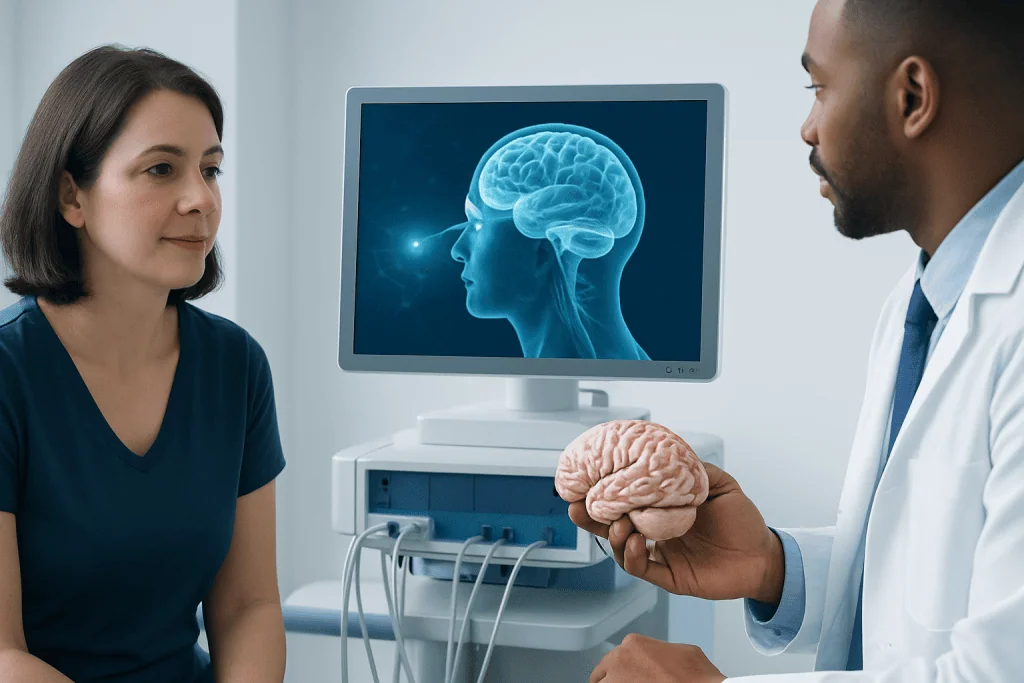
The basic working unit of the nervous system is the neuron, or nerve cell. Neurons receive information, process it, and pass it on to other cells. They do this through small electrical changes across their cell membranes. When a signal becomes strong enough, the neuron generates an electrical impulse called an action potential, which travels along the nerve fiber.
At the end of the neuron, the signal reaches a synapse, which is the tiny gap between one nerve cell and the next cell. Because the electrical signal cannot simply jump across this space, the neuron releases chemicals called neurotransmitters. These chemical messengers bind to receptors on the next cell and either encourage or reduce the chance that it will send its own signal.
Common neurotransmitters include glutamate, which usually excites nerve activity, and gamma-aminobutyric acid, or GABA, which usually calms it. Others, such as dopamine, serotonin, acetylcholine, and norepinephrine, help regulate movement, mood, attention, memory, and many body functions. Normal brain activity depends on a careful balance between excitation and inhibition.
Signals do not move randomly. They travel through organized pathways that connect specific brain regions with the spinal cord, sensory organs, muscles, and internal organs. Supporting cells called glial cells also play important roles by nourishing neurons, producing myelin to speed signal transmission, and helping maintain a stable environment for brain function.
How the brain controls movement
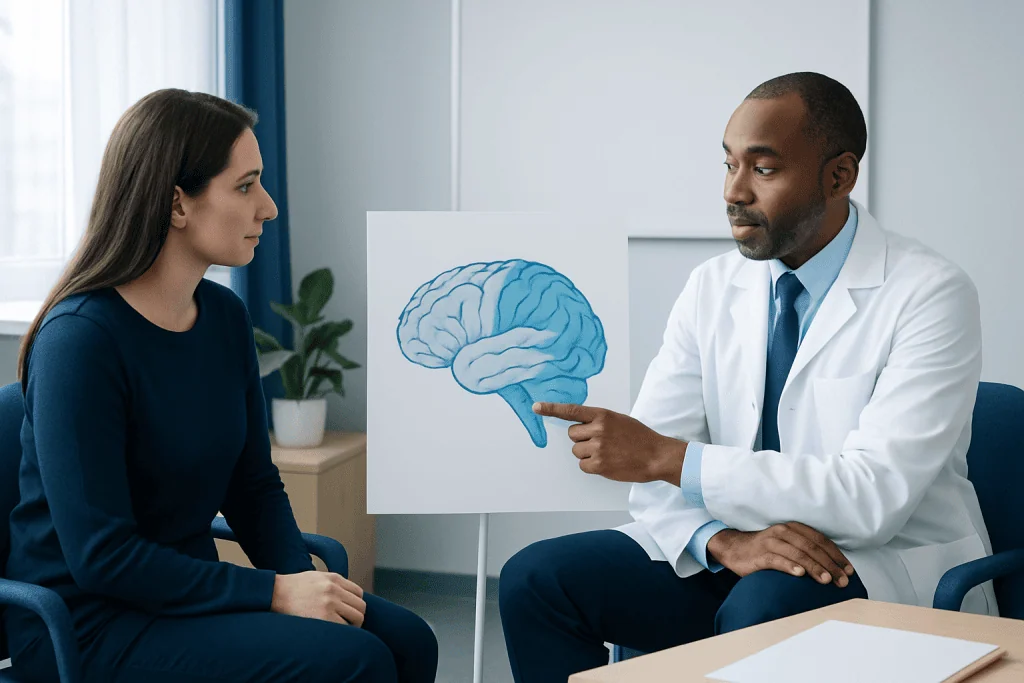
Movement begins with planning. Areas in the frontal lobe, especially the motor cortex and nearby premotor regions, help decide when and how a movement should happen. Once a movement plan is formed, signals travel down through the brainstem and spinal cord to activate the appropriate muscles.
Many other structures refine this process. The basal ganglia help start, stop, and smooth out movement, while the cerebellum helps coordinate timing, precision, posture, and balance. The brainstem supports muscle tone, eye movements, and basic posture control. The spinal cord acts as a relay station and also handles some automatic movement patterns and reflexes.
For a simple action such as reaching for a cup, the brain must combine several tasks at once. It must judge the cup’s position using vision, estimate arm location using proprioception, activate the correct muscles, and adjust grip strength based on touch feedback. This constant feedback loop helps movement stay accurate and adaptable.
When movement pathways are disrupted, symptoms may include weakness, slowness, stiffness, tremor, incoordination, or involuntary movements. Different patterns of symptoms can point to different parts of the nervous system. For example, cerebellar problems often affect balance and coordination, while damage to motor pathways may lead to weakness or spasticity.
How the brain processes sensation
Sensation begins outside the brain. Specialized sensory receptors in the skin, muscles, joints, eyes, ears, nose, and internal organs detect changes such as pressure, vibration, temperature, pain, light, or sound. These receptors convert physical stimuli into nerve signals that can travel through sensory nerves.
Most body sensations first pass through the spinal cord or brainstem and then travel upward to the thalamus, which acts as a major relay center. From there, signals are sent to the cerebral cortex, where they are consciously perceived and interpreted. The somatosensory cortex helps identify where a sensation is coming from and what it feels like.
The brain does more than receive sensory input; it organizes and gives meaning to it. Touch, temperature, and pain are compared with past experience, current attention, and other sensory information. This is why the same stimulus may feel different depending on context, such as stress, focus, or surrounding sounds and sights.
Sensory processing also supports movement and safety. Proprioception, the sense of body position, helps people know where their limbs are without looking. Pain and temperature signals help protect the body from harm. When sensory pathways are not working properly, a person may notice numbness, tingling, burning, reduced balance, or difficulty recognizing touch accurately.
Brain regions that work together
No single brain area works in isolation. The cerebrum supports higher thinking, language, voluntary movement, and conscious sensory perception. The cerebellum fine-tunes coordination and motor learning. The brainstem links the brain with the spinal cord and helps regulate breathing, heart rate, swallowing, alertness, and eye movement.
The thalamus relays sensory and motor information, while the hypothalamus helps regulate temperature, hunger, thirst, sleep, and hormone-related body functions. The limbic system contributes to emotion, motivation, and memory. White matter pathways connect these regions, allowing rapid communication across the nervous system.
The brain is also dynamic, not fixed. Through neuroplasticity, it can adapt by strengthening existing connections or creating new patterns of activity. This ability is important in learning, memory, and recovery after injury. Rehabilitation often relies on neuroplasticity to help patients improve function over time.
When one area is affected by disease or injury, symptoms can extend beyond a single task because networks are interconnected. For example, a problem that begins with movement may also affect balance, speech, or sensation. This network-based understanding is central to modern neurophysiology and neurology.
What supports healthy brain function
The brain needs a steady supply of oxygen and glucose from healthy blood flow. Even brief interruptions can affect function because nerve cells are highly active and have limited energy reserves. Good sleep, hydration, balanced nutrition, physical activity, and management of conditions such as high blood pressure or diabetes all help support normal brain physiology.
Myelin, the protective covering around many nerve fibers, helps signals travel quickly and efficiently. In conditions that damage myelin, nerve communication can slow down or become disrupted. Inflammation, infection, toxins, metabolic imbalance, and head injury can also interfere with normal signaling.
Protecting the brain from injury is important at every age. Seat belts, helmets, fall prevention, and sports safety reduce the risk of traumatic brain injury. Avoiding smoking, limiting alcohol, and discussing medication effects with a doctor can also help preserve neurological health.
Because brain function depends on many systems at once, symptoms sometimes reflect problems outside the brain itself, such as vitamin deficiencies, thyroid disease, sleep disorders, or circulation problems. A careful medical evaluation helps identify the true cause and guide the right care plan.
How doctors evaluate brain signaling, movement, and sensation
Doctors begin with a detailed history and neurological examination. They ask about the timing of symptoms, whether they came on suddenly or gradually, and what body functions are affected. The examination may assess strength, reflexes, coordination, gait, balance, sensation, eye movements, speech, and mental status.
Further testing depends on the suspected cause. Brain imaging such as MRI scans or computed tomography can help show structural changes. Tests that evaluate electrical activity, such as electroencephalography or nerve conduction studies, may be used when seizures, neuropathy, or other signaling disorders are possible. In some cases, blood tests or spinal fluid analysis are also helpful.
When symptoms suggest a specific neurological disorder, additional assessment may be needed to understand which pathways are involved. Conditions affecting movement, sensation, or nerve signaling can overlap, so diagnosis often combines clinical findings with targeted testing. Examples include disorders related to Parkinson's disease or multiple sclerosis.
Specialist care can be important when symptoms are persistent, unexplained, or progressive. In complex cases, multidisciplinary teams may include neurologists, neurosurgeons, neuroradiologists, rehabilitation physicians, physical therapists, and other experts working together to guide diagnosis and treatment.
Treatment, self-care, and when to seek medical advice
Treatment depends on the underlying reason brain signaling, movement, or sensation has changed. Some problems improve by treating a specific medical cause, such as infection, inflammation, vitamin deficiency, or medication effects. Others may require long-term management with rehabilitation, symptom-directed medicines, or procedures tailored to the diagnosis.
Rehabilitation is often a key part of care. Physical therapy and rehabilitation can help improve strength, balance, coordination, mobility, and confidence in daily activities. Occupational therapy, speech therapy, and cognitive support may also be recommended, depending on the affected brain functions.
Patients should seek prompt medical attention for sudden weakness, facial drooping, trouble speaking, vision loss, severe headache, confusion, new seizures, or loss of balance, as these may signal an urgent neurological problem. Ongoing numbness, tremor, memory change, chronic headaches, or gradual difficulty walking also deserve medical review, especially if symptoms interfere with daily life.
For international patients who need evaluation or treatment, Acibadem International’s multidisciplinary specialists and JCI-accredited hospitals provide care for a wide range of neurological conditions, including advanced assessment and, when needed, brain surgery. A qualified doctor can explain the most appropriate tests and treatment options for each individual situation.
Frequently asked questions
What is the main job of the brain?
The brain acts as the body's control center. It receives information, interprets it, and sends instructions that help regulate movement, sensation, thinking, memory, emotions, and automatic functions such as breathing.
How do brain cells communicate with each other?
Brain cells called neurons communicate through electrical impulses and chemical messengers. An electrical signal travels along the neuron, and neurotransmitters carry the message across synapses to the next cell.
How does the brain know where the body is in space?
The brain uses proprioception, a sensory system that detects the position of muscles and joints. It combines this information with visual and balance signals to guide posture and movement.
Why can a brain problem affect both movement and sensation?
Movement and sensation rely on connected pathways rather than completely separate systems. If one brain region or pathway is affected, the disruption can influence multiple functions at the same time.
Can the brain recover after injury?
In some cases, yes. The brain has a degree of neuroplasticity, which means it can adapt by reorganizing connections and developing new patterns of activity, especially with rehabilitation and time.
What symptoms suggest a neurological evaluation is needed?
Persistent numbness, weakness, tremor, balance problems, memory changes, seizures, or unexplained sensory loss should be assessed by a doctor. Sudden symptoms such as facial drooping, speech difficulty, or severe headache need urgent medical attention.
References
- World Health Organization
- National Institute of Neurological Disorders and Stroke
- National Institutes of Health
- MedlinePlus
- Merck Manual Consumer Version
This article is for general information only and is not a substitute for professional medical advice. Please consult a qualified doctor about your individual situation.
Joint and spine care in Turkey — expert assessment & treatment
JCI-accredited · board-certified surgeons · reply within 24h
Add us as a Preferred Source to see more of our trusted health content across Google Search, AI Overviews and Discover.