Broken Metacarpal Treatment: How It Works, Results and What to Expect

Many metacarpal fractures can heal without surgery when the bones remain acceptably aligned and stable. Rotation, significant displacement, multiple fractures, open injuries and joint involvement may make surgery more appropriate.
Key Takeaways
- Many metacarpal fractures can heal without surgery when the bones remain acceptably aligned and stable.
- Rotation, significant displacement, multiple fractures, open injuries and joint involvement may make surgery more appropriate.
- Treatment aims to preserve finger alignment, grip strength, movement and comfortable hand function.
- Bone healing often takes several weeks, but stiffness, strength and return to demanding activities can take longer.
- New numbness, a cold or pale finger, severe swelling, an open wound or worsening pain needs urgent medical assessment.
Broken metacarpal treatment is tailored to the location, alignment and stability of the fracture, as well as the person’s work, sport and hand-function needs. Many fractures heal with protection in a splint or cast, while displaced, rotated or unstable breaks may need a procedure to restore alignment.
Overview: How Broken Metacarpal Treatment Works
Broken metacarpal treatment protects the injured hand while the bone heals and, when needed, restores the bone to a position that supports normal finger movement and grip. The metacarpals are the five long bones in the palm, connecting the wrist to the finger bones. A fracture may occur after a fall, direct blow, twisting injury or sports accident; a break in the fifth metacarpal is sometimes called a boxer’s fracture.
The best approach depends on which metacarpal is broken, whether the pieces are displaced or rotated, whether the fracture extends into a joint, and whether there are associated tendon, nerve, blood-vessel or skin injuries. Clinicians also consider hand dominance, occupation, hobbies and sporting demands. The goal is not simply an X-ray that looks better, but a hand that can move, grip and perform daily tasks as comfortably as possible.
Stable fractures may be treated with a removable brace, splint or cast, followed by carefully timed hand exercises. If the bone is noticeably out of position, rotates a finger, cannot remain aligned in a splint, or is part of a more complex injury, reduction or surgical fixation may be advised. Hand surgery may be used to stabilize selected fractures and support a safe return to function.
Symptoms, Causes and How a Fracture Is Diagnosed
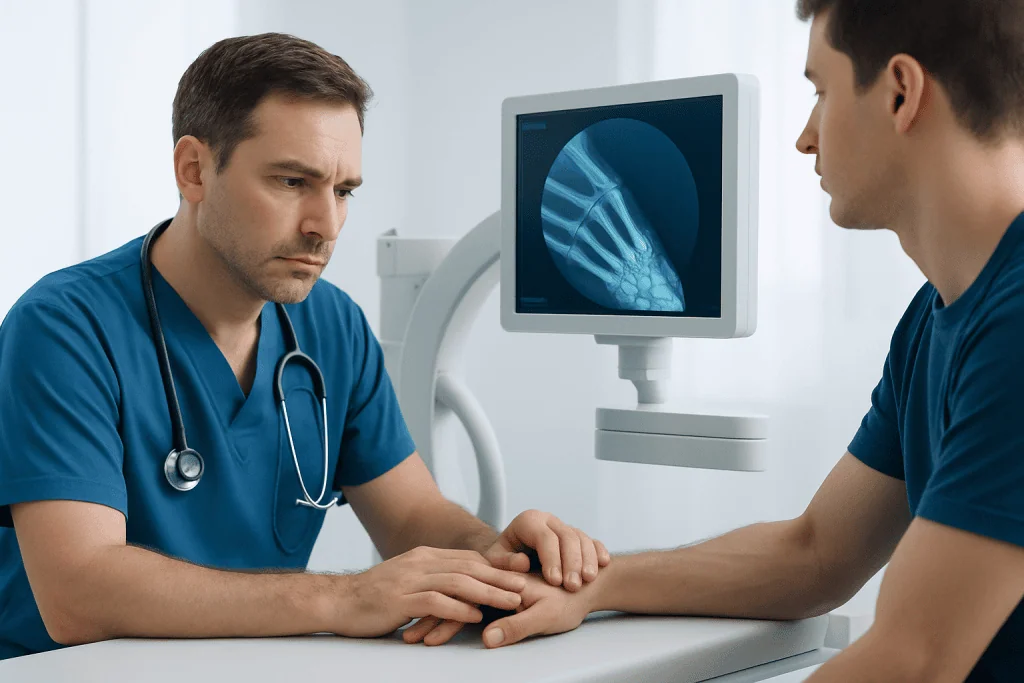
A broken metacarpal commonly causes pain in the palm or back of the hand, swelling, bruising and tenderness over the injured bone. There may be difficulty making a fist, reduced grip, or a visible change in the hand’s shape. A knuckle may appear less prominent, particularly after a fifth-metacarpal injury. Symptoms can overlap with a severe sprain or bruise, so an assessment is important after a significant injury.
Common causes include punching or a direct impact, falls onto the hand, road-traffic injuries, workplace trauma and sports injuries. Lower-energy injuries can occasionally occur when bone is weakened by a medical condition or certain medicines. An open fracture, where a wound communicates with the break, requires prompt care because of infection risk.
A clinician examines swelling, skin integrity, circulation, sensation and the motion of each finger. Finger rotation is particularly important: when a person gently bends the fingers, they should generally point toward the same area of the palm without crossing over. X-rays from more than one angle usually confirm the diagnosis and show the fracture pattern. CT imaging may be useful when joint involvement or a complex fracture is suspected. Related wrist or hand problems may also be assessed through hand and wrist pain evaluation when symptoms do not clearly match a simple fracture.
Is Metacarpal Fracture Serious?

A metacarpal fracture can be serious because the bones of the palm are essential for finger alignment, grip and coordinated hand movement. However, many isolated, closed and well-aligned fractures heal well with non-surgical care. Seriousness depends more on the pattern and consequences of the injury than on pain alone.
Features that need timely specialist assessment include a finger that crosses or twists over another when making a fist, marked deformity, several broken hand bones, an open wound, loss of feeling, color change in a finger, or injury involving a joint. Fractures near the base of the thumb or those affecting the joint surface may be less forgiving of poor alignment because they can affect pinch and movement.
Without appropriate alignment and follow-up, a fracture can heal in a position that causes persistent prominence, reduced motion, weakness, finger overlap or earlier joint wear. Early assessment gives the care team the best opportunity to choose appropriate protection or stabilization and to plan hand rehabilitation.
Treatment Candidacy and Step-by-Step Care
Non-surgical treatment is often suitable for a fracture that is closed, stable and acceptably aligned, without problematic rotation. The hand may be placed in a splint, cast or functional brace that protects the injured metacarpal while allowing appropriate movement of other joints. Follow-up examinations and X-rays may be arranged to make sure the fracture has not shifted as swelling settles and healing begins.
If alignment is not acceptable, a clinician may first perform a closed reduction. This means gently manipulating the bone into a better position, often after local or regional anesthesia, then applying a splint or cast. Reduction can sometimes avoid an operation, but the fracture must remain stable afterward.
Surgery may be considered for open fractures, major displacement or shortening, rotational deformity, unstable patterns, multiple metacarpal fractures, fractures involving a joint, or fractures that have shifted despite splinting. During fixation, an orthopedic or hand surgeon aligns the bone and may secure it with pins, screws, plates or other devices. The exact method is chosen according to the fracture and surrounding soft tissues; some devices are removed later, while others may remain in place.
After either pathway, guidance focuses on swelling control, skin and wound care where relevant, safe movement and follow-up. Hand therapy may be recommended to reduce stiffness and help restore dexterity, movement and strength. Physical therapy and rehabilitation can be adapted to the individual’s healing stage and daily demands.
Is Metacarpal Surgery Worth It?
Metacarpal surgery can be worthwhile when it is likely to improve alignment, prevent finger rotation, stabilize an injury that would otherwise shift, or support better long-term hand function. It is not automatically necessary for every displaced-looking fracture. Some fracture patterns tolerate a degree of angulation and can still provide good function with splinting and supervised rehabilitation.
The decision is individualized. A surgeon weighs the likely benefit of improved bone position against the risks of an operation, such as infection, stiffness, irritation from implants, scar sensitivity, anesthesia-related effects and, occasionally, a need for further treatment. The person’s dominant hand, job, sport, age, overall health and ability to attend follow-up may also matter.
People considering surgery should ask what functional problem the procedure is intended to prevent, what alternatives are reasonable, how the hand will be immobilized, and when exercises can begin. Surgery is generally most useful when it corrects a meaningful mechanical issue rather than solely changing the appearance of a knuckle.
How Painful Is a Broken Metacarpal?
Pain from a broken metacarpal varies considerably. It is often sharp at the time of injury, followed by aching, throbbing or tenderness that worsens with gripping, finger movement or pressure over the fracture. Swelling and bruising can make the hand feel tight and uncomfortable, especially during the first few days.
Pain intensity does not reliably show how severe or stable the fracture is. Some people have substantial pain with a relatively simple break, while others with a displaced fracture may initially feel less discomfort than expected. A clinical examination and imaging are therefore important when a fracture is possible.
Keeping the hand elevated, resting it, and using a properly fitted splint can reduce pain and swelling. A clinician or pharmacist can advise on appropriate pain relief based on the person’s health history and other medicines. Pain that suddenly worsens, feels out of proportion, or occurs with numbness, pale or blue fingers, or increasing tightness should be assessed urgently.
How Long Does It Take to Recover From a Metacarpal Fracture in the Hand?
Many metacarpal fractures show bone healing over roughly 4 to 8 weeks, although the exact timeframe depends on the fracture, treatment approach, age, smoking status, nutrition, medical conditions and whether complications develop. A clinician confirms healing using symptoms, examination and, when needed, repeat X-rays. It is important not to return to impact or heavy gripping solely because pain has improved.
Early recovery usually emphasizes protection and reducing swelling. Gentle movement of permitted joints may begin early to limit stiffness, but the schedule differs between fracture types and after surgery. As healing progresses, therapy may add range-of-motion, coordination and gradual strengthening exercises.
Everyday light activities may be possible before full recovery, but manual work, contact sports, racquet sports, lifting and activities with a fall risk generally require medical clearance. Strength and comfort can continue improving for weeks to months after the bone has united. Following the prescribed splinting and therapy plan helps reduce the risk of stiffness, delayed healing or reinjury.
At Acibadem International, multidisciplinary orthopedic, hand-surgery and rehabilitation specialists at JCI-accredited hospitals assess and treat hand fractures for international patients, with care plans based on the injury and functional goals.
When to Seek Medical Care
Medical assessment is recommended after a hand injury causing persistent pain, swelling, bruising, deformity, reduced ability to move the fingers, or pain when gripping. Even if the person can still move the hand, a fracture may be present. Avoid punching, lifting or attempting to straighten the hand at home while awaiting evaluation.
Urgent medical care is needed for an open wound near the injury, exposed bone, uncontrolled bleeding, a finger that is numb, cold, pale or blue, severe deformity, rapidly worsening swelling, or severe pain not relieved by immobilizing the hand. These features can indicate damage that needs prompt treatment.
Once treatment begins, follow-up should not be missed. A doctor should be contacted if a splint feels excessively tight or loose, pain or swelling is worsening, skin problems develop beneath the cast or brace, a fever occurs after surgery, or the fingers begin crossing when making a fist. Early review can help prevent avoidable complications.
Frequently asked questions
Can a broken metacarpal heal without surgery?
Yes. Many metacarpal fractures heal without surgery when they are stable, closed and aligned well enough to preserve finger function. A splint, cast or brace and scheduled follow-up are commonly used. Repeat imaging may be needed to confirm that the bone has not shifted.
Can a metacarpal fracture heal crooked?
A metacarpal can heal in a changed position if it is substantially displaced, rotated or not adequately protected. Some angulation may be acceptable depending on the bone involved, but finger rotation is usually more concerning because it can interfere with grip. A clinician can assess whether the position is likely to affect function.
When can someone drive after a metacarpal fracture?
Driving should wait until the person can safely control the vehicle, react quickly and use the hand without a restrictive cast or splint that impairs safe operation. Pain medicines that cause drowsiness also make driving unsafe. The treating clinician can provide guidance based on the injury and local requirements.
Will a broken metacarpal leave a permanent bump?
A change in knuckle shape or a small bony prominence can remain after some metacarpal fractures, especially near the neck of the fifth metacarpal. Appearance alone does not always mean function will be poor. Ongoing pain, finger crossing, weakness or reduced movement should be reviewed by a hand specialist.
What should be avoided during metacarpal fracture recovery?
The injured hand should avoid impact, punching, heavy lifting, forceful gripping and sports until a clinician confirms it is safe. The splint or cast should not be removed or altered unless instructed. Smoking or nicotine use can impair bone healing, so stopping is beneficial where possible.
Can fingers be moved with a metacarpal fracture?
Some finger movement may be encouraged, while other movement may need to be limited depending on the fracture and type of immobilization. Moving permitted joints can help reduce stiffness, but forcing painful movement can be harmful. The treating team should provide specific instructions for the individual injury.
References
- American Academy of Orthopaedic Surgeons
- American Society for Surgery of the Hand
- National Health Service
- Mayo Clinic
This article is for general information only and is not a substitute for professional medical advice. Please consult a qualified doctor about your individual situation.
Joint and spine care in Turkey — expert assessment & treatment
JCI-accredited · board-certified surgeons · reply within 24h
Add us as a Preferred Source to see more of our trusted health content across Google Search, AI Overviews and Discover.

More from the Health Library



Related Specialists

Dr. Faezeh Najafı
Inpatient Clinic Physicians
Yağız Meteoğlu
Physical Medicine & Rehabilitation
Prof. Dr. Tevfik Rıfkı Evrenkaya
Internal Medicine
Dr. Berkhan Savaşçın
General Surgery