Broken Tooth: A Complete Medical Overview

A broken tooth can be a small chip or a deeper fracture that affects the tooth root or nerve. Common signs include pain when biting, sensitivity to hot or cold, swelling, or a sharp edge in the mouth.
Key Takeaways
- A broken tooth can be a small chip or a deeper fracture that affects the tooth root or nerve.
- Common signs include pain when biting, sensitivity to hot or cold, swelling, or a sharp edge in the mouth.
- Treatment depends on the type of break and may include bonding, a filling, a crown, root canal treatment, or extraction.
- Quick first aid includes rinsing the mouth, controlling bleeding, saving any tooth fragment, and avoiding chewing on that side.
- A broken tooth should be assessed by a dentist promptly, especially if there is pain, swelling, bleeding, or visible deep damage.
A broken tooth is a crack, chip, or fracture in the tooth structure that can range from minor cosmetic damage to a painful injury involving the nerve. Prompt dental assessment helps relieve discomfort, preserve the tooth when possible, and reduce the risk of infection or further breakage.
Overview: what a broken tooth means
A broken tooth is any loss of normal tooth structure, including a small chip, a visible crack, a fractured cusp, or a larger break that exposes deeper layers of the tooth. Teeth are strong, but they can still be damaged by injury, biting hard foods, untreated decay, grinding, or older dental work that weakens the tooth over time.
Not every broken tooth causes severe pain. Some people notice only a rough edge or mild sensitivity, while others have sharp pain with chewing or temperature changes. The difference usually depends on how deep the damage goes and whether the inner pulp, which contains nerves and blood vessels, has been affected.
A broken tooth is best thought of as a structural problem rather than a single diagnosis. In practice, dentists look at the pattern of damage, the tooth involved, symptoms, and the health of the surrounding gums and bone before recommending treatment. This helps separate minor problems from more urgent injuries, such as a deep dental abscess or a fracture extending below the gumline.
Types and symptoms of a broken tooth
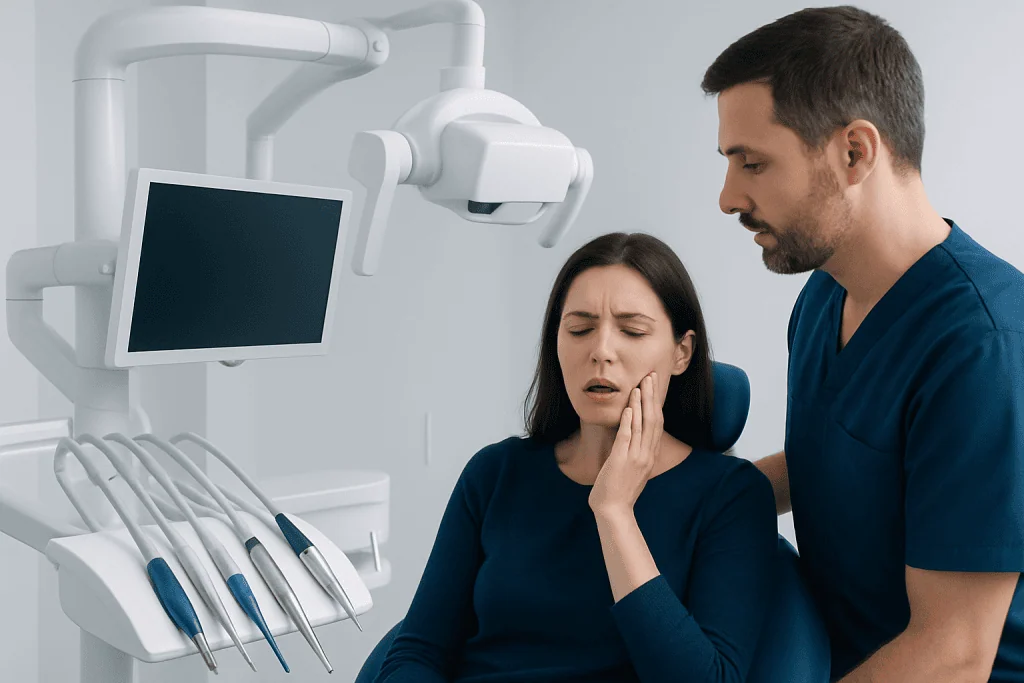
Broken teeth vary widely. A small chip may affect only the enamel, the hard outer layer. A larger fracture can involve dentin, the layer underneath, causing sensitivity. If the pulp is exposed or inflamed, pain may be stronger and more persistent. In some cases, the tooth splits vertically or develops a crack that is difficult to see but painful when biting.
Symptoms are not always constant. A person may feel discomfort only when releasing a bite, eating something sweet, or drinking something cold. If there is swelling, throbbing pain, or a bad taste in the mouth, infection may be developing. A very loose fragment of tooth or a tooth that feels unstable after trauma needs prompt evaluation.
- A visible chip, crack, or missing piece of tooth
- A sharp or rough edge rubbing the tongue or cheek
- Pain when chewing or biting down
- Sensitivity to hot, cold, or sweet foods
- Bleeding from the tooth area after an injury
- Swelling of the gum near the tooth
- Color change, such as a darkening tooth after trauma
Sometimes the damage is hidden. A cracked tooth can look normal from the outside, especially if the crack is fine or extends under a filling. For that reason, symptoms matter as much as appearance. Ongoing pain with chewing should not be ignored even if the tooth looks intact.
Causes and risk factors

Broken teeth often happen because of a sudden force, such as a fall, sports injury, or impact to the face. They can also occur more gradually when a tooth has already been weakened by decay, a large filling, repeated grinding, or age-related wear. Biting hard items like ice, popcorn kernels, nuts in shells, or hard candies is another common trigger.
People with untreated cavities are at higher risk because the tooth structure has already been thinned and weakened. Teeth that have had root canal treatment may also become more brittle over time if they are not well protected with a restoration such as a crown. Nighttime teeth grinding, known as bruxism, can create repeated pressure that leads to cracks.
Other factors include acidic erosion, habits such as chewing pens, previous dental trauma, and sudden temperature changes on already vulnerable teeth. In children, active play and sports can increase the chance of dental injuries. In adults, road accidents, contact sports, and falls are important causes. Some fractures may also appear around older restorations, particularly when a tooth is asked to handle more force than its remaining structure can support.
What to do right away and when to seek medical care
Immediate care can help protect the tooth and improve comfort until a dentist can assess it. The mouth should be rinsed gently with clean, lukewarm water to remove debris. If there is bleeding, light pressure with clean gauze can help. A cold compress on the outside of the face may reduce swelling after trauma. If a piece of tooth is found, it can be saved in a clean container and brought to the appointment.
Until the tooth is examined, it is sensible to avoid chewing on that side and to choose soft foods. Very hot, very cold, or sugary foods may worsen sensitivity. Over-the-counter pain relief may help for short-term comfort if it is appropriate for the person, but it does not replace evaluation. Sharp edges can sometimes be covered temporarily with sugar-free chewing gum or dental wax to protect the cheek or tongue.
Medical or dental care should be sought promptly if there is significant pain, swelling, bleeding that does not stop, fever, a loose adult tooth, trouble opening the mouth, or a fracture after a blow to the face. Urgent assessment is also important if the break exposes a red or bleeding center, if the tooth changes color after injury, or if there are signs of infection such as pus, a foul taste, or worsening gum swelling. Children with dental trauma should be assessed by a dental professional as soon as possible.
How a broken tooth is diagnosed
Diagnosis starts with a careful dental history and examination. The dentist will ask how the injury happened, whether pain occurs with biting or temperature, and whether the tooth had previous fillings, decay, or treatment. The tooth and surrounding gums are then inspected for visible cracks, mobility, bleeding, swelling, and tenderness.
Special tests may be used to understand the extent of the damage. The dentist may gently tap the tooth, test its response to cold, or ask the patient to bite on a specific instrument to pinpoint pain from a crack. Dental X-rays are commonly used to check the root, supporting bone, and any signs of infection, though very fine cracks do not always appear clearly on standard imaging.
In more complex cases, additional imaging or referral may be needed. The aim is not only to confirm that a tooth is broken, but also to determine whether it can be restored predictably and whether the nerve and surrounding tissues are healthy. This is especially important when a fracture extends beneath the gumline or when symptoms suggest deeper inflammation similar to a tooth decay complication.
Treatment options for a broken tooth
Treatment depends on how much of the tooth is damaged, whether the pulp is involved, and whether the fracture extends into the root. Small enamel chips may need only smoothing or cosmetic repair. If more structure is lost, the dentist may rebuild the tooth with a filling or composite bonding. This can restore shape, reduce sensitivity, and protect the area from further wear.
When a larger portion of the tooth is missing or weakened, a crown is often used to cover and support it. If the inner pulp has been exposed or permanently inflamed, root canal treatment may be recommended to remove damaged pulp and preserve the outer tooth structure. After this, the tooth is commonly restored with a crown for strength. In some situations, especially with extensive structural damage, dental crowns provide the most durable protection.
If a crack extends deep below the gumline, if the tooth is split, or if the root fracture is severe, saving the tooth may not be possible. In that situation, tooth extraction may be the safest option. Replacement choices can then be discussed, such as a bridge or dental implant, depending on the person’s oral health and preferences.
Treatment plans vary, and not every broken tooth needs the same approach. A tooth may also need monitoring over time because symptoms can change after injury. Dentists aim to relieve pain, prevent infection, restore function, and preserve natural teeth whenever it is realistic and safe to do so.
Recovery, prevention, and self-care
After treatment, mild sensitivity for a short period can be normal, especially after bonding, a filling, or crown preparation. Good oral hygiene supports healing and lowers the chance of infection. Brushing twice daily with fluoride toothpaste, cleaning between the teeth, and attending follow-up appointments are practical steps. If the dentist advises avoiding hard foods for a period, this should be followed closely to protect the repair.
Prevention focuses on reducing both sudden injury and gradual stress on teeth. A mouthguard can help protect teeth during contact sports. For people who grind their teeth at night, a professionally fitted night guard may reduce pressure and help prevent repeat fractures. Decay should be treated early, because weakened teeth are more likely to crack or break.
Daily habits matter as well. Avoiding chewing ice, hard sweets, and non-food objects lowers risk. People with repeated chips or unexplained cracks may benefit from a bite assessment, since uneven forces can overload certain teeth. Near the end of the care journey, some patients may seek coordinated dental and restorative evaluation at centers such as Acibadem International, where multidisciplinary specialists in JCI-accredited hospitals care for international patients.
Outlook and long-term considerations
The outlook for a broken tooth is often good when assessment and treatment happen early. Minor chips can usually be repaired easily, while many larger fractures can still be managed successfully with modern restorative care. The most important factors are the depth of the fracture, whether the nerve is involved, and how much healthy tooth structure remains.
Some teeth need long-term observation even after treatment. A cracked tooth can become more symptomatic over time, and a traumatized tooth may darken or develop delayed pulp damage months later. Follow-up allows a dentist to check healing, review bite forces, and detect any signs of infection or treatment failure early.
Patients should feel encouraged rather than alarmed. A broken tooth is common, and many treatment paths are available. Prompt professional care gives the best chance of preserving comfort, appearance, and normal chewing function.
Frequently asked questions
Is a broken tooth always an emergency?
Not every broken tooth is a medical emergency, but it should be assessed promptly by a dentist. Urgent care is more important if there is severe pain, swelling, bleeding, fever, or a loose adult tooth after trauma.
Can a broken tooth heal on its own?
Tooth enamel does not heal or grow back on its own, so a broken tooth will not truly repair itself. Small chips may not hurt, but even minor damage can worsen over time without dental evaluation.
What is the difference between a chipped tooth and a cracked tooth?
A chipped tooth usually means a small piece has broken off, often from the outer edge. A cracked tooth refers to a line or fracture in the tooth structure, which may be harder to see and can cause pain when biting.
What should a person avoid after breaking a tooth?
It is best to avoid chewing on the affected side and to stay away from hard, sticky, very hot, or very cold foods until the tooth is examined. This helps reduce pain and lowers the risk of making the fracture worse.
Can a dentist save a badly broken tooth?
Often yes, depending on how deep the break is and whether the root and supporting bone are still healthy. Treatments such as bonding, crowns, or root canal treatment can save many teeth, although some severe fractures require extraction.
Why does a broken tooth hurt only sometimes?
Pain may come and go because pressure from chewing can cause the broken parts of the tooth to move slightly. Sensitivity may also depend on whether the dentin or pulp is exposed to cold, heat, or sweet foods.
References
- American Dental Association
- National Institute of Dental and Craniofacial Research
- American Association of Endodontists
- Mayo Clinic
- World Health Organization
This article is for general information only and is not a substitute for professional medical advice. Please consult a qualified doctor about your individual situation.
Joint and spine care in Turkey — expert assessment & treatment
JCI-accredited · board-certified surgeons · reply within 24h
Add us as a Preferred Source to see more of our trusted health content across Google Search, AI Overviews and Discover.