

Bruising Easily: An Evidence-Based Guide for Patients

Many people bruise easily because tiny blood vessels break after minor trauma, especially as skin and supporting tissues become thinner with age. Blood thinners, aspirin, some supplements, and corticosteroids are common reasons for increased bruising.
Key Takeaways
- Many people bruise easily because tiny blood vessels break after minor trauma, especially as skin and supporting tissues become thinner with age.
- Blood thinners, aspirin, some supplements, and corticosteroids are common reasons for increased bruising.
- Easy bruising may also be linked to vitamin deficiencies, liver disease, inherited bleeding disorders, or low platelet levels.
- A doctor may diagnose the cause with a physical exam, medication review, and blood tests such as a complete blood count and clotting studies.
- Medical care is important if bruising is sudden, severe, unexplained, or happens with bleeding, fatigue, fever, or other concerning symptoms.
Bruising easily is common and often relates to aging skin, minor unnoticed bumps, or medicines that affect clotting. However, frequent, large, painful, or unexplained bruises can sometimes point to a vitamin deficiency, liver problem, platelet disorder, or another condition that needs medical evaluation.
Overview: What Bruising Easily Usually Means
Bruising easily means that marks appear on the skin after little or no remembered injury. In many cases, this happens because small blood vessels under the skin break more readily, especially in areas that are bumped often such as the arms and legs. For many people, the cause is not dangerous and may be related to skin changes with age, daily activities, or medicines that affect clotting.
A bruise forms when blood leaks from damaged vessels into nearby tissues. It may start out red or purple and then turn blue, green, yellow, or brown as the body clears the trapped blood. This color change is normal and usually happens over one to two weeks, although larger bruises may take longer to fade.
At the same time, easy bruising should not always be dismissed. If bruises are frequent, unusually large, painful, or appear in unexpected places such as the trunk without clear injury, a medical review may be needed. The pattern of bruising, any bleeding from the gums or nose, and a person’s medications and general health all help doctors decide whether further testing is necessary.
Common Symptoms and Bruise Patterns
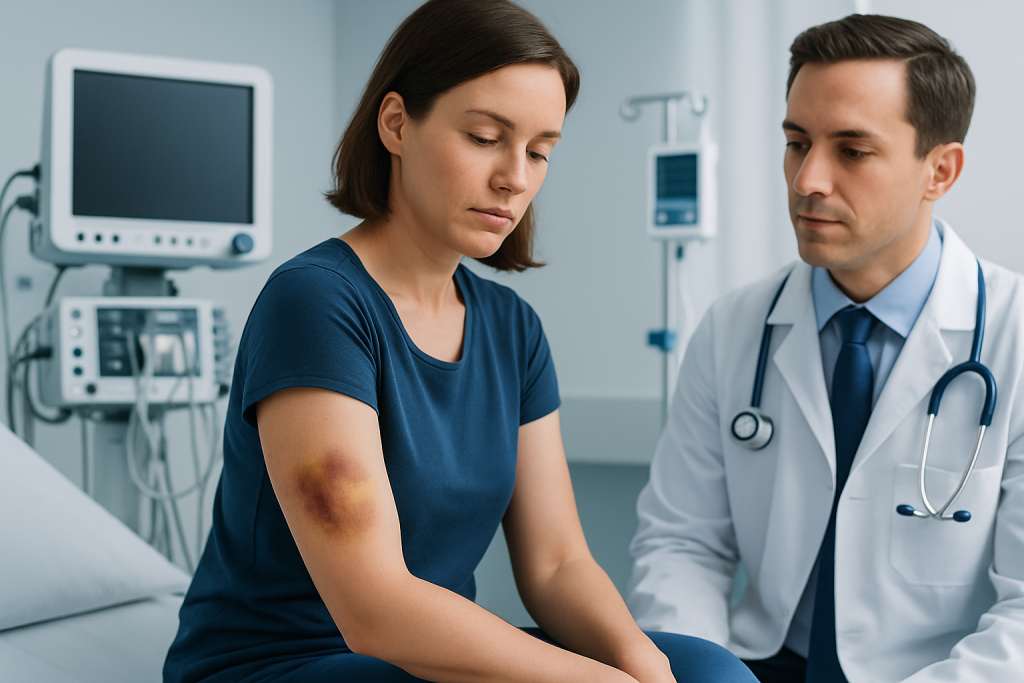
The main symptom is visible bruising after minor contact or without a remembered bump. A bruise may feel tender, swollen, or slightly firm at first, then gradually soften and fade. Some people notice that bruises appear more often after exercise, carrying bags, or everyday tasks that create pressure on the skin.
The location and appearance of bruises can offer clues. Bruises over bony areas such as the shins or forearms are common after minor knocks. In contrast, repeated bruises on the torso, very large bruises, or bruises that appear together with tiny red or purple dots on the skin may suggest a different problem involving platelets or clotting.
Symptoms that deserve special attention include:
- Bruises that are very large or keep increasing in size
- Frequent nosebleeds or bleeding gums
- Heavy menstrual bleeding
- Blood in urine or stool
- Joint swelling or deep muscle pain after minor injury
- Fatigue, fever, weight loss, or new weakness along with bruising
These symptoms do not always mean a serious illness, but they make it more important to seek medical advice rather than self-diagnosing the cause.
Why People Bruise Easily: Causes and Risk Factors

One of the most common reasons for bruising easily is normal aging. Over time, the skin becomes thinner and loses some of the fatty layer that cushions blood vessels. Sun damage can also weaken the skin and supportive tissues. As a result, capillaries may break after small bumps that might once have caused no visible mark.
Medicines are another frequent cause. Aspirin, anticoagulants, and some anti-inflammatory drugs can reduce blood clotting or increase bleeding after a minor injury. Long-term corticosteroid use can thin the skin and make bruising more noticeable. Some supplements, including fish oil, ginkgo, garlic, and vitamin E, may also contribute in certain people, especially when taken with blood-thinning medicines.
Nutritional and medical conditions can also play a role. Low levels of vitamin C or vitamin K may affect blood vessel strength or clotting. Liver disease can reduce the body’s ability to make clotting factors. Low platelet counts, platelet function problems, and inherited bleeding disorders such as hemophilia or von Willebrand disease can increase bruising as well. In some cases, doctors also consider problems such as leukemia or other blood disorders if bruising occurs with fatigue, infections, or unusual bleeding.
Risk factors that may make bruising more likely include older age, a family history of bleeding disorders, intense physical activity, heavy alcohol use, chronic liver disease, and use of multiple medicines that affect clotting. Women may also report easy bruising more often, partly because their skin and fat distribution can make bruises more visible after minor trauma.
How Doctors Evaluate Easy Bruising
Doctors begin by asking detailed questions about when the bruising started, where it appears, and whether there is any clear trigger. They usually ask about all prescription medicines, over-the-counter pain relievers, vitamins, herbal products, alcohol use, and any family history of excessive bleeding. This history is often one of the most important parts of the assessment.
A physical examination helps identify whether the marks are typical bruises or another type of skin change. The doctor may look for signs of anemia, liver disease, enlarged lymph nodes, or tiny pinpoint spots called petechiae. They may also ask whether there has been bleeding after dental work, surgery, childbirth, or injuries in the past.
If testing is needed, common blood tests include a complete blood count to check platelets and red blood cells, and clotting tests such as prothrombin time and activated partial thromboplastin time. Depending on the situation, a doctor may also order liver function tests, tests for vitamin deficiency, or more specialized studies for platelet disorders and inherited bleeding conditions. If a related blood disorder is suspected, further review by specialists in hematology care may be recommended.
Treatment Options and What Helps
Treatment depends on the cause rather than the bruise alone. If easy bruising is linked to medicines, a doctor may review whether the dose or type of medication should be changed. People should not stop anticoagulants, antiplatelet drugs, or steroids on their own, because these medicines may be essential for preventing serious complications.
If a nutritional deficiency is found, correcting the deficiency may reduce future bruising. If tests suggest a platelet or clotting disorder, treatment may involve monitoring, specialist care, or therapies targeted to the specific problem. When bruising is related to a broader medical issue such as liver disease or a blood condition, treating the underlying illness is the main step.
Most simple bruises heal without any special treatment. A cool compress during the first day, elevating the area when practical, and avoiding repeated pressure on the bruise may help discomfort. For people with a diagnosed bleeding tendency, doctors may also recommend planning ahead before procedures or operations and coordinating care with specialists, including check-up and screening services when ongoing evaluation is needed.
Near the end of the care pathway, some patients benefit from multidisciplinary review, especially if bruising is part of a complex blood or liver problem. Acibadem International’s multidisciplinary specialists and JCI-accredited hospitals evaluate and treat international patients with conditions that may cause easy bruising.
Prevention and Self-Care
Not every bruise can be prevented, but simple steps can reduce how often they happen. Wearing protective clothing during physical activity, improving home lighting, removing tripping hazards, and using handrails can help prevent minor injuries. Older adults in particular may benefit from fall-prevention measures and regular vision checks.
It is also sensible to review medicines and supplements with a doctor or pharmacist, especially if bruising has become more noticeable after starting a new product. This review should include nonprescription pain relievers and herbal supplements. People should never make changes to blood thinners without medical advice.
General health habits matter as well. Eating a balanced diet with adequate vitamin-rich foods, limiting alcohol if advised, and managing chronic conditions can support normal healing and clotting. If bruising is accompanied by frequent fatigue or other symptoms, a broader medical review may help identify issues such as anemia or related conditions, and doctors may consider further internal medicine evaluation when appropriate.
When to Seek Medical Care
A person should arrange medical evaluation if bruising starts suddenly, becomes more frequent, or appears without a clear reason. Medical advice is also important if bruises are very large, occur in unusual places, or are associated with bleeding from the gums, frequent nosebleeds, heavy periods, or blood in urine or stool. Even when the cause turns out to be mild, assessment can help rule out more important problems.
Urgent care is needed after significant injury, especially if there is severe pain, swelling, a suspected fracture, head injury, or a rapidly expanding bruise. Emergency assessment is also appropriate if bruising occurs together with confusion, weakness, difficulty breathing, or signs of major blood loss.
For children, older adults, and anyone taking anticoagulants, new or unexplained bruising deserves particular attention. A qualified doctor can decide whether simple observation is enough or whether blood tests and specialist review are the safest next steps.
Frequently asked questions
Is bruising easily always a sign of a serious illness?
No. Many people bruise easily because of aging skin, minor unnoticed injuries, or medicines that affect clotting. However, frequent or unexplained bruising should be checked if it is new, severe, or happens with other bleeding symptoms.
Can vitamins cause or prevent easy bruising?
Low levels of certain vitamins, especially vitamin C or vitamin K, can contribute to bruising in some people. At the same time, supplements are not the right solution for everyone, so it is best to discuss symptoms and any products with a doctor before starting them.
Do blood thinners always make bruises dangerous?
Blood thinners commonly make bruises appear more easily or look larger. Most small bruises are not dangerous, but any large, painful, rapidly growing, or unexplained bruise should be reviewed, especially after a fall or head injury.
How long should a normal bruise last?
Many bruises improve over one to two weeks, changing color as they heal. Larger bruises may take longer. If a bruise does not improve, keeps getting bigger, or remains very painful, medical advice is recommended.
What tests are done for unexplained bruising?
Doctors often start with a medical history, medication review, and physical exam. Common blood tests include a complete blood count and clotting studies, with additional tests based on the person’s symptoms and risk factors.
Should someone stop aspirin or anticoagulants if bruising increases?
No, not without medical advice. These medicines may be essential for preventing stroke, clots, or other complications. A doctor can decide whether the bruising is an expected side effect or whether the treatment plan needs adjustment.
References
- National Heart, Lung, and Blood Institute
- Centers for Disease Control and Prevention
- MedlinePlus
- Mayo Clinic
- American Society of Hematology
This article is for general information only and is not a substitute for professional medical advice. Please consult a qualified doctor about your individual situation.
Explore treatments in Turkey — costs, top hospitals & a free quote
JCI-accredited · board-certified surgeons · reply within 24h
Add us as a Preferred Source to see more of our trusted health content across Google Search, AI Overviews and Discover.

More from the Health Library



Related Specialists

Assoc. Prof. Dr. Serdar Baylançiçek
Otorhinolaryngology
Dt. Selen Burçak Şimşek
Oral & Dental Health
Dr. Ulaankhuu Batgerel
Cardiology
Prof. Dr. Taner Güneş
Orthopedic Surgery & Traumatology