

Bruising in stomach area: Symptoms, Causes, and Treatment — Complete Patient Guide

Most abdominal bruises are caused by minor trauma and improve over 1 to 2 weeks. A bruise that appears without injury, keeps returning, or is accompanied by swelling or severe pain needs medical attention.
Key Takeaways
- Most abdominal bruises are caused by minor trauma and improve over 1 to 2 weeks.
- A bruise that appears without injury, keeps returning, or is accompanied by swelling or severe pain needs medical attention.
- Blood-thinning medicines, bleeding disorders, liver disease, and intense exercise can increase the chance of bruising.
- Doctors may use a physical exam, blood tests, and imaging if they suspect deeper tissue or organ injury.
- Simple self-care includes rest, cold packs in the first 24 to 48 hours, and avoiding further pressure on the area.
Bruising in stomach area usually happens when small blood vessels under the skin break after pressure, bumping, strain, or medical treatment such as injections. While many bruises are harmless and fade on their own, unexplained, severe, spreading, or painful abdominal bruising can sometimes point to a deeper injury or an underlying health problem that should be checked by a doctor.
Overview: what bruising in stomach area can mean
Bruising in stomach area means blood has leaked from tiny blood vessels into the skin or soft tissues of the abdomen. This creates a mark that may look red, blue, purple, brown, or yellow as it heals. In many cases, the cause is straightforward, such as bumping into an object, pressure from a seatbelt, exercise strain, or an injection into the abdominal wall.
The abdomen is a broad area with skin, fat, muscles, blood vessels, and internal organs underneath. Because of this, not every abdominal bruise is the same. Some are limited to the surface of the skin and are mild. Others may suggest a deeper muscle injury, bleeding under the skin, or less commonly, a problem involving the organs inside the abdomen.
One helpful way to think about abdominal bruising is to consider the context. A small bruise after a known knock or after blood-thinning injections is often less concerning than a large bruise that appears suddenly without any obvious reason. Pain level, swelling, spread of discoloration, and other symptoms such as dizziness or abdominal tenderness all help doctors decide how serious the situation may be.
Because bruising can overlap with skin, blood, digestive, or injury-related conditions, persistent or unusual abdominal bruising should not be self-diagnosed. If symptoms are ongoing or unclear, a doctor can assess whether this is a simple soft tissue bruise or something needing further testing.
Symptoms and how a stomach-area bruise may look and feel
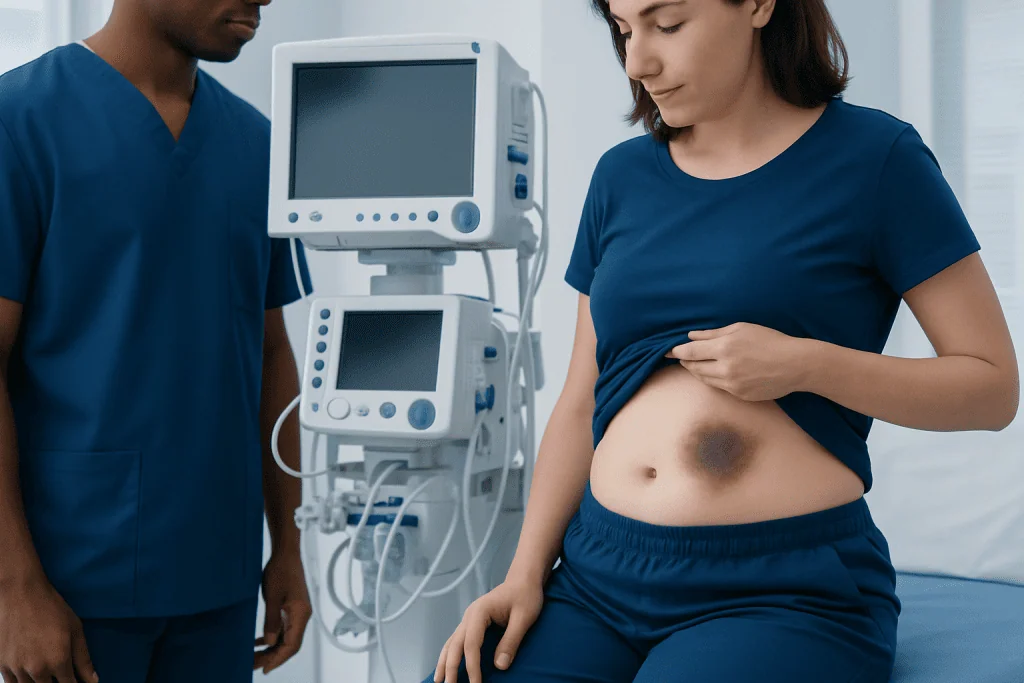
A typical bruise on the abdomen changes color over time. It may begin as red or purple, then become blue, green, or yellow-brown before fading. The area can feel sore when pressed, slightly swollen, or firm if there is a small collection of blood under the skin. Mild bruises often improve gradually over several days.
Some people notice tenderness when moving, coughing, laughing, or tightening the abdominal muscles. This may happen when the bruise involves the abdominal wall muscles rather than only the skin. After strenuous exercise, a person may also feel a pulling sensation or localized pain along with the discoloration.
Certain features can suggest that the bruise deserves closer attention. These include a bruise that is very large, rapidly spreading, unusually dark, or associated with significant swelling. Other warning signs include severe abdominal pain, vomiting, weakness, fainting, shortness of breath, fever, blood in the stool or urine, or new bruises elsewhere on the body.
- Common mild symptoms: localized discoloration, tenderness, mild swelling
- Possible deeper soft tissue injury: pain with movement, firmness, worsening soreness
- Concerning associated symptoms: dizziness, severe pain, fainting, bleeding from other sites
Common causes and risk factors
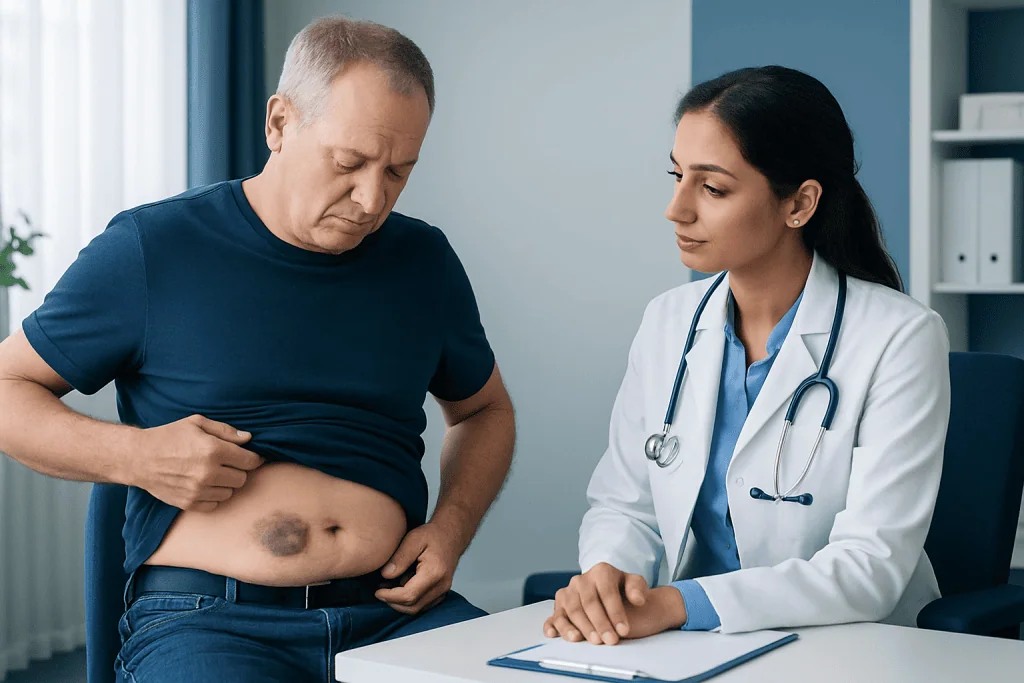
The most common cause of bruising in stomach area is minor trauma. This includes bumping into furniture, contact during sports, pressure from tight objects, falls, or a seatbelt injury after sudden braking or a collision. Even if the impact seems minor at the time, a bruise can become more visible over the next 24 hours.
Another frequent cause is medical treatment or routine care. Injections such as insulin or blood thinners can leave small bruises, especially if a small vessel is nicked. Recent surgery, endoscopic procedures, or abdominal strain from exercise may also lead to bruising. In some cases, severe coughing or repetitive twisting can injure a muscle and cause a bruise in the abdominal wall.
Some people bruise more easily because their blood does not clot as readily or their blood vessels are more fragile. Risk factors include older age, blood-thinning medicines, aspirin or certain anti-inflammatory drugs, long-term corticosteroid use, low platelet counts, inherited bleeding disorders, liver disease, heavy alcohol use, and poor nutrition. Skin and soft tissues can also become more delicate over time.
Less commonly, unexplained abdominal bruising can be related to a medical condition rather than an injury. This may include problems such as hemophilia, platelet disorders, severe vitamin deficiencies, or liver-related clotting problems. Rarely, abdominal bruising may appear with inflammation, infection, or internal bleeding, which is why unexplained cases should be assessed carefully.
When bruising may point to something more serious
Most bruises are superficial, but doctors pay special attention when bruising appears after a significant impact or when it comes with internal symptoms. A bruise after a car accident, a hard fall, or a direct blow to the abdomen may be associated with injury to muscles, deeper blood vessels, or abdominal organs. In these situations, the skin mark can be only one part of the picture.
Bruising without a known cause is another reason for caution. If a person regularly develops bruises on the abdomen or elsewhere, or if bruises are unusually large after minor contact, a bleeding or clotting issue may need to be ruled out. At times, abdominal wall bleeding can create a painful lump or swelling, especially in people taking anticoagulant medicine.
Doctors may also consider related digestive or abdominal conditions when evaluating symptoms. For example, if bruising is accompanied by persistent abdominal pain, bloating, or changes in bowel habits, the doctor may look for other causes of symptoms and not assume the bruise itself is the only issue. Depending on the pattern, the evaluation may overlap with conditions affecting the abdomen such as hernia or other structural problems.
A practical rule is that bruising becomes more concerning when there is no clear explanation, when it worsens instead of improving, or when it is paired with signs of significant illness or injury. Prompt assessment helps identify whether the problem is simply skin-deep or related to a deeper cause.
How doctors diagnose abdominal bruising
Diagnosis starts with a medical history and physical examination. A doctor will ask when the bruise appeared, whether there was an injury, what medicines are being taken, and whether there are symptoms such as pain, swelling, weakness, bleeding gums, nosebleeds, or easy bruising in other places. The timing and pattern often provide important clues.
During the examination, the doctor checks the size, color, tenderness, and location of the bruise and looks for signs of deeper tissue injury. They may gently feel the abdomen for swelling, muscle tightness, masses, or tenderness. If the bruise is associated with significant trauma, the doctor may also assess for signs of internal injury.
Blood tests can be useful when bruising is unexplained or frequent. These may include a complete blood count, platelet count, and clotting tests to evaluate how well the blood is forming clots. Additional tests may be needed if liver disease, vitamin deficiency, or a bleeding disorder is suspected.
Imaging is not always necessary, but it may be recommended if there is severe pain, a large hematoma, ongoing swelling, or concern about internal injury. Depending on the situation, this can involve ultrasonography to examine soft tissues or a CT scan if doctors need a more detailed look at the abdominal wall and internal organs.
Treatment options and what recovery usually involves
Treatment depends on the cause, size, and severity of the bruise. For a simple superficial bruise, care is usually conservative. Resting the area, avoiding repeated pressure, and applying a cold pack for short periods during the first 24 to 48 hours can help reduce discomfort and swelling. After the early phase, gentle activity is often fine if it does not worsen symptoms.
Pain relief may be recommended, but the best choice depends on the person’s health history and current medicines. People who take anticoagulants or have bleeding concerns should ask a doctor before using over-the-counter medicines. If bruising follows injections, rotating injection sites and using correct technique may reduce recurrence.
When the bruise involves a larger collection of blood, a muscle tear, or ongoing bleeding, treatment may need closer supervision. A doctor may advise monitoring, follow-up imaging, adjusting medicines that affect clotting, or treatment of an underlying disorder. If a bruise is related to a bleeding condition, care may involve a hematology evaluation and targeted therapy rather than simple home care alone.
If abdominal symptoms suggest another issue, treatment may also be directed at the underlying problem. In selected cases, the workup may include endoscopy or other specialist assessment if digestive symptoms are present and the bruise is not the full explanation for abdominal discomfort.
Self-care, prevention, and healing timeline
Most mild bruises heal gradually over 1 to 2 weeks, although larger bruises can last longer. The color usually changes as the body reabsorbs the blood. During recovery, it is helpful to protect the area from further impact and avoid activities that trigger sharp pain. Gentle movement is generally acceptable, but strenuous abdominal exercise should wait until tenderness improves.
Prevention focuses on reducing injury and addressing factors that make bruising more likely. Wearing protective gear for sports, using proper exercise technique, and taking care with household hazards can lower the risk of accidental knocks. People who self-inject medication may benefit from reviewing injection technique with a clinician if bruising happens often.
If bruising is recurrent, it is worth reviewing medicines and supplements with a doctor. Some products can affect clotting or increase skin fragility. Good nutrition also matters, since the body relies on vitamins and protein to maintain healthy blood vessels and normal healing.
Near the end of the care pathway, some patients may benefit from coordinated input from general practitioners, hematology, gastroenterology, radiology, or surgery depending on the cause. Acibadem International’s multidisciplinary specialists and JCI-accredited hospitals diagnose and treat abdominal and bleeding-related conditions for international patients when specialist evaluation is needed.
When to seek medical care
Medical care is advisable if bruising in stomach area appears without a clear injury, keeps coming back, becomes larger, or does not start improving after several days. A doctor should also assess bruising that occurs while taking blood thinners, after surgery, or along with easy bleeding from the gums or nose.
Urgent assessment is important if the bruise follows a significant accident or direct blow to the abdomen. Immediate medical attention is also recommended if there is severe abdominal pain, dizziness, fainting, rapid swelling, trouble breathing, vomiting, fever, or blood in the urine or stool. These symptoms may suggest a deeper injury or ongoing bleeding.
Parents should seek medical advice for unexplained abdominal bruising in children, especially if it is recurrent or associated with lethargy, abdominal pain, or bruises in multiple areas. In pregnancy, new abdominal bruising should also be discussed with a healthcare professional, particularly if there has been trauma or any abdominal pain.
When symptoms are uncertain, it is safer to ask for medical guidance rather than assume the bruise is harmless. Early evaluation can provide reassurance when the cause is minor and help identify problems promptly when treatment is needed.
Frequently asked questions
Is bruising in stomach area always serious?
No. Many cases are caused by minor trauma, exercise strain, or injections and improve on their own. It becomes more concerning if the bruise is unexplained, very painful, rapidly enlarging, or associated with dizziness, severe abdominal symptoms, or bleeding elsewhere.
How long does an abdominal bruise usually last?
A mild abdominal bruise often fades over 1 to 2 weeks. Larger bruises or deeper soft tissue injuries can take longer. If the color and tenderness are not gradually improving, a doctor should assess it.
Can exercise cause a bruise on the abdomen?
Yes. Intense abdominal workouts, twisting movements, or heavy strain can sometimes injure abdominal wall muscles or small blood vessels, leading to bruising. If pain is significant or the bruise appears suddenly without direct impact, medical advice is sensible.
Why do I have abdominal bruising without remembering an injury?
Some bruises happen after small bumps that are easy to forget, especially if a person bruises easily. Medicines such as blood thinners, low platelets, bleeding disorders, liver disease, or fragile blood vessels can also make unexplained bruising more likely.
Should a person worry about bruising while taking blood thinners?
Small bruises can be more common while taking anticoagulants or similar medicines. However, a large, painful, spreading, or spontaneous bruise should be reported to a doctor, especially if there is weakness, dizziness, or bleeding from other sites.
What helps a stomach-area bruise heal?
Rest, protecting the area, and using a cold pack in the first 24 to 48 hours can help reduce discomfort and swelling. Avoiding repeated pressure and returning gradually to normal activity may also support healing. Persistent pain or swelling should be checked medically.
References
- National Institutes of Health
- MedlinePlus
- Mayo Clinic
- Cleveland Clinic
- American Society of Hematology
This article is for general information only and is not a substitute for professional medical advice. Please consult a qualified doctor about your individual situation.
Persistent digestive symptoms? Get evaluated in Turkey
JCI-accredited · board-certified surgeons · reply within 24h
Add us as a Preferred Source to see more of our trusted health content across Google Search, AI Overviews and Discover.

More from the Health Library



Related Specialists

Prof. Dr. Kazım Üzüm
Pediatric Cardiology
Prof. Dr. Sezgin Sarban
Orthopedic Surgery & Traumatology
Dr. Gansukh Bataa
Anesthesiology
Dr. Semra Mehmetoğlu
Pediatrics