Bucket Handle Meniscus Tear: An Evidence-Based Guide for Patients

A bucket handle meniscus tear is a displaced tear of the meniscus that may cause knee locking, catching, pain, and swelling. It commonly happens after twisting injuries, especially during sports, but it can also occur with degeneration in older adults.
Key Takeaways
- A bucket handle meniscus tear is a displaced tear of the meniscus that may cause knee locking, catching, pain, and swelling.
- It commonly happens after twisting injuries, especially during sports, but it can also occur with degeneration in older adults.
- Diagnosis usually combines a physical examination with MRI to confirm the tear pattern and look for associated ligament injury.
- Some cases can be managed conservatively, but many displaced tears are evaluated for arthroscopic repair or partial meniscectomy.
- Early medical review is important if the knee is locked, unstable, very swollen, or cannot fully straighten.
A bucket handle meniscus tear is a specific type of knee cartilage injury in which a torn fragment flips inward, sometimes causing the knee to lock or catch. It often needs timely medical assessment because the displaced tissue can interfere with normal knee movement and may require either structured rehabilitation or surgery, depending on the tear pattern and the person’s activity needs.
What is a bucket handle meniscus tear?
A bucket handle meniscus tear is a type of meniscus injury in which a long central portion of the torn cartilage becomes displaced into the middle of the knee joint. The meniscus is a C-shaped pad of cartilage that helps cushion the knee, distribute load, and improve joint stability. When the torn fragment flips inward, it can block normal movement and lead to a classic “locked knee.”
This tear most often affects the medial meniscus, which sits on the inner side of the knee, although it can also involve the lateral meniscus. Compared with smaller or more stable meniscal tears, a bucket handle meniscus tear is more likely to cause mechanical symptoms such as catching, clicking, or being unable to fully bend or straighten the knee.
For patients, the main practical point is that this is not just any meniscus tear. Because the torn piece may be displaced, symptoms can be more sudden and disruptive, and treatment decisions often depend on whether the fragment can be preserved and repaired. In some people, this injury appears alongside other knee problems, especially knee ligament injuries such as an ACL tear.
Symptoms and how it may feel day to day
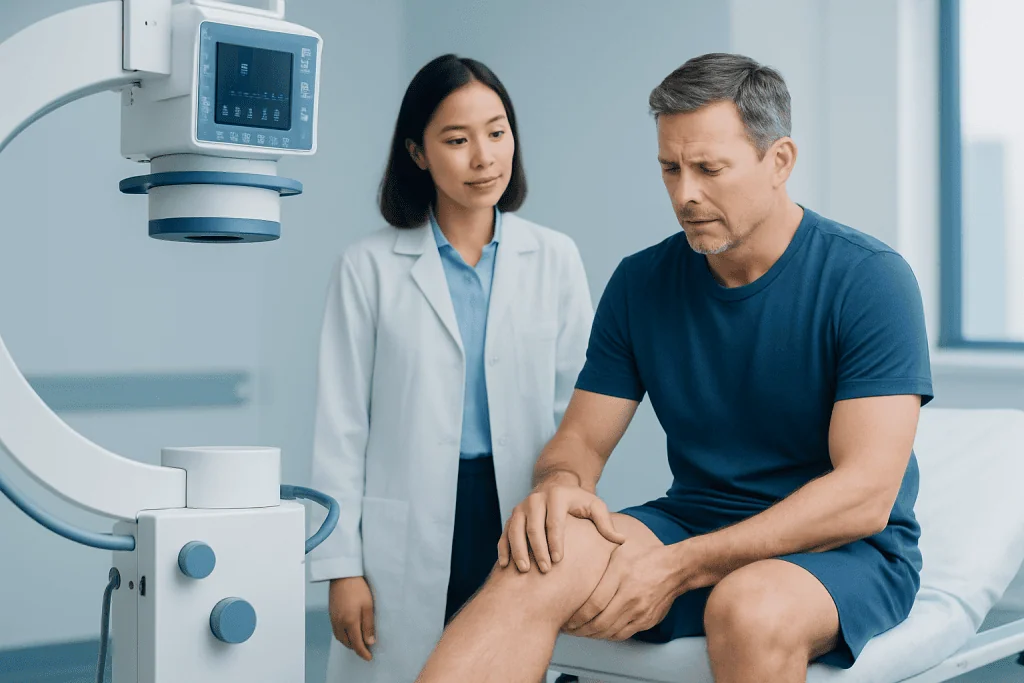
The symptoms of a bucket handle meniscus tear can begin suddenly after a twist, pivot, deep squat, or awkward landing. Some people feel a pop at the time of injury, followed by pain along the joint line, swelling over the next several hours, and difficulty putting full weight on the leg. Others notice that the knee feels unstable or as if something is stuck inside it.
A key feature is mechanical blockage. The knee may catch during movement or seem to lock in a partly bent position, making it hard or impossible to fully extend the leg. This can interfere with ordinary activities such as walking, climbing stairs, getting out of a car, or standing up from a chair.
Symptoms vary depending on the size and location of the tear and whether there are related injuries. Common symptoms include:
- Pain along the inner or outer side of the knee
- Swelling or stiffness
- Clicking, catching, or locking
- Reduced range of motion
- A feeling that the knee may give way
- Difficulty squatting, kneeling, or twisting
Not every person with a meniscus tear has a true locked knee, and not every locked knee is caused by a meniscus injury. Still, when the knee suddenly cannot fully straighten after a twisting injury, it is sensible to seek medical attention promptly.
Causes and risk factors
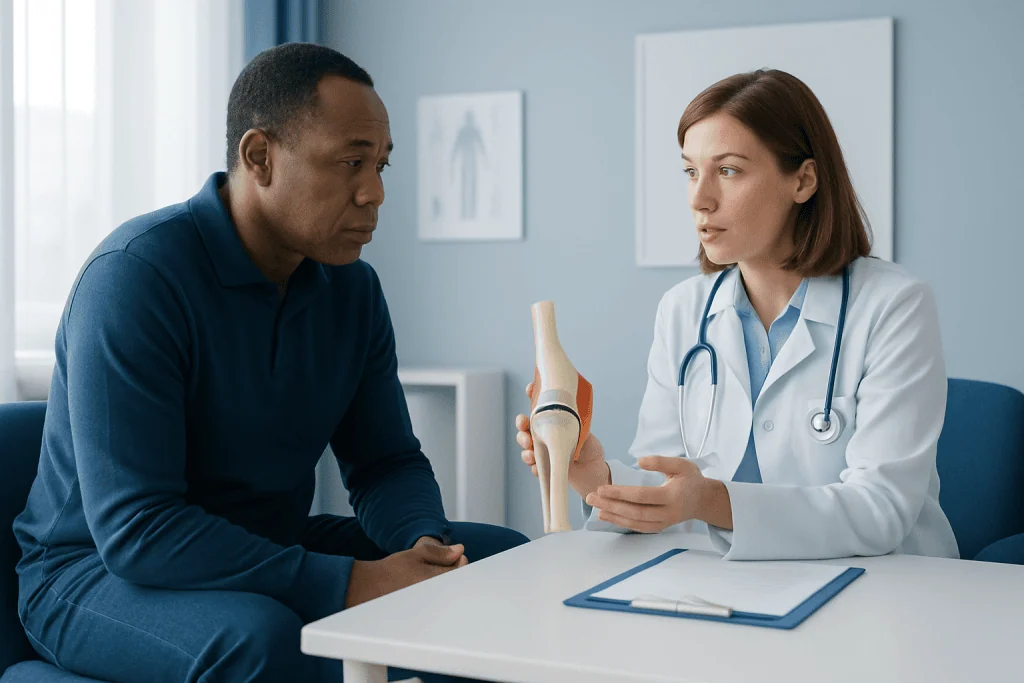
This injury usually happens when the knee twists while the foot is planted. It is common in sports that involve pivoting, sudden direction changes, tackling, or jumping, such as football, basketball, skiing, and tennis. A forceful squat or kneeling movement can also stress the meniscus, especially if the knee is already vulnerable.
Younger and more active adults are more likely to develop bucket handle tears from trauma, while older adults may have meniscal tissue that has become less resilient over time. In these cases, a relatively minor movement may trigger a tear in a meniscus that has already undergone degenerative change.
Several factors can increase risk:
- Participation in pivoting or contact sports
- Previous knee injury or surgery
- Associated ACL injury or knee instability
- Repetitive deep squatting or kneeling
- Age-related wear of the meniscal cartilage
- Reduced strength or poor movement mechanics around the knee and hip
Because the meniscus has areas with different blood supply, the exact location of the tear matters. Tears closer to the outer rim may have a better chance of healing after repair, while tears in the inner portion are less likely to heal well on their own.
How doctors diagnose it
Diagnosis starts with a careful history and physical examination. A doctor will ask how the injury happened, whether the knee locked, and how symptoms have changed over time. During the exam, they check swelling, range of motion, tenderness along the joint line, and signs that another structure, such as the ACL, may also be injured.
Physical examination maneuvers can suggest a meniscus tear, but imaging is often helpful to define the exact pattern. X-rays do not show the meniscus itself, but they may be used to rule out fracture, alignment issues, or arthritis. MRI is the most commonly used test to confirm a bucket handle meniscus tear and to assess whether the torn fragment is displaced.
Prompt imaging may be especially useful if the knee is locked or if surgery is being considered. MRI can also help identify other injuries that influence treatment planning, such as cartilage damage or ligament tears. In some situations, diagnosis is ultimately confirmed during arthroscopy, a minimally invasive procedure that lets the surgeon examine the inside of the knee directly.
Accurate diagnosis matters because treatment for a stable, smaller meniscal tear may be quite different from treatment for a displaced bucket handle tear. The goal is not only to relieve symptoms, but also to protect long-term knee function when possible.
Treatment options: from rest to surgery
Treatment depends on the person’s age, activity level, symptoms, tear location, whether the knee is locked, and whether there are associated injuries. Initial care often includes relative rest, ice, compression, elevation, and short-term activity modification. A clinician may advise crutches for comfort and to reduce strain while the knee is painful or swollen.
Some people with meniscal injuries improve with nonoperative treatment, especially if symptoms are settling and the tear is not causing persistent mechanical blockage. Conservative care may include pain relief strategies, guided exercises, and physical therapy and rehabilitation to restore motion, strength, and confidence in the joint.
However, bucket handle tears are frequently assessed for surgery because the displaced fragment can interfere with movement. When possible, surgeons often try to preserve the meniscus by repairing it, especially in younger patients and in tears located in a better-vascularized area. Repair aims to keep as much meniscal tissue as possible because the meniscus plays an important protective role in the knee.
If the tear cannot be repaired, the damaged unstable portion may be trimmed during knee surgery using arthroscopic techniques. The best approach is individualized. A patient with a locked knee, a displaced fragment, or a combined injury such as ACL tear may need more urgent orthopedic evaluation than someone whose symptoms are mild and steadily improving.
Recovery, rehabilitation, and self-care
Recovery time varies widely. It depends on whether treatment is nonoperative or surgical, whether the meniscus was repaired or partly removed, and whether there are other injuries. In general, recovery after a meniscus repair tends to be slower than after partial meniscectomy because the tissue needs time to heal and may require restrictions on weight-bearing or knee flexion early on.
Rehabilitation is a central part of recovery. The focus is usually on reducing swelling, restoring extension and flexion, strengthening the quadriceps and surrounding muscles, improving balance, and gradually returning to daily activities and sports. A structured plan helps reduce stiffness and supports safer return to movement.
Self-care strategies commonly include:
- Following the clinician’s advice on rest, bracing, and crutch use
- Using ice to help with swelling and discomfort
- Doing prescribed exercises consistently, but not pushing through sharp pain
- Avoiding twisting, deep squats, and impact activity until cleared
- Returning to sport gradually rather than all at once
Patients should keep in mind that symptom relief does not always mean the knee is ready for unrestricted activity. Returning too quickly can increase the risk of reinjury. If ongoing pain, swelling, or loss of motion persists, the rehabilitation plan may need to be adjusted.
When to seek medical care
Medical evaluation is important if a knee injury is followed by severe pain, rapid swelling, inability to bear weight, or a feeling that the knee is unstable. It is especially important to seek care if the knee is locked and cannot fully straighten, because a displaced meniscal fragment may be blocking movement.
Patients should also seek assessment if symptoms do not improve after several days of rest, if swelling repeatedly returns with activity, or if there is persistent catching or clicking. A doctor can help determine whether the problem is a meniscus tear, ligament injury, cartilage injury, or another cause of knee pain.
Urgent care is appropriate after a major injury, obvious deformity, numbness, fever, or inability to move the joint at all. For international patients who need specialist evaluation, Acibadem International’s multidisciplinary teams at JCI-accredited hospitals diagnose and treat knee conditions with orthopedic, imaging, and rehabilitation support.
Frequently asked questions
Is a bucket handle meniscus tear serious?
It can be more significant than some other meniscus tears because a torn fragment may flip into the joint and block normal movement. Many cases are treatable, but a locked knee or ongoing catching usually deserves prompt orthopedic assessment.
Can a bucket handle meniscus tear heal without surgery?
Some meniscal injuries can improve with conservative care, but bucket handle tears are often evaluated for surgery because the fragment is displaced. Whether nonsurgical treatment is reasonable depends on symptoms, tear location, knee stability, and imaging findings.
What does a locked knee mean?
A locked knee means the joint cannot fully bend or straighten, often because something inside the knee is mechanically blocking movement. In a bucket handle meniscus tear, the displaced cartilage fragment can act like a wedge inside the joint.
How is this injury different from a regular meniscus tear?
A bucket handle tear is a specific tear pattern in which a longer inner fragment becomes displaced. This makes mechanical symptoms such as locking and catching more likely than with many smaller, stable meniscal tears.
Will MRI always show a bucket handle meniscus tear?
MRI is very useful and commonly helps confirm the diagnosis, but interpretation still depends on image quality and clinical context. In some cases, the final assessment is made during arthroscopic evaluation if symptoms and examination strongly suggest a displaced tear.
How long does recovery take after treatment?
Recovery varies from person to person and depends on the type of treatment and whether other knee structures are injured. Rehabilitation after meniscus repair usually takes longer than recovery after trimming part of the meniscus, because the repaired tissue needs time to heal.
References
- American Academy of Orthopaedic Surgeons
- National Institute of Arthritis and Musculoskeletal and Skin Diseases
- American Orthopaedic Society for Sports Medicine
- OrthoInfo
- National Health Service
This article is for general information only and is not a substitute for professional medical advice. Please consult a qualified doctor about your individual situation.
Joint and spine care in Turkey — expert assessment & treatment
JCI-accredited · board-certified surgeons · reply within 24h
Add us as a Preferred Source to see more of our trusted health content across Google Search, AI Overviews and Discover.

More from the Health Library



Related Specialists

Prof. Dr. Ahmet Onur Odabaşı
Ear Nose & Throat
Prof. Dr. Hatem Hakan Selçuk
Interventional Neuroradiology
Dr. Hafsa Hicret Bülbül Göktaş
Neurology
Dr. Mohammad Sevimli
Anesthesiology