Bump on Eyeball: What Patients Need to Know

A bump on eyeball can arise from the conjunctiva, cornea, or the tissue around the eye. Common causes include pinguecula, pterygium, cysts, irritation, allergy, or inflammation.
Key Takeaways
- A bump on eyeball can arise from the conjunctiva, cornea, or the tissue around the eye.
- Common causes include pinguecula, pterygium, cysts, irritation, allergy, or inflammation.
- Pain, redness, discharge, light sensitivity, or blurred vision can suggest a problem that needs medical evaluation.
- Doctors diagnose most eye bumps with a detailed history and a slit-lamp eye examination.
- Treatment depends on the cause and may range from lubricating drops to medicines or minor procedures.
A bump on eyeball is commonly caused by a benign surface growth, irritation, or inflammation. While many eye bumps are not dangerous, persistent pain, vision changes, or a rapidly growing lesion should be assessed by an eye doctor.
Overview: What a bump on eyeball usually means
A bump on eyeball usually refers to a visible raised spot on the clear or white surface of the eye. In many cases, it is caused by a noncancerous change such as a small deposit, surface growth, cyst, or area of irritation. Some bumps stay stable for years, while others become more noticeable with dryness, sun exposure, or inflammation.
Patients often use the phrase “bump on eyeball” for several different problems. The bump may actually be on the conjunctiva, the thin membrane covering the white part of the eye, or near the edge of the cornea, the clear front window of the eye. Less often, it may be related to infection, trauma, or a growth that needs closer evaluation.
Because the eye is delicate, the main concern is not only what the bump looks like, but whether it affects comfort or vision. A bump that causes redness, pain, tearing, a foreign-body sensation, or visual change deserves more attention than one that is small and symptom-free.
What kinds of bumps can appear on the eye surface?
Several common conditions can look like a bump on eyeball. A pinguecula is a yellowish, slightly raised area on the white of the eye, often closer to the nose. It is linked to dryness, wind, dust, and ultraviolet exposure. A pterygium is a wedge-shaped growth of tissue that can extend from the white of the eye toward the cornea. Patients sometimes recognize it as a fleshy or prominent surface growth; more information about pterygium may help explain its appearance and treatment.
Another possibility is a conjunctival cyst, which is a small fluid-filled sac on the eye surface. These cysts may look clear or translucent and can cause the sensation that something is in the eye. Inflamed tissue from allergies or chronic irritation can also create a localized raised area, especially when accompanied by itching or watering.
Less commonly, a bump may reflect an inflamed nodule, scar tissue, a deposit from long-term irritation, or a lesion that requires specialist review. A lump on the eyelid margin may also be mistaken for a bump on the eyeball, so careful examination is important to identify the exact location.
Symptoms that can happen with a bump on eyeball

Some eye bumps cause no symptoms and are found only when a person looks closely in the mirror. Others cause mild discomfort, especially in dry air or windy conditions. Common sensations include grittiness, mild burning, itching, tearing, or the feeling that something is stuck in the eye.
If the bump becomes inflamed, the eye may look red and feel more irritated than usual. A larger bump near the cornea can disturb the tear film and make the eye feel dry or sensitive to light. In certain cases, a surface growth can change the shape of the cornea enough to affect vision.
Symptoms that are more concerning include moderate or severe pain, discharge, sudden swelling, reduced vision, new floaters, marked light sensitivity, or a bump that bleeds or changes shape. These signs can point to infection, corneal involvement, injury, or another eye disorder that should be evaluated without delay.
Causes and risk factors
The causes of a bump on eyeball vary, but environmental irritation is a common theme. Long-term exposure to sunlight, wind, dust, and dry climates can contribute to surface changes such as pinguecula and pterygium. Frequent eye rubbing, smoke exposure, and poor tear quality may also irritate the ocular surface and make bumps more noticeable.
Inflammation is another important factor. Allergies, chronic dry eye, and previous eye infections can trigger swelling or tissue changes on the surface of the eye. Some bumps arise after minor trauma, contact lens irritation, or healing from inflammation. Patients with repeated redness or dryness may be more likely to develop persistent surface changes.
Age can play a role, because some benign surface lesions become more common over time. However, children and younger adults can also develop cysts or inflammatory bumps. Although uncommon, a new or changing growth on the eye surface should be assessed to rule out rare but important conditions, especially if it is pigmented, irregular, or enlarging.
- UV light exposure
- Dry, windy, or dusty environments
- Chronic dry eye or allergy
- Eye rubbing or irritation from contact lenses
- Previous inflammation, surgery, or injury
How doctors diagnose a bump on eyeball
Diagnosis begins with a description of the bump and any symptoms around it. The doctor will ask when it first appeared, whether it has changed in size or color, and whether it is associated with discomfort, redness, discharge, or blurred vision. Contact lens use, recent eye injury, allergy symptoms, and time spent in sun or dust can also provide helpful clues.
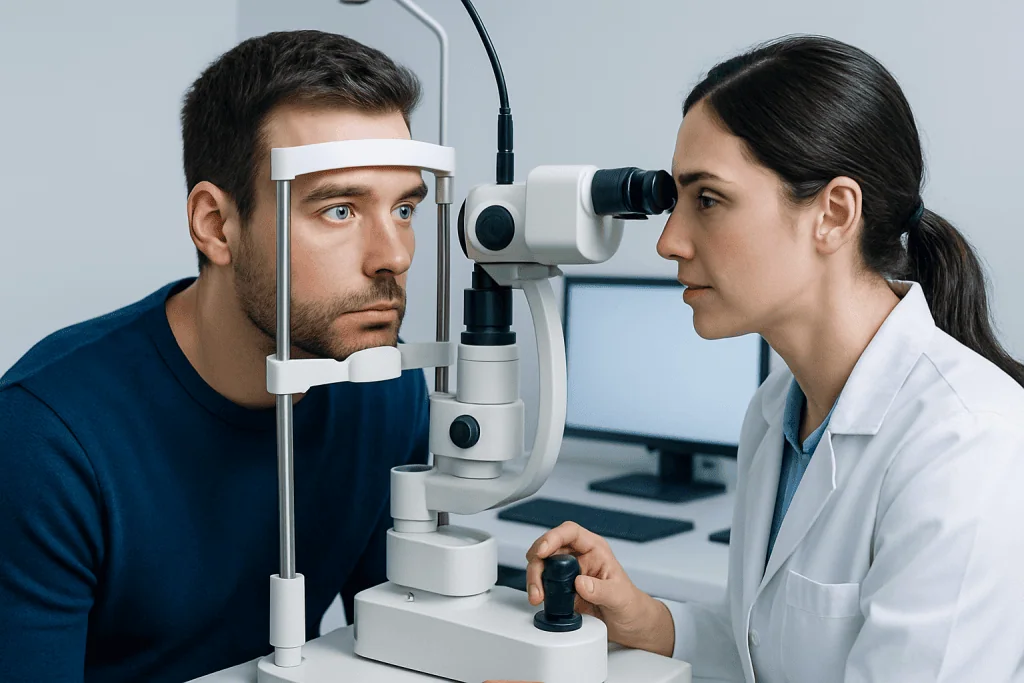
The main examination tool is a slit-lamp exam, which allows the eye doctor to closely inspect the surface of the eye under magnification. This helps distinguish a pinguecula, cyst, inflamed area, corneal problem, or another lesion. Fluorescein dye may be used to check for surface damage, and vision testing may be done if the bump is near the cornea or if symptoms suggest visual involvement.
Most surface bumps can be diagnosed in the clinic without invasive tests. If the lesion has unusual features, the doctor may recommend imaging, photography to monitor changes over time, or referral to a specialist in ocular surface disease. In selected cases where a suspicious growth must be removed or studied, the next step may involve eye surgery or biopsy-based evaluation.
Treatment options and what recovery depends on
Treatment depends on the cause, size, location, and symptoms. If the bump is benign and not causing discomfort, careful observation may be enough. Lubricating eye drops are commonly used to reduce dryness and irritation, especially when the eye feels gritty. Avoiding triggers such as wind, smoke, and excessive sun can also help.
If inflammation is present, a doctor may recommend prescription drops or other medicines to calm the surface of the eye. Contact lens users may be advised to stop wearing lenses until the eye has recovered. When an underlying condition such as persistent dryness is contributing, addressing dry eye can improve comfort and reduce recurrence of irritation.
Some growths become large enough to affect appearance, comfort, or vision. In these situations, a procedure may be considered. For example, a significant pterygium may need pterygium surgery if it progresses toward the cornea or causes repeated symptoms. Recovery varies by procedure and by the underlying condition, but follow-up care is important to monitor healing and detect recurrence early.
Self-care and prevention
While not every eye bump can be prevented, everyday eye protection can lower the chance of irritation-related changes. Sunglasses that block ultraviolet light are especially useful outdoors. In dry or dusty environments, protective eyewear can help shield the eye surface from wind and particles.
Good eye-surface care also matters. Preservative-free lubricating drops may help people who are prone to dryness or grittiness. Taking breaks from screens, staying hydrated, and avoiding smoke exposure can support tear film health. People with allergies should try to reduce triggers and avoid rubbing the eyes, which can worsen inflammation.
Contact lens hygiene is important as well. Lenses should be worn exactly as directed and never used when the eye is red, painful, or unusually irritated. If symptoms suggest ongoing ocular surface irritation, evaluation in a clinic that offers ophthalmology care can help identify the cause and guide long-term prevention.
When to seek medical care
A short-lived, painless bump without redness or vision change is often not urgent, but it should still be monitored. Medical care is advisable if the bump persists, grows, returns repeatedly, or causes ongoing irritation. Even common benign lesions can benefit from an accurate diagnosis, especially if a patient is unsure whether the bump is on the eye itself or the eyelid.
Prompt assessment is more important when symptoms include pain, increasing redness, discharge, light sensitivity, blurred vision, or the feeling that the eye cannot be kept open comfortably. Care is also needed after an eye injury, chemical exposure, or contact lens-related pain, since these can involve the cornea and lead to complications if ignored.
Patients should also seek expert advice for any pigmented, irregular, bleeding, or fast-changing lesion. Near the end of the care pathway, some people may need a multidisciplinary eye assessment; Acibadem International’s specialists in JCI-accredited hospitals diagnose and treat eye surface conditions for international patients. A qualified ophthalmologist can clarify whether the bump is harmless, inflammatory, or something that needs treatment.
Frequently asked questions
Is a bump on eyeball usually serious?
Often, no. Many bumps on the eye surface are benign and related to dryness, irritation, or a common growth such as pinguecula. Still, any bump that is painful, growing, or affecting vision should be checked by an eye doctor.
Can a bump on eyeball go away on its own?
Some bumps caused by temporary irritation or inflammation may improve as the eye heals. Others, such as pinguecula or certain cysts, may remain but become less bothersome with lubrication and trigger avoidance. A doctor can explain whether observation is appropriate.
What does a white or yellow bump on the eye mean?
A white or yellow bump on the white part of the eye is often a pinguecula, which is a common noncancerous surface change. It may become more noticeable with sun exposure, dryness, or irritation. Not every pale bump is the same, so an exam helps confirm the diagnosis.
Should contact lenses be worn if there is a bump on the eye?
It is generally best to avoid contact lenses if the eye is red, painful, or irritated. Lenses can worsen friction on the eye surface and may delay healing. A clinician can advise when it is safe to resume lens wear.
How is a bump on eyeball treated?
Treatment depends on the cause. Lubricating drops, anti-inflammatory medication, and environmental protection are common first steps, while larger or vision-affecting growths may need a minor procedure. The right approach is based on a careful eye examination.
Can allergies cause a bump on eyeball?
Yes, allergies can irritate the conjunctiva and make areas of the eye surface look swollen or raised. Allergy-related eye symptoms often include itching, tearing, and redness. If symptoms keep returning, medical advice can help identify triggers and appropriate treatment.
References
- American Academy of Ophthalmology
- National Eye Institute
- Mayo Clinic
- Merck Manual Consumer Version
This article is for general information only and is not a substitute for professional medical advice. Please consult a qualified doctor about your individual situation.
Explore treatments in Turkey — costs, top hospitals & a free quote
JCI-accredited · board-certified surgeons · reply within 24h
Add us as a Preferred Source to see more of our trusted health content across Google Search, AI Overviews and Discover.

More from the Health Library

Carotid Artery — Explained by Medical Evidence, Not Myths

Cure a Migraine Naturally: A Complete Medical Overview

Signs Your Cold Is Getting Better: What Patients Need to Know

Hemophilia — Explained by Medical Evidence, Not Myths

Excedrin Extra Strength: What Patients Need to Know