Bunion: An Evidence-Based Guide for Patients

A bunion forms when the joint at the base of the big toe shifts out of alignment over time. Common symptoms include a visible bump, pain with shoes, redness, swelling, and difficulty finding comfortable footwear.
Key Takeaways
- A bunion forms when the joint at the base of the big toe shifts out of alignment over time.
- Common symptoms include a visible bump, pain with shoes, redness, swelling, and difficulty finding comfortable footwear.
- Supportive shoes, padding, activity adjustments, and other non-surgical measures often help relieve symptoms.
- Surgery is considered when pain limits daily life or when conservative treatment no longer helps.
- Early assessment can help distinguish a bunion from arthritis, gout, or other causes of forefoot pain.
A bunion is a bony prominence at the base of the big toe caused by gradual joint misalignment. Many bunions can be managed with shoe changes and symptom relief, while persistent pain or deformity may need specialist evaluation and sometimes surgery.
Overview
A bunion is a bony bump that develops at the base of the big toe, where the toe meets the foot. In medical terms, it is often called hallux valgus. The bump itself is not an extra bone; it reflects a change in the alignment of the joint, with the big toe gradually leaning toward the second toe.
This change can make the front of the foot wider and more sensitive to pressure from shoes. Some people mainly notice the shape change, while others have pain, swelling, rubbing, or trouble walking comfortably. Bunions usually develop slowly, and symptoms may come and go depending on footwear and activity.
A bunion is common and often manageable. Not every bunion needs surgery. Treatment depends on how much discomfort it causes, how much the toe position has changed, and whether daily activities are affected. A careful evaluation helps rule out other causes of big-toe pain, such as arthritis or inflammation.
How a bunion develops
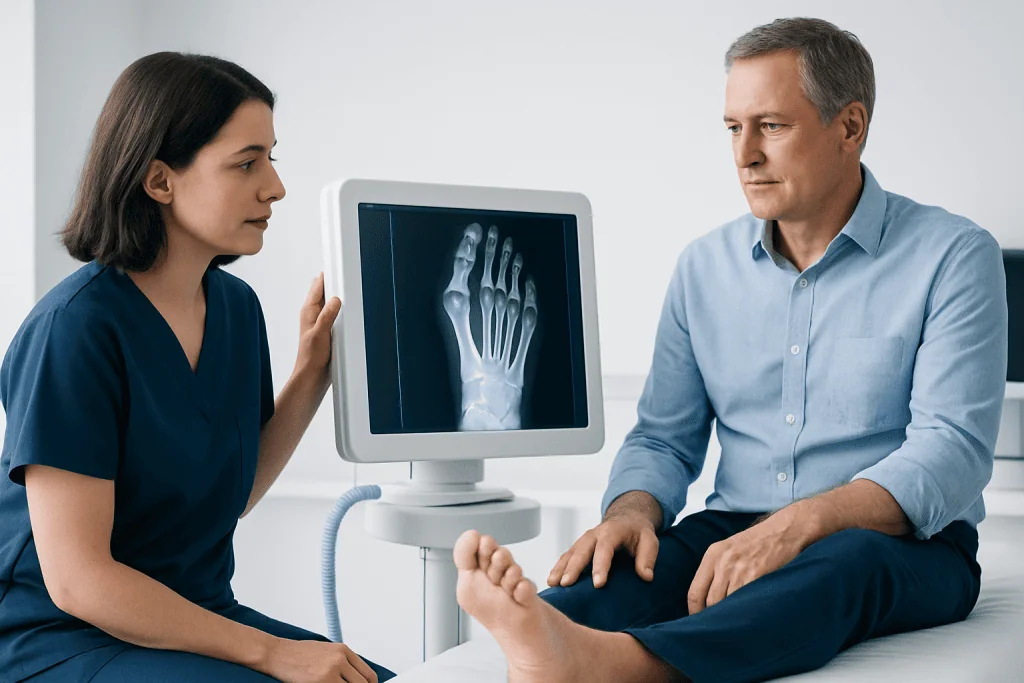
The big toe joint works best when the bones, ligaments, tendons, and surrounding muscles stay balanced. In a bunion, that balance changes over time. The first metatarsal bone can drift inward while the big toe angles outward toward the smaller toes. As the joint shifts, the prominent bump on the inner side of the foot becomes easier to see and more likely to rub against shoes.
This is usually a gradual process rather than a sudden injury. The altered position can change how body weight passes through the front of the foot during standing and walking. That may lead to irritation of the joint lining, thickening of the skin, pressure points, and transfer of stress to the lesser toes and the ball of the foot.
Some people also develop related problems, such as calluses, hammertoes, or pain under the second toe. In more advanced cases, stiffness can develop in the big toe joint, and the toes may overlap. When symptoms are significant, foot and ankle specialists may also assess for other structural conditions and for associated issues such as flatfoot.
Symptoms

Bunion symptoms vary widely. Some people have a visible bump with little pain, while others have substantial discomfort even with a modest deformity. Symptoms may worsen after long periods of standing, walking, exercise, or wearing narrow or high-heeled shoes.
- A noticeable bump on the inner side of the base of the big toe
- Pain or tenderness around the joint
- Redness, swelling, or a warm irritated area from shoe pressure
- Difficulty fitting into shoes or frequent rubbing and blisters
- Limited movement or stiffness of the big toe
- Calluses where the big toe presses against the second toe
Symptoms are not always constant. They may flare after a change in footwear or a long day on the feet. A painful, swollen big toe can also have causes other than a bunion, including gout or osteoarthritis, so persistent or sudden symptoms deserve proper assessment rather than self-diagnosis alone.
Causes and risk factors
Bunions do not have a single cause. They tend to result from a combination of inherited foot structure and long-term mechanical stress. A person may inherit a foot shape or joint laxity that makes bunion formation more likely, even if the bump does not appear until adulthood.
Footwear can influence symptoms and may contribute to progression in susceptible people. Shoes with a narrow toe box, rigid shape, or high heel can increase pressure on the front of the foot and crowd the toes. However, shoes alone do not explain every bunion, and many people with bunions have an underlying structural tendency.
Other risk factors include:
- Family history of bunions
- Female sex, partly related to foot shape and shoe choices
- Flat feet or abnormal foot mechanics
- Inflammatory joint disease such as rheumatoid arthritis
- Ligament looseness or connective tissue laxity
- Occupations or activities that place prolonged stress on the forefoot
Less commonly, bunions can appear in adolescents. When they occur at a younger age, specialist follow-up is especially helpful because the foot may still be developing and treatment planning can differ from that for adults.
Diagnosis
Diagnosis begins with a clinical assessment. A doctor examines the foot while the person is sitting and standing, looking at the bump, toe alignment, skin irritation, joint movement, tenderness, and the overall shape of the foot. They also ask about pain patterns, shoes, work or sports activities, and how symptoms affect daily life.
X-rays are commonly used to confirm the extent of the deformity and measure the angles between the bones. Imaging helps show whether the joint is merely misaligned or whether arthritis, joint damage, or other structural problems are present. This is important because treatment choices depend not only on pain but also on the underlying anatomy.
In some cases, the clinician may consider other conditions that can mimic or worsen bunion symptoms, such as bursitis, gout, nerve irritation, or degenerative joint disease. If advanced imaging is needed to evaluate related problems, it may be arranged through MRI imaging or other tests, although standard X-rays are usually the main imaging study for bunions.
Treatment options
Treatment is based on symptoms, not on the appearance of the bump alone. If a bunion does not hurt and does not interfere with activity, observation and sensible footwear may be all that is needed. For mild to moderate symptoms, non-surgical care is usually tried first.
Conservative options may include wider shoes with a roomy toe box, soft leather uppers, low heels, padding over the bunion, toe spacers, custom or over-the-counter orthotics, and activity adjustments. Ice after activity and doctor-guided use of pain-relieving medication may help with flares. If there is associated inflammation or another foot problem affecting walking mechanics, evaluation by physical therapy and rehabilitation may also be useful as part of a broader care plan.
Surgery may be considered when pain remains significant despite appropriate non-surgical treatment, when walking is limited, or when the deformity is progressing. The goal of surgery is to realign the bones, improve function, and reduce pain. There are different procedures, and the best approach depends on the severity of the bunion, joint stability, arthritis, and the person’s activity needs.
Bunion surgery is not one single operation. Options can include bone cuts to reposition the metatarsal or toe, soft tissue balancing, and, in some cases, joint fusion. Recovery varies by procedure and individual health factors. Orthopedic teams may discuss orthopedic surgery when conservative care is no longer enough, explaining expected recovery time, footwear changes, and rehabilitation needs in clear terms.
Prevention and self-care
Not every bunion can be prevented, especially when inherited foot structure plays a major role. Still, practical self-care can reduce pressure, improve comfort, and possibly slow symptom progression. Footwear is one of the most important day-to-day factors a person can control.
Helpful self-care measures include choosing shoes with a wide toe box, avoiding prolonged use of tight or high-heeled shoes, using protective pads if rubbing occurs, and resting the feet after activities that increase pain. People who stand for long periods may benefit from supportive footwear and cushioned insoles. Weight management can also reduce stress on the feet.
Exercises for toe mobility and foot strength are sometimes recommended, although they do not reverse the bony deformity. They may help maintain flexibility and reduce stiffness in some people. A clinician or therapist can advise which exercises are suitable and whether orthotics are likely to help based on the person’s foot mechanics.
When to seek medical care
Medical care is appropriate when a bunion becomes painful, changes how a person walks, or makes it hard to wear normal shoes. It is also sensible to seek assessment if symptoms are gradually worsening, if the big toe crosses toward the second toe, or if calluses and pressure sores keep returning.
Prompt evaluation is especially important if there is sudden severe pain, marked swelling, warmth, redness, fever, numbness, or a wound on the foot. These findings can suggest infection, an acute inflammatory condition, circulation problems, or another diagnosis that needs timely attention.
People with diabetes, inflammatory arthritis, nerve disease, or poor circulation should not ignore foot symptoms. Near the end of the care pathway, some patients may choose treatment in specialist centers; Acibadem International’s multidisciplinary specialists and JCI-accredited hospitals diagnose and treat bunions for international patients when expert assessment or surgery is needed.
Frequently asked questions
What is the difference between a bunion and a callus?
A bunion is a structural problem involving misalignment of the joint at the base of the big toe. A callus is thickened skin that forms from repeated friction or pressure. A bunion can lead to calluses, but the two are not the same condition.
Can a bunion go away without treatment?
A bunion does not usually reverse on its own because the underlying joint alignment has changed. However, symptoms may improve with wider shoes, padding, and other conservative measures. Treatment focuses on relieving pain and protecting foot function.
Do bunions always need surgery?
No. Many people manage bunion symptoms successfully without surgery. Surgery is usually considered only when pain persists, daily activities are limited, or the deformity continues to progress despite appropriate non-surgical care.
Are tight shoes the main cause of bunions?
Tight or narrow shoes can aggravate a bunion and may contribute to symptoms or progression in people who are already susceptible. But they are not the only cause. Inherited foot shape, joint laxity, and underlying mechanics often play a major role.
How is a bunion diagnosed?
Diagnosis is based on a physical examination of the foot and, in most cases, X-rays to assess alignment. The doctor also considers symptoms, walking pattern, shoe wear, and whether other conditions could be causing the pain. This helps guide the most appropriate treatment plan.
How long does recovery from bunion surgery take?
Recovery depends on the specific procedure, the severity of the deformity, and the person's overall health. Many people need a period of protective footwear and activity limits before returning fully to normal routines. The surgeon explains expected milestones and follow-up care in advance.
This article is for general information only and is not a substitute for professional medical advice. Please consult a qualified doctor about your individual situation.
Joint and spine care in Turkey — expert assessment & treatment
JCI-accredited · board-certified surgeons · reply within 24h
Add us as a Preferred Source to see more of our trusted health content across Google Search, AI Overviews and Discover.

More from the Health Library

Anaphylactic Shock: What Patients Need to Know
Dental Sedation: A Complete Medical Overview

Low Fat Peanut Butter: An Evidence-Based Guide for Patients

Rizatriptan: An Evidence-Based Guide for Patients

Feet Swelled for 3 Days After Flying: A Complete Medical Overview